
Bangkok in Two Days: the Royal Centre and River Neighbourhoods

Two days in Bangkok work best when each has a clear character. Spend the first in the royal old town, where temple roofs and ceremonial spaces explain the city’s public face. Give the second to the riverside neighbourhoods of Talat Noi and Chinatown, where workshops, family businesses and food bring the city down to street level. This pairing offers a convincing first impression without turning both days into a race between famous names.
The route below is a framework for two full days, rather than a promise that every door will be open or every journey quick. It includes one substantial visit on the first morning, a proper lunch each day and room to stop early. Arrival and departure travel need separate time. If your two days include a late flight in or an early flight out, shorten the programme before adding anything else.
How to divide your two days in Bangkok
Keep the royal centre together on day one: the Grand Palace and Wat Phra Kaew as one visit, followed by lunch and the streets around Tha Tien. On day two, start in Talat Noi in daylight, then move towards the Chinatown Gate and Yaowarat. You get two connected areas, two different moods and fewer cross-city transfers. This is more comfortable than assigning every headline attraction its own compulsory stop.
With RoadMe, you can turn this outline into a personalised trip plan built around your interests, available days and preferred pace. Let the app do the detailed planning, so the time you save goes into enjoying Bangkok.
The suggested time blocks are estimates, with pauses built in; they are not measured walking times or booked appointments. Allow your accommodation’s location, the weather and your energy to decide the precise start. Travellers who love architecture can stay longer in the royal compound. Those interested in everyday streets can protect more of the second day instead. Choosing where to linger is the useful decision here.
Day one morning: choose one major royal visit
A sensible aim is to reach the palace area around 8:15 and begin the visit after opening, allowing roughly the morning for entry procedures and looking around. Check the official calendar for your actual date before setting out: ceremonies and access arrangements can affect the visit. Follow the designated entrance and current staff instructions. An early start creates breathing room; it does not guarantee a quiet compound.
Bangkok became the capital in 1782, and the palace complex brings together royal, administrative and religious functions. That background makes the visit more interesting than a succession of glittering roofs. Look at how gateways, courtyards and changes of scale organise the spaces. Wat Phra Kaew, the Temple of the Emerald Buddha, belongs to the same compound, so treat it as part of this main visit rather than an extra destination across town.
There is no need to photograph every decorative surface. Choose one courtyard or architectural detail, put the camera away briefly and notice the contrast between shaded passages and bright open areas. Respect signs about photography and restricted spaces. A general visitor ticket should not be understood as permission to enter every royal hall. The accessible areas on the day determine what your visit includes.
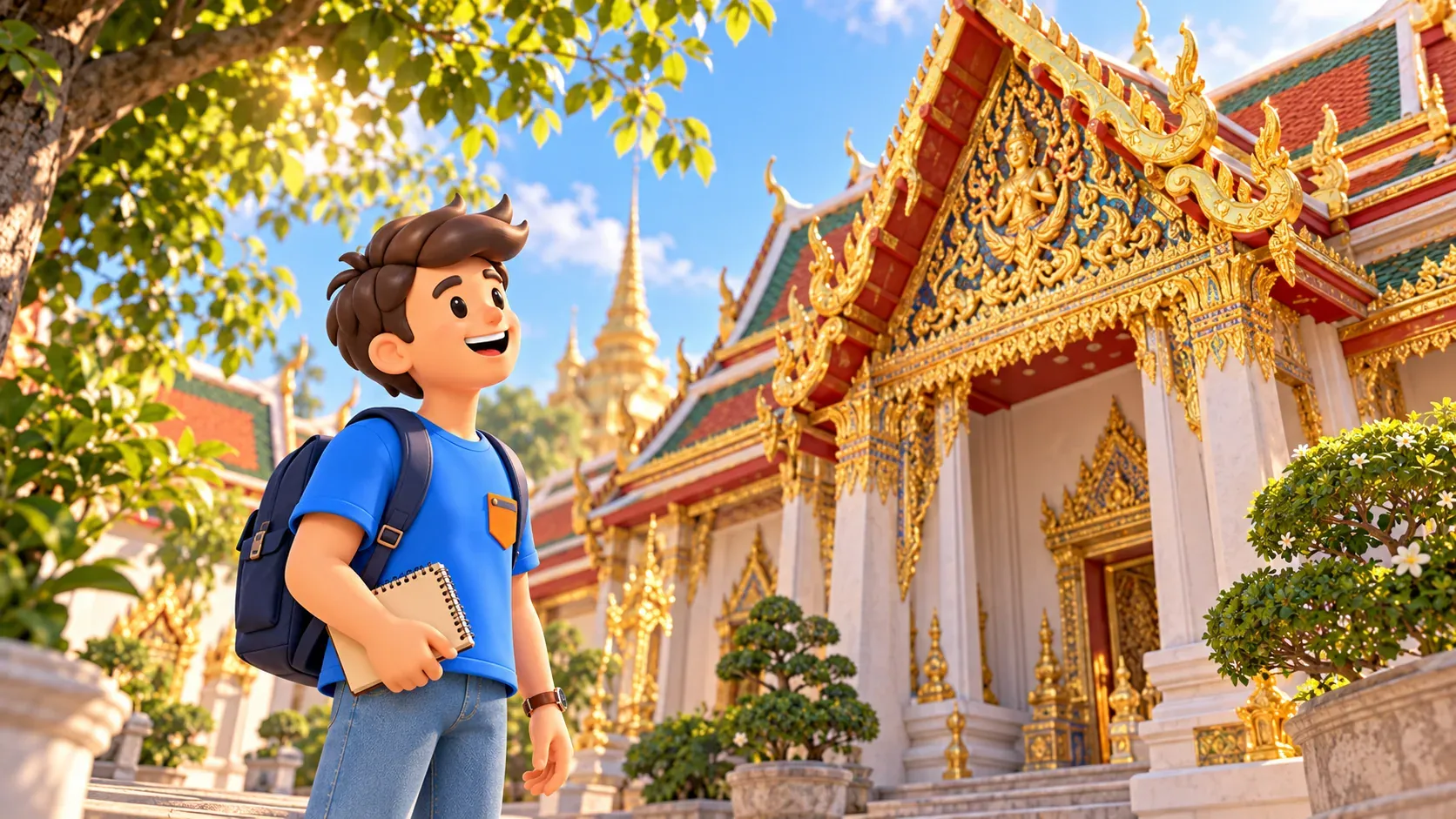
Would Wat Pho suit you better?
Wat Pho is a useful alternative if the reclining Buddha and temple atmosphere interest you more than the palace visit. Its restoration under Rama I is part of the story of the early capital, giving the site a place in Bangkok’s history beyond a single famous image. For this two-day outline, choose it instead of the palace as your main morning visit. Combining both is possible for some travellers, but it changes the pace considerably.
Dress for religious and royal settings before leaving your accommodation: covered shoulders and legs, with clothing that meets the site’s current rules. Do not assume a scarf solves every restriction or that suitable clothing will be available at the entrance. Carry drinking water and footwear you can manage easily when removal is required. These small preparations make the morning smoother without filling your bag with unnecessary equipment.
Day one afternoon: lunch and Tha Tien at a slower pace
From late morning, give lunch a real place in the plan. A seated meal and a cool pause around Tha Tien will usually contribute more to the afternoon than another rushed admission. Choose somewhere with a menu you understand and prices you are comfortable with. You do not need to chase a particular fashionable restaurant for this route to work; the purpose is to recover and enjoy the neighbourhood.
After lunch, spend an unhurried period in the surrounding streets and look for an accessible riverside viewpoint. The Chao Phraya helps explain why this part of Bangkok developed as a centre of movement and exchange. Boats and the opposite bank give a different sense of the city from the palace courtyards. Riverside premises can be private, so stay on public paths and ask before entering terraces or seating areas.
A view towards Wat Arun can be a satisfying ending without crossing the river. If visiting the temple itself is a priority, allow for the transfer, entry and return, and remove another afternoon activity. Do not treat the far bank as a quick extra because it appears close in a photograph. A short distance across water still involves access points and transport arrangements.
Finish during the afternoon if the heat or the morning’s standing has caught up with you. The success of day one is a meaningful royal visit and a sense of the river, not a late finish. Readers with only one complete day can use our one-day old town and Chao Phraya itinerary as a separate, more concentrated option.
Day two morning: Talat Noi while the streets are visible
Start the second day later, around mid-morning, in the southern part of Talat Noi near Holy Rosary Church. The exterior can serve as an orientation point; entering a place of worship depends on current access and religious activity. Then wander north through the neighbourhood’s lanes. Keep the walk flexible enough to accommodate a workshop delivery, a narrow pavement or a tempting place to sit.
Talat Noi is a working community, and its appeal comes partly from the coexistence of machinery, shophouses, shrines and everyday domestic life. Old mechanical parts are not simply a decorative backdrop installed for visitors. Notice the textures and shopfronts without blocking trade. Ask before photographing people closely, and leave doorways clear. The most rewarding observation may be an ordinary detail rather than a marked attraction.

The community museum adds context when it is open and fits your day: its premises were formerly a lathe workshop producing boat and machinery parts. That link connects the neighbourhood’s present appearance with the river economy. Keep the interior visit optional until you have checked the date and access. A museum closure should not make the whole morning fail, because the surrounding streets remain the main thread.
Likewise, the So Heng Tai house can be understood as part of the neighbourhood’s architectural story without assuming unrestricted admission. Private buildings and courtyards are not public simply because they appear on a sightseeing list. Observe from permitted areas and follow the current arrangements. This approach gives you useful context while leaving the detailed object information and practical navigation to a more suitable format.
Day two afternoon: a gentle move into Chinatown
Take lunch before the next substantial decision. After a morning of looking into small lanes, a seated break helps reset your attention. Continue towards the Chinatown Gate and nearby Wat Traimit, allowing for road crossings and the normal interruptions of a busy district. The connection is part of the outing, not empty time to be squeezed away. Use safe crossings and resist stepping into traffic for a photograph.
The gate is a useful visual threshold for the Chinatown part of the day. Wat Traimit gives you the option of another cultural visit, but you do not need to enter if yesterday supplied enough temple time. Choose between that visit and a slower exploration of the trading streets. Keeping the choice explicit prevents an appealing two-day plan from quietly becoming a list of obligations.

RoadMe makes it easier to build a personal route around the Bangkok that interests you, whether that means culture, neighbourhood life or food. Use the app to work out your trip in detail and spend less time piecing together separate recommendations.
Allow another substantial pause during the afternoon. If you want to stay for an early evening meal around Yaowarat, this break is what makes that extension enjoyable. You can return to your accommodation and come back only if the extra travel suits you, or settle somewhere nearby. Staying out continuously is not an achievement in itself, especially after a hot morning.
An optional Chinatown evening, with permission to finish
Yaowarat offers a different atmosphere as daylight softens and food becomes the focus. Choose a manageable meal rather than attempting to taste everything associated with Chinatown. Look at what is actually cooking, ask about ingredients where necessary and check the price before ordering. Individual stalls and businesses have their own schedules, so no particular vendor is essential to this itinerary.

Decide how you will return before you feel exhausted. A meal and a short look at the evening streets are enough; nightlife does not need to become a third shift of sightseeing. If you finish earlier, your second day still contains a coherent journey from a working riverside neighbourhood into a busy trading district. That contrast is the point of the route.
What to change when your two days are different
If royal access is restricted on your first date, consider swapping the days after checking the alternative day’s conditions. If rain interrupts Talat Noi, stop under suitable shelter and shorten the lanes rather than treating a private courtyard as a refuge. With children or anyone who tires easily, keep one main visit and one street section per day, with longer seated breaks.
Before leaving each morning, settle three things: your first destination, your main visit and your return plan. Keep the rest adjustable. If you are still deciding which side of the city appeals most, our guide to where to start in Bangkok by interests helps make that choice. Two well-shaped days can reveal more than a crowded checklist, because you have enough attention left to notice the city between its landmarks.


