
Bangkok on a small budget: a walking day and one paid visit

A smaller Bangkok budget need not produce a day of looking at gates and refusing every interesting entrance. Give the day one paid cultural visit, then let streets, a public park and the river provide the rest of its character. The useful saving comes from making a few decisions well, rather than adding admissions and cross-city journeys because each looks modest on its own.
This idea stays around Banglamphu and the northern part of the old town. Begin by the river at Santichaiprakan Park, spend time in nearby streets and choose a focused visit to the National Museum Bangkok. Afterwards, have lunch and decide whether to return to the park or finish. Allow roughly six hours in the area, with your actual hotel journeys added separately. It is not six hours of continuous walking.
Keep one paid interest at the centre
The National Museum is the suggested paid stop for someone curious about Thai art and cultural history. It is a deliberate choice, not a compulsory box for every traveller. Before leaving, decide whether its subject interests you enough to use your admission budget. If a different kind of visit matters more, build another day around that choice instead of buying this ticket and then adding the preferred attraction afterwards.
With RoadMe, it is much easier to turn your interests, available time and comfortable pace into a personal Bangkok trip. Let the app develop the whole itinerary so the experiences you value, useful pauses and sensible journeys fit together before you start spending.
Here, “one paid visit” means one attraction admission, not one expense. Transport to the area, food, drinking water and a suitable place to rest still belong in the budget. Any boat ride, extra exhibition or shopping is a separate choice. Treating these ordinary costs honestly is more useful than describing a day as almost free and discovering that the things making it comfortable were left out.
There is no fixed total that fits every visitor. Museum rates and eligibility can depend on the applicable visitor category, and companions may need different tickets. Establish your actual admission cost before committing. Then set aside the meals, outward and return journeys and a small reserve you want to keep available. You can choose a modest day without assuming a discount, a nationality or an unusually cheap transport connection.
Start with the river at Santichaiprakan Park
Santichaiprakan Park lies on Phra Athit Road beside the Chao Phraya, in the Banglamphu area. Its scale suits a slow beginning rather than a long exercise circuit. Give it about thirty minutes: find a comfortable public place, look at the river and notice how differently the city feels here compared with a busy junction. The park and ordinary street portions of this plan do not require an attraction admission.
Phra Sumen Fort gives the setting a recognisable historic outline. Regard it from the public surroundings; an interior visit or climb is not included. Its relationship to the old town’s defences makes the walls more than a photographic background, but you do not need a lengthy historical lesson to appreciate that connection. Look at the shape of the structure and its position beside the water, then give the space back to other park users.
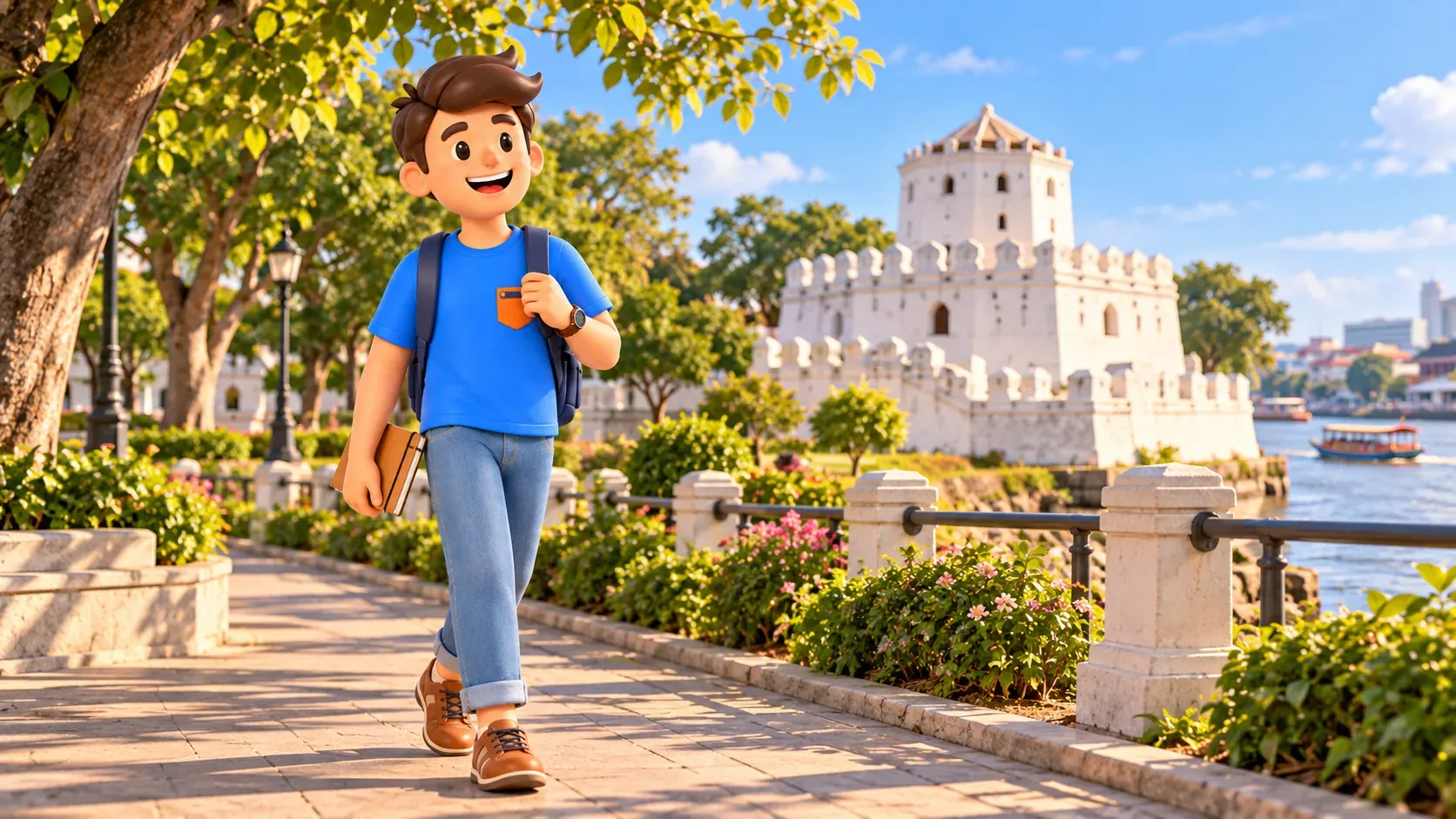
Use a public entrance that is actually open and keep to the permitted areas. This is a working city park, not a private viewing platform reserved for your itinerary. Trees or river air do not guarantee comfortable weather at every hour. If you want to sit longer, do so; if conditions are unpleasant, shorten this opening and keep your energy for the selected indoor visit.
Let Banglamphu supply the street part
Allow around forty-five minutes for a small selection of nearby streets, rather than trying to cover the whole district. Phra Athit and the Banglamphu surroundings offer old buildings, shopfronts and everyday movement to observe from public space. The neighbourhood is not simply a backdrop to Khao San Road. Its cultural mixture can be noticed in different food traditions and street uses without making every café or religious building an entrance on your list.
Choose a detail to follow: shutters, upper-storey windows, shaded thresholds or the way a shop arranges everyday objects. You do not need to buy something at each stop for the walk to have a purpose. Equally, an open doorway is not an invitation into a home or workplace. Photograph considerately and avoid blocking people who are working. This modest form of attention often gives a day a clearer identity than rushing between famous names.
Leave shopping as a genuine option. A planned purchase can be enjoyable, but repeated “small” purchases are still part of the day’s spending. If you want a souvenir, decide what matters to you before browsing widely. There is no need to turn a limited budget into constant arithmetic on the pavement. A little preparation should leave more attention for the neighbourhood rather than make every moment a negotiation with yourself.
Move towards the museum while the visit still has room
Keep about thirty minutes for the approach and small delays between the street section and the museum. The park and the National Museum occupy the same northern old-town sector, but their entrances are separate. Use a current walking route through public streets and appropriate crossings. This article does not promise a continuous riverside promenade, covered footways or a step-free connection. The estimate changes with your exact starting point and pace.
The suggested order reaches the museum in the late morning if you begin around nine. Do not move the visit to the very end and rely on the final admission. The regular opening pattern is Wednesday to Sunday, with Monday and Tuesday closed; special calendars and temporary gallery closures can change what is possible. Check the date before setting off and choose from the areas actually open rather than a room seen in an old guide.
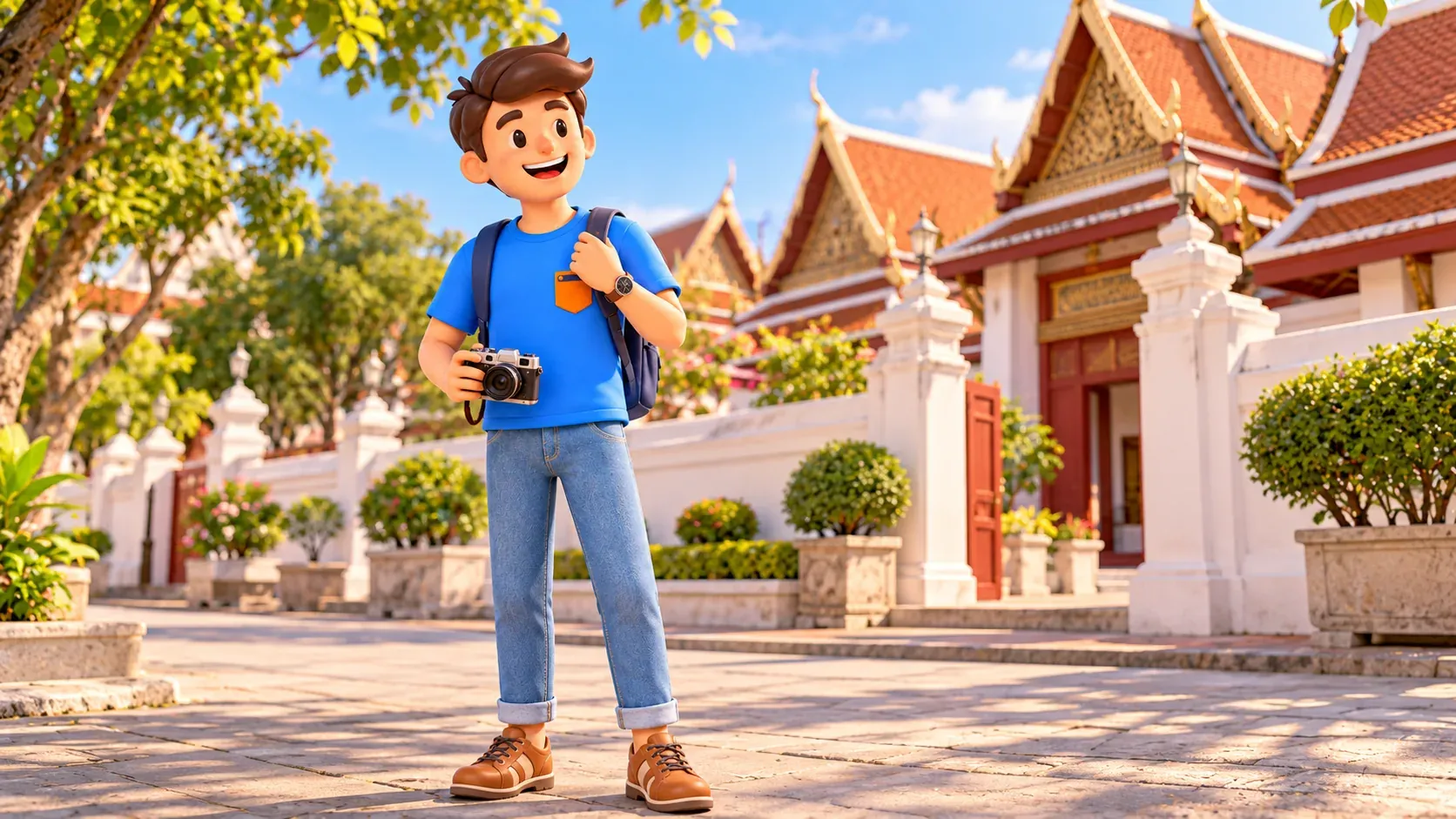
On a closed day, either move the museum outing to another date or enjoy a shorter park-and-streets day. There is no obligation to replace it immediately with another paid attraction. You could preserve the admission budget for a better match elsewhere in the trip. The point is not to spend a certain amount daily, but to make the spending you do choose correspond to something you genuinely want to experience.
Make ninety minutes in the museum worthwhile
The National Museum brings objects and art into a wider cultural story. Allow about ninety minutes for a selection, not for a claim that you have completed the whole museum. Choose one or two themes from the current display information. You might follow changes in artistic forms or look at how an object connects practical use with ceremony. Use the museum’s own explanation rather than guessing a history from decoration alone.
Do a brief orientation first, then spend time with a limited group of works. Look once before reading and once afterwards. What did the explanation make you notice? That question provides a clear activity without requiring expert knowledge or additional paid equipment. If the subject catches your attention, a longer stay may be the best use of your day; shorten the later walk rather than racing out to protect an optional stage.
Check the rules for bags, photography and individual rooms. A ticket does not promise every hall or a particular ceremonial object will be available. If one display is the sole reason for coming, establish its current access before buying admission. This is particularly useful when travelling with children or someone whose interest is focused: the important question is whether the available visit suits them, not how much of the complex exists in total.
Lunch and sitting time belong in a modest day
Set aside roughly an hour for lunch and rest. Choose somewhere with a clear menu and seating that works for your group. Confirm what you are ordering and the cost before committing, including drinks or extras that matter to you. No particular restaurant or dish is essential to the route. A simple satisfying meal nearby is usually more compatible with this plan than another long journey in pursuit of a supposedly indispensable bargain.

Do not remove the pause merely because it involves an expense. Rest is part of making the day work, especially after walking and museum attention. You can choose the level of spending consciously without treating comfort as a failure to travel cheaply. Allow water and any practical needs in the same way. A budget that depends on ignoring them is less useful than a slightly smaller sightseeing plan you can comfortably follow.
If the heat or rain changes your mood, finish after lunch. Our slower Bangkok day with a midday pause explores a different rhythm; it is an idea for another outing rather than an instruction to cross the old town now. Staying in one manageable area is a substantial part of the saving here, both in fares and in effort.
Keep the river finish optional
If you still want a walk, give about forty-five minutes to a gentle return through public streets towards the park, choosing the actual route for the conditions. Returning to a familiar riverside place is perfectly reasonable. You do not need to discover a second viewpoint to justify the afternoon. Nor does a river view require a boat ticket. A cruise or ferry journey would be an extra transport decision with its own route and fare.
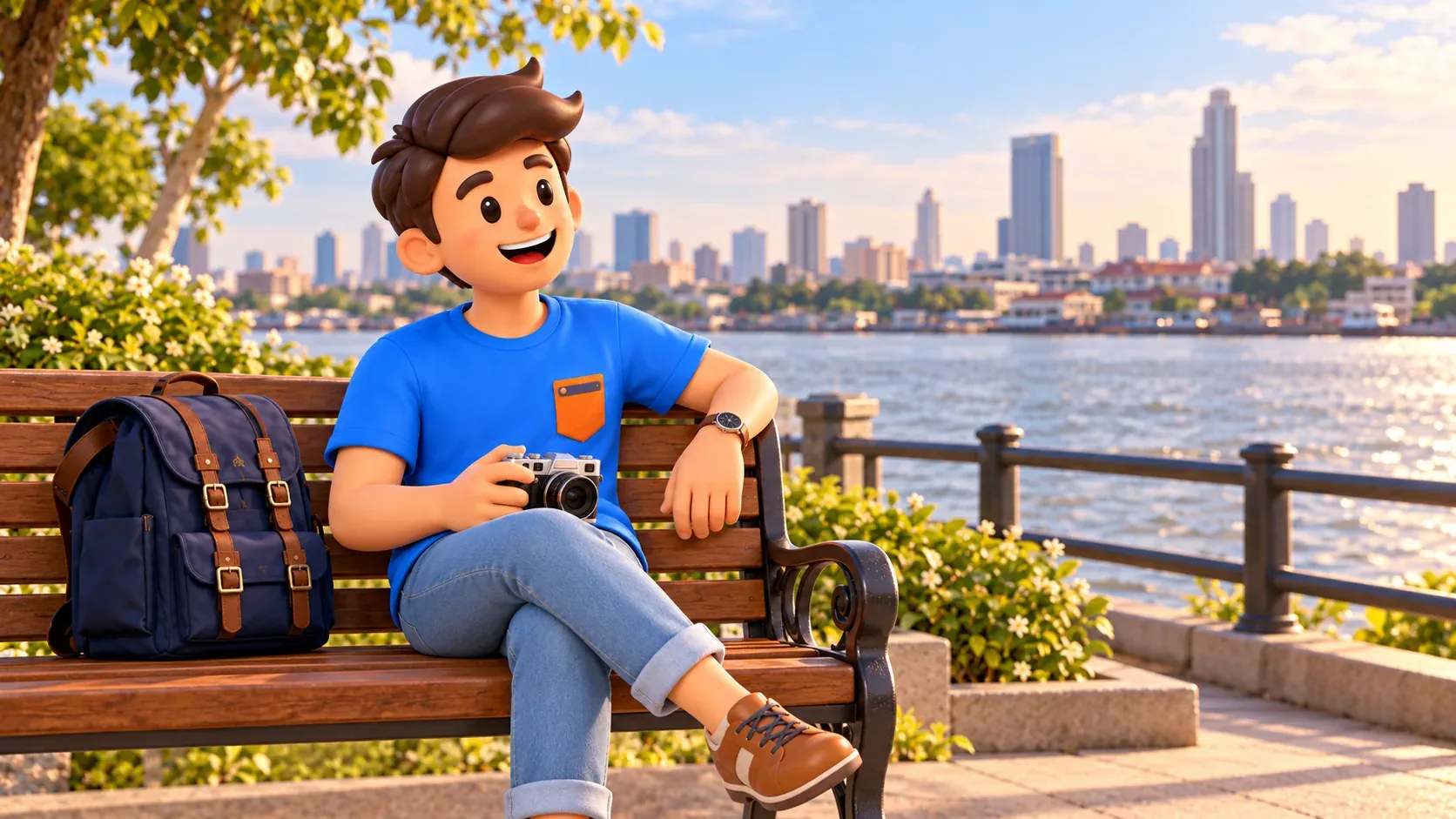
Keep the final hour flexible for seated rest, your departure and small delays. Around six hours from a nine o’clock start would take you to roughly mid-afternoon, not automatically to sunset. A colourful sky is not promised. If you prefer a later finish, change the timing deliberately and account for the extra food, rest and journey needs rather than treating several additional hours as costless simply because the park itself is public.
RoadMe makes organising the whole stay more convenient and effective by working out a personal plan around your interests and pace. Use the app to give one worthwhile paid experience its place among the walks, pauses and other Bangkok days that suit you.
A small budget can still make a full day
Before leaving, settle the actual museum admission, both journeys and the food-and-rest allowance. Confirm the opening date, keep the street section compact and retain the option to shorten the afternoon. The result is a day with a river setting, neighbourhood detail and one cultural interest given proper time. Its value comes from those connections, not from the number of tickets collected or a claim to have seen all of Bangkok cheaply.


