
Asakusa to Tokyo Skytree: A Walk Across the Sumida
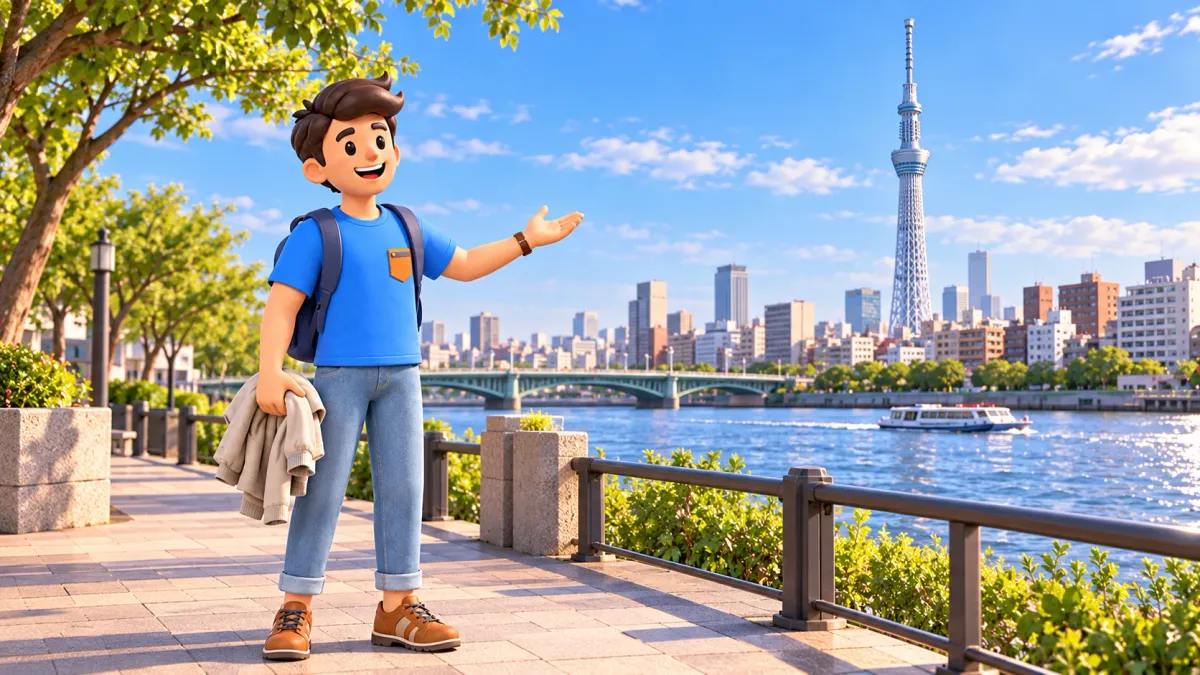
Walking from Asakusa to Tokyo Skytree turns the space between two recognizable Tokyo landmarks into an experience of its own. Start at Kaminarimon, reach the west bank of the Sumida, cross on Sumida River Walk and continue through a short park section and Tokyo Mizumachi toward the tower. The interest lies in watching the city change scale along the way.
Allow roughly two to three hours with brief viewing stops and a break. That is an editorial planning estimate, not a measured walking time. A full Sensoji visit and admission to the tower observatories need separate allowances. The core walk ends at the foot of Skytree and works perfectly well without buying a ticket to go up.
Connect the neighborhoods in one clear direction
Follow a west-to-east sequence: Kaminarimon, the west riverbank, Sumida River Walk, a limited part of the east-bank park, Mizumachi and Tokyo Skytree. The tower helps with general orientation, but its visible spire cannot tell you which pedestrian entrance to use. Roads, railway infrastructure and the actual crossings determine the route at ground level.
To make this walk much easier to fit into your own trip, try RoadMe: the app builds a personal day-by-day itinerary around your dates, interests, pace and budget. Plan ahead to give river views, neighborhood exploring and any booked visits a practical place in your Tokyo journey.
| Stage | Main experience | Space to preserve |
|---|---|---|
| Kaminarimon to the river | From busy streets to a wider view | A brief stop by the gate |
| West bank | Reading the opposite skyline | A few views rather than a long park circuit |
| Sumida River Walk | The crossing and its changing perspective | Time to look without blocking the path |
| East-bank park and Mizumachi | A pause at neighborhood scale | One refreshment break |
| Foot of Skytree | The tower from below | A separate block if you choose the observatories |
Keep the park sections modest instead of making a long northward circuit on both banks. A few well-chosen stretches support the overall direction. Walking back is optional too: finishing near a convenient station can make sense, especially if the riverside outing follows an already substantial morning in Asakusa.
Start at Kaminarimon and set the scope
Kaminarimon is a recognizable meeting point. Stand clear of the main flow while you agree on the plan. If you have already explored Sensoji, this is the beginning of a new chapter. If you came specifically for the river, you can head toward the water without first making a complete temple circuit.
Walk toward the river by Azumabashi Bridge. Stay on the west side initially: the proposed crossing is a little farther north at Sumida River Walk. First take a moment to see the water and understand the opposite bank, then follow the river toward the entrance to that pedestrian crossing.
Notice the change in the way you look. Around the gate, people, signs and close facades compete for attention. Beside the river, the view opens out. This transition gives a short distance its character; you do not need to identify a separate attraction every few minutes to make the walk worthwhile.
If lunch is due, either eat before the crossing or reserve a proper stop afterward. A quick snack may not be enough after a long temple morning. With children or tired travelers, agree early on the shorter version and keep one clear break rather than repeatedly postponing rest until the next landmark.
The west bank: put the tower in context
Continue north on the west side toward the Sumida River Walk entrance, using the local pedestrian signs. Follow an open, suitable path. A waterside stretch shown on a map does not necessarily provide an uninterrupted route at the lowest level; staying higher by the park can be the more useful choice.
Compare a couple of views across the river. Here Skytree belongs to a larger composition of bridges, buildings and moving traffic. At its base later, the structure will dominate your field of vision. The river approach lets you appreciate its height in relation to ordinary urban life before you stand directly underneath it.
Choose one or two places for photographs and then move on. Turning every gap into a long photo session can consume the time intended for the park and a pause. Look without the camera first: boats, passing trains and people on the opposite bank make scale easier to understand than a tightly cropped tower image.
Seasonal blossoms may transform this section, but flowering dates vary. Choose the walk for its river setting even when no trees are in bloom. During a large event or a particularly busy period, reduce the amount of wandering and follow the temporary pedestrian arrangements you find on the day.
Sumida River Walk: cross beside the railway
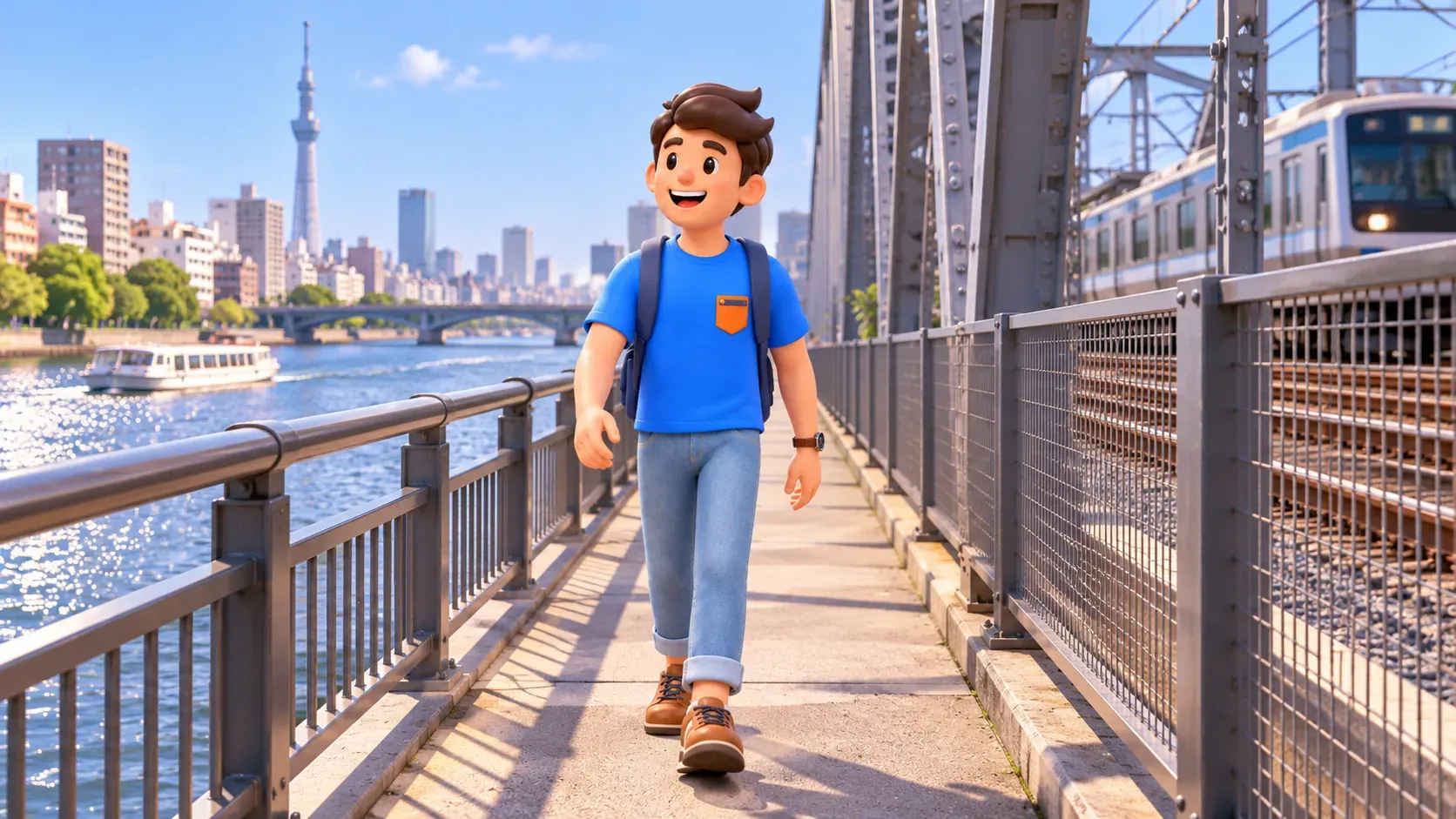
Sumida River Walk is a pedestrian passage alongside the railway bridge, connecting Asakusa with the east side of the river. Opened in 2020, it is a modern connection between established neighborhoods. Its value here is both practical and visual: the crossing itself becomes part of the outing rather than an interval between sights.
The operator lists opening hours of 7:00 to 22:00. This is not an overnight crossing. Check current notices before a late outing, since normal hours do not override temporary restrictions. For a first visit, daylight makes the entrance, the continuation and details on the far bank easier to understand.
Leave space for other walkers. If you pause to watch a train or the water, choose a position that keeps the route clear. The bridge section ends quite soon, yet there is no need to rush across it. The changing viewpoint is the point: a broad river scene gradually becomes a closer neighborhood setting.
Some sections have glass floor panels that offer an unusual downward view. Treat them as an optional detail. If the surface feels uncomfortable, continue on the available ordinary walkway and follow local markings. The experience does not depend on standing over the water for a particular photograph.
The east-bank park: make a small detour
After crossing, give a limited section of the east-bank park some time. Keep the main direction toward the tower rather than automatically expanding this into an entire park outing. Greenery offers another change in attention, from the broad river and railway to paths, trees and everyday neighborhood recreation.
Choose one path or a place to rest and assess your energy. This pause is especially useful if you reached the river after an extensive Asakusa visit. Individual park services and indoor facilities can have their own conditions; park-center opening hours should not be treated as the operating schedule for every outdoor path.
An event may change the appearance of an open space compared with photographs. Follow permitted routes and shorten the park section if it no longer provides the quiet break you wanted. Keeping the walk pleasant matters more than reproducing a particular view or completing every possible stop.

Tokyo Mizumachi: one break on the way
Continue toward Tokyo Mizumachi, where shops and places to eat sit along the railway. After the open water, this is a more intimate urban setting. Notice how leisure and transport share the same space and how the tower appears and disappears behind nearer structures as your position changes.
If you want this outing to include cafes, architecture or an evening panorama, build a personal trip in RoadMe. The app makes it much more convenient to arrange experiences around your interests and preferred pace, giving the river crossing a useful place in a day designed for you.
Choose one break instead of inspecting every establishment. Shops and cafes have individual hours: an open footbridge does not mean a particular breakfast table will be available early in the morning. If the stop matters to the group, check the chosen place and leave flexibility around the rest of the walk.
Afterward, continue east toward the complex at the tower's base, following pedestrian signs. Pay attention to the next junction or entrance rather than simply watching the spire. An obvious landmark gives you direction, but streets, buildings and usable crossings still determine the final approach.
Finish at Skytree: look up or go up
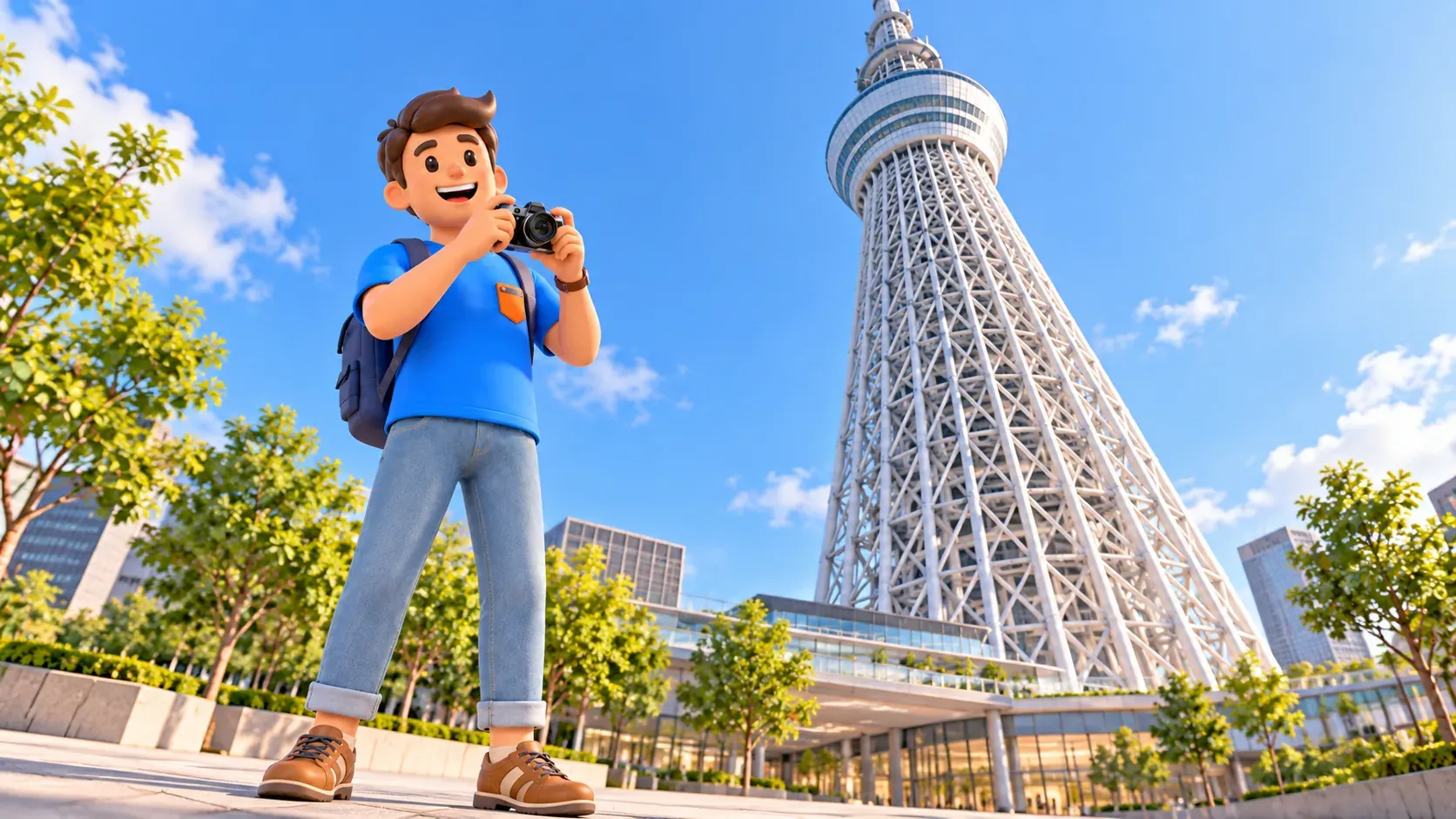
Tokyo Skytree opened in 2012 and reaches 634 meters. At its foot, the same object takes on a different role: across the river it organized the neighborhood skyline; nearby, it becomes a large structure overhead. A few attentive minutes here can complete the main idea of the walk.
The observatories are a separate continuation. Decide which visit you want, then check the date, entry arrangements and current operator notices. Reaching the base does not mean you have reached the elevator: finding your way through the complex, possible waiting and viewing all require extra time. Weather also affects visibility; a ticket cannot guarantee a particular distant panorama.
If you prefer to stay at ground level, finish with a meal or a limited look around the complex. Nearby paid attractions are individual choices rather than compulsory additions. For the journey onward, compare Tokyo Skytree Station and Oshiage Station: they are different stations serving the same large area, and the convenient option depends on your destination.
Shorten the walk without losing its purpose
If energy is running low, reduce the park detour and keep the clear link between river, crossing and tower. In heavy rain or uncomfortable wind, moving an outdoor walk to another day can be the better choice. If access is restricted, follow the official arrangements on site rather than trying to pass a closed entrance.
Before leaving, check the crossing's availability for your time, the waterfront conditions and any separate tower booking. Keep a small allowance for returning from the actual finish. The walk works because it connects two familiar Tokyo images through the everyday city between them, with enough space to notice the transition.


