
Ariake with Kids: Small Worlds and Water Science

Ariake can provide a family day with two different interests: a little water science and close attention to the miniature worlds at Small Worlds. This is an independent neighbourhood combination, without a compulsory continuation to Odaiba or a list of every children's museum in Tokyo. The two venues require a separate urban connection, so two indoor exhibitions do not make the whole outing a continuously covered route.
Allow roughly four to five hours for both museums, food and local travel, counting the journey from your accommodation separately. This is an editorial estimate, not a measured duration. A practical sequence is a shorter Water Science Museum visit, lunch and the main Small Worlds visit. If your child wants to spend longer with miniatures, choosing only them is a complete option rather than a failure to finish the programme.
Choose the main interest first
The venues hold attention differently. Small Worlds invites close looking at little scenes; the Water Science Museum invites questions about water and its journey to a home. Decide which suits your family. Do not promise equal engagement from a child already tired after the first visit simply because the second name looks close on a map and has been written into an adult's plan.
RoadMe helps develop a personal programme around your family's interests, giving miniatures more time or keeping the science section short or separate. Try preparing the day at your own pace, with enough room for food, the connection and a calm ending.
If both matter, begin with water science because its standard last admission is earlier. If Small Worlds is the priority, put it first and accept that the second museum may be omitted afterwards. These variants cannot simply be added into one unchanged duration. A long workshop, food, waiting for a session and outdoor travel all occupy real time, even when each item seems small in isolation.
Check the Water Science Museum calendar
Tokyo Water Science Museum is at Ariake 3-1-8. Normal hours are 9:30–17:00, with last admission at 16:30, and entry is free. It closes on Mondays, moving closure to the following day when Monday is a holiday. The year-end closure is December 28 to January 4. These are not automatically the arrangements of every neighbouring family venue, so check its own current calendar.
Read notices about operations and events before travelling. A standard timetable does not override temporary closures, programme changes or a filled session. If a particular activity matters, establish its conditions first. The basic outing can use available exhibitions and a few understandable questions about water; success should not depend on a single demonstration promised to a child before actual availability was known.
The official site shows approaches from Kokusai-tenjijo on Rinkai and Tokyo Big Sight on Yurikamome. Its separate walking page gives approximately ten minutes from Kokusai-tenjijo. That is an orientation rather than your measured time with a pushchair, crossings and stops. Save the current access map and choose a suitable station exit instead of walking towards a visible building on an assumed straight line.
Follow one science question instead of every activity
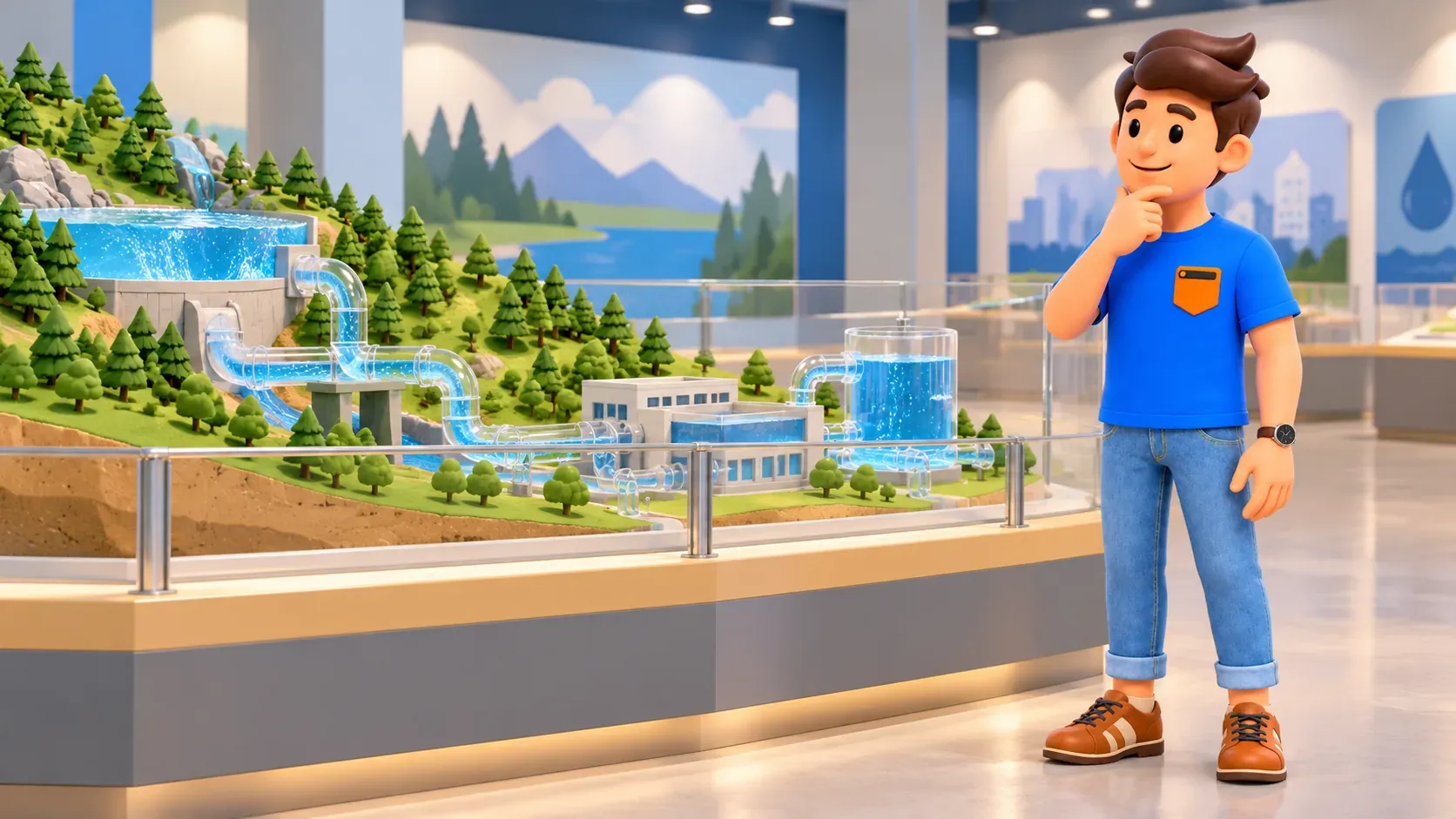
Begin with something simple: where does water from the tap come from? Then choose available sections connected to that question. Water's journey, source forests or a city's supply system can provide a focus. A child need not understand every engineering and natural topic at once. One observation remembered that evening may be more valuable than a long route on which an adult managed to read every panel.
Official arrangements describe timed numbered tickets for Aqua Trip and Aqua Tour, distributed at information. Check the actual day's conditions in current notices and on arrival. Do not promise a particular free slot or equate general free admission with guaranteed access to every session without waiting. If no suitable time is available, continue with ordinary accessible exhibits rather than making the day depend on getting into one activity.
Do not assume every piece of material is equally understandable in every language. Check available guidance and choose something you can explain simply. Asking what changed after one demonstration can be more useful than translating an entire wall. If the flow of information becomes too dense, end this section earlier and preserve interest for the main part of the day instead of insisting on completeness.
Rest and connect to Small Worlds
After the science block, make food a genuine pause and assess energy. Choose an open place by current menu, price, queue and a practical approach to the next venue. No famous name is compulsory. Do not reduce lunch to five minutes standing simply to preserve a second visit. Hunger and tiredness can alter a child's response to the most interesting miniatures more than an early-morning plan suggests.
Build the connection between addresses separately using a current map. Do not promise uninterrupted cover, no stairs or an instant transfer. In poor weather with a pushchair, choose the comfortable real route rather than a neat line through a closed property. Both venues being in Ariake does not make them adjoining galleries within one building or remove the time required to move between them.
Small Worlds is officially at Ariake 1-3-33, Ariake Butsuryu Center. Its operator gives approximately three minutes on foot from Ariake Tennis no Mori on Yurikamome, or nine from Kokusai-tenjijo. These approaches also help with a miniature-only version. Choose according to your own stations rather than trying to use both options merely to introduce a greater variety of train rides into the afternoon.
Use the daily Small Worlds calendar
The operator asks visitors to check its operating calendar because opening days and hours vary. During the check, the page displayed a 9:00–19:00 version with last admission at 18:00, but that is not a universal promise for your travel date. Confirm the actual day, ticket availability and notices about accessible areas before leaving, particularly when arriving later after the water museum and lunch.
Do not consider every movement or performance permanently operational. The official October maintenance notice listed space shuttle and Saturn rocket launches as suspended. The plan should not depend on a promised rocket launch. Available miniature scenes can still be observed during such a pause, but a specific animation should not be promised to a child until its actual current operation has been confirmed.
Check tariffs, age categories and purchase methods with the operator for your date; no numerical budget is provided here. At busy times, admission can be temporarily restricted. Tickets being on sale and a short station approach do not guarantee empty rooms or no waiting. Keep purchase confirmation and the conditions of additional activities separate from general admission if you choose to add anything.
Look at the miniatures with your child
Let your eyes adjust to the scale and select one scene rather than trying to see the whole collection immediately. Find an understandable question: who is waiting for transport, where does movement begin, how does an evening scene differ from a daytime one? You do not need to know every franchise and character to enjoy small streets and details. Each family can find its own way into the same world.
The operator lists different areas including space, urban settings and airport miniatures. Check the current composition and access separately. Choose two or three appealing sections and leave the rest optional. A short visit benefits more from time with one carefully made fragment than a circuit of every name without noticing what actually interested a child or adult at each stop.
Do not touch where it is not permitted or lift a child over a barrier for a better view. The height and accessibility of a particular scene affect comfort. If a popular place is busy, try another and return later if you wish. Finding a particularly good camera angle does not turn the miniature into your private set that everyone else must leave unobstructed for an unlimited period.
Make photography part of a slower discovery rhythm
The operator permits photographs but applies restrictions to equipment and methods; read the current rules separately. Do not block other views with a long setup or use objects to get around barriers. Sometimes one general photograph followed by simply looking works better. A camera records detail well, but it does not need to govern the entire pace of a family museum visit.
Alternate close observation and a short pause. Each person can choose the first thing they noticed, then compare responses. This makes looking a shared experience without a quiz requiring the correct result. Returning to one scene may matter more to a child than adding another area. Constant forward movement is not the compulsory measure of whether an admission ticket is being used well.
Treat your own figure and workshops as separate choices
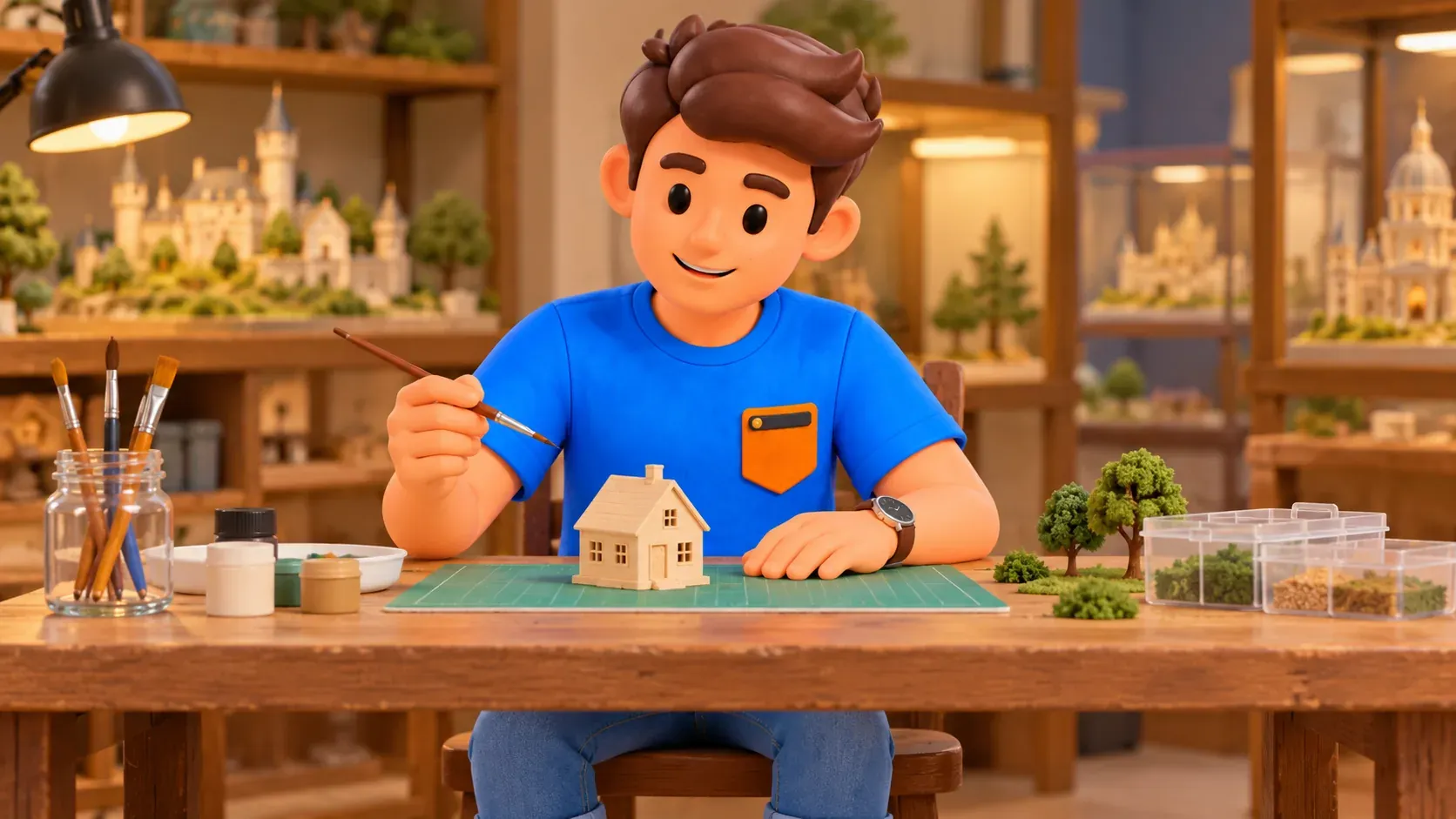
Small Worlds offers 3D figure programmes and workshops, but these are not automatically part of general entry. Check price, age conditions, availability, booking and time required. In an October notice, the operator warned about production lead times for figures. Do not promise to collect a finished miniature of yourself immediately after scanning that same day. Commissioning an item and having the completed object in hand are different stages.
If you choose a programme, shorten something else. Waiting, registration, participation and later delivery cannot be added invisibly on top of two substantial museum visits. Explain to your child what happens today and what occurs later. When arrangements are unsuitable, ordinary miniature viewing remains an independent experience. A personalised purchase is unnecessary for the day to feel complete or to have provided enough value.
Use RoadMe to develop a personal programme in which science, miniatures and rest receive time according to your interests. The app helps prepare the right intensity for a family day, giving an important activity a real place rather than adding it to an already full list.

Finish without compulsory Odaiba
Cafe use and exhibition entry have different conditions. Small Worlds generally restricts outside food and drinks; check special arrangements in advance, particularly for allergies. Do not assume you can picnic beside any miniature. If using the cafe, check its actual hours and queue. If food is needed sooner, handle that before the main visit rather than when a child has reached complete exhaustion.
For the finish, choose Ariake Tennis no Mori, Kokusai-tenjijo or another suitable connection according to the actual route. Leave time for the exit and final walk to the platform. Do not automatically add Odaiba because the broader waterfront has a shared reputation. It is a separate plan with its own changing access conditions, and two museums, food and connections may already fill the family's available energy.
If one venue is closed, keep the other and rest as a shorter working version rather than promising an unchanged full day. One clear scientific idea and a few little scenes genuinely observed together are enough for a good result. A calm return is part of the programme, not empty time remaining after every possible marker has been completed.


