
Amsterdam remembrance walk: Dam, the Names Memorial and the Resistance Museum
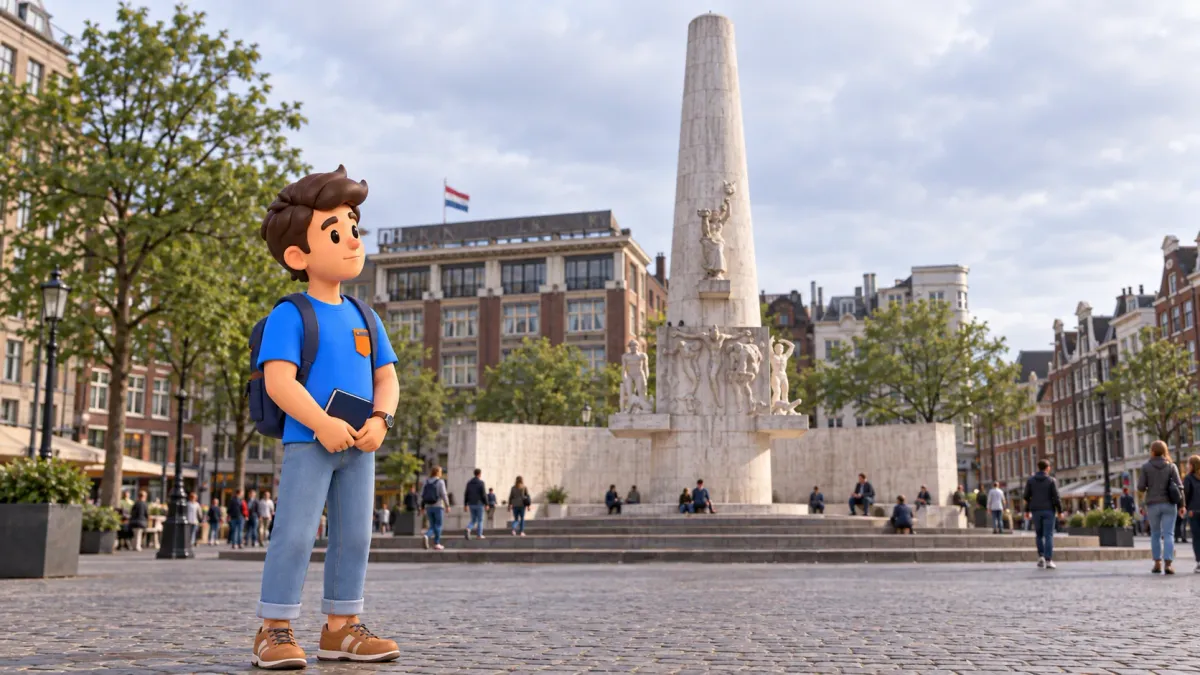
Amsterdam's wartime history belongs to several kinds of place. A national monument brings remembrance into a busy public square. A memorial restores individual names to people murdered in the Holocaust. A museum explains the pressures and choices of life under occupation. This walk connects those three perspectives without treating them as interchangeable attractions. It gives each stop a purpose and leaves a deliberate break before the longest visit. You can follow the plan independently, while allowing more time wherever a particular story deserves your attention.
Allow about four and a half hours, from 10:00 to 14:30. The itinerary includes the National Monument on Dam Square, the National Holocaust Names Memorial and one paid visit to the Dutch Resistance Museum. It does not include Anne Frank House or the National Holocaust Museum, which are separate institutions with their own admission arrangements. Travel to the starting point, a full lunch and your journey after the museum sit outside this schedule. The walking allowances are estimates rather than measured journey times.
Give the subject room in your day
Choose this itinerary when you can give remembrance a substantial part of the day. Three carefully considered stops are enough; adding every nearby wartime site would change the character and duration of the walk. If travelling together, agree beforehand that people may want to read, speak or remain quiet at different moments. There is no required emotional response and no need to read every panel to make a visit worthwhile. A comfortable shared pace matters more than completing a list as quickly as possible.
Try RoadMe for a fully developed personal trip plan shaped around your interests and preferred pace. The app makes it much easier to organise meaningful visits, walking time and proper breaks into a coherent day.
The standard plan assumes an ordinary visiting day, without a ceremony affecting access to Dam Square. Check the current museum calendar before choosing your date: the Resistance Museum normally opens daily from 10:00 to 17:00, but closes on 1 January, 27 April and 25 December. On 4 May, national remembrance on Dam Square has its own programme and access arrangements. Do not apply this ordinary morning schedule to the ceremony itself or assume the same freedom to move around the monument.
10:00: the National Monument on Dam Square
Begin at the National Monument, the pale column and sculptural ensemble on Dam Square. Allow around 25 minutes to look at the whole setting before examining individual figures. The square carries on around it: people cross towards shops, trams and other appointments. That contrast is part of what makes this starting point useful. National remembrance is present within everyday urban life. You do not have to remove the movement of the city from view to understand that the monument has a different purpose from its surroundings.
Unveiled on 4 May 1956, the monument was designed by architect J. J. P. Oud, with sculpture by John Rädecker and reliefs by Paul Grégoire. Its pale stone is travertine. The figures and composition address suffering, resistance, peace and new life. These themes allow a first reading without turning the stop into a detailed lesson in every symbol. Notice how the column, sculpture and surrounding wall form a single ensemble, rather than looking only for the most familiar frontal photograph.
The monument is associated with Dutch national remembrance of the Second World War and the annual commemoration on 4 May. It is not a wall listing Holocaust victims, and its national role should not be confused with the more individual focus of the next stop. Keep that distinction in mind as you leave. One place can hold a shared public act of remembering, while another directs attention to the particular person behind a name. The route gains meaning from that change in scale.
Walk to the Names Memorial
Leave about 40 minutes for the walk towards the National Holocaust Names Memorial beside Weesperstraat. Use public streets and a current pedestrian map, allowing for crossings and other people. For this direction of approach, the entrance by Nieuwe Herengracht is a useful destination to locate. The memorial also has entrances by Nieuwe Keizersgracht and Hoftuin. A street address alone is less helpful than identifying the entrance you intend to use; do not assume a line on a map runs through an open gate.
The two canal entrances open from 08:00 to 20:00 between 1 October and 31 March, and from 08:00 to 21:00 between 1 April and 30 September. These are calendar periods, not a rule based on the exact day the clocks change. Entry is free, but the site is not open around the clock. The proposed late-morning visit falls comfortably within either seasonal timetable. Check any temporary visitor notice before travelling, especially if remembrance rather than a general city walk is the main reason for your visit.
11:05: individual names and shared history
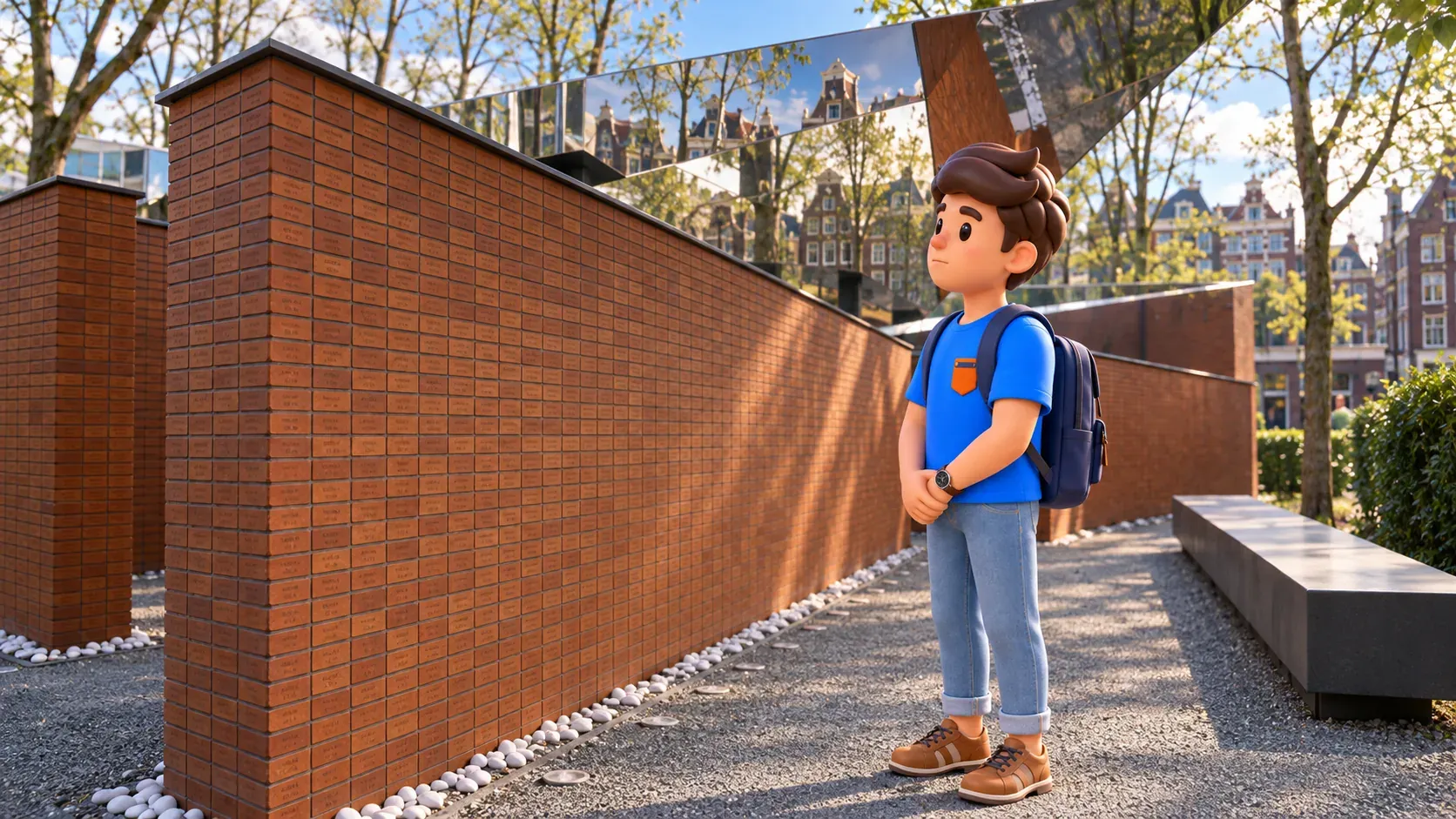
Allow about 35 minutes at the Names Memorial. Designed by Daniel Libeskind, it commemorates more than 102,000 Jewish, Sinti and Roma Holocaust victims connected with the Netherlands who have no known grave. Its scope extends beyond Amsterdam. Equally, it is not a list of everyone who died in the Second World War. The red brick walls and reflective elements create a powerful setting, but the individual names remain the essential reason to stop. Architecture supports remembrance here rather than replacing the lives it concerns.
There is no practical or respectful expectation that you will read every wall. Walk slowly through the accessible area, stop at a few names and allow their individuality to register. If looking for someone specific, prepare beforehand: the memorial provides a name-location search through its visitor information and QR codes. That may require more time than this introductory visit allows. Avoid inventing a biography from a name, a date or an impression. Where a life is unfamiliar, further understanding comes from records and reliable historical research.
Keep conversations quiet and give space to people visiting a particular name. A photograph should not interrupt someone else's remembrance or turn a private moment into part of your composition. Taking no pictures is also a complete way of visiting. The allotted time is an aid to planning, not a limit on attention. If a member of your party needs longer, reconsider the remaining schedule together. It is better to make that decision consciously than to hurry someone away because the next time on the page has arrived.
A break before the museum
After leaving, reserve 25 minutes for a short personal break outside the memorial. You might drink some water, sit where appropriate or decide together whether to continue. This interval deliberately contains no additional attraction. A particular café, table or available seat is not guaranteed, and a full meal requires longer. Keeping the break separate from the memorial also respects the different uses of those spaces. It gives the next part of the itinerary a clearer beginning, rather than carrying the timetable straight from a wall of names into an exhibition.
Then allow about 25 minutes to reach the Dutch Resistance Museum at Plantage Kerklaan 61. The plan places arrival at approximately 12:30. This is a separate museum visit with its own admission; proximity to other institutions does not create a combined ticket. If you decide to shorten the day after the memorial, that is a reasonable change to make. If continuing, keep the museum's two-hour allowance intact where possible, rather than spending the break adding another stop and arriving with too little time to read.
12:30: the Dutch Resistance Museum
The Dutch Resistance Museum explores the occupation of the Netherlands by Nazi Germany from May 1940 to May 1945, including persecution, resistance and the choices people faced. Personal stories make the subject more complex than a sequence of famous names or heroic moments. Ask what information someone had, what pressures shaped a decision and what consequences followed. Objects, documents and testimony help connect broad events with everyday circumstances. The exhibition supplies that historical context; this itinerary helps you give it a meaningful place within your visit to Amsterdam.
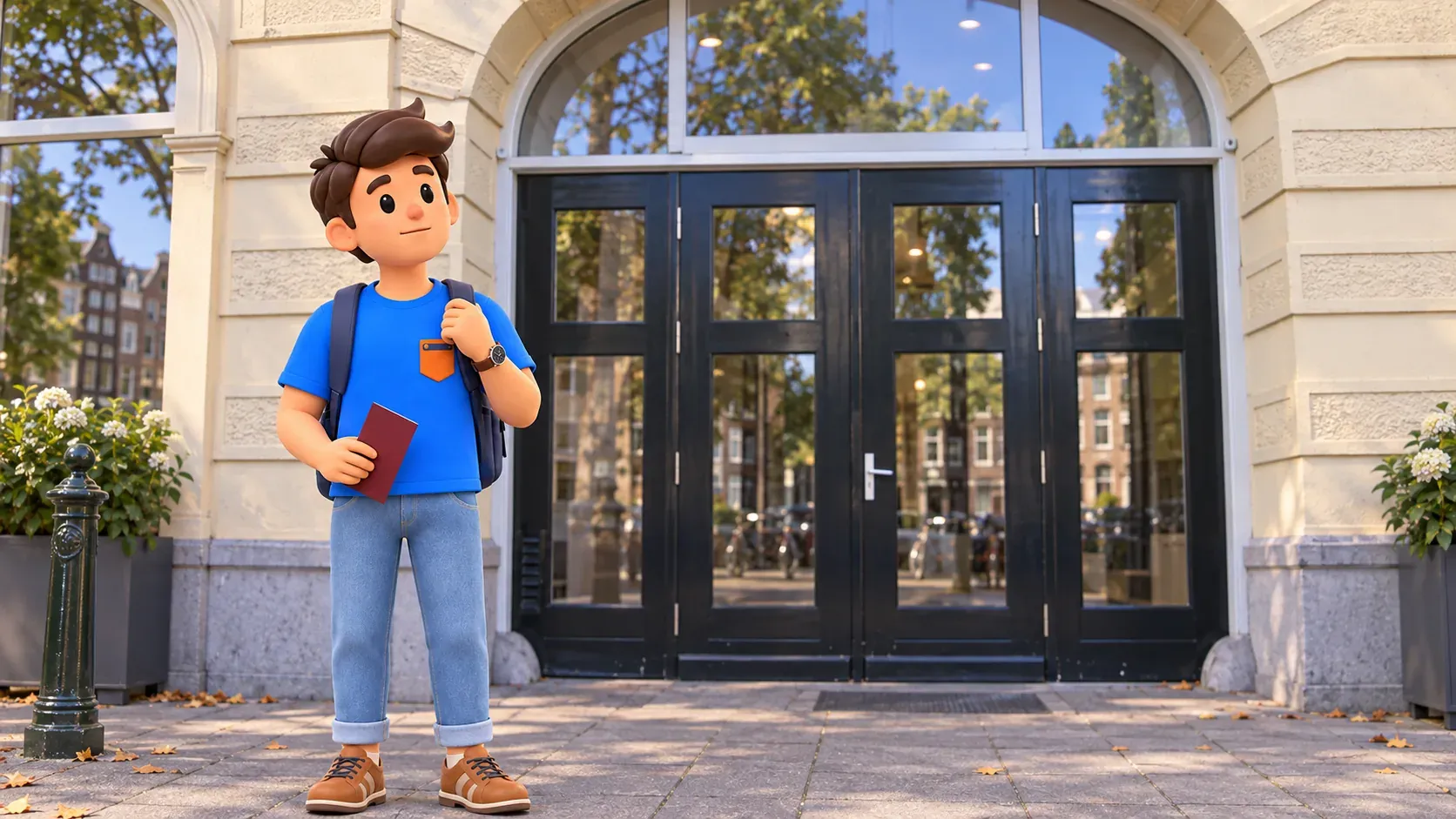
Allow two hours for an initial visit. That is our planning allowance, not a fixed guided-tour duration or a promise that everyone will finish at the same speed. Choose a few stories to follow closely rather than giving every display identical attention. Standard admission is paid, with tickets available online or at the museum under its current conditions. An audio guide is included and available in English, French, German and Spanish, among other languages. Choose a language you understand before starting, rather than assuming every translation is available.
For access requirements, consult the museum's detailed visitor information and contact it about your particular needs. The presence of an accessible entrance does not establish that every feature of the building or the entire street route will suit everyone equally. The museum does not advertise a dedicated low-stimulation room or special quiet visiting hours. Avoid treating an ordinary weekday as a guarantee of a quiet exhibition. If travelling with children or anyone unfamiliar with the subject, consider the content and their interests when deciding how much of the exhibition to cover.
Finish with time to reflect
The main programme ends at around 14:30. Lunch, further reading or a return to your accommodation can follow at your own pace. There is no obligation to attach another emotionally demanding museum visit to the afternoon. A useful way to finish is to note one question you want to explore, or the title of a source you encountered in the exhibition. That gives your interest somewhere to go without pretending that one morning can explain the whole history of occupation, persecution and resistance in the city.

With RoadMe, planning the whole trip around your interests becomes much more convenient and effective. Try a personal plan in the app to give substantial historical visits the time they need alongside the walks and breaks that suit you.
For a different day in the same district, consider our green half-day walk in Plantage. Today's route has its own complete sequence: public remembrance on Dam Square, individual names at the memorial and personal decisions explored in the museum. It offers enough practical structure to make those differences visible, while leaving the detailed historical interpretation to the places themselves. The most useful result is not a larger collection of stops, but a clearer understanding of why these three deserve their own time.


