
A flower-themed Amsterdam walk: Tulip Museum, Bloemenmarkt and Hortus
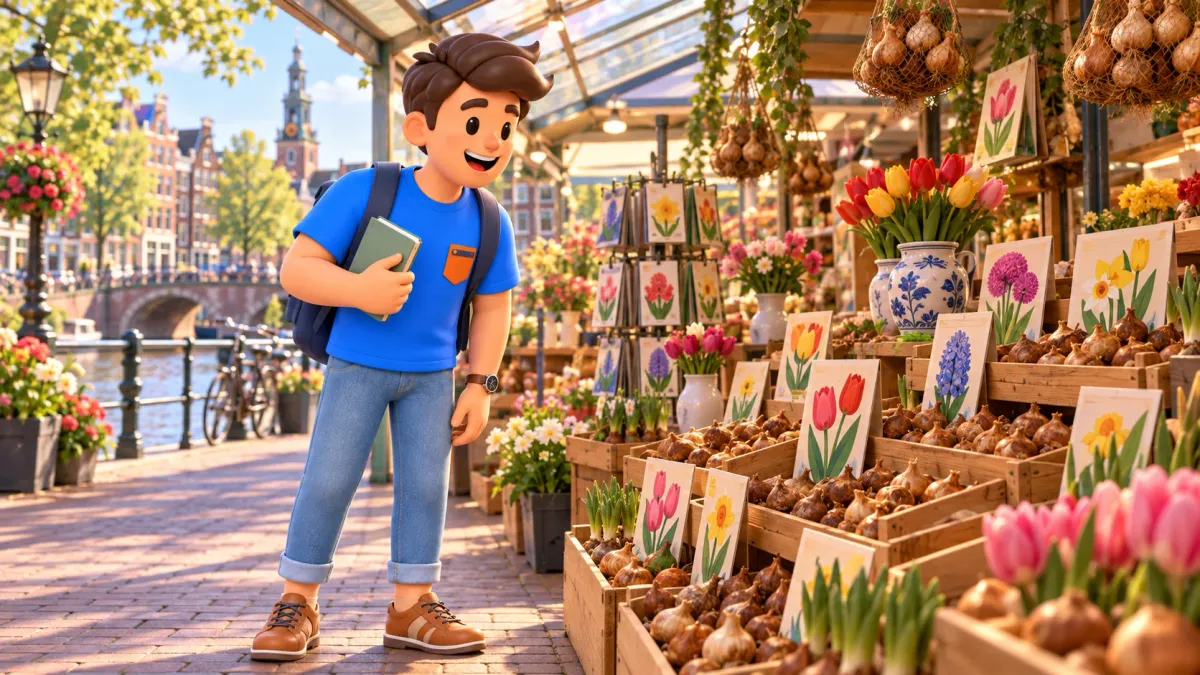
You can explore Amsterdam’s flower connections without leaving the city. Three quite different places provide a thread: Amsterdam Tulip Museum on Prinsengracht, the Bloemenmarkt trading pavilions on Singel and Hortus Botanicus in Plantage. The first introduces a familiar cultural symbol, the second shows its place in urban retail, and the third expands the subject into living plants and their environments. Together they give a walk a clear progression: learn, compare, then observe a living collection. This is an outing for curious visitors, rather than a promise of tulips in full bloom all year.
Allow around five hours, from 10:00 to 15:00, on an ordinary day without holiday changes. Start at the tulip museum, walk to the market and finish at Hortus. Walking between the stops is roughly 3–4 km by our estimate, with garden walking additional; this is not a measured track. Travel from your accommodation to the start, your return and a long lunch are outside the five hours. A short pause is included, and two hours go to the garden. That leaves room to find something interesting without immediately abandoning it to complete another compulsory attraction.
Choose a flower story that interests you
Several threads can carry the day. One visitor may enjoy a flower becoming a cultural symbol; another may prefer shop displays; a third may be interested in contrasting plants inside greenhouses. Discuss your interests before leaving. The museum offers interpretation, the market offers goods and an urban setting, and the garden offers living forms. Those changes help maintain attention without making the entire outing a succession of similar bouquet photographs beside different canals.
Try RoadMe for a complete personal route or trip plan built around your interests and pace. The app makes it much more convenient to connect gardens, small museums, walks and rest into a suitable programme for your whole journey.
If flowering fields are the main objective, choose a season and a separate excursion beyond the city. This walk serves another purpose: discovering Amsterdam’s floral connections within the city itself. A retail market is not a field, and a botanical garden does not promise tulip beds in flower whenever you visit. Understanding that makes the outing worthwhile beyond a springtime image. You can discover history in the museum, compare flower imagery in trading displays and find living plants according to the garden’s actual season and conditions. None of the three places needs to provide precisely the same experience.
Five hours from Prinsengracht to Plantage
Use this outline: 10:00–10:45 for the tulip museum, including entry; 10:45–11:25 for the walk to Bloemenmarkt; 11:25–12:00 for a short market stop. Then allow thirty minutes for rest or a simple snack, until 12:30. Keep the next half-hour for reaching Hortus, followed by 13:00–15:00 in the garden. The blocks total 45 + 40 + 35 + 30 + 30 + 120 minutes: five hours. They indicate the day’s scale rather than guaranteeing queues, road crossings or serving times. If one section grows, deliberately give it more time instead of expecting the rest to become instantaneous.
From Prinsengracht 116, use available public streets via Westermarkt and Raadhuisstraat towards Singel, then follow the canal south towards Koningsplein and the trading pavilions. Afterwards continue from Muntplein beside the Amstel towards Blauwbrug, then through Waterlooplein and Mr. Visserplein towards Plantage Middenlaan 2A. This is a general sequence of directions, not guidance for every turn. Use current navigation and permitted pedestrian crossings. Street works may change the approach, while an attractive private passage is not a shortcut. Buildings encountered along the way are context, without additional interior visits concealed inside the walking allowances.
Amsterdam Tulip Museum: context before the shop windows
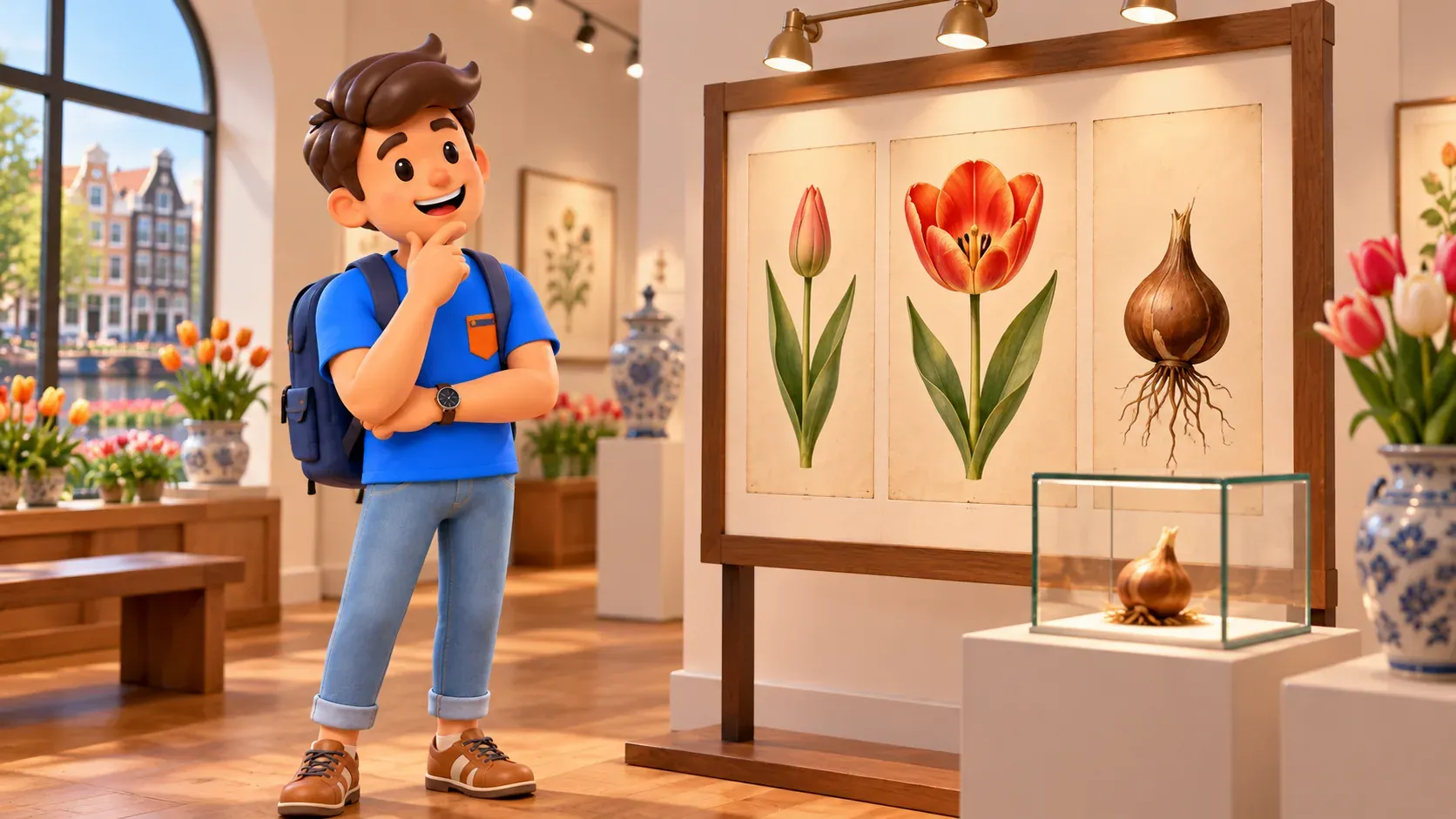
Amsterdam Tulip Museum explores the tulip’s journey towards a significant place in Dutch culture. Themes include its Ottoman history, arrival in the Netherlands, trade and Tulipmania, followed by cultivation. A little context can change how you view the familiar souvenir image afterwards. Behind a convenient emblem are interests in unusual forms, growers’ work and the movement of knowledge between places. You do not need to memorise a complete chronology. Take one question into the walk: why has this particular shape become so recognisable and so easy to reproduce? The answer can develop as you encounter different ways of presenting it.
The address is Prinsengracht 116. Ordinary opening is daily, 10:00–18:00, with closures listed for 27 April and 25 December. This is a separate ticketed visit; check current admission and your date before setting out. Forty-five minutes is our allowance including entry, not a stay limit. Watching all the films and reading more closely may require longer. In that case, reduce the shopping section or extend the outing. An interesting historical visit should not be compensated for by rushing through the garden you selected as the afternoon’s main destination. Choose which experience deserves the extra attention.
The shop beside the exhibition and the museum itself contribute different things. You can look at souvenirs with the same interest in form: how does a flower become a pattern, a silhouette or an object? However, a display of goods does not replace the exhibition’s account. If history is the reason for coming, include entry to the museum area. Accessibility also needs a prior decision: the official FAQ says the historic canal-side building is not equipped for wheelchair visits. Neither its small scale nor its central position establishes an accessible entrance. Contact the museum about any personal requirements before making it an essential stop.
Let the walk change the pace
Leaving the museum provides a useful shift from information to observation. Look for one plant-related motif in something publicly visible, perhaps a shop window, a pattern or a small item you are carrying. This is an attention prompt, not a promised detail on every facade. There is no compulsory correct discovery. Water, bridges and ordinary streets provide a change of air after an interior. The forty-minute approach includes finding your way and brief pauses. If a canal view deserves longer, take time from browsing rather than hurrying road crossings or removing the allowance needed to enter the next main visit.
Bloemenmarkt: flowers in city trading
Bloemenmarkt consists of waterside trading pavilions on Singel. Approach its flower theme through bulbs, plant images and souvenirs rather than expecting agricultural rows of blooming tulips. Actual stock depends on the shop and season. The description “floating market” does not turn this stop into a boat trip: the plan involves browsing on foot. Thirty-five minutes allows a brief introduction without a compulsory purchase. If choosing goods is important, add time deliberately. Otherwise an unplanned shopping session can reduce the substantial garden finish to a hurried visit late in the day, despite having started with plenty of time.
Compare two or three displays. Where does colour lead, where does the flower’s outline matter, and where does repetition of similar packaging create the effect? That retail imagery becomes more interesting after a museum introduction. A packet’s picture is not a plant currently flowering in front of you. Avoid judging the outing against a vivid spring photograph from someone else’s trip; start with what is actually displayed today. Ask the seller about a particular item when needed. A walking article cannot replace its specific description. Leaving without a purchase is perfectly compatible with enjoying the stop and continuing towards a living collection.
The city tourism resource describes the market as daily, but that does not establish identical hours for each pavilion. Check an individual shop when a particular purchase matters. This plan puts the stop towards midday, after the museum, rather than early in the morning. Do not turn a general calendar into a promise that a specific door opens on a holiday. If trading is closed or holds little interest, keep the public canal walk and a longer pause. Our comparison of Amsterdam markets helps with other formats on another day; it is not a list of extra stops for this route.
Keep the pause before the garden
The 12:00–12:30 block is for rest or a simple snack at a place you choose. Thirty minutes does not promise a restaurant meal involving a wait for a table and several courses. Extend the programme for a longer lunch, or give it time from an earlier section. The following thirty minutes are for approaching the garden. Water, a bridge and city streets remain part of that journey, so this is not a fully covered itinerary. In rain, shorten outdoor observations and decide whether two separate paid visits with walks between them still suit you. Greenhouses do not remove the need to travel between addresses.
Hortus: look beyond a single flower
Hortus began in 1638 as a medicinal garden where physicians and apothecaries studied plants. That background changes the question from why a flower became a symbol to how people developed knowledge about plants. Today a living collection continues to change. Choose a few contrasts rather than trying to cover everything: broad and small leaves, different outlines, or relationships with light. These are prompts for your own attention, not an examination in botanical names. The two-hour block includes entry and a considered introduction. It does not promise every corner, a detailed guided tour and a meal inside the same allowance.
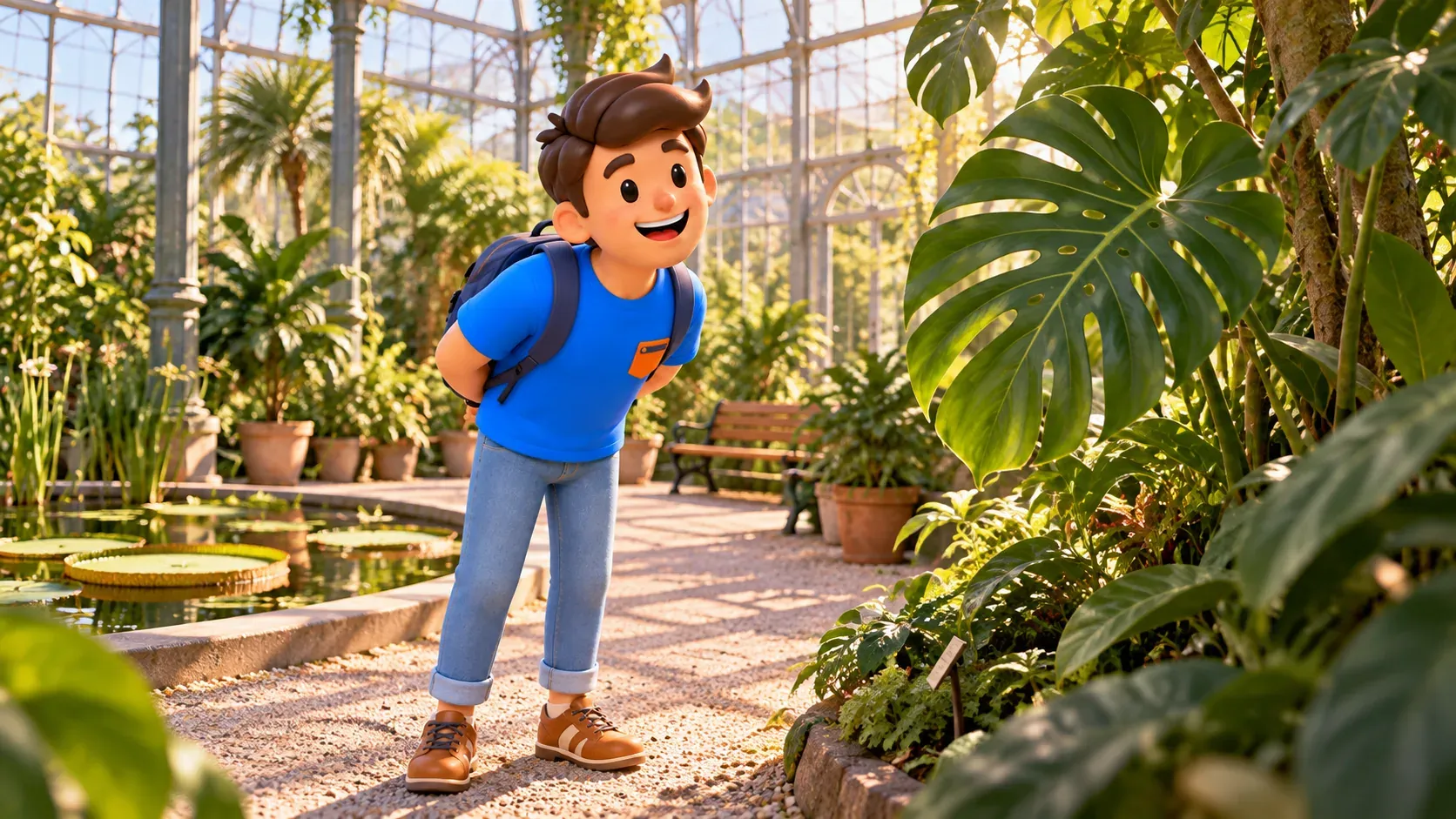
Climate House, renovated in 2025, explores climate and biodiversity through jungle, desert and South African landscapes. Compare plants responding to different conditions without requiring every area to supply abundant flowers. A leaf, stem or way of occupying space can hold attention. That broadens the subject with which the day began. Outdoors, look at available seasonal planting; inside, explore environmental contrasts. An old account of building work should not automatically be treated as a current closure. Use the garden’s latest information for your date, and let the actual collection guide your visit rather than reconstructing another visitor’s photograph plant by plant.
Before entering Hortus
The address is Plantage Middenlaan 2A. Ordinary hours are daily, 10:00–17:00, with closures on 25 December and 1 January. A valid ticket is required; Museumkaart is not accepted, and payment at Hortus is by card. Oranjerie café is accessible only with garden admission. Large travel backpacks and suitcases are not permitted, and there are no lockers or storage facilities. Arrange luggage elsewhere after hotel checkout. Stay on designated paths and do not pick plants. Access varies: Climate House has automatic doors, other greenhouses have thresholds, and garden paths are gravel. The complete city walk has not been verified as step-free.

With RoadMe, get a personal plan for the whole trip combining gardens, history, walks and rest. Try the app for a much more convenient and effective way to distribute favourite themes across your days at a pace that suits you.
For a two- or three-hour outing, choose the museum with a short walk, or Hortus with its approach. Our green Plantage walk helps with the latter choice; do not add its complete programme to these five hours. If a paid attraction is closed, keep the available part and move the main visit to another date. This route has a coherent purpose without buying a bouquet: a plant becomes history, a product, an image and a subject of study. After the garden, leave room for the impression you enjoyed most instead of automatically adding another compulsory address before returning.


