
Amsterdam courtyards and passages: a quiet two-hour walk

Sometimes an Amsterdam day needs a change of scale rather than another major museum: an old gateway, a smaller courtyard and time to slow down. A walk from Oudemanhuispoort to the Begijnhof, including an exterior look at the Houten Huys, offers that change in roughly two hours. Its subject is the way spaces connect. A few steps can shift your view from a street running past façades to a passage leading inward, then to houses arranged around a more enclosed setting.
The suggested plan runs from 11:00 to 13:00. Visit the parts of both historic settings that are open to guests, then take your personal break outside the residential Begijnhof, towards Spui. Quiet describes the pace and manner of this walk, not a guarantee that nobody else will be there. These are places with continuing everyday uses. A short, attentive visit can be more rewarding than waiting for a perfectly empty postcard view, especially when that expectation turns a pleasant stop into a prolonged exercise in finding the right photograph.
A small route with a clear theme
This walk fits between other plans or after a busy part of a trip. It does not require the energy of a long museum exhibition, yet has a subject of its own. At Oudemanhuispoort, notice the gateway, passage and shop cupboards. At the Begijnhof, look at the arrangement of buildings and the variety of façades. At the Houten Huys, compare timber with neighbouring brick. The three places in the inventory occupy two settings; a neighbouring frontage is not presented as a separate long journey or a full interior visit.
Try RoadMe for a fully developed personal route or trip plan shaped around your interests, dates and pace. The app makes it much easier to combine quieter walks with museums, food and rest in a coherent programme for each day.
Come independently or with a small party comfortable with a quiet conversation. Save lengthy explanations for outside the residential court. Choose one interest, such as gateways, materials or changing views, without treating every turn as a compulsory discovery.
Two hours from passage to courtyard
Begin at Oudemanhuispoort at 11:00, allowing half an hour for the accessible gateway, passage and any operating booksellers. From 11:30 to 11:50, follow public streets towards the Begijnhof visitor entrance at Gedempte Begijnensloot, in the continuation of Begijnensteeg. The next 30 minutes cover the whole courtyard visit, including the Houten Huys exterior and departure through the same gate. Allow 12:20–12:30 for the public-street approach towards Spui, followed by a short personal break outside the court until 13:00.
These are estimated allowances rather than a measured track. Use a current map for public routes and crossings. A library, museum, church interiors, full lunch and travel to the start are additional activities. Your onward journey after the finish also needs its own plan. The final pause can be a short drink at an available place or another suitable rest; it does not promise a particular free table. Keeping some space at the end makes the walk comfortable if a crossing or a busy gateway takes longer than expected.
Monday to Saturday is preferable if browsing the passage’s booksellers appeals, although every seller is not guaranteed to operate. The Begijnhof owner currently gives daily visitor hours of 10:00–18:00, including holidays except 27 April, when it closes to tourists. Check the date and access notices before setting out. Do not seek extra quiet by coming outside opening hours. If one setting is unavailable, shorten the route while keeping the pause, rather than looking for an improvised route through another door or somebody else’s premises.
Oudemanhuispoort: notice the transition
Pause on the public side of the old gateway. Consider how a modest opening can suggest an entirely different scale behind the surrounding street façades. Decoration above the entrance is only part of the interest. On a street, your eye usually travels along a line of buildings; at a gateway it moves into depth. That change makes a passage appealing before you know its history. It is a useful first observation for the walk, allowing architecture to explain something through its arrangement rather than relying on a long account of dates.
The complex has served several purposes. A home for older men and women opened here in 1602. During eighteenth-century alterations, a corridor along the southern façade became a covered gallery with shop cupboards. The university began using the complex in 1880. The setting was therefore not designed once as a visitor attraction and then left unchanged. Bookselling is one way to encounter its continuing life, rather than evidence that all the surrounding buildings are now open for a public tour of rooms and staircases.
If the passage is accessible, walk through without blocking others. It links Oudezijds Achterburgwal and Kloveniersburgwal. Stop at an operating seller for cover design, prints or sheet music according to the actual stock. On this route, the space matters more than a purchase; a few details are enough to make the stop worthwhile. Half an hour can reveal how a narrow covered trading gallery differs from a wider street of shopfronts, even when the amount of selling activity is modest on the day you happen to visit.
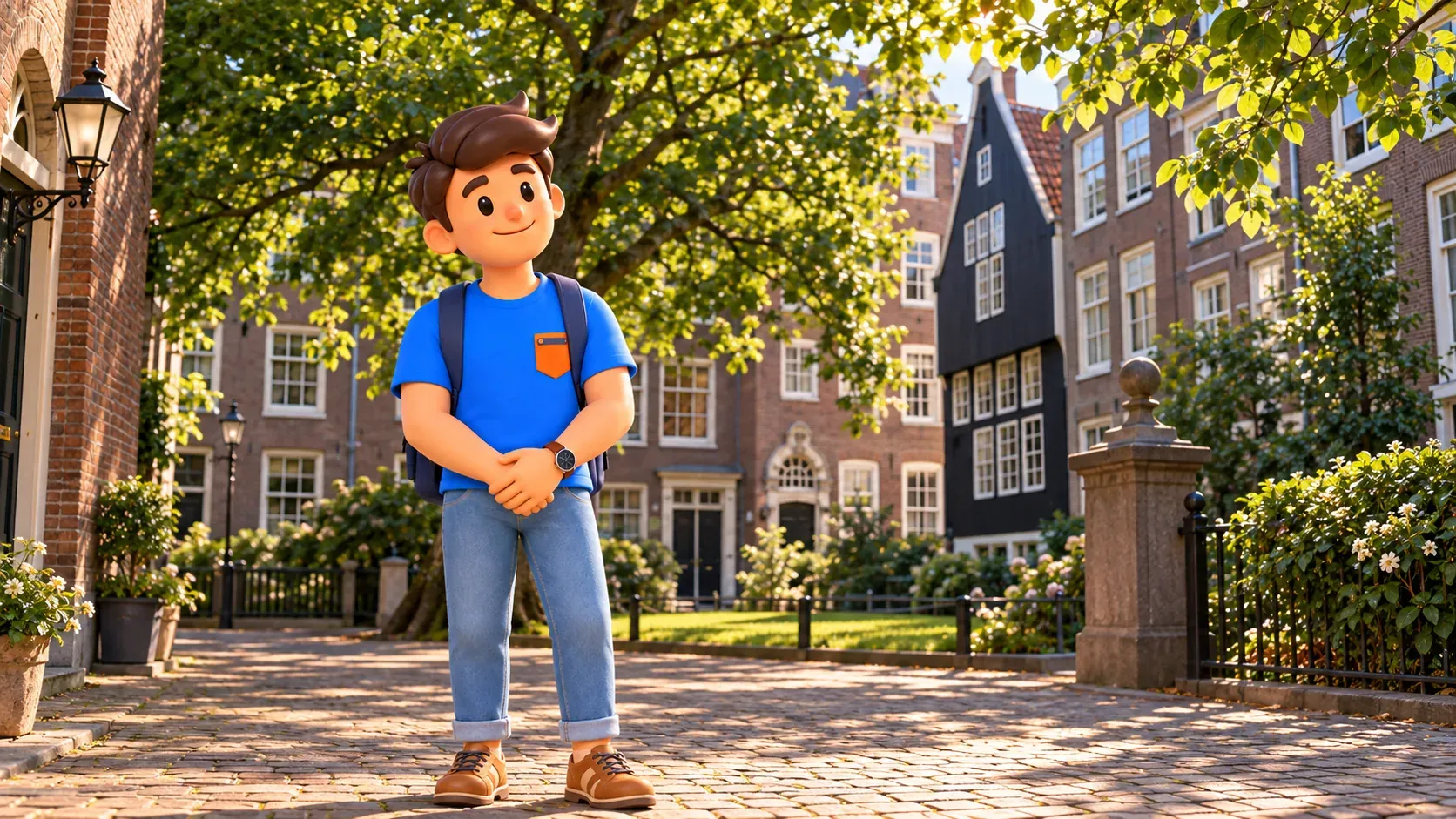
The university is preparing renewal, with its published programme placing the main construction works in 2028–2030. That does not mean everything is already closed now, nor does it remove the possibility of local restrictions. University services and temporary student housing use parts of the complex. Follow current signs and do not use closed buildings as a shortcut. If you cannot enter the gateway, look from the available public side and continue. The route retains its idea without requiring entry into every historic space along the way.
Reaching the correct Begijnhof entrance
Follow public streets towards Gedempte Begijnensloot by Begijnensteeg, checking the approach on a current map. An administrative address, chapel address and visitor gateway are different things. Current arrangements direct tourists in and out through the same gate on the Begijnensteeg side. Do not build the ordinary visitor route around the older Spui gate. The sequence then stays clear: approach the correct entrance, visit the permitted part of the court, return to that entrance and take your refreshment break afterwards in public surroundings outside.
The connection is a small part of the programme. Notice how the busier street feels before the enclosed court. Read current gateway instructions before entering, then concentrate on the permitted visitor space rather than searching for hidden doors or shortcuts.
Begijnhof: an old community in a living court
The Begijnhof has medieval roots: its first mention dates to 1307, while the exact foundation date is unknown. It was associated with beguines, religious women whose community should not automatically be equated with a conventional convent of nuns. The last beguine died in 1971, but residential life continues. This connection between past and present matters more than the idea of a completely frozen medieval scene. Many visible façades belong to later centuries, showing a city shaped by accumulated changes rather than a single year preserved in its entirety.
Look at how houses, trees, paving and smaller spaces frame the view. There is no need to study every window. Choose a couple of broad details: different roofline shapes, for instance, or the contrast of brick and dark timber. That gives a sense of the setting without making residents’ everyday lives the subject of observation. Avoid intrusive photographs of people and do not approach private doors or gardens for an angle. The permitted visitor area already provides enough material for understanding the courtyard’s arrangement during a brief visit.
The rules shape the kind of pause possible here. Eating and drinking are not allowed, nor are bicycles, dogs or wheeled suitcases. Guests may enter only the designated visitor area. Hosts supervise at busier times and weekends; follow their instructions. Save coffee, snacks and extended discussion for outside the gates. The Begijnhof is a residential setting rather than a picnic park. Its quieter atmosphere depends partly on how guests use the space, and a little consideration makes the visit more comfortable for the people who live there as well as other visitors.
Houten Huys: a timber façade within the same visit
The Houten Huys is at Begijnhof 34 and belongs within the same half-hour stop. View it from permitted visitor space. Its dark timber frontage and steep triangular upper shape contrast with neighbouring brick, while pale window frames make the proportions easy to follow. Compare the effect of the materials rather than searching for an interior entrance. A small house can change the impression of a whole row through that contrast. You do not need to turn this into a long separate stop or wait for every other visitor to disappear from the frame.
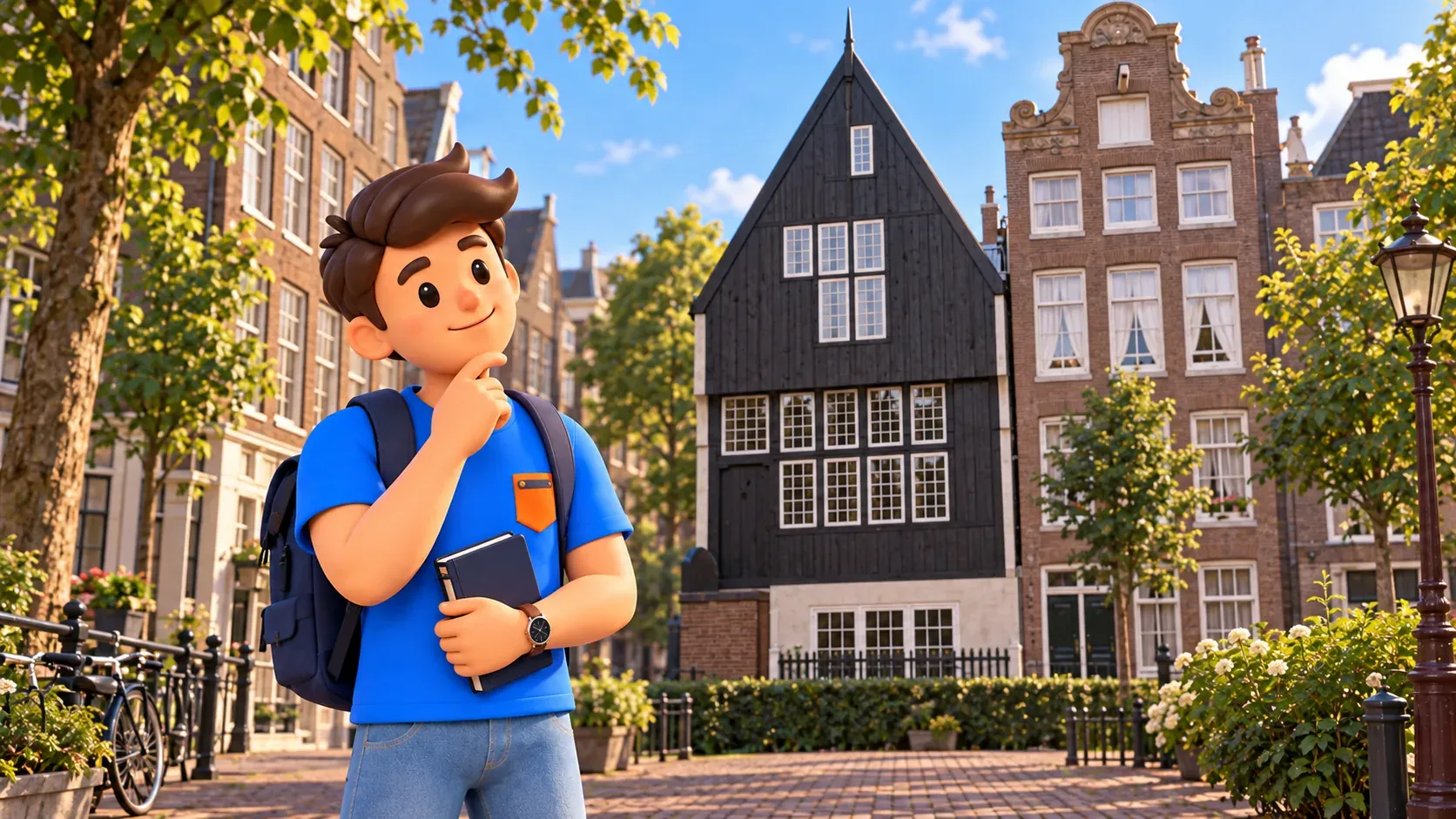
It is an old timber-framed house with a history of restoration. Published dates differ, so the useful question for this walk is what you can see, rather than which building wins a claim to be the oldest. Do not assume the present surface has remained untouched since construction. Like other long-lived houses, it has changed and survived through the work of successive generations. That brief thought adds more substance to an exterior view than an impressive date which does not explain what is original, altered or restored in front of you.
Return calmly to the same exit. Church and chapel interiors have separate arrangements and are not included automatically. One clear observation is enough; outside, ordinary conversation and the concluding break can resume without asking the residential court to serve every visitor need.
A pause after the gate
Continue on public streets towards Spui and choose an available place for a short rest. Here you can have a drink or discuss the visit outside the courtyard’s restrictions. Half an hour does not guarantee a full lunch including ordering and waiting; finish the walk and give lunch separate time if you need it. A purchase is optional if another suitable permitted place to pause is available. The aim is a comfortable ending, rather than filling the last minute with another attraction simply because the rest of the programme has finished.

With RoadMe, it is much easier to turn your preferred walking pace into a personal plan for the whole trip, with interesting places, culture and proper breaks. Try the app to bring each day together around your interests without assembling every part of the programme yourself.
If the books in the old passage were the strongest attraction, choose the bookish route with OBA and the Multatuli Museum on another day. Today’s walk has a different purpose: showing how a few steps between street, passage and courtyard change your experience of central Amsterdam. Two settings and one contrasting timber façade are enough. You do not need a growing collection of secret places. A considered pause and a handful of observations can make the city feel closer while leaving energy for the rest of your trip.


