
Amsterdam for cat lovers: the Catboat, canals and KattenKabinet
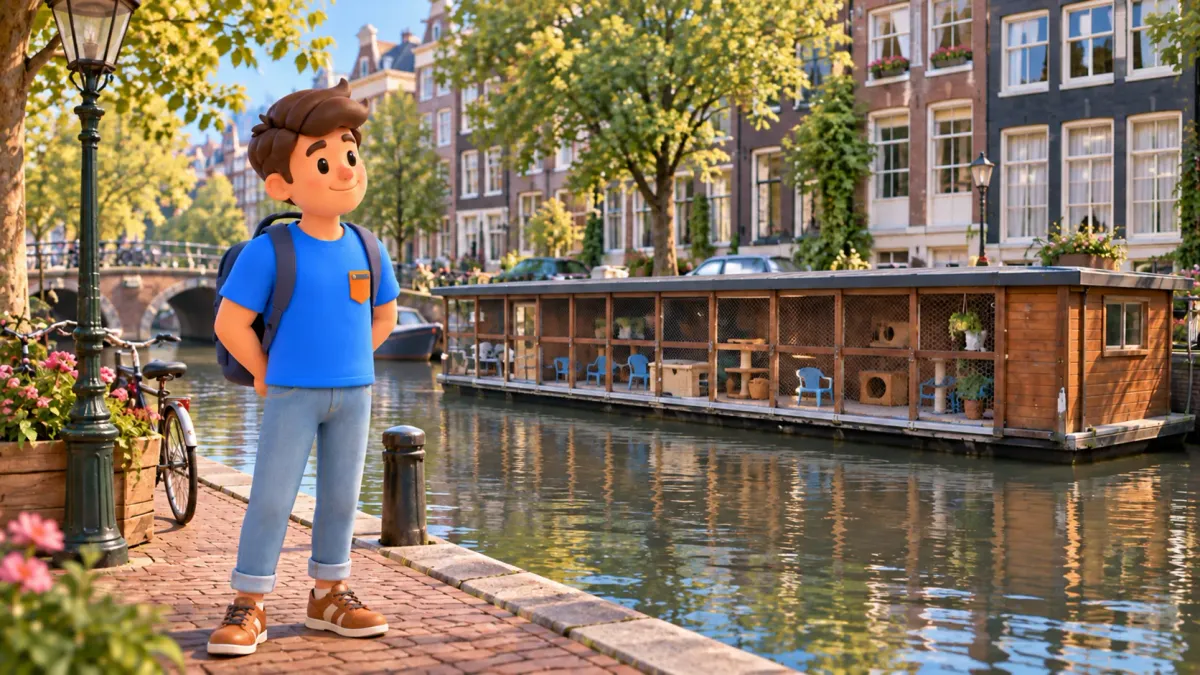
Amsterdam for cat lovers has two quite different sides. On the Singel, De Poezenboot is a floating shelter whose main purpose is animal care. On the Herengracht, KattenKabinet is an art museum where cats appear in images, sculpture and other works. A canal walk can connect them, provided you begin with the calendar and the shelter’s limited visiting arrangements. The result is a small themed outing: a living city project, a walk through the centre and art featuring a familiar subject. You do not need an exhaustive list of feline addresses or a promised encounter with a particular animal at every stop.
Allow around three hours, from 13:00 to 16:00, on an ordinary Tuesday, Friday or Saturday. Start with the shelter because its visitor hours are much narrower, then walk to KattenKabinet and finish with a museum visit. Shelter admission is not guaranteed even during opening hours: capacity is limited and waiting, or being unable to enter, is possible. The museum and walk therefore remain the independent foundation of the programme. The first visit depends on the actual opportunity. This keeps the afternoon worthwhile if the shelter stop is shorter than expected or cannot happen, without turning the entire outing into a search for another live-cat encounter.
Decide which experience interests you
A shelter and an art museum do different things. On the boat, you encounter a place helping cats; in the museum, you explore how people see and represent them. If art matters most, KattenKabinet can be the only main visit. If a city animal-care project interests you, begin with De Poezenboot’s current conditions. Loving cats does not require equal enthusiasm for both formats. Discuss it with companions: one may prefer pictures, another the shelter’s story, while someone else simply wants a canal walk and an unusual museum. Knowing this first makes it easier to adjust the afternoon without disappointing a promise the place never made.
Try RoadMe for a fully developed personal route or trip plan shaped around your interests and pace. The app makes it much more convenient to combine unusual museums, canal walks and other activities into a suitable programme for your whole journey.
Avoid building expectations around compulsory petting or a photograph together. A cat may be resting, out of sight or uninterested in contact. At the shelter, visitors enter a working care environment rather than a performance. A live cat in the museum, if encountered, also does not replace its artistic content. This outlook makes it easier to enjoy what is actually available. Choose a subject instead of counting encounters: cats as neighbours, artistic figures or the starting point for an urban charitable project. That thread can connect different parts of the walk without needing every venue to provide a hands-on animal experience.
Three hours from Singel to Herengracht
Keep 13:00–14:00 for De Poezenboot at Singel 38G. This block includes orientation, possible waiting and a short visit if staff can admit you. It does not promise an hour inside or an hour interacting with cats. If no queue delays you, leave the spare time for walking. If admission would take too long, move onwards no later than 14:00. The museum remains a separate experience, not a reward that depends on gaining entry to the boat. If the wait would disrupt the rest of the afternoon, keep the walk and museum rather than stretching the first block indefinitely.
Allow forty minutes until 14:40 for the public walk along Singel towards Koningsplein, followed by available pedestrian approaches to Herengracht 497. Expect roughly two kilometres depending on approaches and crossings; this is an estimate rather than a measured track. The next twenty minutes provide a short pause. Visit the museum from 15:00 to 16:00. Together, that is 60 + 40 + 20 + 60 minutes. Arrival at the start, return travel and a substantial lunch are additional. Check the museum’s ticket and calendar for your date; our hour is a planning allowance, not a compulsory limit on how long visitors may stay.
De Poezenboot: animal care on water
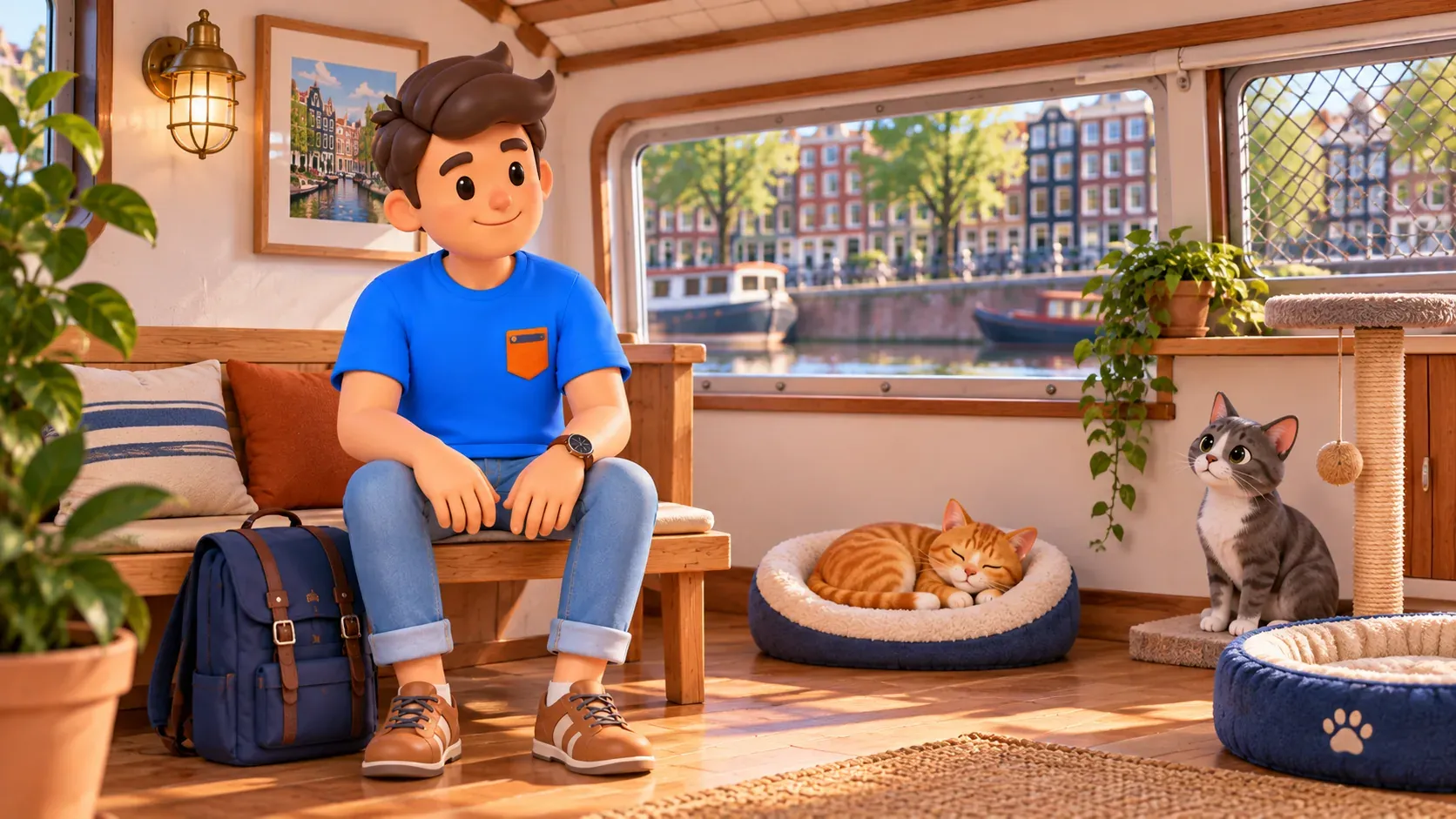
The shelter’s story began with Henriette van Weelde helping cats in 1966. The first boat for them followed in 1968. Those dates refer to different stages: the beginning of care and the first floating accommodation. Do not imagine today’s place as an unchanged vessel from that period. The important starting point is the idea of a city boat becoming a place of care. It changes a canal from a scenic background into part of ordinary work with a specific purpose. Water belongs here to the organisation of daily life, rather than only to a postcard view or a sightseeing cruise through the city.
Entry is free and a donation is voluntary. The shelter emphasises that visitor hours supplement its main work: it is not a petting zoo. Follow staff directions, remain calm and do not pick cats up. Children need an accompanying adult and the same considerate behaviour. Do not make an animal participate in a photograph. Sometimes the useful experience is simply seeing how care is organised and letting the place remain calm. Conversation and observation can matter more than obtaining a pre-imagined scene. A brief visit does not lose its meaning because a cat preferred its own activity to the interaction you had pictured beforehand.
Use current visiting information
Ordinary visitor hours are Tuesday, Friday and Saturday, 13:00–15:00. The current visiting page says online and email reservations are no longer possible. Only six visitors are admitted at a time; when very busy, you may be asked to return another day. Do not transfer an older instruction to book a slot into the present plan. Consult the shelter’s current information before leaving. Arriving early or sharing an enthusiasm for cats does not guarantee admission for everyone in your party. Limited capacity is part of this particular visit, rather than an inconvenience that a tightly written sightseeing timetable can automatically remove.
The contact page checked also announces closure from 25 December 2026 through 2 January 2027 inclusive. Ordinary hours do not apply throughout that period. The boat is not wheelchair accessible and can be difficult for people with limited mobility; consider your group’s requirements beforehand. If the visit does not suit, keep an independent walk and museum after clarifying the latter’s access. Tourist visiting hours are not for arranging an adoption: the shelter has a separate process. This programme concerns a short visitor introduction to the place’s work, rather than a pet-acquisition outing or a promise of individual animal consultation.
Ordinary Amsterdam between the addresses
You need not search for a cat in every window on the way. Notice a few broader impressions: water beside the pavement, the relationship between low boats and tall facades, reflections of neighbouring houses. Let the city exist without collecting many additional attractions between the two main addresses. Our separate guide to life on Amsterdam’s water explains why a floating home, a museum boat and a vessel offering a journey are different experiences. It does not add another compulsory stop. It supplies context for what you may already encounter along the canal, without expecting private residents to explain their own homes.
Keep private entrances and residential windows private. Curiosity about cats does not make somebody’s apartment an exhibition. Public space is sufficient for observing facades; our guide to Amsterdam’s house details offers questions to take along. Here, those remain optional. Once the main visits are chosen, the walk may simply provide a change of pace. You do not need to stop in every street for another historical account. Preserve the pause and museum arrival, especially if the first block required waiting. A gentle transition can connect the experiences more pleasantly than an attempt to make every metre contain one more attraction or story.
KattenKabinet: when the cat becomes an artistic subject
Bob Meijer founded KattenKabinet in 1990 in memory of his ginger cat, John Pierpont Morgan. A personal story became the starting point for a museum devoted to feline imagery. Look beyond recognising a favourite animal towards comparing ways of representing it. The collection page presents different forms, from drawing and painting to sculpture and posters. Choose several works and consider where the cat appears as an independent figure, part of a domestic scene or an expressive graphic shape. You need not know every artist beforehand. The familiar subject gives you a clear way into the art without removing the pleasure of discovering particular works in person.
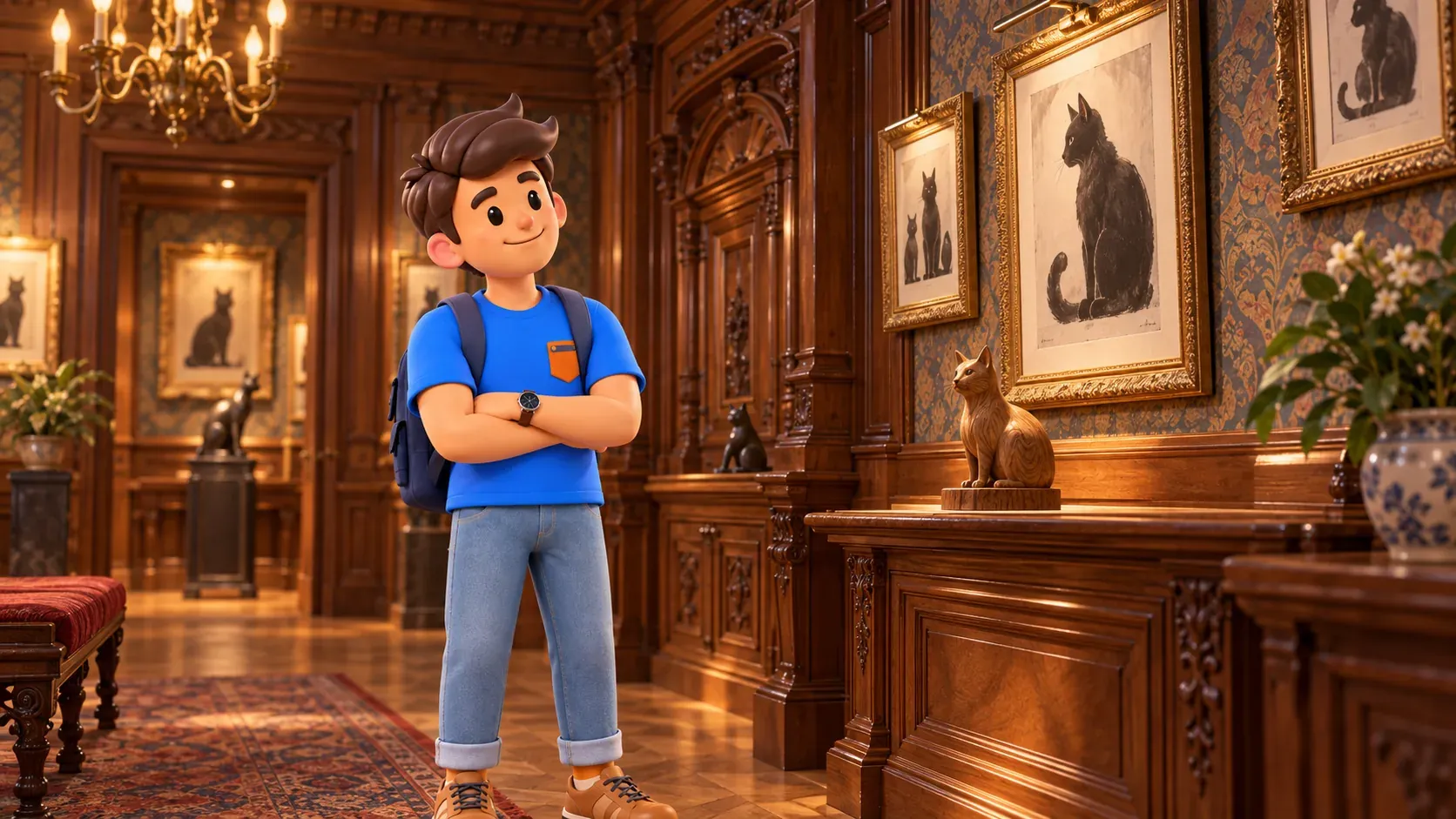
Look at posture, the line of the back, direction of a gaze and position within the composition. A calm silhouette and energetic line can communicate differently about a similar animal. Compare a flat image with a three-dimensional work: what does the artist emphasise or leave aside? These are observation prompts rather than a decoding of the full display. Leave room for discovery. Two or three comparisons can make a satisfying visit without memorising every object. If one subject appeals, stay with it; a shared theme does not require equal attention to all the surrounding works or a complete account of their makers before you leave.

Treat the museum as its own visit
The address is Herengracht 497, with ordinary hours Tuesday–Sunday, 12:00–17:00. The museum requires separate admission; free entry to the shelter does not extend to this part of the afternoon. Museumkaart is not valid here. Check the chosen ticket’s current conditions, holiday calendar and any access needs beforehand. A small historic building is not automatically convenient for every visitor. Contact the museum if access matters. Live cats may be encountered, but art remains the main subject. Expecting guaranteed interaction can distract from the collection and from the individual attention you might otherwise give to several works that catch your interest.
If the boat is closed or staff cannot admit visitors, the museum remains worthwhile. Make it the main experience and shorten the programme to a walk and one cultural stop. Monday does not fit the museum’s ordinary schedule either; choose another day if you want both addresses. Do not promise yourself the full route on any date. Recognising calendar limits beforehand is more useful than trying to correct them with extra travel afterwards. Spare time can remain for rest. It need not automatically become another cat cafe, guided tour or museum in an unfamiliar district simply because the first visit was unavailable.
In RoadMe, getting a personal plan for the whole trip is more convenient and effective, combining unusual interests with walks, culture and rest. Try the app to distribute these outings across your days at a suitable pace while leaving room for other experiences.
This outing is memorable for more than how many cats you saw. Its interest lies in the transition between care for living animals, ordinary canal life and artistic representation. On the boat, respect its capacity and calm; along the way, observe the city; in the museum, bring your own eye to the works. Choose both places or only one if that suits the day. A small subject can still give the afternoon coherence. Afterwards, a familiar feline outline in a poster or painting may look different, while Amsterdam opens through a specific human interest without needing to cover every unusual address in one visit.


