
Alserkal Avenue in Three Hours: A First Visit to Dubai’s Art District
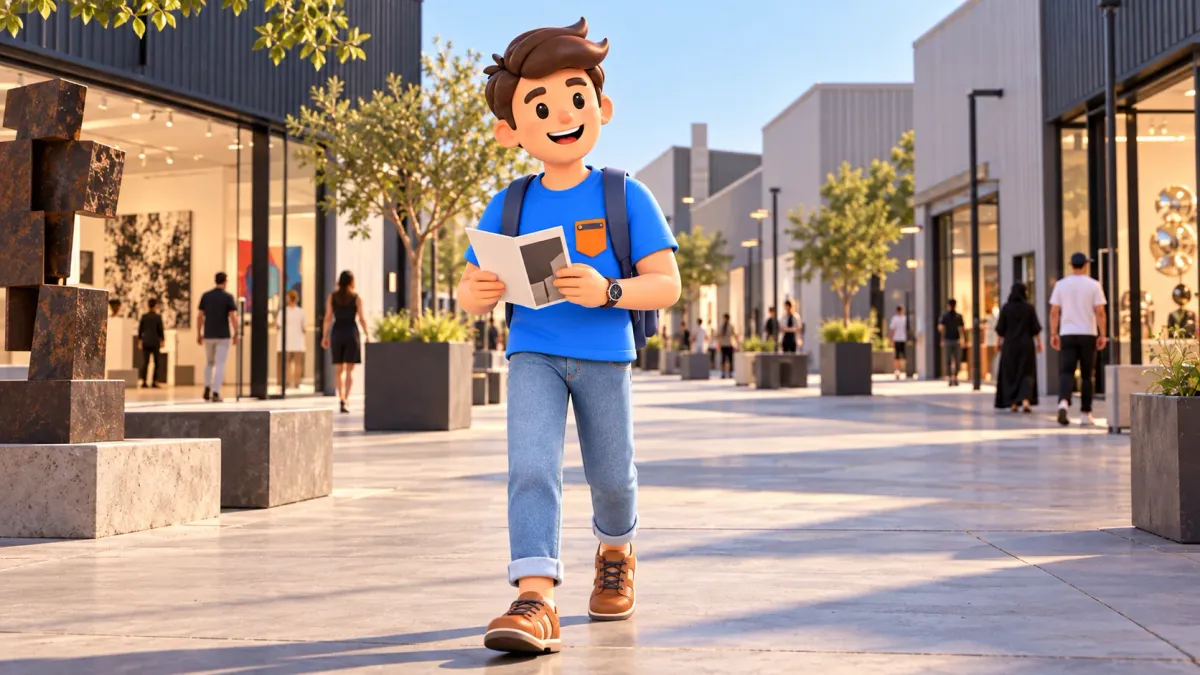
Alserkal Avenue offers a different scale from Dubai's tower districts. Here, broad warehouse volumes, gallery doors and spaces between buildings matter more than a distant skyline. The point of a first visit is not to enter every address. It is to see how an industrial setting becomes a place for looking, making and discussing art.
For about three hours, keep one clear sequence: an architectural introduction at Concrete, two exhibitions chosen for their actual programmes and a pause. The duration is an editorial estimate, adjusted to current access, your arrival and attention. A particularly strong exhibition can change the balance. The best version leaves room for that response instead of assigning equal minutes to every room.
Choose the current exhibitions before the gallery names
RoadMe can create a personal route or complete Dubai trip around your interests, dates and pace. Prepare Alserkal in the app: connecting exhibitions, architecture and time to rest is much more convenient than coordinating several separate lists of art spaces.
Begin with the programmes available on your date. The Third Line, Green Art Gallery and CARBON 12 provide different possible starting points, but their names do not describe one permanent display. Read the actual exhibition descriptions and choose two that make an interesting pair. The content should lead the route, rather than the wish to tick every familiar name.
Pick one main exhibition and one complement. A contrast might come from different materials, a focused presentation by one artist or a question you have not considered before. Two rooms with similar subjects may also work if you enjoy comparing approaches. There is no universal pair that remains the best choice through every change of programme.
Keep Concrete as an architectural part of the visit, with interior access depending on what is actually offered. It is an adaptable venue, not a promise of the same exhibition at every arrival. Check its current arrangements alongside your gallery choices. That lets the forecourt and exterior contribute to the plan without inventing an available event.
As a rough balance, give a first block to orientation and architecture, the largest share to your exhibitions and a real period to rest and discuss. Add the actual movements between them. Three hours are not three hours of uninterrupted viewing. Arrival, entrances and choosing where to stop all belong to the experience.
Let the warehouse setting become visible
Before entering the first room, look at the scale of the surrounding buildings. Broad industrial volumes create a different relationship between height, width and the person walking. A gallery may have a large opening but a small interior presentation; another can use the room's depth or height. The older spatial character remains useful even when the function changes.
Look at the spaces between venues as well. A cultural district is not made only by its individual interiors. Doorways, courts and shared routes allow people to move from one programme to another. Choosing a manageable circuit makes those links part of the visit rather than treating them as empty gaps between the important objects.
This is a setting within Al Quoz, not a miniature version of a historic souk or a waterfront resort. Give it its own visual language: industrial surfaces, simple structures and contemporary cultural uses. The difference is part of why it belongs in a varied Dubai trip. Not every worthwhile district needs a famous tall silhouette.
Use the actual public routes and entrances. A warehouse-style door or open-looking service edge does not automatically identify a visitor entrance. Keep attention for the current organisation and save the venues you selected. This article offers the idea and priorities of a first visit; the usable plan depends on the real arrangement on the day.
Concrete: architecture that can change its boundaries
Concrete opened in 2017 as OMA's first completed building in the United Arab Emirates. The project transformed existing warehouse space into a cultural pavilion. Its main idea is flexibility: a building can change the relationship between artworks, visitors and the outside area instead of offering only one fixed sequence of rooms.
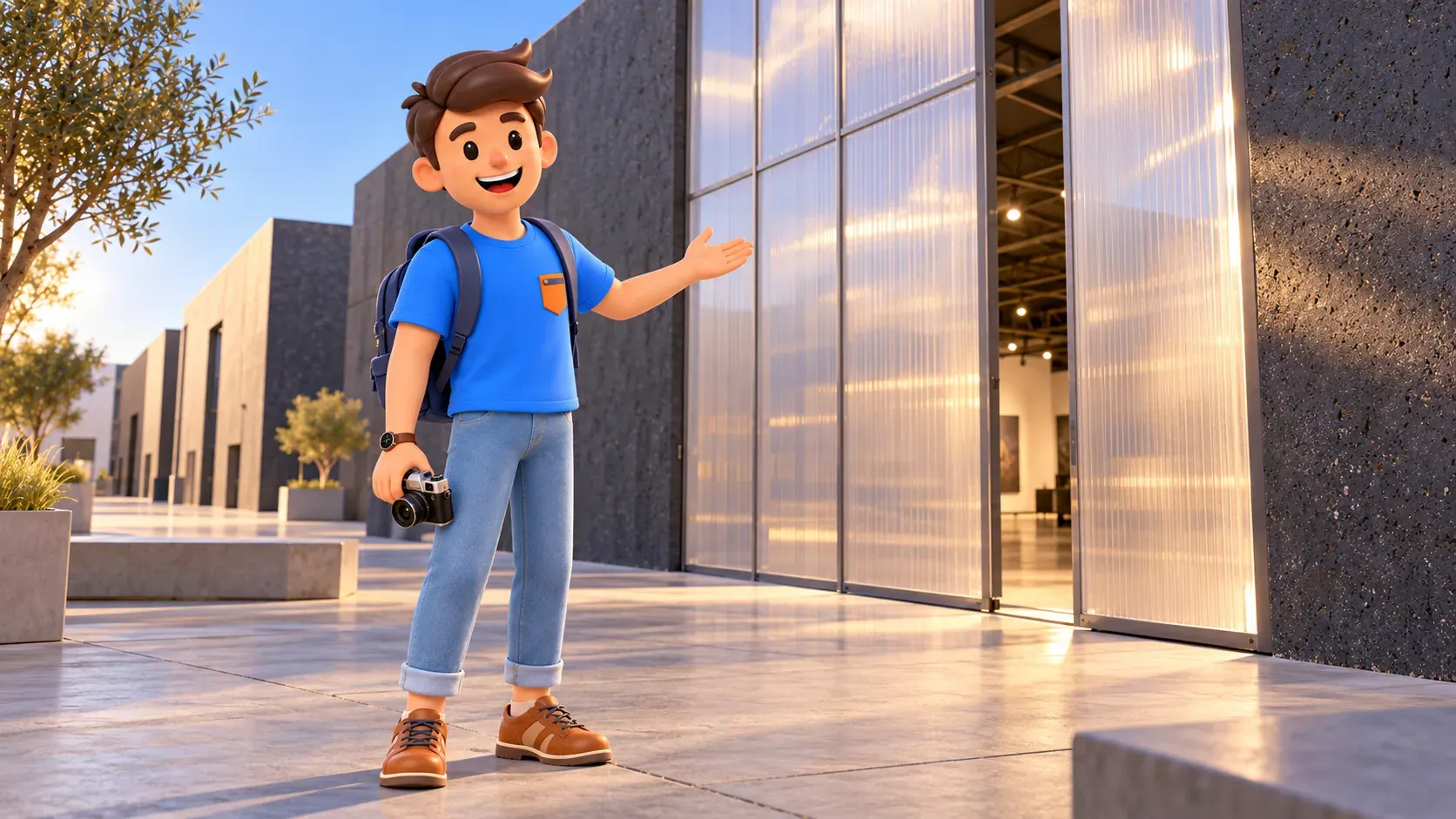
Movable internal walls allow spaces to be divided or connected. Large opening façade elements can link the interior with the forecourt. You do not need to witness every possible configuration to understand the architectural question. Look at the junction between a fixed part and a part designed to move, then imagine how a different event might use that boundary.
Materials make the contrast clearer. Translucent polycarbonate brings diffuse light to the front, while other surfaces use a rough concrete mixture with glass and mirrored fragments. The front can feel visually light, another side more textured. A slight change of position or illumination can alter what stands out without any part of the building physically moving.
The warehouse's useful qualities, including broad scale and height, are retained while flexibility is added. That is a specific way of reusing industrial architecture. The project is not simply an old shell filled with new objects. The shell itself participates in how a cultural event can be arranged and connected with the public space around it.
Choose a gallery with a story you want to follow
The Third Line was founded in Dubai in 2005 by Sunny Rahbar, Claudia Cellini and Omar Ghobash. Its history includes sustained support for contemporary artists of the region and its diasporas, as well as publishing. That background points towards art as an ongoing practice, not only the temporary contents of one room.
If its current programme becomes your main stop, choose a work and read the information that accompanies it. What question does the artist seem to be pursuing? How does the material contribute? The gallery's background can help you approach the work, but the individual artist should not disappear behind a broad regional label.
Green Art Gallery offers another possible direction. Its history connects an earlier cultural initiative in Syria with a Dubai gallery opened in 1995, followed by a later shift towards contemporary and research-based practices. This is a reminder that a cultural district contains institutions with longer stories than the particular building you enter today.
At Green Art, let the current exhibition determine your attention. You might notice the relationship between a work, its explanation and the wider subject it investigates. You do not need to know the whole institutional history. A small amount of context makes room for a better question without replacing the actual encounter with the work.
Use the second exhibition to change the question
CARBON 12, founded in Dubai in 2008 by Kourosh Nouri and Nadine Knotzer, is another possible choice. Its international approach brings different artistic practices into a shared professional setting. Select it if the current programme gives your visit a useful complement, rather than adding a third compulsory stop just because another gallery appears nearby.
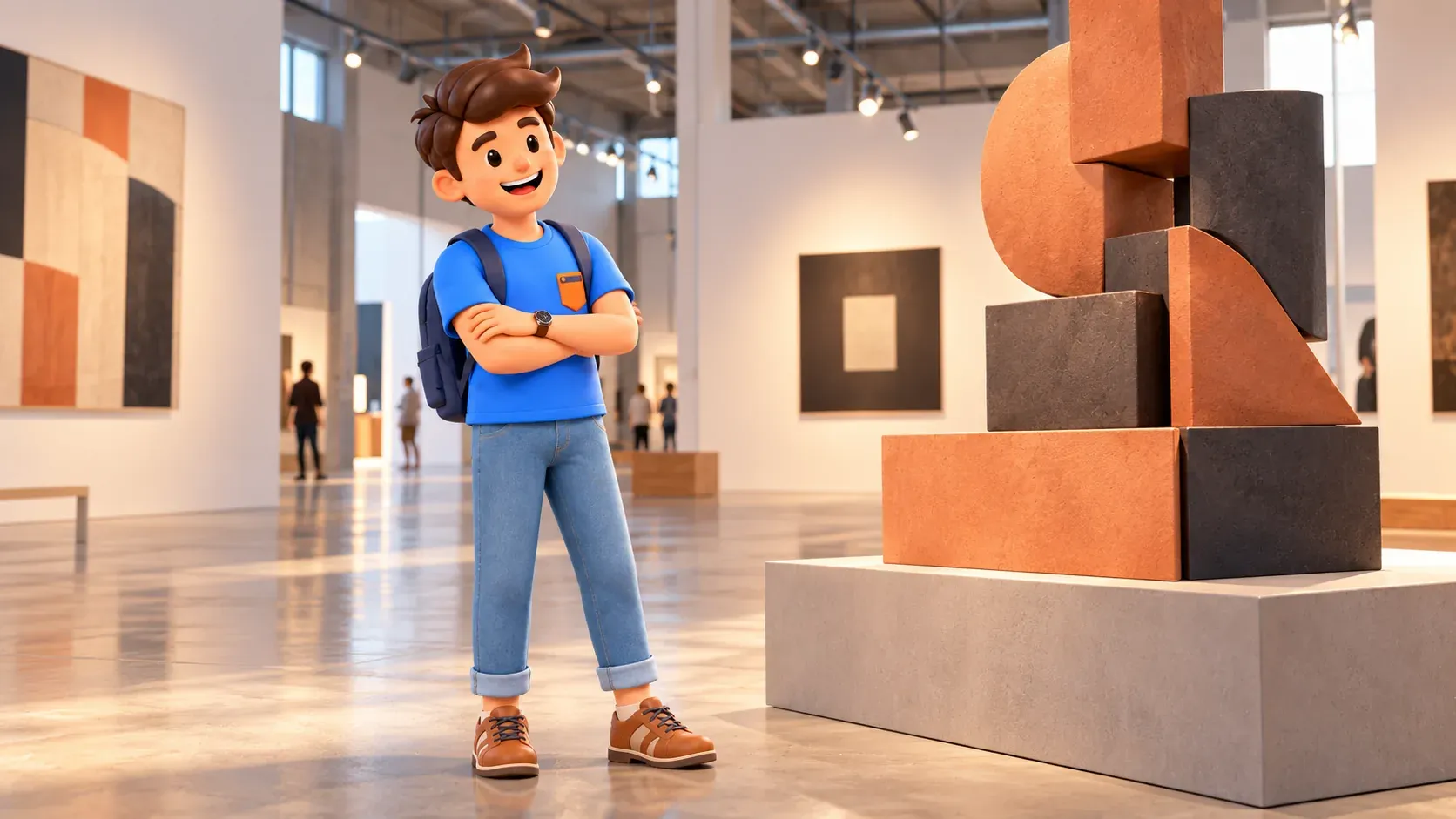
When moving between the selected exhibitions, change one question. After a room where colour carried the experience, you might pay attention to material or scale. After an installation, notice how a smaller framed work occupies a wall. The difference need not create a ranking. It can simply show that looking requires different kinds of attention.
Choose one work long enough to let the first impression develop. What do you notice after a minute that was absent at the doorway? A surface, an edge or a relation to the surrounding space can become clearer. This is a more manageable aim for a first visit than attempting an immediate interpretation of every object.
Follow the gallery's current visiting and photography arrangements. Ask staff about the presentation when appropriate, without feeling that a commercial gallery requires a buying decision. Looking and informed questions are valid parts of the experience. Give other people space and let the room's actual organisation guide where you pause.
If the second exhibition does not suit you, it is fine to shorten it. The route has a flexible shape precisely because attention is personal. Put the extra time into the first show, architecture or a pause. A good art visit is not measured by equal time at each address or by the highest count of gallery entrances.
Give the pause a subject of its own
Choose an available shaded place to sit or have a drink that fits the day. The pause is not a gap to fill immediately with another venue. It allows you to separate the architecture of the district from the works inside it. Ask which impression belonged to the building and which came from the artist's choices.

With a companion, describe one work without showing the photograph first. A colour, material or spatial relation may be enough. The other person might remember something completely different in the same room. Those differences can make a useful conversation rather than a problem to resolve. You do not need one shared favourite for the outing to feel coherent.
If you took photographs where allowed, save accurate artist and exhibition information for the small selection you want to keep. A name and a short note about why the work mattered are more useful than an unidentified image. The record can help you return to an artist later, after the immediate memory of the room has faded.
For children, keep the task modest: compare two materials or find a work that feels large even in a broad room. They do not need to produce an adult interpretation. For adults new to contemporary art, the same concrete questions can be more helpful than trying to find a hidden correct answer at every stop.
Finish with a first visit, not a complete directory
After Concrete, two chosen encounters and a pause, the three-hour plan can be complete. A separate performance, screening or other event would change the timing and the emphasis. If that is your main interest, check the actual offer and give it its own space rather than quietly adding it to an already filled first visit.
Allow the ordinary route to your next transport or meeting point. Alserkal's concentrated cultural setting can encourage one more door, but that choice should match your remaining attention. Leaving with a work or question you want to revisit can be a stronger result than reaching the end of every possible address while tired.
RoadMe can place Alserkal in a personal multi-day trip, balancing your art interests, pace and rest across Dubai. Use the app to organise the whole visit more efficiently, so gallery districts, museums and lighter days fit together without rebuilding the programme every evening.
For a contrasting gallery setting, the DIFC art walk explores culture within a business district. The three-day art-and-architecture plan spreads different places across separate days. Keep those connections as choices for the trip, leaving Alserkal time to reveal both the work and the warehouse around it.


