
After the Tretyakov: a short walk through Kadashi and Tolmachi
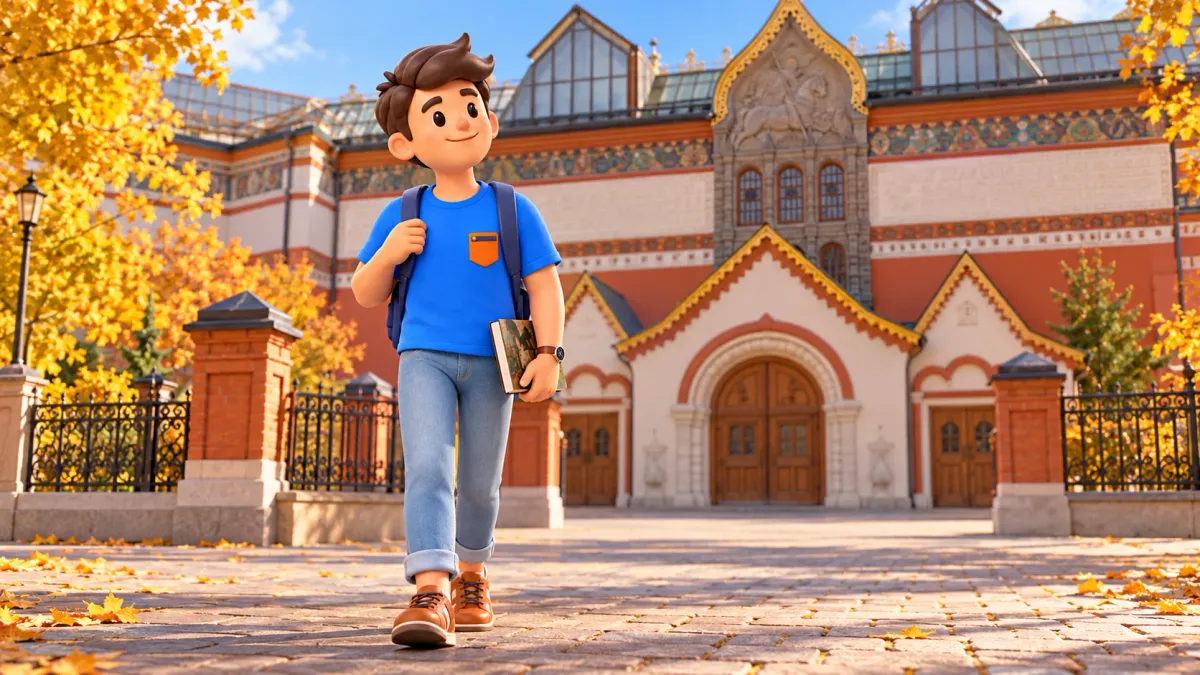
After a few hours in the Tretyakov Gallery, a short walk can be more rewarding than another major museum. Stay in the surrounding neighbourhood and let the day change pace: leave the paintings behind, look at a church silhouette, notice the scale of a lane and pause by a small public artwork. You can experience more of Moscow without immediately travelling elsewhere.
This route begins at the historic Tretyakov building in Lavrushinsky Lane, then connects Kadashi with Tolmachi. The Church of the Resurrection, St Nicholas in Tolmachi and the Inspiration fountain are the main outdoor subjects. St Clement's Church is an optional continuation. The programme is deliberately adjustable to your energy after the gallery.
First check which Tretyakov building you are leaving
The starting point is the historic gallery at 10 Lavrushinsky Lane. A visit to another Tretyakov venue does not automatically end at the beginning of this walk. Check the address on your ticket before attaching the route to your day. A museum's shared name is not a guarantee that every collection sits beside the same streets.
To make the museum and the rest of the day work around your interests and pace, try RoadMe: the app develops a personal route or trip plan for your dates. Following that programme on your phone is more convenient than assembling nearby suggestions after a tiring gallery visit.
Allow roughly an hour to an hour and a half for a selective outdoor continuation with pauses. That is an editorial estimate, not a measured walking time. A meal, church interior or longer extension needs additional time. If you have already spent longer than expected in the gallery, use the shorter Tolmachi option instead of treating every stop as compulsory.
- Begin with a pause outside the historic gallery.
- For the fuller walk, head towards Kadashi and the Resurrection Church exterior.
- Return through public lanes towards Tolmachi.
- Look at St Nicholas in Tolmachi from the available public approach.
- Pause near the Inspiration fountain, then finish or continue towards Klimentovsky Lane.
Give yourself a pause before choosing the walking version
On leaving the museum, take a few minutes to decide what you need. Food, a seat and fresh air are different things. If you are hungry, have a proper break before walking; do not assume a series of outdoor stops will restore the energy spent indoors. The route should support the museum day rather than become a second demanding programme.
Choose the fuller version if you still want to explore. Kadashi gives the walk a different beginning before returning towards Tolmachi. Choose the shorter version if you would mainly like to stretch your legs: stay around Lavrushinsky and the Tolmachi area, then decide whether one further street is appealing. Both versions can make a satisfying finish.
Agree on that choice with companions before setting off. One person may want a church exterior while another needs to sit down. A shared plan with fewer stops is often more pleasant than everyone following the longest available route at a different pace. Keep a clear time for any next appointment as well as a preferred finishing area.
Kadashi: look up and change your scale of attention
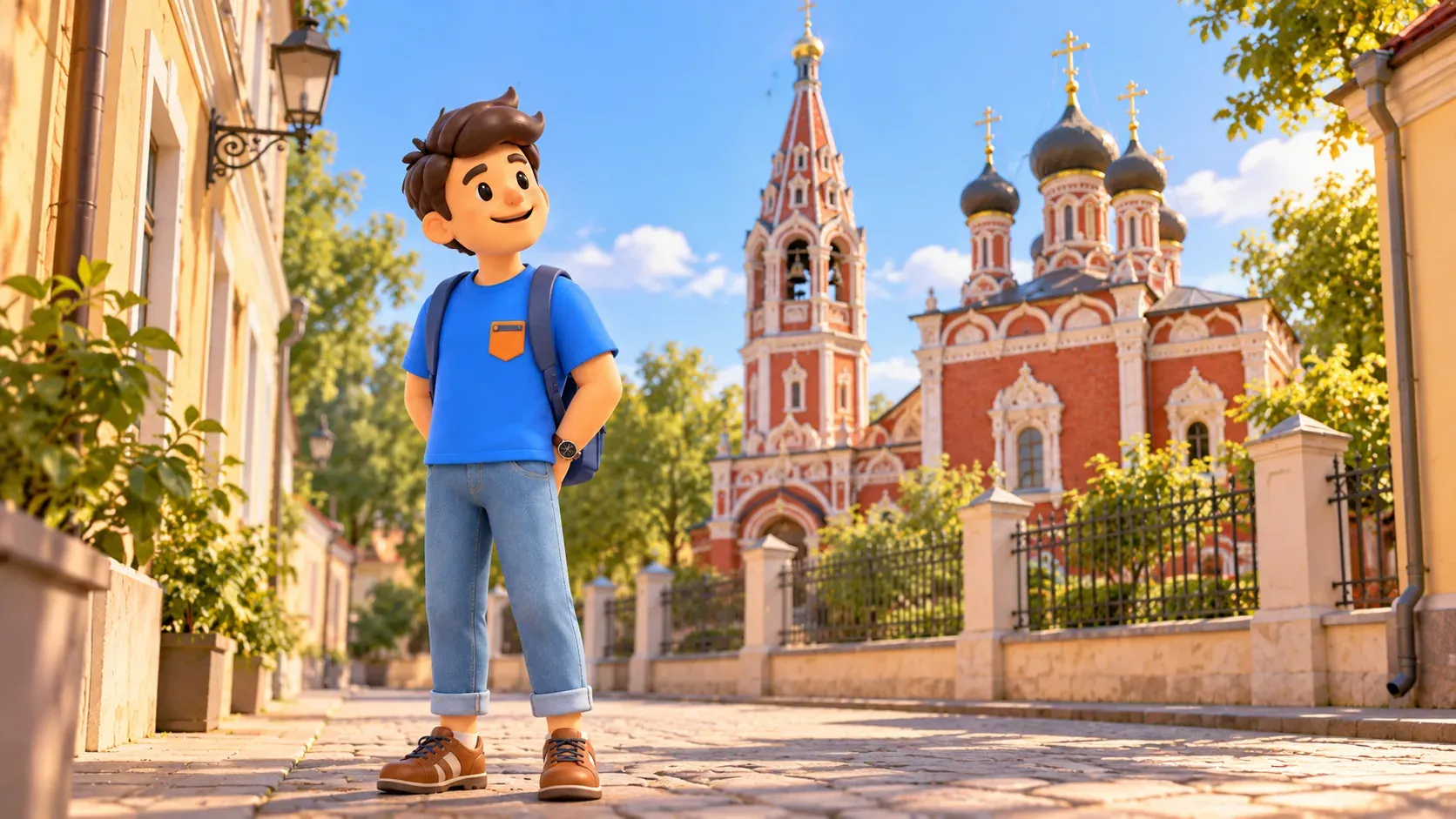
For the fuller version, make your way through the public lanes towards the Church of the Resurrection in Kadashi. Its official address is 2nd Kadashevsky Lane, 7/4, building 14. Use that as a destination reference, not a promise that every nearby opening is a public entrance or a through route to the church.
The church belongs to the late-seventeenth-century layer of the neighbourhood. For an exterior stop, notice the taller elements, the decorative rhythm and the way the silhouette appears above the surrounding streets. After looking closely at paintings, shifting attention to a whole building can be a welcome change. No detailed church-history lesson is required for that contrast to work.
Find a permitted position where you can pause without obstructing a gate or path. If you want to enter, check the current arrangements and follow the rules of an active religious site. An exterior walk does not include a guided visit, an unrestricted courtyard or a guaranteed open interior. If access is limited, keep the view from public space.
A single unhurried stop is enough here. You do not need to trace every lane around the church or seek an ideal angle inside residential passages. The point is to see how a major historical building belongs to a smaller street pattern, then move on while the neighbourhood still feels like a comfortable continuation of the gallery day.
Return towards Tolmachi through the public street network
Continue back towards the Tolmachi area using the open pedestrian routes. The walk changes direction because the two neighbourhood subjects sit on different sides of the gallery area; this is a local loop rather than a straight march to a distant destination. Accepting that shape makes more sense than trying to force a shortcut through a closed passage.
Use this section to notice the scale of houses and the gaps between them. The experience outside the gallery need not contain the same density of information as the exhibition. One doorway, a view along a lane and a change in frontage may be enough. Let the street offer a slower rhythm rather than searching constantly for the next label.
If the weather has turned or your energy has dropped, shorten the loop at this point. It is reasonable to finish after Kadashi and a rest. Alternatively, continue only to the fountain area and leave any interior for another day. A flexible route means making these decisions while there is still time to enjoy the remaining part.
St Nicholas in Tolmachi: separate the exterior from the museum-church
St Nicholas in Tolmachi is both an active church and a museum-church associated with the Tretyakov Gallery. The operator gives its address as 9 Maly Tolmachevsky Lane. This dual role is useful context, but it also means an interior visit cannot be assumed to follow the same schedule as the gallery you have just left.
At the time of checking, the museum-church's listed visiting window is Tuesday to Sunday from noon to 4 pm, with Monday closed. The historic gallery has a later visiting day, so an afternoon or evening exit from its rooms may already be too late for the church interior. Check the current date-specific arrangements before building a visit around it.
For this route, the dependable core is the exterior and its relationship to the nearby museum buildings. If the interior is a priority, plan it earlier as part of the museum day, using the operator's current admission instructions. Do not assume that a nearby door or a ticket to a particular exhibition answers every question about entry.
Keep the outdoor pause respectful and compact. Services and museum visits have different purposes, and neither should be treated as a shortcut to a photograph. If you enter under the appropriate conditions, allow a real visit and adjust the remaining walk. If you stay outside, the neighbourhood sequence remains complete.
The Inspiration fountain: a small link back to art
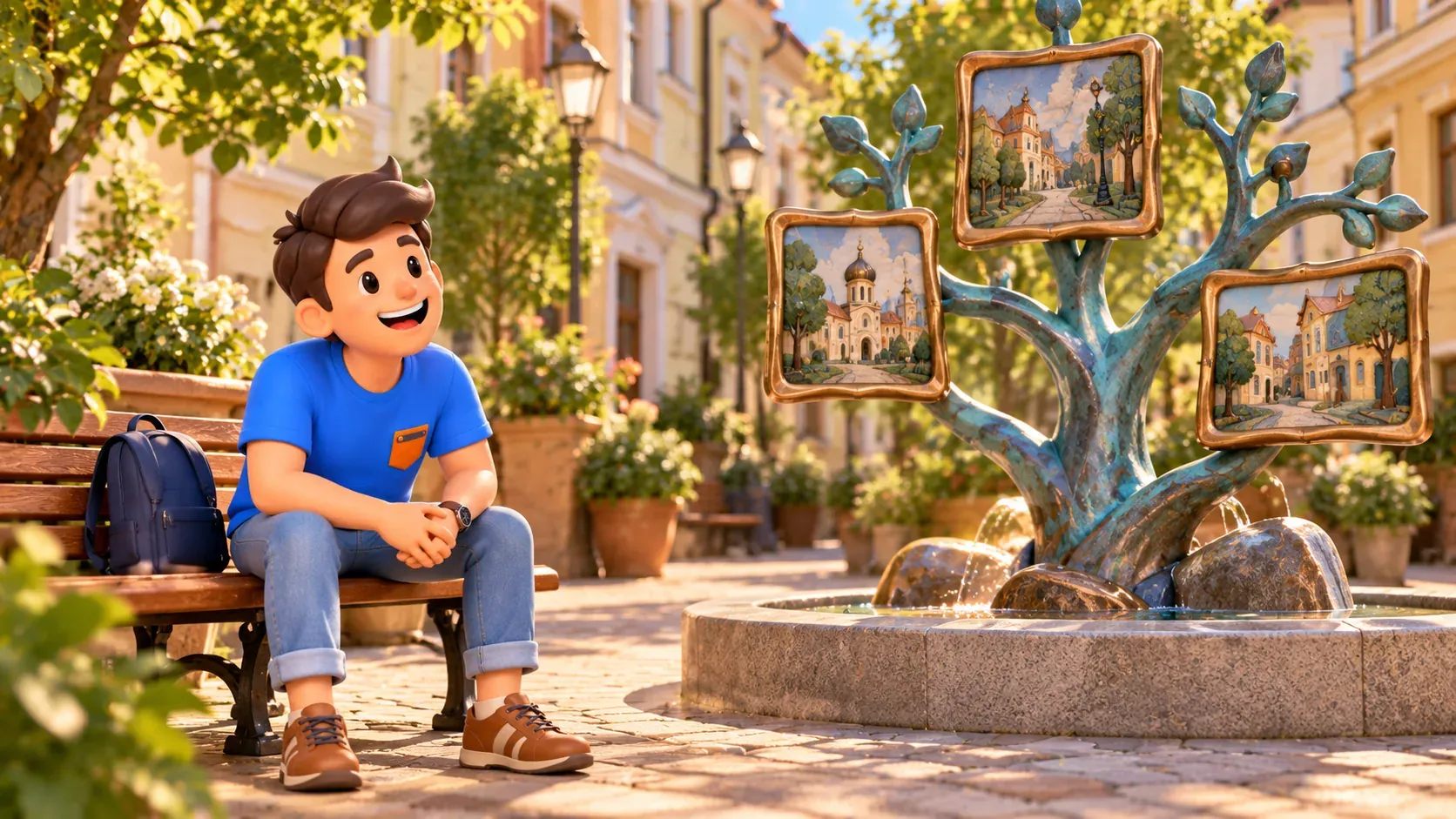
The Inspiration fountain in the Bolshoy Tolmachevsky Lane area offers a fitting small stop after a gallery visit. Its subject connects the idea of public art with the museum day, but it does not require another long interpretive programme. Look at the composition as something encountered in the street and decide what detail catches your attention.
The walk does not depend on the fountain running. In colder months or during maintenance, water may not be part of the scene. Treat the sculptural object and its setting as the reason to pause rather than promising a water display. This also makes the stop useful when the day is better suited to a brief look than a long rest outdoors.
Choose an available position without blocking other pedestrians. After several hours of standing in galleries, even a short pause can be valuable, but do not rely on a particular seat being free. If you need a longer break, take it before deciding on the optional continuation. You have already seen the core of the neighbourhood route.
St Clement's and Klimentovsky Lane are an optional finish
If you want a little more street life, continue towards Klimentovsky Lane and St Clement's Church near Pyatnitskaya. The church's official address is 26 Pyatnitskaya Street, building 1. Its large exterior adds a different architectural impression, while the surrounding lanes offer a logical place to end near convenient transport.
Check your actual path and use pedestrian crossings when moving between streets. A nearby destination on a map can still involve an approach, a crossing and time to find the correct exit afterwards. Do not count the optional section as free simply because the museum and church belong to the same broader neighbourhood.
If you prefer a shorter finish, more architecture or a different balance tomorrow, RoadMe develops a personal plan around your interests and travel dates. Keeping the wider programme in the app helps you use your remaining energy effectively instead of adding every nearby sight to the same afternoon.
For a fuller centre-and-neighbourhood pairing, our two-day Moscow plan places the gallery within a longer visit. This particular outing can remain short. You do not need to continue to every destination in the wider plan to justify having spent an hour in the local lanes.

Adapt the walk to the time you leave the museum
A morning gallery visit followed by lunch leaves more flexibility for daylight observation. A later visit may call for only one nearby outdoor stop before dinner. Use your actual exit time instead of the time you hoped to leave when booking. Museum rooms can hold your attention, and that is a good reason to change the afternoon.
In rain, take a shorter street section and a proper indoor break rather than walking the full loop with little enjoyment. In winter, remember that standing to look at facades can feel colder than moving between them. Choose warm pauses before fatigue becomes the main impression. No season requires completing every optional stop.
With children or anyone who has limited stamina, let one church exterior and the fountain be enough if that suits the day. For step-free needs, check actual approaches and any museum-church entry separately. This overview does not certify accessibility. A compact area can still contain uneven surfaces, thresholds and a particular entrance that matters to the visit.
Finish the day before it turns into another checklist
The purpose of the walk is to connect art with the city just outside it. Kadashi changes the scale of attention, Tolmachi keeps the museum context visible and the fountain offers a modest final link. One or two of those impressions may be enough after a long gallery visit. Their value does not depend on how many points you complete.
Leave a margin for reaching transport or your next appointment. The moment you finish looking at the last building is not the moment you arrive at a station. A calm final walk and time to eat can be the best ending to a museum day. Keep the neighbourhood memories clear rather than covering them with one more hurried destination.


