
Yas Marina for motorsport fans outside race weekends

You do not need a Grand Prix weekend to give Yas Marina Circuit a place in an Abu Dhabi trip. A booked venue tour can make the circuit's scale, engineering and working spaces more understandable, without expecting a live Formula 1 race. Finish with a pause and, if access and conditions suit, a separate short visit to the marina.
Allow roughly three to four and a half hours for arrival, the guided programme, a break and an optional waterfront finish. This is an editorial planning estimate. The circuit advertises its standard venue tour at approximately two hours, while the actual date, available itinerary and arrival requirements determine your visit. Track access and individual stops can change.
Choose a venue tour as the main experience
For a first motorsport visit outside a race weekend, begin with the current venue-tour calendar. Choose an available date and understand the product you are booking. A tour, a driving experience, a passenger ride and karting are different activities, even when they share the circuit's name.
The route here uses the guided venue tour as its anchor. It suits someone interested in the place and the organisation behind racing, rather than someone whose only goal is to drive a particular car. If driving is the priority, replace the anchor and plan around that programme's own conditions.
For a more convenient way to organise the whole trip, try RoadMe. The app develops a complete personal itinerary around your interests, dates, pace and budget, so a motorsport visit fits naturally alongside the other experiences you want in Abu Dhabi.
Keep the rest of the outing light. The tour already brings a sequence of spaces and explanations, and a quiet finish helps you retain them. You do not need to add another paid activity simply because the island offers many options.
What a non-race visit can reveal
Yas Marina Circuit was completed in 2009 by the team of Hermann Tilke, the year of the first Abu Dhabi Grand Prix. Its importance is not limited to a strip of racing asphalt. Grandstands, pit buildings and operational spaces form an organised environment designed around movement, visibility and technical work.
The circuit layout was substantially reworked in 2021. That change is useful context when comparing old memories or videos with the present venue. A racing route is a design that can be reconsidered through experience, rather than a fixed line that has always looked the same.
During the visit, distinguish the perspective of a spectator from that of a team. A seat needs a view; a working space needs access and organisation. You do not have to understand every regulation to see how those different tasks influence the place.
A quieter day can make the physical setting easier to read. It does not reproduce the noise, crowds or competition of a Grand Prix, and need not try. The value is a closer understanding of how a venue becomes capable of hosting such an event.
Arrive for the programme you actually booked
Use the meeting point stated in your booking. The standard venue-tour information identifies Yas Central, but confirm the current instructions for your selected product. A circuit is a large site; arriving at a familiar-looking gate is not the same as arriving at the correct check-in.
Keep the required early-arrival period outside the advertised tour duration. Allow room to find the meeting point, complete formalities and ask practical questions. The outing starts before the guide's explanation, not at the moment the vehicle crosses onto Yas Island.
Read current conditions for children, accessibility and any assistance your group requires. Confirm them with the operator when necessary. A general description of the circuit does not establish the suitability of every route or vehicle used by a particular guided programme.
Choose comfortable clothing and shoes appropriate to the actual visit and weather. Some parts may be exposed, while others are inside or sheltered. Carry what you need without assuming all waiting areas are shaded or all belongings can accompany you into every space.
Read the track from an available viewpoint
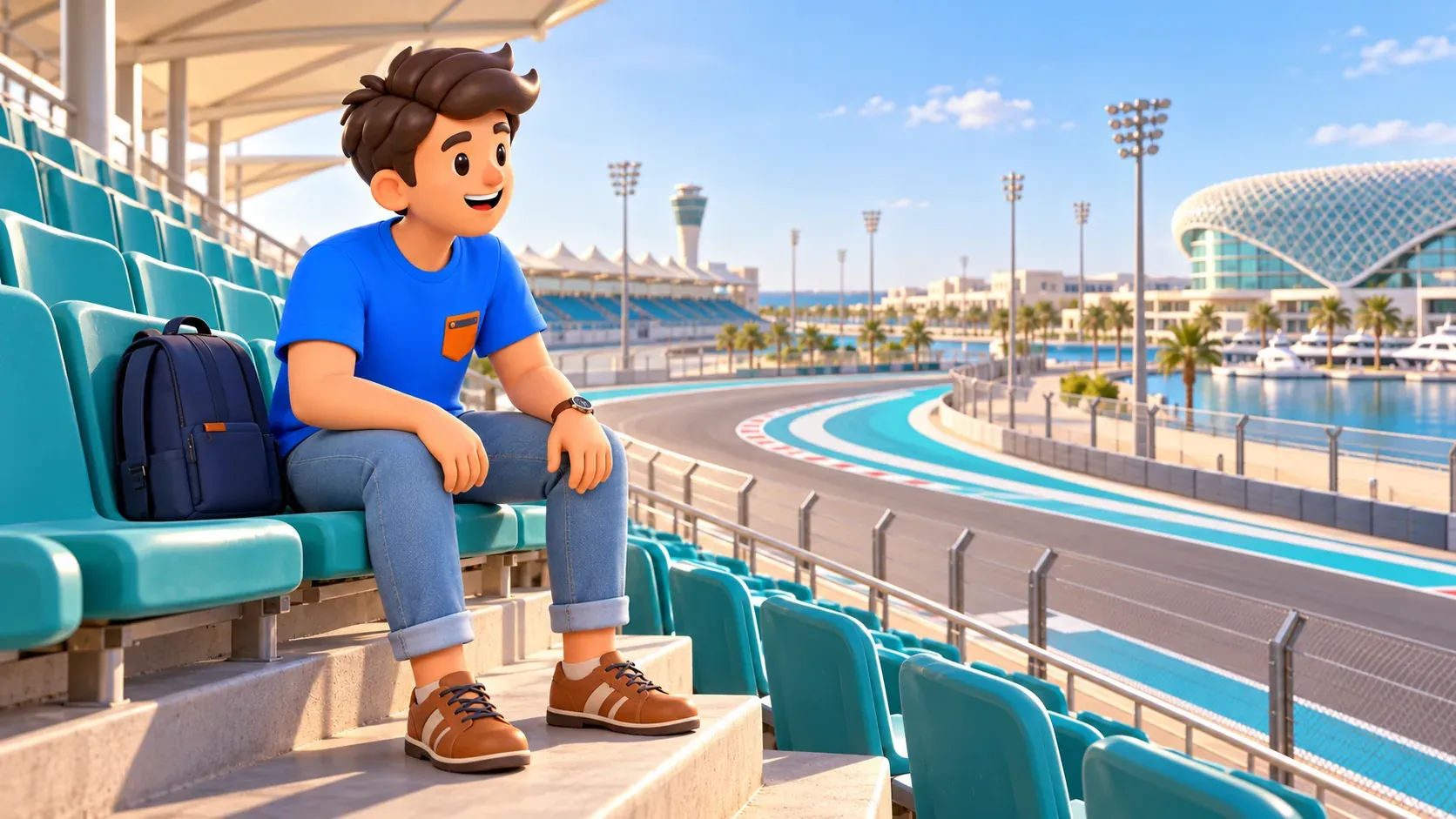
At a viewpoint included in your tour, begin with the overall shape rather than a search for a famous photograph. Notice the relationship between the curve, the barriers, the run-off and the spectator area. Each belongs to the experience of a circuit, even when no car passes during your stop.
Ask the guide how the view relates to the current layout. This is more useful than confidently applying an old turn number from a video. The same place can carry sporting memories while its configuration and the way it is explained have changed.
Then choose one detail: the angle from which a spectator sees an approaching car, the space around a curve or the separation between different working areas. A focused observation gives the scale meaning. You need not gather a technical description of every section to enjoy the visit.
Before arriving, choose one thread to follow: the spectator view, the work behind a race or the way the layout shapes movement. You can return to that thread at different stops. It gives the guided explanations a connection and makes the visit useful even if you have never memorised the complete circuit diagram.
For photographs, try pairing a broad view with a smaller detail from the same place, wherever photography is permitted. Later, the pair can help explain what interested you: not simply a large grandstand, but how its seats face a particular section. Keep the observation grounded in what the guide actually showed rather than adding a technical conclusion you could not verify.
Look beyond the moment of speed
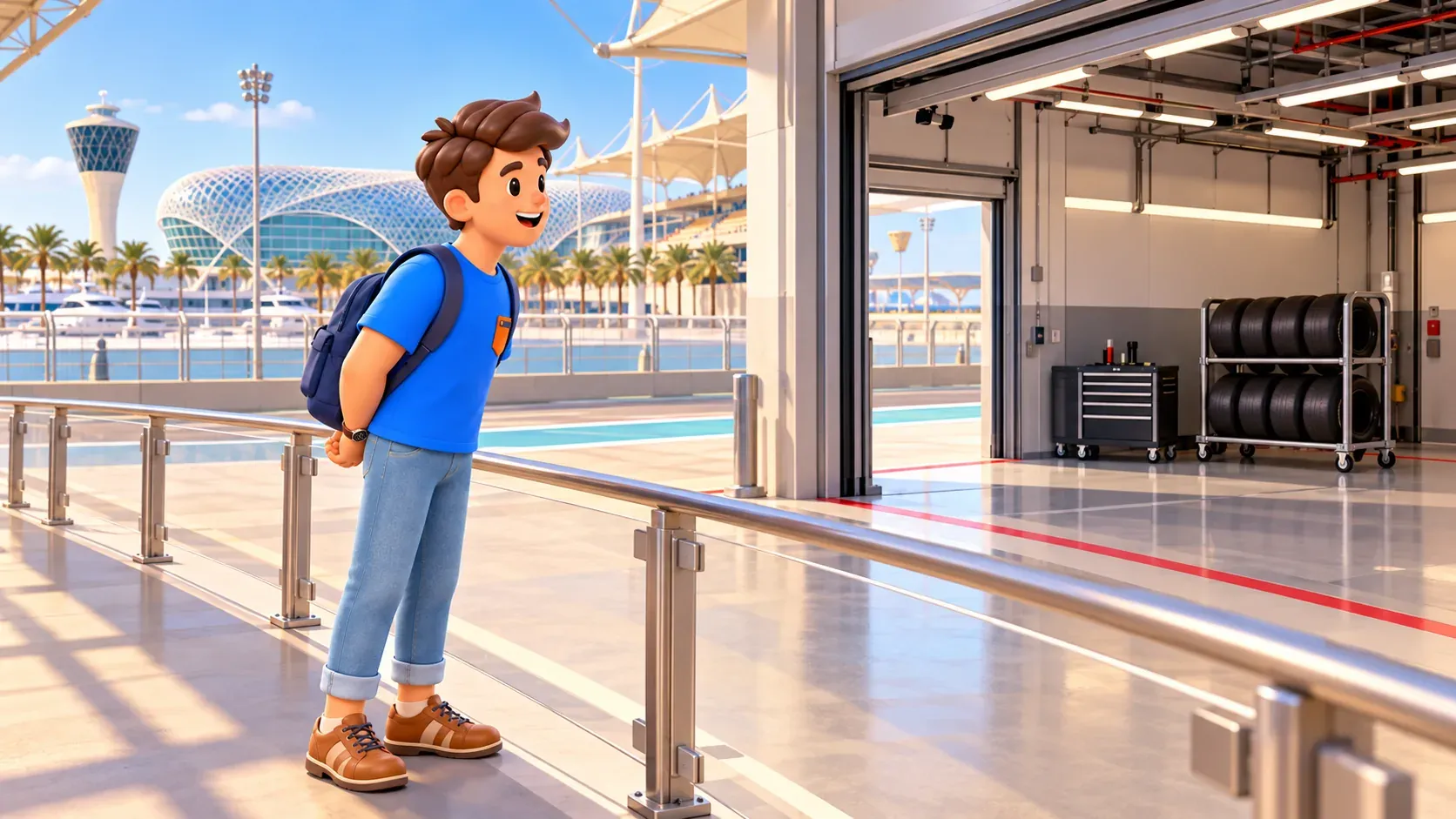
The behind-the-scenes idea is not simply to stand where a famous driver stood. A motorsport venue coordinates teams, officials, information and movement. Where your actual itinerary allows, consider how a garage, a pit area or an operational space contributes to that larger system.
The operator lists possible stops and explains that the itinerary can change. A particular control room, podium, team area or lap is therefore a possibility under the day's arrangements, not a personal entitlement attached to any circuit visit. Follow the guide's route rather than trying to reconstruct the full promotional list independently.
If a restricted area is unavailable, use the accessible explanation to understand its purpose. An operational venue can have work taking place on an otherwise ordinary day. Being outside the Grand Prix weekend does not mean the circuit is empty, idle or open to wander through at will.
Keep questions specific and manageable. Ask how two spaces relate, why a viewpoint is positioned where it is, or what changed with the newer layout. One clear answer often adds more than collecting the names of several rooms without understanding their connection.
Separate the tour from other track experiences
A standard guided visit does not automatically include driving, a passenger lap or a kart session. Those options have their own bookings and participation requirements. If one interests you, decide whether it should replace the tour or extend the day, rather than treating it as a small addition hidden inside the same time block.
Likewise, a scheduled public fitness programme is not a standing right to walk onto the track whenever you arrive. Check the relevant programme independently. The ordinary visitor route follows the access you have actually booked or been given for that day.
For mixed groups, agree on the main interest before booking. A keen motorsport fan may enjoy operational detail; a companion may prefer a shorter visit and a longer waterfront pause. A clear shared expectation is easier to manage than surprising everyone with another intensive activity afterwards.
RoadMe can work out the full personal trip for a motorsport fan or a group with different interests. In the app, it is easier to shape the route around your available time and preferred pace while also planning the rest of your holiday.
Make the pause part of the route
After the tour, allow time to sit and take stock before moving elsewhere. A simple drink or a short rest in an appropriate available place may be enough. A substantial meal needs a larger block and its own venue arrangements.
Choose the next step using the actual exit point, weather and group energy. There is no need to follow a fixed imaginary loop around the circuit. A satisfying guided visit and an uncomplicated departure can already form a complete half-day.
If you continue to Yas Marina, confirm the permitted visitor connection and the correct arrival area. The marina is a distinct waterfront destination near the circuit. Its proximity does not create a shared ticket or a shortcut through pit, hotel or berth areas.
Finish at the marina, if it suits the day
Use the visitor areas that are actually open and appropriate for a short walk. Look at the change from engineered racing space to moored boats and water. Keep the purpose modest: a different atmosphere and a chance to slow down, rather than another collection of attractions to complete.
A marina visit does not guarantee access to private berths, a particular restaurant table or a view of the circuit from every position. If a meal or specific view matters, confirm that venue separately. A quiet waterfront moment can still be worthwhile without reproducing a race-week hospitality photograph.

Decide on a clear pickup point and leave time to gather belongings. The most useful memory may be one relationship you understood: track and grandstand, garage and pit work, or racing infrastructure beside the water. A non-race visit succeeds through that understanding, at a pace that leaves room for the rest of Abu Dhabi.


