
Sea, trade and pearls: reading Abu Dhabi’s past today

To see Abu Dhabi's maritime past within the modern city, begin with the people who worked with the sea. Fishing, pearl diving, boatbuilding and trade supported a coastal way of life long before today's skyline. Qasr Al Hosn provides historical context, while the fish and date markets around Mina Zayed let you notice how buying, selling and everyday work remain part of the city.
You do not need a complete heritage tour to make those connections. Choose a historical visit, a selective market outing or both with a proper transfer between the central city and Mina Zayed. The useful thread is the relationship between skills, goods and the sea, rather than a race to collect every place described as traditional.
Look for work behind the waterfront view
A boat can be a beautiful shape in a photograph, but it also suggests labour: someone built it, knew how to use it and understood where to go. A market display suggests another set of skills in choosing, handling and selling goods. These ordinary tasks give maritime history a human scale that a skyline alone cannot provide.
Try RoadMe to turn that interest into a complete personal itinerary for Abu Dhabi. The app works through your interests, dates, pace and budget, making it much more convenient to combine historical visits, markets, meals, journeys and rest in a programme that suits you.
Keep the distinction between history and present-day life. A modern market can carry a longstanding trade without occupying an unchanged old building. A museum can explain an earlier economy without recreating an ordinary working day from that period. Both forms are useful when you understand what each can actually show.
Pearls connected the coast to a wider world
Natural pearls were an important part of the region's pre-oil economy. Looking for oysters was not an isolated act by a diver: it depended on boats, crews, maritime knowledge and a market for the result. The small object eventually worn as jewellery belonged to a much larger network of work and exchange.
That network extended beyond the Gulf. Regional maritime trade connected with ports around the Arabian Sea and Indian Ocean, including India and East Africa. Abu Dhabi's past therefore makes more sense when you see the coast as part of routes between places, not as an isolated settlement looking only towards the desert.
The idea changes how you view a modest boat model or an old photograph. Instead of asking only whether it looks picturesque, ask what the vessel carried, who needed its journey and what knowledge made the journey possible. You do not need to learn every boat type for those questions to make the object more interesting.
Avoid turning pearling into a simple romantic image of easy treasure. It was work shaped by conditions, organisation and uncertainty. The value of a pearl was linked to the effort around it as well as the buyers far away. A short introduction is enough to add that perspective without turning the visit into a technical account of diving methods.
Qasr Al Hosn: give the maritime story a city setting
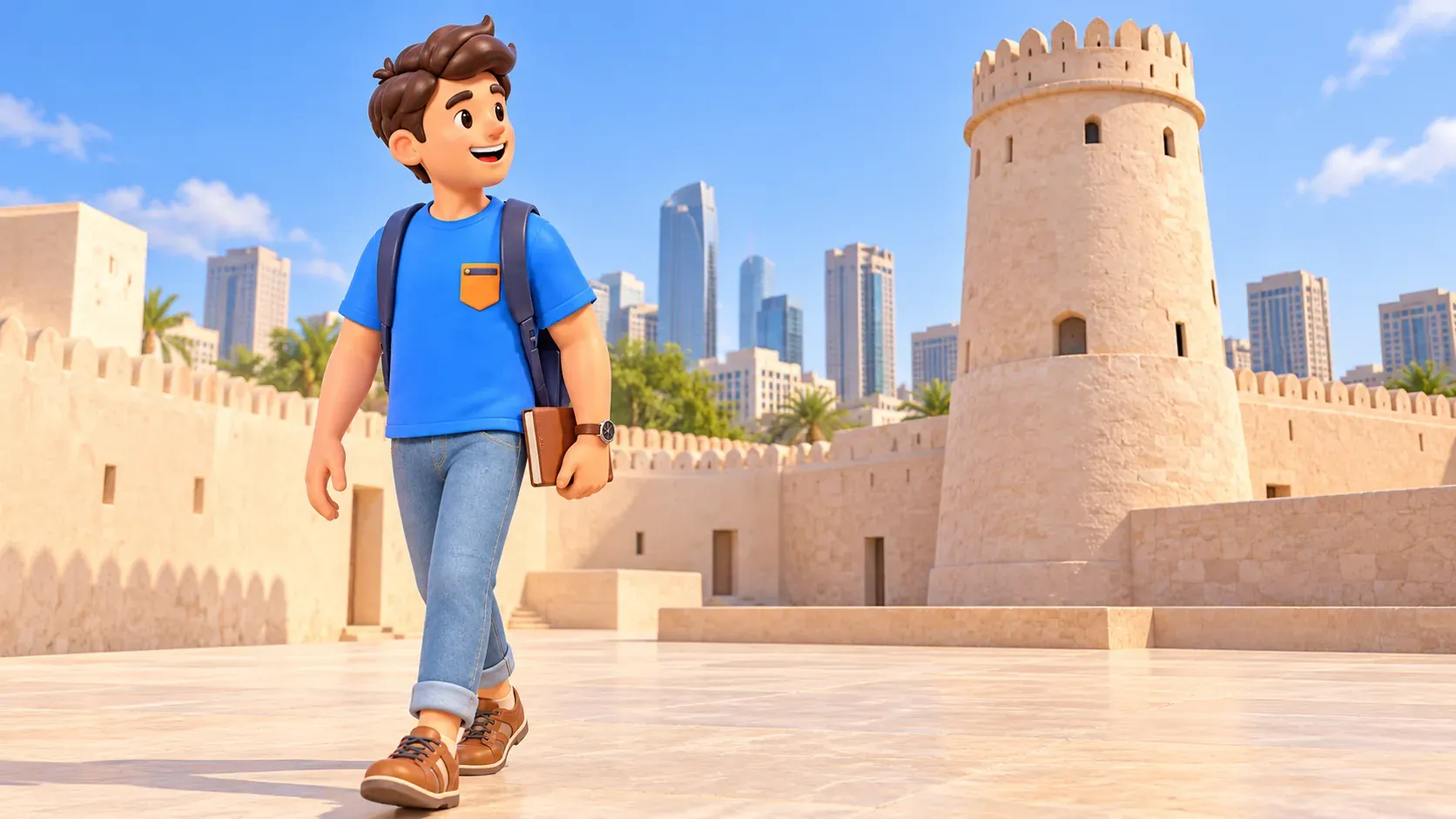
Qasr Al Hosn helps connect the coastal economy with the development of Abu Dhabi. Its watchtower and later fort belong to a history of protecting a growing settlement and overseeing coastal approaches. The site then acquired other roles in governance and the life of the city. It is a place to think about how a community became organised.
When looking at the fort, separate the historical setting from the city visible around it today. Modern streets and towers do not reproduce the earlier shoreline. You can recognise the connection to coastal routes without imagining that every present-day view preserves the exact landscape the first inhabitants saw.
Inside the visit, give attention to how the city's story is presented rather than searching only for one photogenic object. The transition from a community associated with fishing and pearling to a modern capital is the wider subject. Maritime life belongs within that development, alongside changing institutions, buildings and ways of living.
Heritage is a story of change, too
The pearling economy did not remain fixed. Competition from cultured pearls and wider economic changes affected the region, followed by a very different era of development. Avoid reducing the whole transition to one convenient sentence about an overnight replacement. The interesting point for a visitor is that the city's past contains adaptation as well as continuity.
Qasr Al Hosn itself has changed through different uses, building phases and conservation. That makes it more useful than a frozen picture of a single year. Let the visit establish a historical frame, then carry a few questions into the contemporary city: what work continues, what has changed and where do people encounter these traditions now?
Check current admission and any particular programme separately. Access around the site, entry to Qasr Al Hosn and a special workshop are not automatically the same arrangement. If a demonstration is important, choose by the actual calendar rather than assuming that every historical activity appears whenever the site is open.
Mina Zayed Fish Market: a living trade in modern premises
At Mina Zayed, the fish market offers a different kind of attention. This is a place where goods are sold and people work. The current market opened in new premises in 2022, with its design connecting to the area's fishing-trade heritage. A modern setting does not remove that connection; it shows that a working city updates its facilities.
Look at the variety on the counters and the practical sequence of the market. There is knowledge behind identifying products, handling them and serving customers. You do not have to make a large purchase to notice the organisation, but remember that the stalls are businesses rather than displays arranged solely for visitors.
Do not assume every fish has just arrived from a nearby boat or that all products share the same origin. Ask about something specific if it interests you. A market can connect to a local fishing tradition while participating in modern supply networks. That combination is part of its present-day reality rather than a failure of authenticity.

Observe without interrupting the working day
Keep clear of service areas and let transactions take place. Ask before photographing a person closely. A little time spent watching respectfully can be more revealing than entering with a fixed list of images you want to capture. You may notice a routine or exchange that would disappear if everyone had to stop and pose.
If you buy food, establish what the price covers. The product, cleaning and cooking can involve different services and arrangements. Do not assume a particular restaurant or preparation is included simply because it appears nearby. Choose a meal because you want it, with the conditions clear, rather than treating it as a compulsory part of a cultural visit.
Nor should a market visit become a promise of access to every nearby quay or commercial port area. Use the public visitor spaces you have actually identified. A port district includes different kinds of working environments, and being close to the water does not make each one an open promenade.
The date market: notice the goods, not only the souvenir
The date market adds another part of the trading landscape. Dates matter in local food and cultural life, but a shop visit also reveals variety, presentation and the choices people make when buying. Take time to notice differences instead of treating every box as the same interchangeable gift from a trip.
Ask about a particular variety, origin or filling if you want to know more. Do not assume that everything on sale grew locally or that every product contains only dates. A plain fruit, a filled date and a gift assortment are different choices. Looking at what you are actually buying makes the visit more useful and the souvenir more personal.
Compare a clear quantity and the whole package, rather than only an attractive headline price. If a tasting is offered, follow the seller's arrangement; it is not an automatic entitlement at every stall. You can also choose not to buy and still leave with a better understanding of how a familiar product varies.

Connect the places without forcing an all-day checklist
Qasr Al Hosn and Mina Zayed belong to different parts of the city. If you include both, allow a real transfer rather than presenting them as one short historic lane. The fish and date market visits can share a Mina outing, but use the actual entrances and current pedestrian connections, including crossings and the weather.
Choose what you most want to understand. A museum-led day might finish after the historical visit and a pause. A market-led outing can concentrate on fish or dates and a meal, without adding every nearby souk. Combining fewer experiences with attention gives the maritime theme more substance than hurrying through a larger list.
Boatbuilding and related skills offer another connection through cultural interpretation, including House of Artisans in Al Hosn. If you want a particular live session, verify the current programme. A display explaining a technique and an organised workshop are different experiences; neither needs to be promised as a permanent demonstration.
Let the past make the present more interesting
You may not see a historic pearling voyage or an old trading scene recreated in front of you. That is not necessary. A fort, a market counter and a box of dates can each suggest different parts of the relationship between a coastal community, its skills and the wider world beyond the shore.
Take away a few useful questions: what made this work possible, where did the goods travel and how has the place changed? Those questions allow the modern city to remain modern while its earlier stories become easier to notice. They also leave room for the people working today to be more than figures in a heritage photograph.
RoadMe makes the full trip much easier to work through, developing a personal route around your interests and preferred rhythm. Let the app fit history, markets and the rest of Abu Dhabi into a complete plan, so you can give each chosen experience proper attention.
The maritime past becomes visible through work, exchange and change. Give one historical place or working market enough time, and the waterfront will begin to mean more than a beautiful view.


