
Saadiyat in two days: museums without the rush
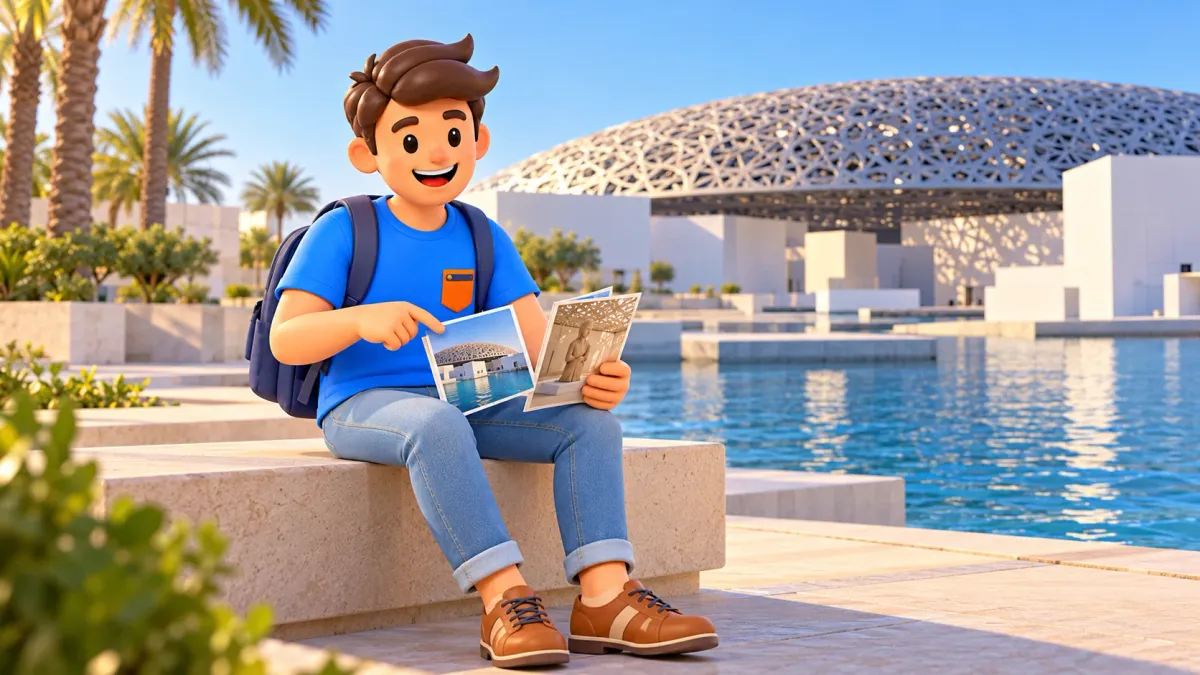
Give Saadiyat two full days by choosing one main cultural experience for each. A useful first pairing is Louvre Abu Dhabi followed by Zayed National Museum. If natural history or immersive art interests you more, replace the second day with Natural History Museum Abu Dhabi or teamLab Phenomena. Leave the remaining time for architecture, food and a genuine pause.
This is a way to distribute attention, not an invitation to fit every institution into two crowded schedules. The actual entry dates and reservations should decide the final order. Suggested visit lengths are estimates for planning, not measured journeys or official tour durations. The cultural district contains separate destinations with their own visitor arrangements.
Choose the pair before making the bookings
Begin with two questions: what do you most want to understand, and what kind of experience keeps your group interested? Collections, the story of the UAE, natural history and immersive art ask for different kinds of attention. Choosing a contrast can make the second day feel fresh rather than like another version of the first.
The Louvre and Zayed National Museum provide a clear two-day structure. One encourages connections across cultures and periods; the other brings the focus to the land, people and history of the UAE. You can reverse the days when the actual visitor arrangements make that easier. The useful part is the relationship between the experiences.
For a more convenient way to organise the two days within your stay, try RoadMe: the app prepares a personalised programme around your interests, dates, pace and budget. It helps give major museum visits and quieter moments a coherent place in the whole trip.
Make one principal booking per day first. Add another substantial visit only when it answers a real interest and leaves enough time. A museum district is not a requirement to keep moving between buildings. Staying longer at the chosen place can be the most rewarding use of the second half of a day.
Day one: give the Louvre a main block
Louvre Abu Dhabi offers a broad narrative of art and human connections. Objects from different societies can be considered together through questions such as belief, power, exchange and the image of a person. A selective visit works well when you choose a few themes instead of treating each room as a task to finish.
Allow roughly two and a half to three hours as an initial framework for a first selective visit, with room to extend. Add arrival, orientation and a meal outside that allowance. If the collections are a main reason for your trip, they can legitimately occupy more of the day. Do not make the visit smaller simply to preserve an unnecessary next appointment.
Choose a question that interests you and use it through several parts of the collection. You might compare how people expressed status or how materials travelled. A small number of carefully viewed objects can connect more clearly than a rapid survey of everything. The aim is to leave with something remembered, not a complete list of rooms.
If you are visiting together, each person can choose one object to discuss afterwards. Ask what first caught their attention and what changed after reading the explanation. This gives different interests a place without turning the visit into a guided lesson. A photograph or short note can preserve the question when taking one is appropriate. You can return to it over the meal instead of trying to remember every room equally.
The building is part of the Louvre day
Jean Nouvel's broad dome brings white museum pavilions and spaces beside the water into one architectural setting. Filtered daylight changes the experience between galleries and open areas. Leave some time for that relationship rather than treating every passage as merely the fastest way to the next display.
Look at how the dome's pattern appears against a white wall, an open passage or the water. You do not need its measurements to appreciate the change. A pause can connect the architecture to the museum's wider idea of relationships: separate objects and spaces acquire meaning through the way they are brought together.
Use the visitor areas and conditions allowed by your admission. A photograph of a quiet architectural space does not establish that it is available in exactly the same way on every visit. Give the actual day enough flexibility to follow the appropriate route without chasing one predetermined image.
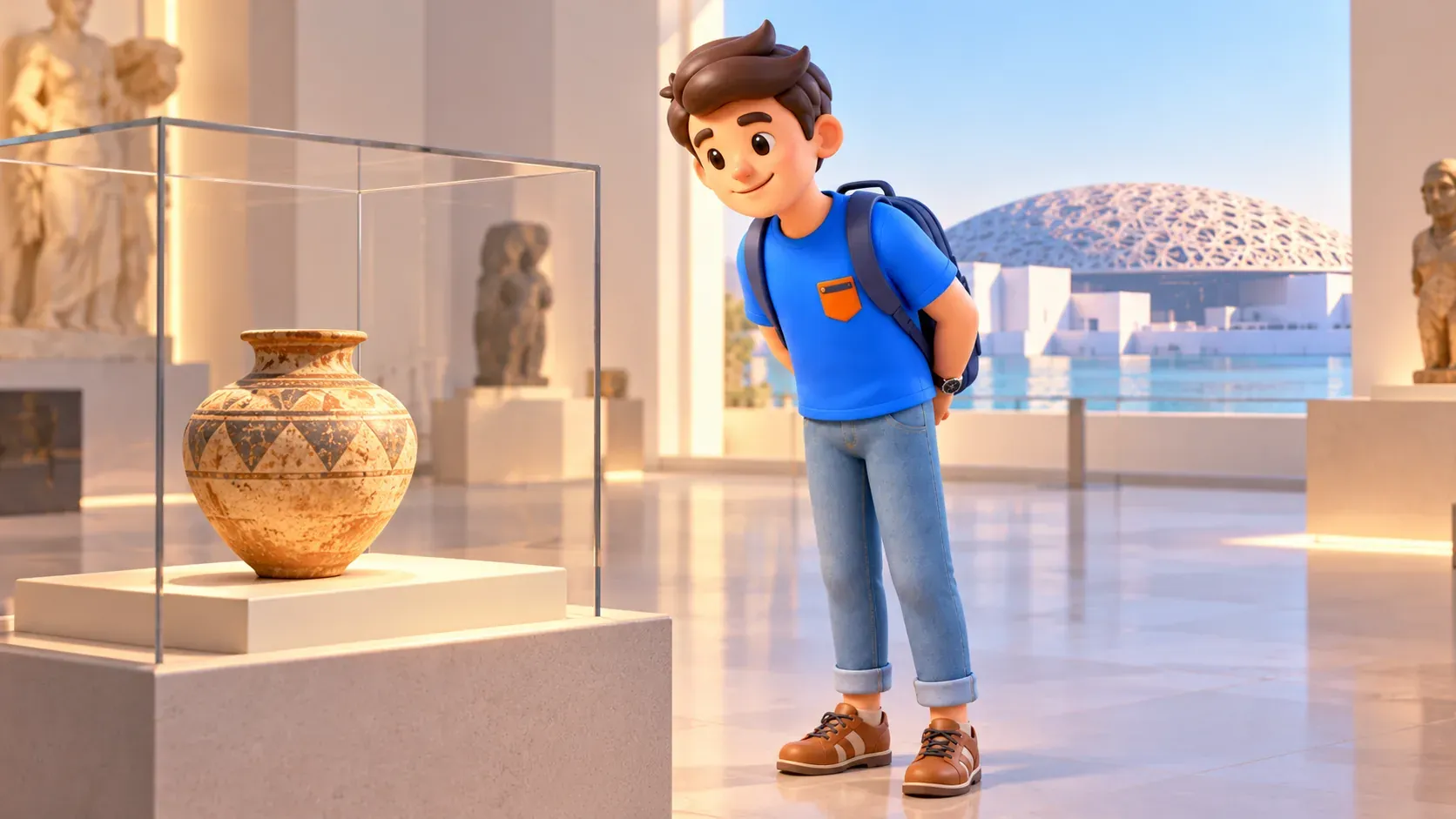
Keep the first afternoon lighter
After a main museum visit, take a real break before deciding on more culture. A meal and a slower finish may be enough. Discuss whether the group wants another subject or more time with what it has already seen. The existence of a second free afternoon does not mean the first must be filled completely.
Manarat Al Saadiyat can be a lighter cultural possibility when its current programme appeals to you. Treat it as a separate destination with its own entry and transport arrangements. It is an option, not a guaranteed exhibition added automatically to every Louvre ticket. Check the actual programme before allowing it to shape the afternoon.
If you prefer a waterside meal elsewhere on the island, choose the place and connection specifically. The cultural district is part of a wider island with residential and hospitality areas. A beach, resort or private terrace is not included simply because it shares the Saadiyat name. Keep the pause convenient rather than turning it into another demanding excursion.
Day two: bring the focus to the UAE
Zayed National Museum offers a different scale of story after the Louvre's cross-cultural view. The legacy of Sheikh Zayed is connected with the country's land, communities and longer history. This makes the day useful for understanding the place you are visiting, rather than viewing another set of impressive objects without a local context.
The museum's wing-like architecture by Foster + Partners is a strong exterior image, but the visit is not only about a silhouette. Give the historical narrative proper attention. Land, coast, movement and community provide themes that can connect with the rest of a trip through Abu Dhabi.
Keep a substantial block for the museum and decide how much detail suits the group. Avoid placing a second large institution immediately afterwards. A thoughtful visit, a meal and a quiet continuation can form a complete day. Let the actual entry arrangements and your interest determine when you begin and finish.
Compare the two days at the level of questions, not prestige. The Louvre may have prompted thoughts about exchange across societies; the national museum can give a more focused understanding of a particular country and its development. These perspectives complement one another without requiring you to remember every historical date.
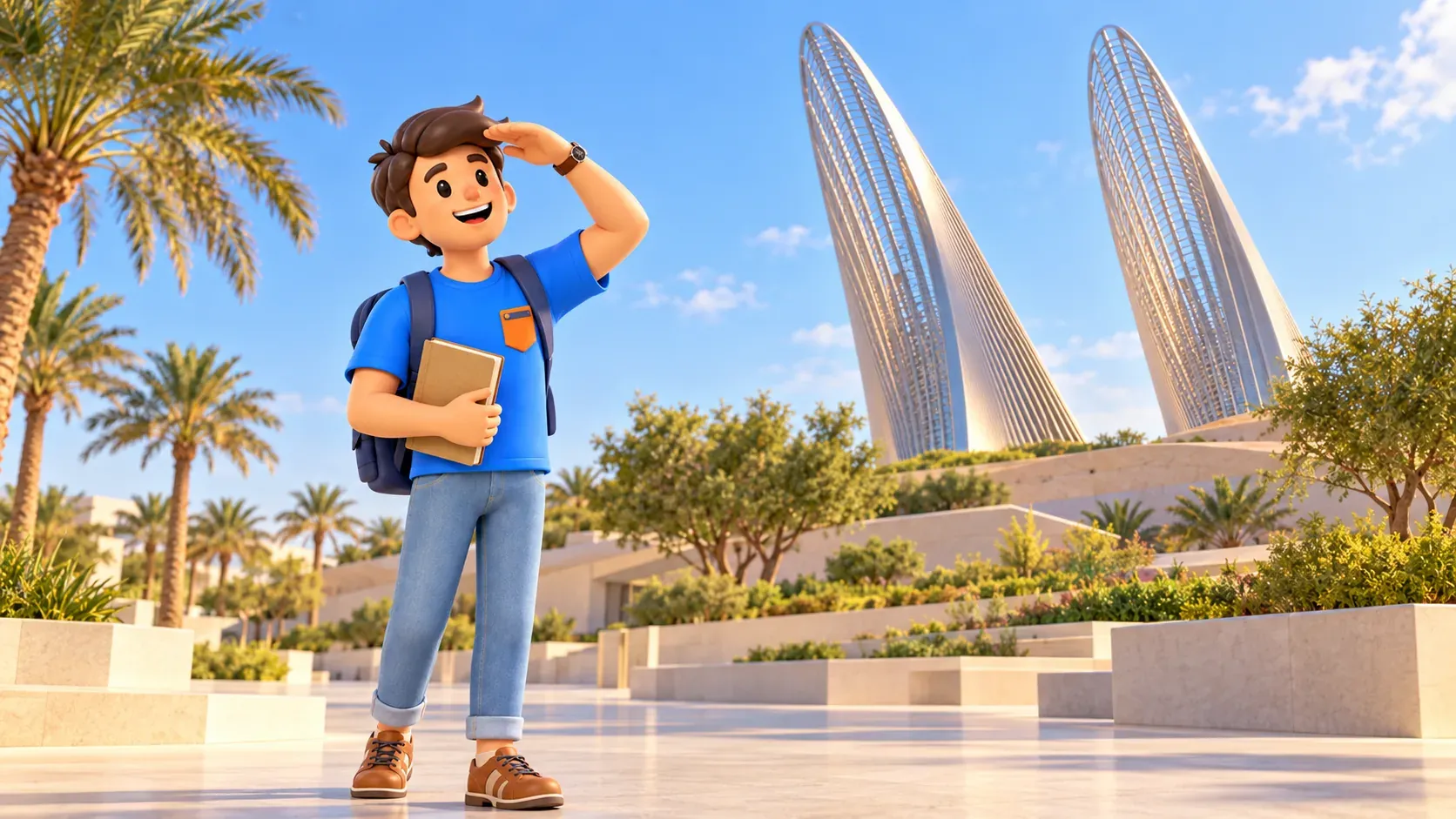
Replace the second day when another subject fits better
Natural History Museum Abu Dhabi is the alternative when Earth, life and the natural world are stronger interests. It shifts the journey away from a second human-history narrative. Choose it because those questions appeal to you, not because a familiar image of a dinosaur makes it automatically the right choice for every family.
Look at the actual visitor offer and decide what you want from the day. A substantial natural-history visit still benefits from pauses and a selective approach. Specific programmes and temporary exhibitions have their own dates. The general museum experience should not depend on an activity that you have not confirmed.
teamLab Phenomena offers another direction, centred on multisensory art, environment and engagement. It is a different experience from moving through a conventional collection. Read the current visitor guidance and entry arrangements, especially if the format or sensory setting matters to anyone in the group. Give it a proper place in the day instead of treating it as an automatic small add-on.
These are replacements for the main second-day block, not instructions to add both after another museum. The advantage of two days is the ability to enjoy distinct experiences. It disappears if the plan becomes a race through all the names in the district.
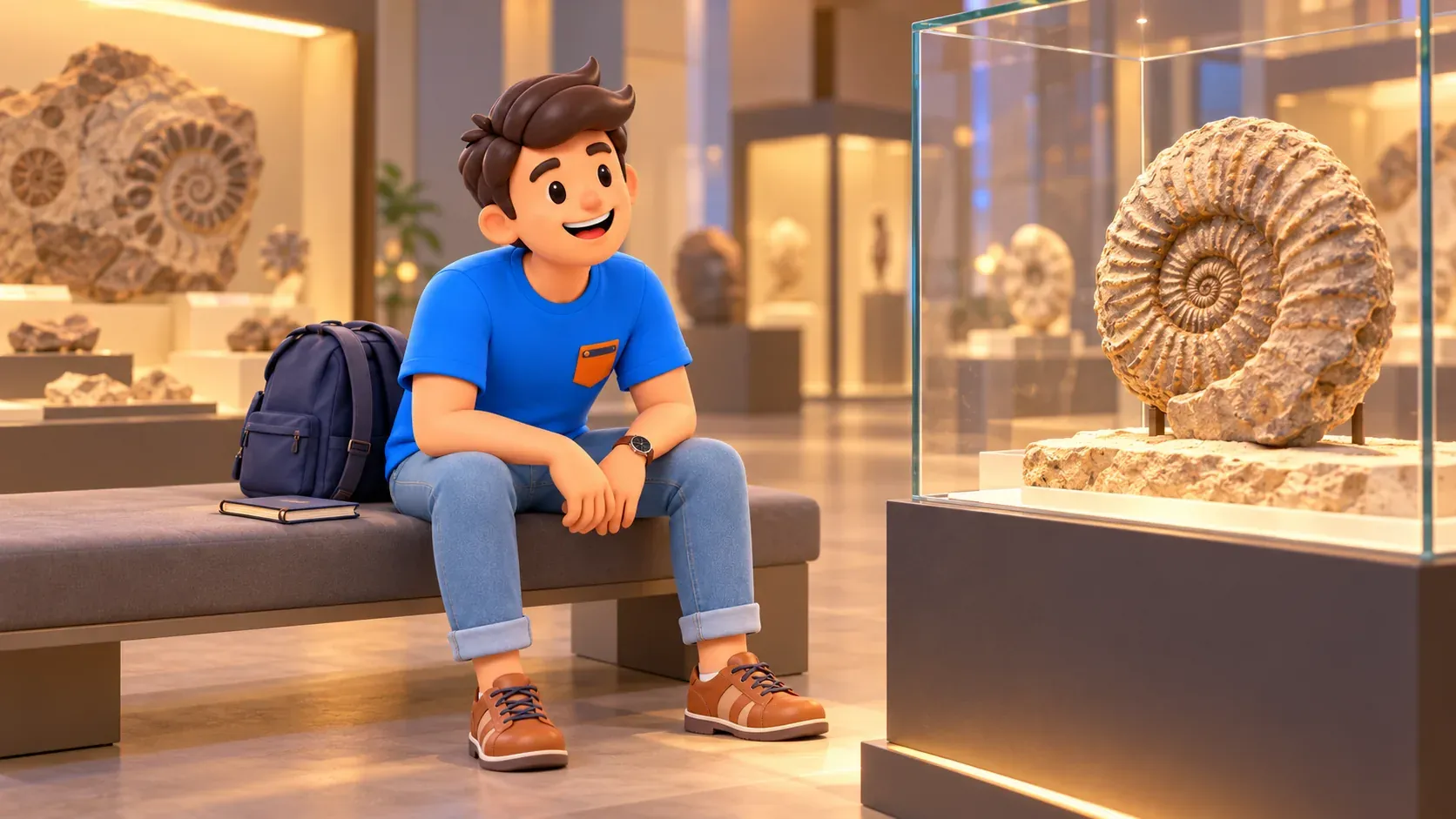
Three pairings that keep the two days clear
- Art and the UAE: Louvre Abu Dhabi, then Zayed National Museum for a cross-cultural view followed by local historical context.
- Human creativity and the natural world: Louvre Abu Dhabi, then Natural History Museum Abu Dhabi.
- Collections and immersive art: Louvre Abu Dhabi, then teamLab Phenomena, with the different visitor format considered before booking.
If one traveller's main interest is natural history and another's is art, discuss that before allocating both days. The best pairing is the one that the people travelling want to experience. A famous name alone does not decide how a whole day should be spent.
When those priorities need to fit together, RoadMe works out a personalised itinerary for the entire trip. The app helps distribute museums, architecture and rest according to your group's interests and available time, rather than assembling every day from scratch.
Keep transport and attention in the same plan
For each day, save the correct entrance and confirm how to reach it from your accommodation. If you add another venue, check the real connection between visitor entrances, including the final approach. A shared district name does not tell you how comfortable that particular walk will be in the day's conditions.
Check each admission's date, arrival requirements and included spaces before booking around it. Do not transfer one institution's rules to another. Keep any specific eligibility or family requirement tied to the actual museum and people concerned. The schedule should follow real reservations rather than a generic assumption about museum opening patterns.
Protect time for eating, water and a proper rest. An indoor visit can still be tiring, and outdoor architecture pauses need suitable weather. After the first day, adjust the second to the group's real pace. Two Saadiyat days are most useful when the programme gives you room to look, compare and return with clear memories.


