
Abu Dhabi in one day: a realistic first-visit route

With one day in Abu Dhabi, choose two major experiences and give them enough time. A useful starting point is Sheikh Zayed Grand Mosque followed by either Louvre Abu Dhabi or Qasr Al Watan. Add an evening walk only if the day is still comfortable. These are two alternative afternoon routes, so you can choose according to your interests.
The plan below is for visitors who have a full day in the city. Allowances are estimates for organising the day, not measured travel or guaranteed visiting times. If you are arriving from another city or returning to an airport, reserve that travel time first and shorten the sightseeing programme accordingly.
Choose the shape of your day before booking
Decide what you want the second major visit to offer. Choose Louvre Abu Dhabi for collections and museum architecture. Choose Qasr Al Watan for ceremonial interiors and a different perspective on the country's institutions. Both can make a strong companion to the mosque, but visiting both would substantially change the pace.
Your arrival location may suggest reversing the sequence. A morning museum reservation or a particular mosque visiting slot can become the day's anchor. Keep the same principle in either direction: two main visits, one substantial break and a modest optional finish.
For a more convenient way to organise the whole day, try RoadMe: the app creates a personalised itinerary around your interests, date, pace and budget. It helps turn a short stay into a complete programme that reflects what you actually want to experience.
Before making reservations, check that both chosen venues welcome visitors at the times you need. The morning-first sequence described here assumes a suitable mosque visiting slot on your date. Prayer arrangements, special events and individual venue programmes can require another order.
First main visit: Sheikh Zayed Grand Mosque
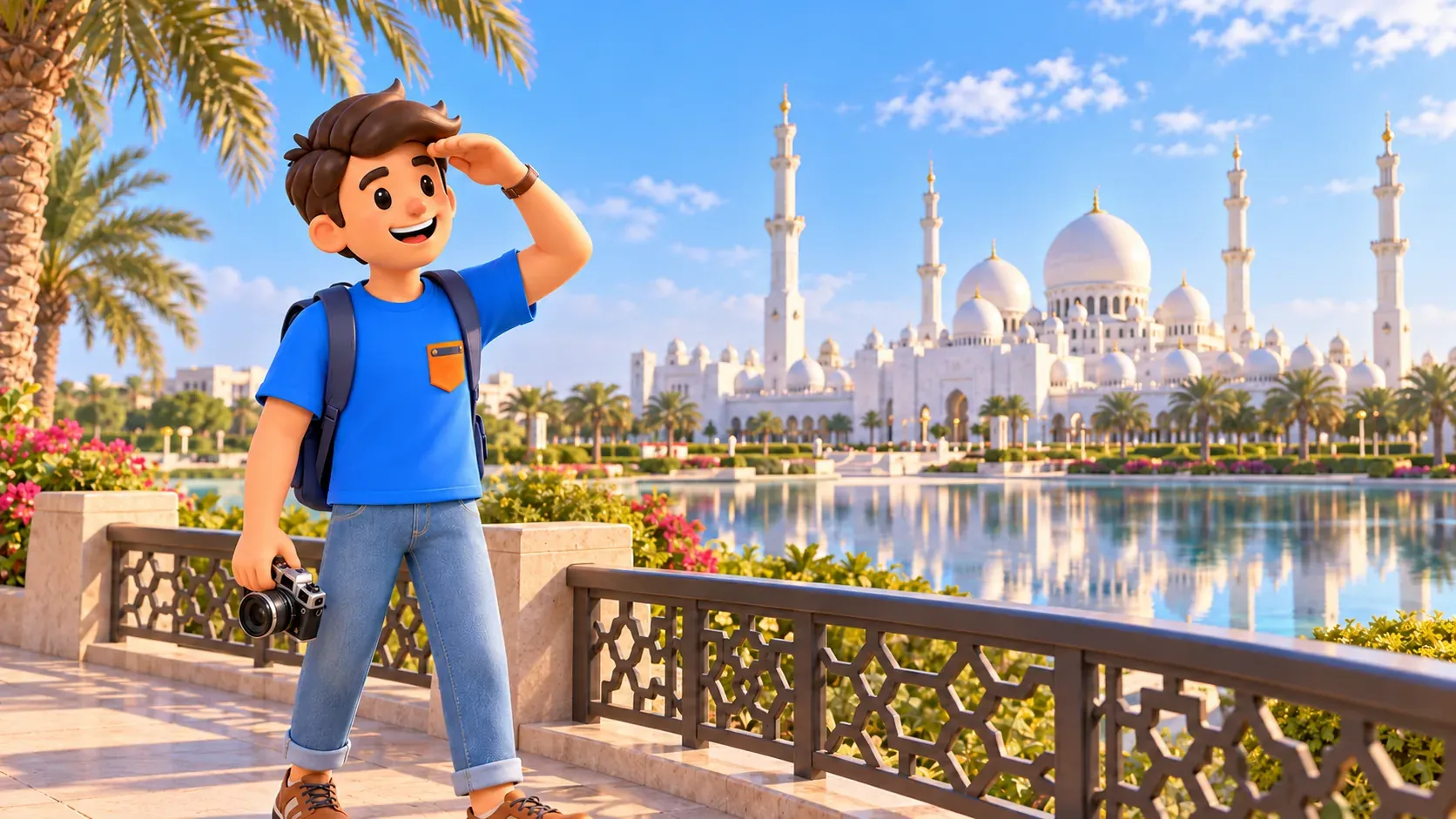
Allow roughly an hour and a half to two hours for a first encounter, including time for arrival and getting your bearings. Some people will want longer. Do not interpret this allowance as an official tour length or as a promise that every part of the complex will be available.
The mosque is a place of worship as well as a major architectural visit. Read its current guidance before leaving your accommodation, including clothing requirements and arrival instructions. Bring any confirmation required for your visit in an easily accessible form.
Inside the permitted visitor route, give attention to the relationship between the white surfaces, arcades and decorative detail. A first visit does not need to become a catalogue of records and measurements. Choosing a few details to look at closely can make the space more memorable.
Photography is part of many visits, but follow the instructions at the location. Leave enough time to walk through the experience without spending the entire visit arranging pictures. In a group, agree on a meeting point before anyone becomes absorbed in a different view.
Pause before the next appointment
After the mosque, avoid treating the next visit as if it begins at the exit gate. You still need to find the relevant pickup point, travel, arrive and reach another entrance. Reserve a broad transfer block, with extra time if a meal or other stop sits between the two.
For a first draft of the day, keep approximately half an hour to an hour available for a major transfer. This is a planning margin, not a route measurement. Check your actual transport and date, and increase the allowance whenever the available information suggests you should.
A meal of about forty-five minutes to an hour can also serve as a proper rest. Choose it near the next area when that makes the day simpler. A distant restaurant recommendation can create more work than it adds value to a short visit.
Wahat Al Karama is a nearby possibility for travellers particularly interested in the memorial. It deserves its own attention and appropriate visiting conditions. Include it by reducing another optional activity rather than quietly adding a third major commitment.
Afternoon option A: Louvre Abu Dhabi
This branch takes you to Saadiyat. Give the museum a substantial part of the afternoon: roughly two and a half to three hours is a useful starting allowance for a selective first visit. Enthusiastic museum-goers may prefer to stay longer and remove the evening extension entirely.
Choose how you want to approach the galleries before entering. You could follow the museum's own orientation, focus on a few themes or stop longer at works that attract your attention. You do not need to turn the collection into a race to complete every room.
The building is also part of the encounter. Jean Nouvel's dome filters daylight over white gallery buildings and spaces beside the water. Leave a little attention for the movement between rooms, shade and open areas; these transitions contribute to the character of the visit.
Check what is included in your admission and the programme for your date. A temporary exhibition, guided activity or family experience may need a separate decision. Do not assume that all experiences mentioned under the museum's name share the same entry arrangements.
For a quiet finish, remain in the same area and choose a suitable pause after the museum. Moving back across the city for a final photograph is optional. If the collection has already filled the afternoon, ending the sightseeing here is an entirely reasonable choice.

Afternoon option B: Qasr Al Watan
This branch suits travellers drawn to grand interiors and ceremonial architecture. Start with an allowance of about two hours for the visit itself, then account separately for arrival and any internal movement required by the current visitor arrangements. Keep a little spare time instead of attaching another timed entry immediately afterwards.
Qasr Al Watan offers a setting connected with state ceremony, diplomacy and knowledge. Let those themes guide what you notice in the halls. One or two well-observed details can provide a stronger impression than trying to memorise every decorative feature.
The palace and Qasr Al Hosn are different places. Al Hosn belongs to the earlier history of the city; Al Watan is the palace visit in this plan. Check the exact name when booking or arranging transport so that the similar-looking names do not cause an avoidable mistake.
Visitor access can depend on the programme at the palace. Confirm the arrangements for your date before treating this branch as fixed. An evening event should also be considered separately, with its own schedule and conditions, rather than assumed to accompany every daytime visit.
Afterwards, the western part of the city provides possible smaller additions. Choose a look at the surroundings, a suitable visit to the Founder's Memorial or a panoramic experience at Etihad Towers if time and admission arrangements work. One modest addition is enough.

How the time fits together
The following is a framework for a full sightseeing day. It deliberately uses durations rather than fixed clock times, because the available visiting slots should determine your actual start.
- First main visit: around one and a half to two hours at the mosque, with a flexible arrival margin.
- Transfer and meal: allow real space for travel and a proper break; check the journey you will actually make.
- Second main visit: around two and a half to three hours for a selective Louvre visit, or about two hours at the palace, with arrival time considered separately.
- Optional finish: a short walk or quiet stop in the area where you end the afternoon.
These blocks can fill much of a day even before you include travel to and from your accommodation. If your available time is shorter, remove the optional finish first. If that is still too tight, choose one substantial visit and a local walk.
Keep the evening close to where you finish
After the palace branch, a western-city walk may make sense. After the museum branch, a pause on Saadiyat can be simpler. The right ending is the one that fits your energy and the journey home, rather than a compulsory third headline attraction.
If you want to include the Corniche, choose a particular section and check the transfer before committing. The waterfront is a place to spend time, not merely a label to add to the day's list. A brief relaxed walk is a valid way to experience it.
If you would rather have the day worked out around your own interests, RoadMe makes that planning more convenient with a personalised route for the time you have. The app helps you organise the visit as a whole instead of fitting separate attractions together by hand.
Adapt the plan to your group and departure
With children, discuss which main visit is likely to hold their attention and leave space for food and rest. Check relevant age or activity conditions directly with the chosen venue. A shorter programme can be more enjoyable for the entire group.
In warm conditions, be particularly careful with outdoor extensions. Plan shade, water and a suitable time for walking, and remember that the journey between air-conditioned interiors still includes outdoor stages. Give your least energetic traveller a practical way to shorten the day.
If you need to catch a flight, intercity service or another fixed departure, work backwards from its requirements. Set a separate end to sightseeing and keep the return journey protected. This city-day framework is not an assessment of whether a particular airport connection is feasible.
Before setting out, keep the correct entrance addresses, booking confirmations and return plan together. Once those essentials are clear, let the two chosen experiences carry the day. Abu Dhabi in one day can feel varied and satisfying when the programme leaves enough room to be present at each place.


