
Al Bateen walk: a former bus station and a villa gallery

For a small neighbourhood walk in Abu Dhabi, connect the former Al Bateen bus-station building, also known as Al Bateen Mall, with Etihad Modern Art Gallery nearby. Give the exterior architecture proper attention, make the short local connection and finish with a villa-scale art visit and a pause. Around an hour and a half to two hours is a useful starting allowance.
This is a selective city outing, with estimated durations rather than a measured walking tour. It does not depend on entering the old transport building. Gallery access and the current presentation should be confirmed before you choose the day; the exterior visit remains a look from permitted public space.
Choose the small Al Bateen route
Start with the former bus-station building, then move to the gallery on Al Huwelat Street. The two places are close enough to make a compact theme: the scale of public infrastructure followed by the scale of a house. Leave the wider Al Bateen waterfront and the palace area for a separate decision.
As an initial split, allow twenty-five to thirty-five minutes for the exterior architecture, fifteen to twenty-five for local connections and looking at the streets, thirty-five to fifty at the gallery, and ten to fifteen for a pause. A conversation or a longer art encounter can extend that.
To make this more convenient to organise, try RoadMe: the app develops a personal itinerary around your interests, available time, pace and budget. It can turn an interest in architecture and art into a complete trip programme, with this small walk in the right place.
Use the correct names when setting the arrival point. The old Al Bateen building is a different place from Abu Dhabi's main bus terminal. Etihad Modern Art Gallery is also a different destination from Etihad Towers. Similar words should not send the outing to another part of the city.
Start with the building's earlier life
The Al Bateen building began as a bus station in the 1980s and was later adapted for a small retail use. Its transport history survives in a strong architectural language: a broad parabolic arch and projecting concrete canopies. You can begin to read that story from the exterior.
Look first at the overall profile from a permitted viewpoint with enough distance. The curve and the long roof edge explain more together than either detail does alone. What had to remain open? Where does the structure create a sheltered area? These questions connect the shape with its earlier practical purpose.
Then move, where the public route allows, to a slightly different angle. Watch how the apparent weight of the canopy changes and where its support becomes visible. You do not need engineering vocabulary to notice the relationship between a long projection, a vertical support and the shade below.
The later change of use makes the building interesting as modern heritage. Abu Dhabi's history includes places built for everyday movement as well as ceremonial and religious architecture. A useful visit can focus on how a recognisable structure remains part of the city after its original role changes.
Do not rely on an assumed interior visit, an open shop or an active transport service. Keep to the publicly available exterior areas and respect current barriers and activity. The programme works through observation rather than access to every part of the building.
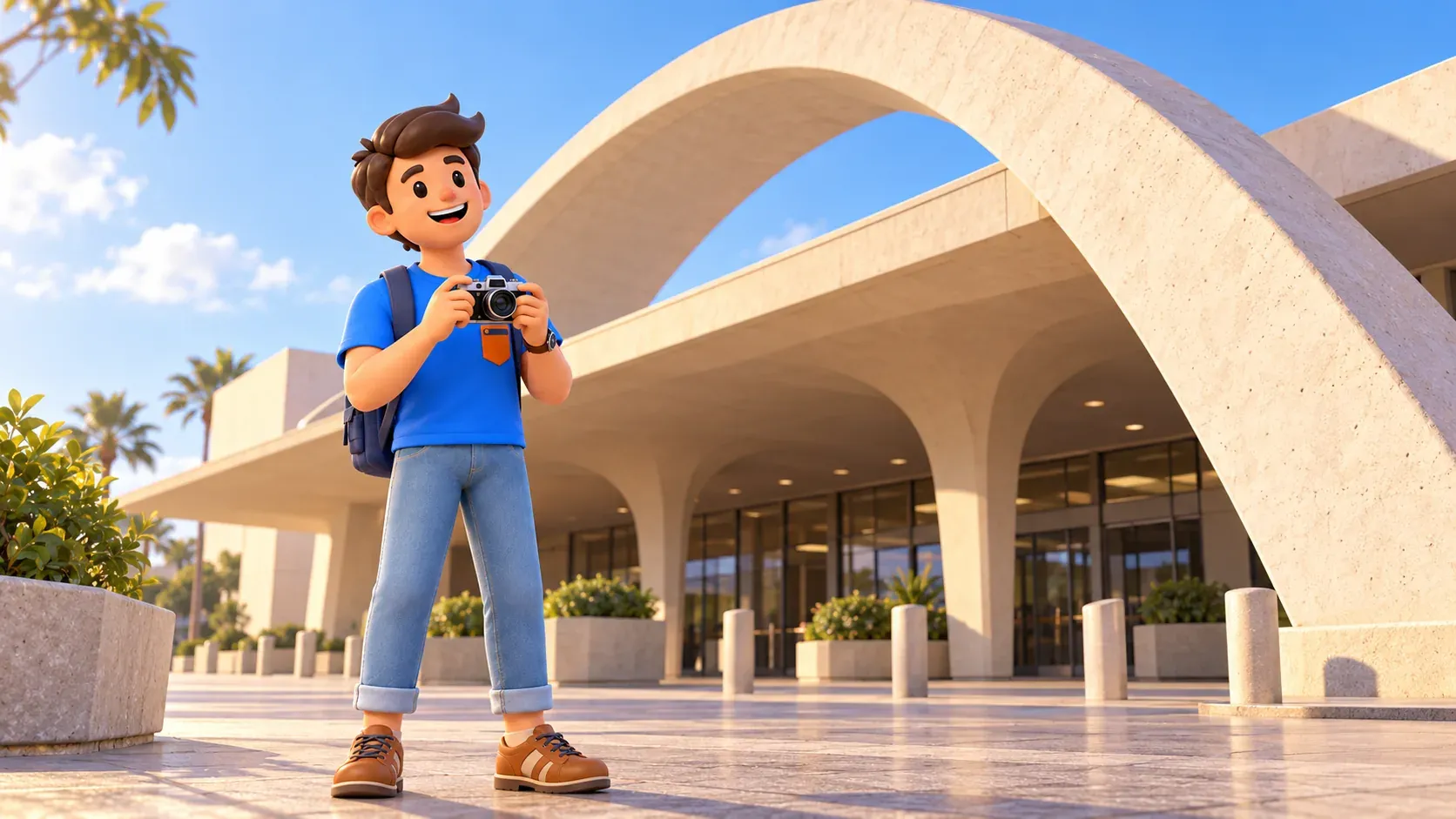
Three details to notice before moving on
The first is the span: how far the roof seems to reach compared with the points that carry it. Look from one angle, then another, without stepping into traffic or a service area. Architecture becomes easier to understand when you give a simple relationship more than one view.
The second is the edge. A roof or canopy meets the sky differently from a wall. Depending on the light, the same concrete surface can look heavy in one place and thin in another. That change is part of what makes ordinary infrastructure visually memorable.
The third is the space underneath. Shade, the entrance scale and the relation to the street can tell you how the building addressed people arriving and waiting. Keep the observation tied to the actual visible structure rather than imagining a complete historic scene.
A photograph or a quick sketch can help record one of these details. Neither needs to include the whole building. A smaller image of a curve, a shadow line or a meeting of surfaces may preserve the specific thing you noticed.
Make the local connection part of the walk
Continue towards the confirmed gallery entrance using public paths and designated crossings. The map relationship is compact, but a short distance does not identify the exact door or prove an uninterrupted accessible route. Check the actual connection before setting out if anyone needs particular access arrangements.
Along the way, pay attention to the change of scale. Lower buildings, entrances and boundary walls work differently from the large transport form you have just seen. The point is to look at the city at walking speed, not to assign a famous architect to every house.
Respect the residential character of the area. A villa façade visible from the street is not an invitation to enter a garden or photograph private life closely. Keep your attention on public-facing forms, shade and the relation between buildings and the route.
Do not turn the short connection into a hunt for every nearby site. With a focused gallery visit ahead, a few observations provide enough transition. If you want a longer architectural exploration, make that the main purpose of another outing.
Enter Etihad Modern Art Gallery at the scale of a house
Etihad Modern Art Gallery occupies a villa in Al Bateen and presents contemporary art through a private-gallery setting. The domestic scale is part of its interest. A work can feel different in a room with the proportions of a house than in a large museum hall.
Check the current exhibition and visitor arrangement directly before coming. The gallery's programme can include exhibitions and events, while published office information does not by itself guarantee a particular presentation at any hour. Choose the visit that is actually available for your date.
Begin with a slow look through the accessible presentation. Notice the size of a work in relation to the room and the way a doorway frames the next view. Pick one element to return to, instead of treating a small setting as something that must be finished quickly.
Read the available introduction after that first encounter. It may change your interpretation or explain a material or process. You do not need to understand every reference immediately. A clear question about one work is a worthwhile result of a short visit.
If a conversation with gallery staff is appropriate, ask about the aspect that genuinely interests you. Photography, sculpture, colour and making can lead to different questions. A brief exchange helps the visit stay personal without requiring an explanation of the entire art scene.
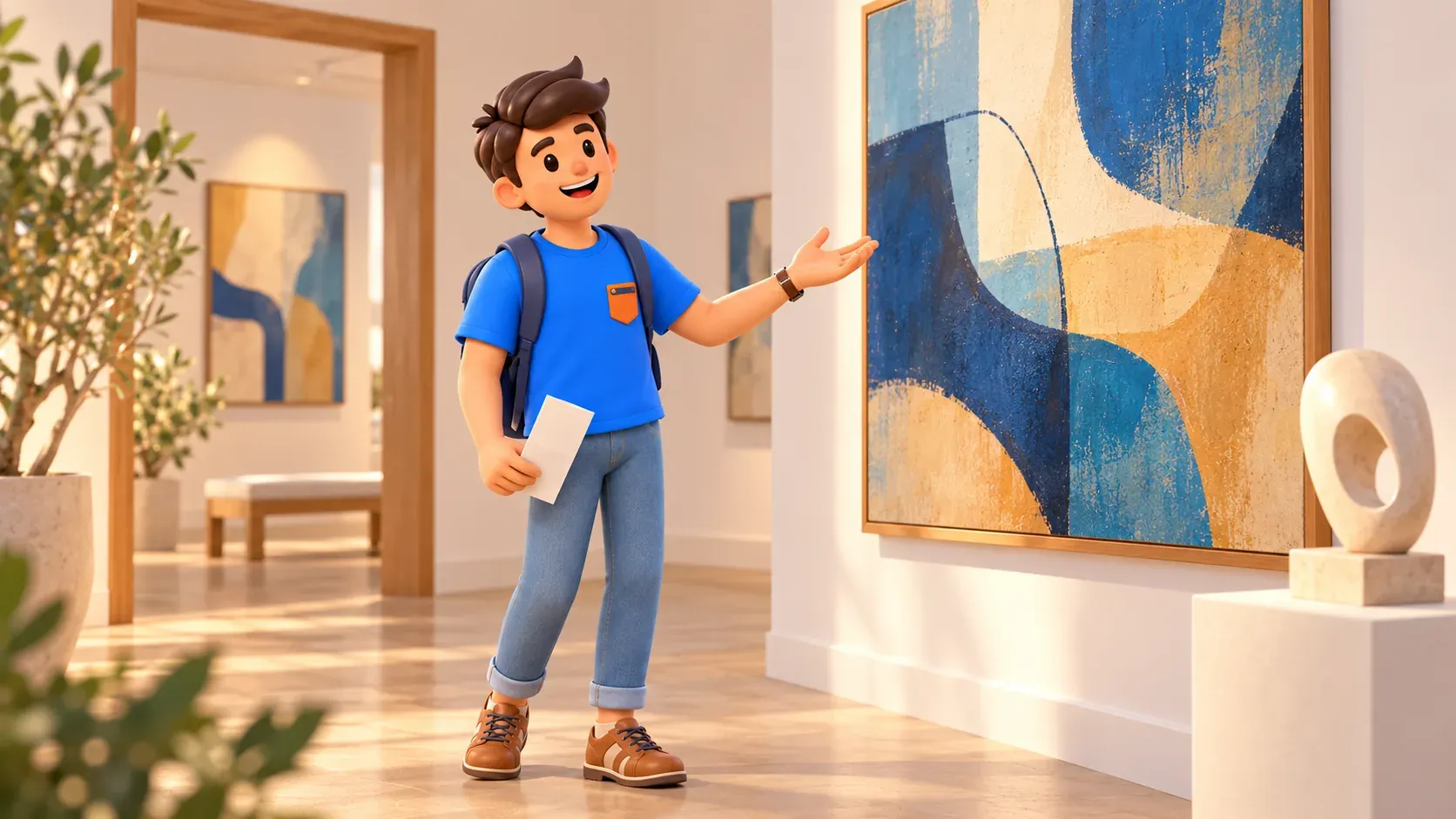
Connect the two places through scale and use
The former bus station and the villa gallery are not the same kind of institution, and they need not tell one literal story. Their relationship can be your way of looking: a roof designed for public movement, followed by rooms used for close encounters with art.
Think about how architecture changes your distance from things. Outside, you may have needed to step back to understand a canopy. Inside, a modest room may encourage a closer, slower view. That contrast gives the small walk its shape without adding another major attraction.
The art visit also shows a cultural layer that exists within ordinary neighbourhood space. You can appreciate it without treating the villa as a historic house museum or assuming that the current exhibition is permanent. The value is a specific encounter with a living gallery.
Leave room for a real pause
Keep ten to fifteen minutes for water and a rest at an appropriate available place. Decide whether a short café stop or simply a seated pause suits the group. If a particular café matters, confirm it separately instead of making the whole walk depend on an assumed open door.
This is a good moment to compare one architectural detail with one gallery impression. A notebook can hold a short sentence or a simple shape, rather than a complete account. Let the pause make the experience easier to remember.

Choose comfortable outdoor conditions and do not assume continuous shade between addresses. Water and suitable sun protection help, but the route can also become shorter. A small neighbourhood outing is enjoyable when it follows your energy rather than testing it.
If you enjoy modern heritage, intimate galleries or slower city walks, RoadMe can build a complete personal trip plan around those preferences. Using the app makes it easier to organise the day around the way you like to discover a city.
Give this outing its own place in the day
This route suits a day when you want to look closely without committing to another large cultural complex. It can also be a useful change after several famous landmarks, because the interest lies in scale, use and the setting of ordinary streets. Leave some attention for the gallery instead of arriving after a completely full programme.
With children, choose a simple observation such as a roof's long edge or the difference between a large public form and a small room. You do not need to turn the walk into a lesson. Let each person name one thing they noticed, then keep moving or pause according to the group's energy.
Keep your conclusions as small as the outing. One adapted building does not explain all of Abu Dhabi's development, and one exhibition does not represent the whole art scene. The value is the opportunity to see two different layers together and discover which one you would like to explore further.
Know what belongs to another outing
Do not automatically add the beach, marina, Etihad Towers and a palace circuit. The wider name Al Bateen covers more than the two nearby places in this programme. Any continuation needs a new calculation of time, transport and what the group still wants.
If the gallery is unavailable, keep a shorter exterior architecture walk rather than promising an art visit that cannot happen. If a confirmed gallery presentation becomes the main interest, spend longer there and reduce the street observations.
The allowance begins at the first stop. Travel from the hotel, the final pickup and a return to a parked car need their own time. Set the endpoint before the gallery visit, so the outing finishes with a pause rather than an improvised search for the way back.
What remains is a small, distinct way to see Abu Dhabi: infrastructure whose purpose changed, contemporary art at a human scale and the everyday city that holds them both.


