Which Seoul palace should you visit first?

Gyeongbokgung is the clearest starting choice for many first palace visits in Seoul: ceremonial organisation, broad courtyards and the role of Joseon’s main palace are easy to grasp. Choose Changdeokgung for landscape and a separately confirmed Huwon garden visit, or Deoksugung for Korean and Western architecture together. Changgyeonggung offers a more strolling-oriented residence landscape; Gyeonghuigung a shorter visit to a restored portion. The first choice should match an interest rather than complete all five names.
Palaces share details such as tiles, painted wood, gates and stone platforms, but create different experiences. Their layouts, historical roles, visiting scale and calendars differ. One well-chosen visit provides a clear image and a basis for comparison. Afterwards, deciding whether a second palace adds something becomes easier. This guide helps with that choice rather than replacing a full catalogue of every hall, pavilion and architectural detail at each complex.
Choose by what you want to understand
Begin with one question. For a formal palace axis, choose Gyeongbokgung; for architecture related to terrain, Changdeokgung; for the imperial period and contrasting styles, Deoksugung. Changgyeonggung combines palace spaces with a more leisurely landscape sequence. Gyeonghuigung allows concentration on a few restored elements in less time. These are different answers rather than a ranking of quality. A first visit works when the actual programme matches the kind of attention you enjoy.
Choose a palace and fit it into the trip more conveniently with RoadMe: the app develops a complete personal route around your interests, dates and pace. History, neighbourhood walks, museums and rest become a coherent programme that is easier and more effective to follow.
| Palace | Reason to choose | Suggested allowance | Transport reference |
|---|---|---|---|
| Gyeongbokgung | Main ceremonial composition | 2–3 hours | Gyeongbokgung, Line 3 |
| Changdeokgung | Terrain and separately admitted garden | 3–4 hours with Huwon | Anguk, Line 3 |
| Deoksugung | Tradition and imperial modernity | 1½–2 hours | City Hall, Lines 1/2 |
| Changgyeonggung | Residence and landscape stroll | 2–3 hours | Hyehwa, Line 4 |
| Gyeonghuigung | A shorter restored section | 1–1½ hours | Seodaemun, Line 5 |
These are editorial estimates for selected visits. Add travel from accommodation, separate guided programmes and substantial museums. Changdeokgung without the garden is a different programme from the Huwon version in the table. One principal palace outing with a nearby pause is enough for a first day. It leaves time to see the composition instead of merely reaching the best-known building before leaving for another transfer.
Gyeongbokgung: the clearest ceremonial introduction
Gyeongbokgung, 경복궁, was established in 1395 as the main palace of the new Joseon dynasty. Read it through successive gates, courtyards and principal buildings. Broad open space expresses distance and the order of official life. Mountains behind help establish the palace within the capital’s landscape. If your first visit means encountering a clear, substantial Korean royal ensemble, this option supplies a strong point of reference for understanding further palace architecture.
The present appearance includes several historical stages. Destruction in 1592, nineteenth-century rebuilding and later changes shaped the complex, with modern restoration continuing from the late twentieth century. Founding year is therefore not the date of every visible timber. That does not diminish the visit: restoration, research and the recovery of lost spatial relationships are also part of its history. Compare the purposes of spaces and individual details rather than expecting a wholly unchanged medieval environment.
For two to three hours, select the main sequence and one quieter branch along permitted paths. First see how a gate frames the next court, then compare a building’s scale with its open setting. Stone platform and roof structure offer different levels of detail. Moving from whole to part makes the visit richer than repeatedly seeking a frontal photograph. Ceremonies and special access have separate arrangements and should not be treated as guaranteed content at every hour.
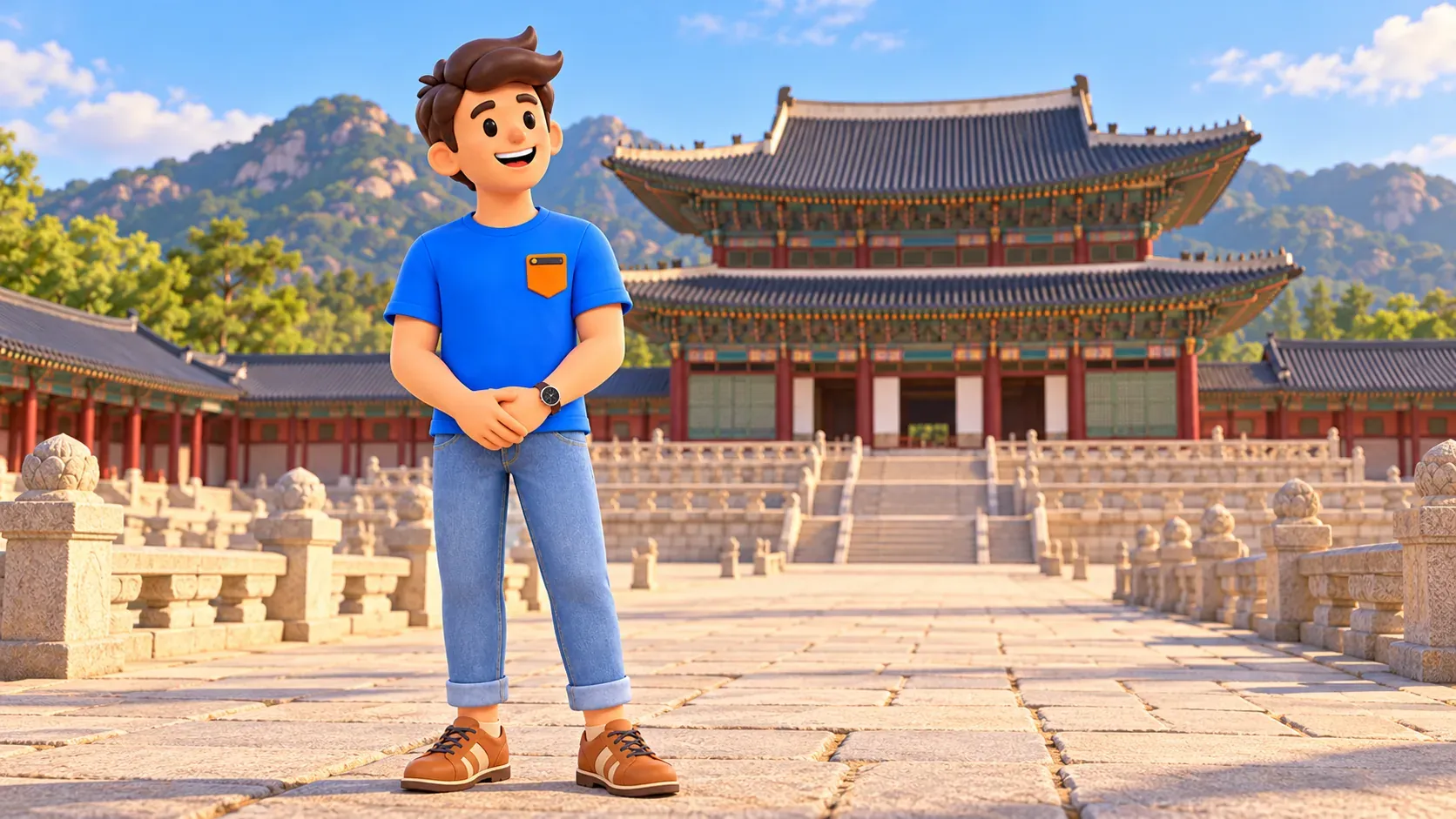
Changdeokgung: architecture following the landscape
Changdeokgung, 창덕궁, began in 1405 and developed as an important royal residence. Its main distinction for this choice is the relationship between buildings and natural surroundings. Turns, level changes and courtyard positions produce a different experience from a long ceremonial axis alone. Notice how a route joins several spaces into a sequence. This can be the right first palace for someone more interested in landscape relationships than the breadth of a formal square.
Huwon strengthens that interest, but visiting the garden requires a separate decision. A suitable timed session, language and admission conditions, and access to the palace itself must all be secured. Main admission does not automatically include the garden. Confirm the visit before distributing three to four hours between approach, palace and garden. Without confirmation, choose a palace-only programme or another first palace rather than expecting a guaranteed place when you arrive.
Allow roughly seventy to ninety minutes for the current garden programme, with possible route changes. A distant pond or pavilion should not become the sole objective. Water, trees and buildings, and changing open and concealed views, matter more. Illustrations convey atmosphere and stylised spatial ideas rather than a confirmed route towards a particular façade. Current arrangements determine permitted connections and the actual programme. The landscape remains interesting as a sequence, even when one expected section is unavailable.
Deoksugung: choose contrasting periods
Deoksugung, 덕수궁, beside City Hall is convenient for a more compact first encounter. Traditional wooden structures stand alongside Western architecture from the imperial period. Its relationship with the Korean Empire proclaimed in 1897 changes the subject: this is also an attempt to express state modernity through another architectural language. Stone, columns and traditional rooflines allow you to see different ideas of representation and authority within one visit rather than treating all palaces as identical.
Choose one comparison. How does the entrance to a wooden building differ from a stone one? What changes in proportion, surface and the boundary between room and courtyard? Understanding does not require entering every interior: exterior observation already reveals important contrasts. Seokjojeon, completed in 1910, has separate interior visiting conditions. Ordinary palace admission does not automatically mean a guided interior tour or access to every exhibition project. Establish those additions before counting them within the planned time.
An allowance of one and a half to two hours supports a selected exterior sequence and an unhurried finish. The palace’s regular later opening may suit an afternoon, but rooms and museums have their own closing times. A daytime first visit can focus on materials and volumes without depending on a special programme. A walk along the outside wall is a separate urban element, not a substitute for entering the palace grounds.

Changgyeonggung: residence, water and a strolling rhythm
Changgyeonggung, 창경궁, is easily confused in writing with Changdeokgung. These neighbouring palaces have separate names, entrances and conditions. Established in 1483 on an earlier residence site, Changgyeonggung is associated with royal family life. A selected visit can connect palace buildings with greener areas and observe how formal architecture gives way to a more leisurely landscape. It is an independent first visit rather than merely an extension required after the neighbouring palace.
Its history includes early twentieth-century transformation into a park with a zoo and botanical garden, followed later by restoration and recovery of the palace name. Those layers are not equally old. The changing purpose itself is interesting: a royal setting received other functions and was subsequently reinterpreted as heritage. This gives the waterside walk meaning without requiring a detailed lecture. It also prevents the present palace from being mistaken for a zoo that still forms the main attraction.
Allow around two to three hours from the appropriate visitor approach on the Hyehwa, Line 4, side, leaving time to return. Do not assume every passage between adjacent grounds operates continuously. A confirmed main entrance and one clear exit simplify the first visit. Later palace hours do not mean identical access to all sections. Daylight makes it straightforward to compare building form and landscape without waiting for a particular evening event to supply the interest.
Gyeonghuigung: a shorter, focused encounter
Gyeonghuigung, 경희궁, in the western historic centre offers a smaller visiting scale. It is a restored portion of a larger seventeenth-century ensemble rather than the entire original palace preserved intact. Buildings and gates returned to the site through later work. Choose it to study a few elements and grasp a palace composition in a shorter period. It need not reproduce Gyeongbokgung’s scale to provide a worthwhile experience or an introduction to restored heritage.
About one to one and a half hours can cover the approach, principal available spaces and return towards Seodaemun on Line 5. Admission is free, but visiting follows a schedule: 09:00–18:00, last entry 17:30, closed Mondays and 1 January. This is not an unrestricted twenty-four-hour park. Smaller scale also does not guarantee an absence of visitors. The reason to choose is focus and manageable extent rather than a promise of an empty photographic stage.
The calendar can change your first choice
Gyeongbokgung normally closes on Tuesdays; Changdeokgung, Deoksugung and Changgyeonggung on Mondays. When a regular closure coincides with a public holiday, the royal operator moves it to the following first non-holiday day. Check Gyeonghuigung through its municipal calendar. Distinguish final admission from closing time. Gyeongbokgung and Changdeokgung have seasonal hours, and evening access is not an identical opportunity at all five palaces. One daytime plan is the simplest starting point.
Connect the chosen palace with the wider stay more conveniently in RoadMe: the app prepares a complete personal plan around your interests and rhythm, distributing history, neighbourhoods and rest across your days. A developed programme helps decisions and effective use of time without endless manual comparison.
Choose your first palace around one principal interest and the time actually available. Gyeongbokgung explains the ceremonial axis, Changdeokgung landscape relationships, Deoksugung imperial contrasts, Changgyeonggung residence and strolling space, and Gyeonghuigung a restored portion. After one attentive visit, a second becomes a meaningful comparison. A new subject, rather than another similar photograph, makes an additional palace walk a useful part of the trip and gives each outing its own reason to exist.