Which Saadiyat museum should you choose?

The best choice on Saadiyat depends on the kind of curiosity you want to follow. Choose Louvre Abu Dhabi for art and connections across cultures, Zayed National Museum for the UAE's story, Natural History Museum Abu Dhabi for the Earth and life, or teamLab Phenomena for an immersive encounter with light, sound and changing environments.
These are four different experiences, not four interchangeable ways to spend the same afternoon. Start with one main visit. Giving it enough attention usually brings more than trying to compare every entrance in person. A second place can wait for another day or become a deliberate addition with its own time and admission.
Choose the question you want the visit to answer
Ask what you would enjoy discussing afterwards. How do people create and exchange ideas? How did this country develop? How does the natural world change? What happens when an artwork surrounds you? That question is a better starting point than a ranking that assumes every traveller wants the same museum experience.
RoadMe makes the choice easier to use in a real trip: the app develops a complete personal itinerary around your interests, dates, pace and budget. Your museum preference can shape a balanced day with suitable connections, meals and rest, instead of becoming another planning problem.
Also think about how you like to pay attention. Some visitors enjoy looking closely at objects and reading context; others prefer a larger narrative, scientific questions or a space that changes as they move. None is a lesser way to engage. Choose the form that makes you curious today.
A quick comparison before the details
| Your main interest | First option to consider | A useful approach |
|---|---|---|
| Art and shared human ideas | Louvre Abu Dhabi | Follow one theme across a few works |
| The UAE and its people | Zayed National Museum | Connect places, lives and historical change |
| Earth, life and scientific discovery | Natural History Museum Abu Dhabi | Begin with one question about the natural world |
| Immersive contemporary art | teamLab Phenomena | Observe how the environment and your presence interact |
This is a guide to fit, not a league table. The museums contain more than a single subject, and a temporary programme can change the appeal for your dates. Use the comparison to choose where to investigate further, then check the current offer of that place rather than assuming the general label describes every room.
Louvre Abu Dhabi: art through connections
The Louvre's galleries place human creativity in a broad chronological story with connections across cultures. That makes it appealing when you enjoy comparing how people represent, make and use things. You can follow a material, an image of a person or a shared activity instead of treating the collection as isolated famous names.
Choose a small number of works and give each a first look before reading the interpretation. Return to the object afterwards and notice what changed. This rhythm suits a selective visit: you leave with a few relationships in mind, rather than measuring success by the number of galleries crossed.
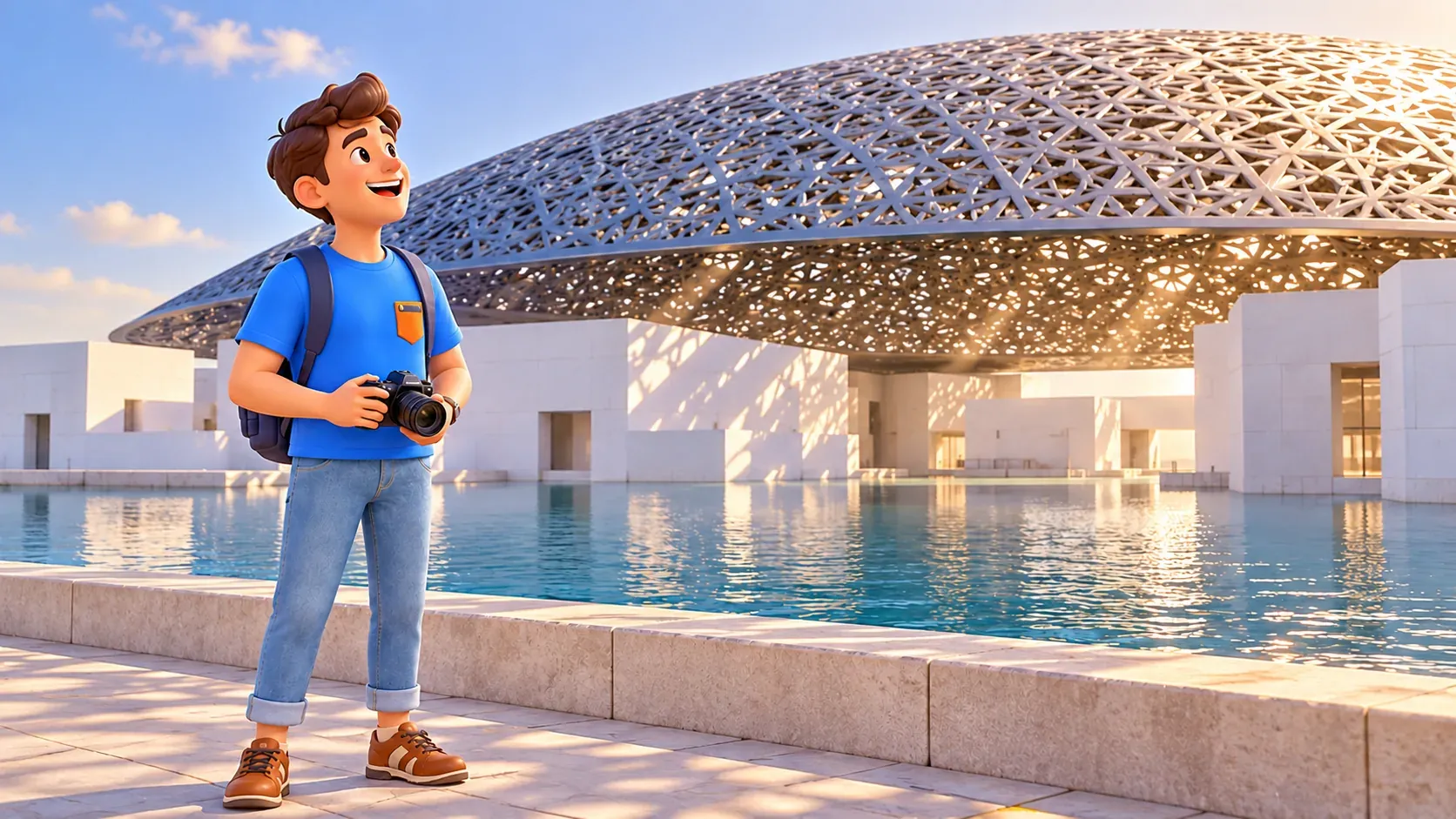
The architecture adds another layer. Jean Nouvel's broad patterned dome and low white pavilions create a setting beside the water, but a good museum choice should also interest you inside. If the building is the main attraction, check what access is actually available for your intended visit instead of assuming every exterior and interior area follows identical conditions.
Consider the Louvre first when you want a wide cultural frame and enjoy slow visual observation. It can also work for companions with different artistic tastes because the starting question can be broad. Do not make one particular borrowed work essential: displays and loans can change, while the overall approach gives the visit its structure.
Zayed National Museum: understanding the country around you
Zayed National Museum places the UAE's land, people and history at the centre. Sheikh Zayed's life forms an important lens within that larger story. It is a strong option when the holiday has raised questions about the country you are travelling through and you want a more connected account than isolated facts picked up between attractions.
Look for relationships between geography, settlement and exchange as you follow the actual presentation. The useful outcome is a clearer sense of how lives and places connect over time. It need not become a test of remembered names or dates. Let one historical question guide the amount of detail you take in.
This differs from choosing the Louvre for a broad cross-cultural art encounter. There can be overlapping themes, but the centre of attention changes. If you have only one museum opportunity and your strongest wish is to understand the UAE itself, that distinction may decide the choice more clearly than comparing striking building photographs.
Keep the museum's current programme separate from accounts of its opening celebrations. An event described in an older announcement is not automatically part of your visit. Choose the permanent subject first, then check exhibitions or activities for your dates if they would genuinely add something you want.
Natural History Museum Abu Dhabi: curiosity on a different scale
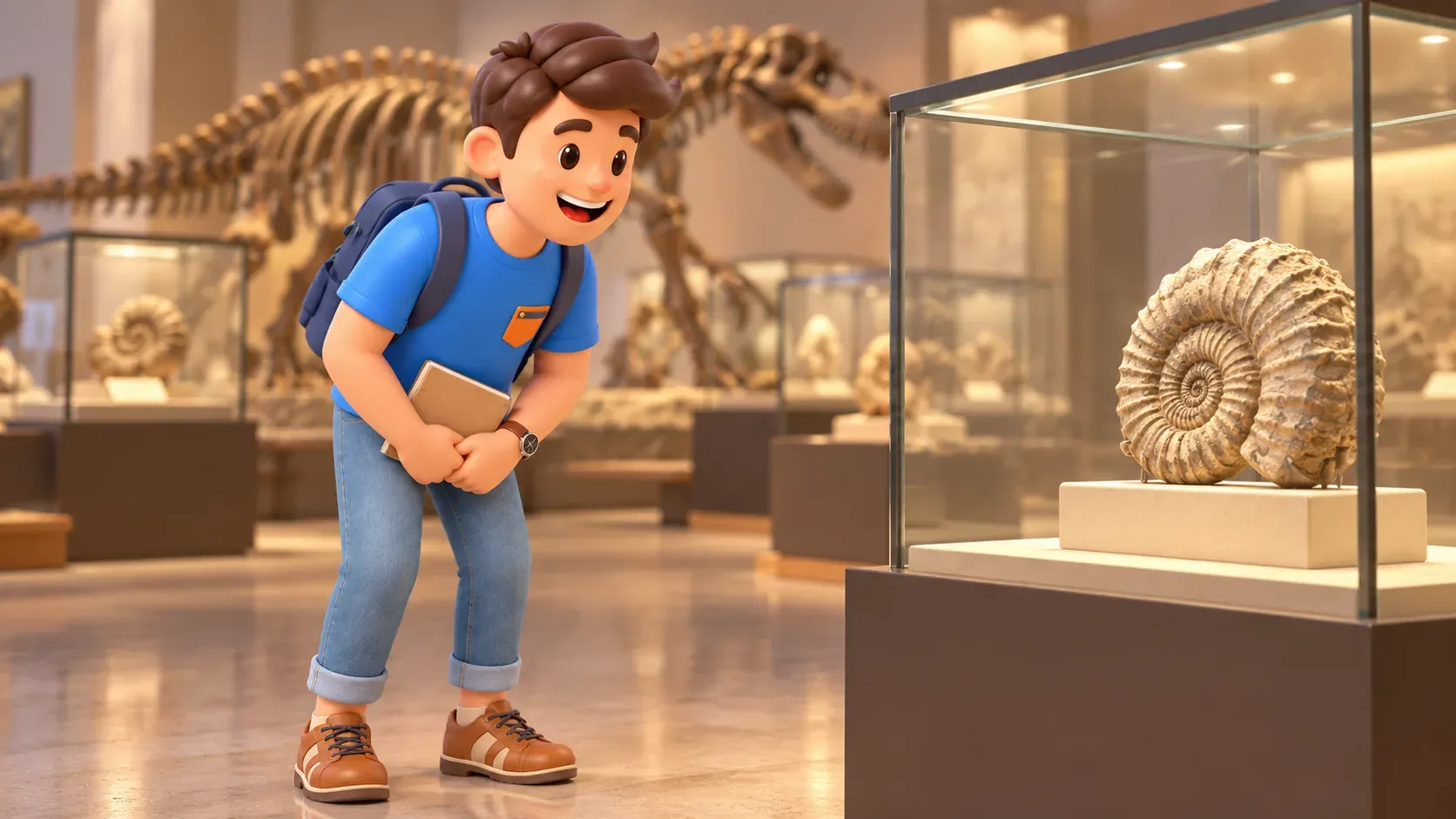
The Natural History Museum shifts the subject towards the Earth, life and scientific discovery, with space also part of its wider story. It suits a wish to think about the planet beyond a single city's timescale. A fossil, a scientific explanation or a relationship between environments can provide the beginning of a much larger question.
Choose it for the subject, not only because a large specimen looks impressive in a photograph. Ask what the display helps explain about the world, then follow that question through a manageable part of the galleries. A sense of scale becomes more rewarding when it leads to understanding rather than only surprise.
For families, this can be a shared starting point when a child has a particular interest in ancient life, animals or space. Adults do not need to turn every label into a lesson. Let curiosity decide the direction and stop when attention fades. The same approach also works well for adults travelling without children.
Check the current programme if workshops or temporary exhibitions influence the decision. Their dates, places and booking conditions belong to those activities. A general museum choice should not promise that a particular event or hands-on session will be available whenever you arrive.
teamLab Phenomena: entering an artwork's environment
teamLab Phenomena offers an immersive form of contemporary art in which light, sound, movement and the surrounding conditions become part of the experience. Rather than looking only at an object from outside, you encounter an environment and notice how your presence relates to what is happening around you.
Choose this when that kind of perceptual exploration appeals to you. The most satisfying visit is not necessarily the one with the most photographs. Spend some time observing before using the camera, where photography is allowed, and notice a change you would have missed while searching for a single ideal frame.
The official information distinguishes areas with and without water and describes intense sensory features, including bright or flashing light, fog and some dark enclosed spaces. Read the current visitor guidance for the people travelling with you. Do not assume that every area has identical access or that the whole experience will feel calm to everyone.
Specific entry, clothing, age or participation conditions should be checked for the actual visit. Immersive art is a meaningful option in its own right; it does not need to replace an interest in history or become an obligatory addition after another full museum. Choose it deliberately rather than simply because its pictures are colourful.
Let the group choose a shared interest
When preferences differ, ask each person for one thing they would genuinely like to explore. A shared theme may emerge: materials, changing landscapes, everyday objects or an unfamiliar way of seeing. Select the place that gives that theme the best chance, instead of trying to compensate for every difference by booking all four.
Children's ages alone do not decide the answer. Their current interests, the kind of environment they enjoy and the group's available energy matter too. Likewise, an adult who seldom visits museums may enjoy a focused historical question, while an art enthusiast may prefer science on this particular day.
Build a comfortable day around the choice
As an initial editorial planning allowance, leave roughly two to three hours for the chosen experience, then adjust to current admission, the programme and your interest. Count arrival, orientation and the return separately. None of these estimates is an official tour length or a reason to hurry through a visit you are enjoying.
Saadiyat's cultural district does not mean every connection is a short covered walk or every venue shares one ticket. Check the real approach and the admission you need. If considering a combined product, read its current coverage and conditions rather than assuming a general museum pass includes every option discussed here.
If you still want a second visit, give it a separate block and a real break between the two. Otherwise keep a lighter finish. One museum explored with attention can become the day's complete cultural experience, leaving space to enjoy the rest of Abu Dhabi.
RoadMe conveniently develops the wider trip around those priorities, combining your preferred museums with other interests and the pace that suits you. Let the app work through the full personal programme so your chosen cultural day belongs naturally in the whole holiday.
Choose the question that stays with you after reading the options. A clear reason for going is more useful than a universal winner, and a considered visit will give that curiosity time to become a memorable part of your trip.