Washington in the Heat: A Short Morning Walk and Museum Break

On a hot Washington day, smaller sections can be more rewarding than one continuous monument walk. Choose one outdoor focus in the morning, one museum for the middle of the day and leave the evening optional. The Lincoln Memorial, Washington Monument and Jefferson Memorial do not have to belong to the same uninterrupted route. Spread them across days or select the most important one.
This plan changes the effort rather than promising cool conditions everywhere. Mornings and evenings can also be hot, so use the forecast and current advisories for your date. The structure is a flexible editorial suggestion, not a timed survey. Shorten or omit the outdoor portion if conditions are unsuitable while retaining a meaningful museum experience instead of treating every original stop as compulsory.
Start with one outdoor section
Name a main outdoor interest and a clear finish: the Lincoln Memorial from an open approach, the Washington Monument’s silhouette or a small waterside section by the Jefferson Memorial. These are three alternatives, not consecutive stops. In hot conditions, knowing where the walk ends and the quieter next part begins is particularly useful. A clear boundary prevents the route growing with every nearby attraction.
RoadMe can develop a complete personal trip plan around your interests, dates and comfortable pace, distributing open spaces, museums and rest across the stay. In the app, it is more convenient to organise days so the main experiences do not require one long continuous walk.
Do not treat the city map as a promise of easy walking. An open area can look simple, while the entrance approach, street crossings and return also require effort. Choose the whole fragment from an understandable start to a finish. If continuing requires a substantial connection, decide how to make it separately rather than automatically adding that distance on foot.
Check the day’s weather and current restrictions. An early start changes the rhythm without guaranteeing comfort. Do not appoint a universal hour after which every street will be pleasant. Under unsuitable conditions, retain a smaller programme. The value of a visit does not depend on completing the outdoor section exactly as imagined before you knew the actual conditions.
Prepare the next step before starting
Choose the museum and its actual opening time in advance. An early memorial visit does not open museum doors sooner. If a long gap remains between the two, provide a suitable rest arrangement or change your start. Do not turn the whole morning into waiting at a closed entrance assumed to be a guaranteed available place of shelter.
Carry what you need for a modest day and check your museum’s belongings rules. Plan water and a pause without expecting a drinking fountain at every point. Use comfortable footwear and current permitted approaches. This article does not prescribe medical quantities or thresholds. Its purpose is a flexible programme that responds to the real conditions of your trip.
The Lincoln Memorial: a short morning encounter
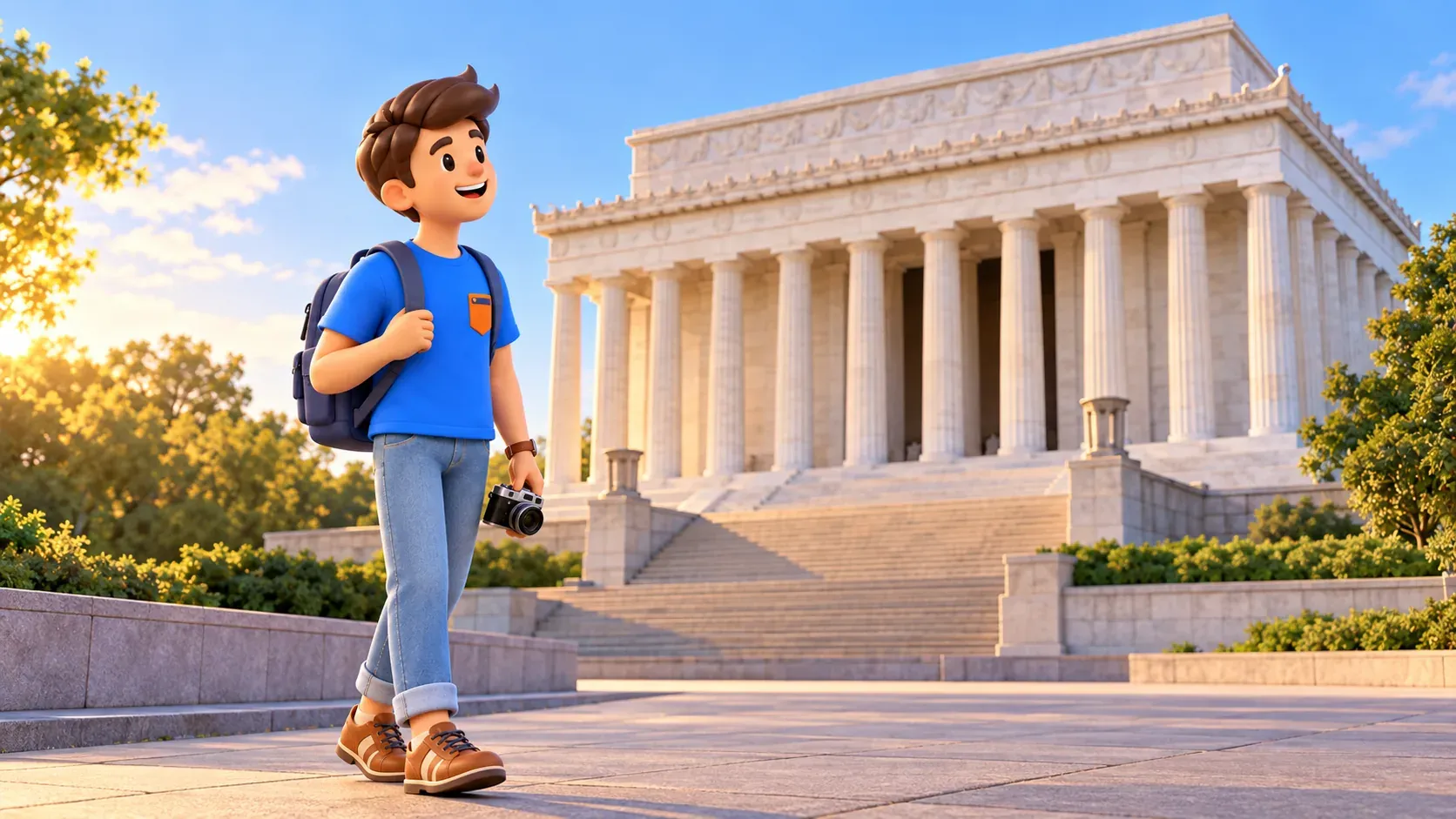
At the Lincoln Memorial, focus on the building and its position in the city. The rectangular temple form and rhythm of columns make an impression before a detailed visit. Notice how scale changes on approach, what gives the facade its order and how it faces the city’s open axis. A few such observations are enough for one small outdoor section.
Do not automatically turn it into a complete Reflecting Pool walk and onward Mall journey. At preparation, the pool, adjacent paths and specified lawn strips are closed through November 20, 2026. Use available outer paths and signed diversions. A stated end date does not guarantee that access will have resumed immediately afterwards. Check the actual route for your own visit.
The onward journey to the museum deserves a separate decision. The memorial occupies the western part of the central landscape; the chosen museum entrance is another address. Every intervening attraction need not fill the gap. If those places matter, give them their own route under suitable conditions and finish today’s outdoor portion at the scale you originally selected.
Morning offers a different opportunity for attention, not a guarantee of an empty site. Other visitors, maintenance and altered approaches remain possible. Stop where permitted without obstructing people. A long wait for a perfect photograph may defeat the reason for choosing a brief, calm start. The experience does not require an image without anyone else in the background.
Two other morning alternatives
The Washington Monument from outside
If a central panorama matters most, choose an exterior look at the Washington Monument. Its simple obelisk form helps establish the scale of open space through lines and distances. Limit the section to approach, observation and departure towards the next part. It does not require going up inside and does not promise an entry ticket or a suitable ascent slot.
You do not have to circle every side and then continue to opposite ends of the axis. Find an available view that answers your interest and finish. Lawn around a landmark does not guarantee continuous shade or a convenient exit in any selected direction. Plan the actual next connection according to open approaches and your own pace instead of the apparent simplicity of the skyline.
The Jefferson Memorial and a small waterside fragment
For another relationship between architecture and water, choose the Jefferson Memorial. Observe the circular volume, colonnade and position at the shore. Do not make this an obligatory full Tidal Basin circuit. One small section with a clear return suits the format better than a promise to walk around the whole waterside area before the museum part begins.
The shore does not guarantee coolness, a permanent breeze or shade. Assess the available approach and conditions before adding another section. The museum remains a separate journey; an attractive water view does not remove it from the plan. If current logistics make this option harder, choose a more convenient morning start without treating it as the loss of a required sightseeing item.
One collection for the museum part
Choose the National Museum of Natural History or the National Gallery of Art’s West Building for the middle of the day. The first suits ancient life, natural processes, animals and minerals. The second supports attentive looking at historical art. These are subject alternatives, not a sequence of two complete collections after a morning that has already required time and energy.
Both ordinarily open at 10:00. Consider your actual date and holiday closures. Ordinary admission is free without tickets, while a particular programme can have separate conditions. A museum break does not promise instant entrance: screening, possible waiting and reaching the chosen section take time. Allow those parts rather than counting only the minutes you expect to spend in front of exhibits.
At Natural History, retain one line such as ancient forms of life or natural materials. Every floor is unnecessary. In the Gallery, compare a few works through light, colour or space. These are suggestions for personal observation, without guarantees about a particular object or temporary display. A theme reduces the tiring need to keep deciding which new section should come next.
Being indoors is not a promise of identical temperature and comfort throughout every space. Each place has its own conditions and usable areas; each person has a different pace. Ask staff about an appropriate pause when necessary. Do not describe every museum room as an unlimited place to remain with food and drinks regardless of the institution’s actual visitor rules.
The West Building’s general closing time is 17:00, while Natural History closes at 17:30. Do not move the museum part to an indefinite late evening as though it were a round-the-clock fallback. If energy remains afterwards, choose the next activity separately. The requirement to leave at closing is also a real boundary for this part of the day.
Give the middle of the day a real break
If leaving for lunch and hoping to return, confirm the current re-entry arrangements. The absence of an ordinary ticket does not guarantee a return without screening, waiting or other conditions. Finishing the chosen subject and eating afterwards may be simpler. It reduces repeated connections and avoids depending on an unplanned return to the same entrance later in the day.
With a fixed evening event, build from its actual location and start time. A morning waterside visit is not compulsory if it creates an inconvenient cross-city journey. The format can be shorter: one museum, food and rest before the event. That remains a meaningful Washington experience when a larger open-air section moves to another date or is removed entirely.
A break need not be another attraction. Food, quiet rest or returning to accommodation may be more useful than a second museum chosen solely for an interior. Decide what suits the group. If lunch takes longer, shorten the optional continuation. Do not compensate for stopping by hurrying between places and trying to restore the original intensity before the evening.
Plan food separately from the collection. An institutional café has its own hours, offering and capacity. Appearing on the floor plan does not guarantee a table and convenient service. This scenario needs an area and time allowance rather than one restaurant required for every reader. Avoid making one unconfirmed venue the condition on which the entire comfortable day depends.
Remember the return journey. After a lengthy indoor visit it can feel different from the morning. If the museum is far from your rest destination, keep a clear transport option and check current operation. A plan without compulsory paid museum admission still involves possible transport, food and other family expenses. Free entry does not make all practical decisions disappear.
Leave the evening as a possibility
Look at real conditions again. If you want to go out and weather suits, choose a small familiar or new section with a clear finish. It need not add the other two memorials from the morning alternatives. A free evening has value because it does not require recovering everything omitted earlier in the day. Another pleasant fragment can remain small in its own right.
If the evening stays hot, keep a quieter format. The word evening does not guarantee a comfortable temperature. Do not make success depend on a sunset photograph or a complete waterside circuit. Rest after one chosen collection is a legitimate conclusion to a meaningful day. A following morning can have its own question if your trip includes another day.
With children or different paces, agree on a shared small outdoor section. Additional walking can shrink without a family endurance contest. If someone needs rest sooner, adjust the programme and return arrangement. An expected option to finish preserves calm better than debating cancellation at the far end of another compulsory connection that nobody currently wants to make.

In RoadMe, it is easier to prepare a personal plan for the complete journey, distributing important places, museum effort and rest according to your interests and pace. A hot day can then follow your own comfortable rhythm instead of becoming an attempt to complete somebody else’s list.
Choose one morning section, confirm the museum and leave the last part free. If choosing a collection is the main question, read our guide to selecting one Smithsonian museum. A smaller route leaves attention for what you really chose to see and room to continue discovering Washington without unnecessary urgency.