Verona in winter: a short day, one museum and the evening city
Winter Verona suits small chapters: give one collection proper attention, keep city details for daylight and spend a short evening on a familiar square. The day does not then depend on completing a long river walk or reaching every hilltop. It has something meaningful indoors and clear boundaries for the outdoor sections.
For a first winter visit, try Castelvecchio, Corso Cavour and Porta Borsari towards Erbe and Signori, then Via Mazzini to Piazza Bra. After a pause, you can see the Arena outside in the evening city. Snow, Christmas markets and special events are not built into the plan; their presence depends on weather and the calendar.
Keep daylight available for the streets
Start with the museum, perhaps around 10.30am, allowing 90–110 minutes. Follow with a compact central walk of roughly 75–90 minutes including stops. This order gives facades and squares their daylight, rather than leaving the entire outdoor section until after a late museum exit.
RoadMe makes preparing a personal trip around your interests and pace much more convenient. Try arranging museums, walks and downtime across your winter Verona days in the app, connecting separate ideas into an enjoyable itinerary.
Add 45–60 minutes for an indoor pause, 20–30 minutes for optional evening Bra and 20–30 minutes of flexibility. Together that gives around 250–320 minutes of activities spread across the day. Travel from your accommodation, long rest intervals and waiting for darkness are extra. These are editorial allowances, not measured timings for a continuous route.
Different winter months and cloud conditions change the experience of daylight. Avoid assigning every date the same universal evening hour. Look up sunset for your own day and adapt the outdoor section. If you prefer to finish early, the museum and daylight walk already make a complete outing.
At Castelvecchio, choose art and the museum’s arrangement
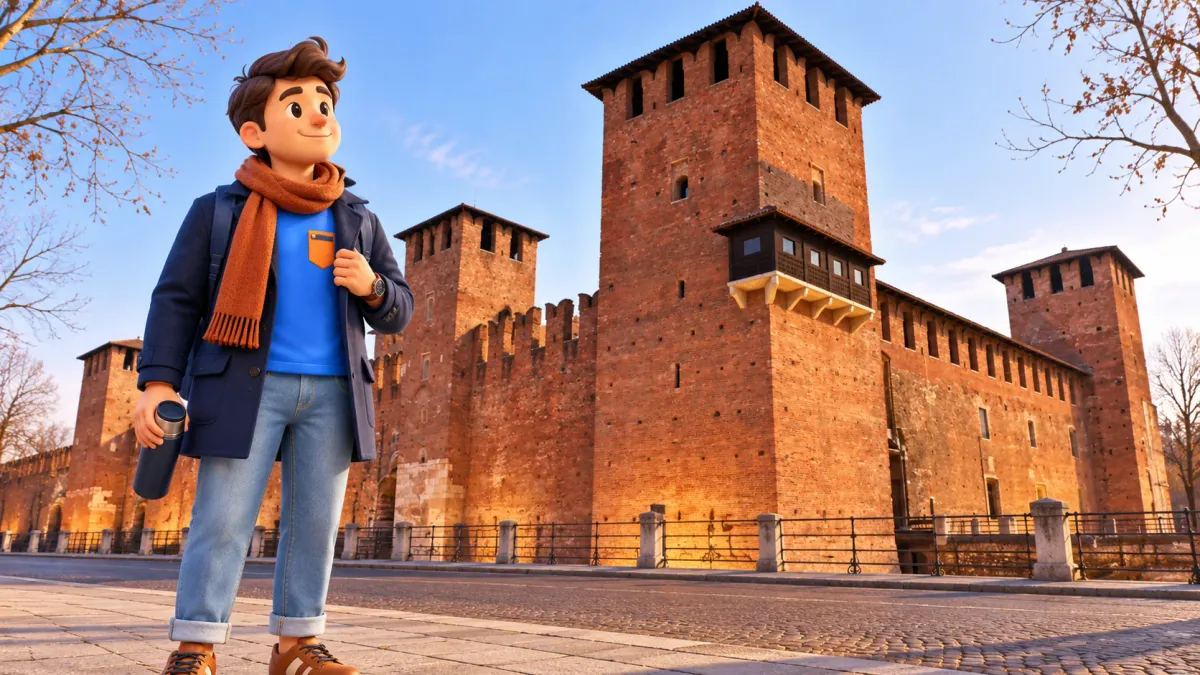
Castelvecchio began as a fourteenth-century Scaliger defensive castle and now houses an art museum. The collection includes medieval, Renaissance and later works. Distinguish interest in the fortress outside from the time you want to give the displays: a museum visit involves more than briefly looking at towers.
One of its particular qualities is the relationship between art and space. Director Licisco Magagnato and architect Carlo Scarpa worked on the modern museum arrangement. On a first visit, notice how placement changes an encounter with an object: where it enters your sightline, what surrounds it and how the next transition redirects attention.
You do not need a full understanding of Scarpa’s work or every school of painting beforehand. Choose one sculpture and one painting to look at longer. Notice the difference between encountering a three-dimensional object and an image. A few personal observations make the visit rewarding without attempting to remember an entire museum in one morning.
The proposed 90–110 minutes is an allowance for selected parts, rather than a promise to see everything. Stay longer if art becomes the day’s main interest and shorten the streets afterwards. Movement through courtyards or other open parts differs from time in galleries. The castle should not be imagined as one uninterrupted covered room.
Ask which sections are available before beginning. Official pages may announce temporary route changes, and conditions on your actual date matter more than a photograph from another season. This winter plan requires no wall-walk climb. Visitors with particular mobility requirements should check their needed route: the museum has partially accessible areas rather than identical access throughout.
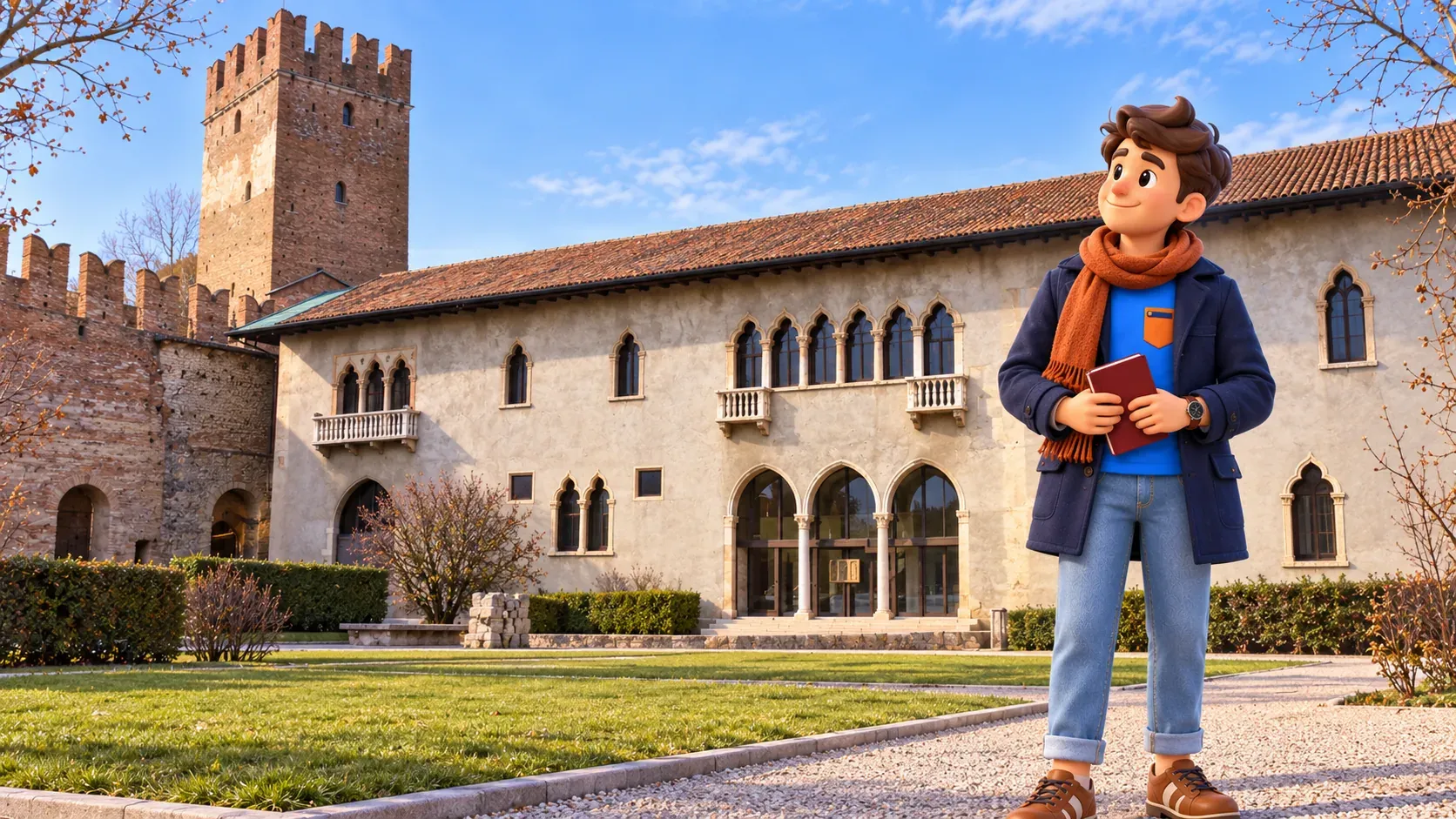
Check the museum day and holiday dates
Castelvecchio normally opens Tuesday to Sunday, 10am–6pm, with final admission at 5.15pm. Its usual closures include Mondays, 25 December and 1 January, with separately announced exceptions possible. Check the actual date of your winter trip, when public holidays sit alongside the normal weekly pattern.
On a Monday, you could choose Palazzo Maffei and keep the walk around Erbe and Signori. Maffei’s regular closing day is Tuesday, while Monday is normally an opening day. This is an alternative plan, not an additional museum after Castelvecchio. Confirm the holiday calendar and ticket arrangements for the institution you actually choose.
Final admission is not the start of a full, leisurely visit. Arriving close to closing provides a different amount of gallery time from the morning outline. Preserve the visit duration you want first, then choose an appropriate entry time. That helps prevent a winter day in which everything interesting has been postponed until the last available minutes.
Do not count on empty rooms, special winter discounts or a particular indoor temperature without confirmation. Choose the museum for its collection and suitable arrangements rather than a promise of deserted heated galleries every Tuesday. Settling practical details before leaving keeps more attention available for the visit itself.
Walk from the castle towards Erbe in daylight
After the museum, take Corso Cavour towards Porta Borsari. Choose one palace frontage along the way, such as Palazzo Canossa, and look at the relationship between its substantial base, windows and rooftop figures. This is a brief exterior encounter from a public street, rather than access to private spaces behind an attractive entrance.
Roman Porta Borsari changes the walk’s theme. An ancient entrance facade survives within an everyday street. Compare its repeated openings with the palace windows you have just seen. Different periods continue a shared conversation about how architecture directs people and their looking.
Continue along Corso Porta Borsari to Piazza delle Erbe. The area held the Roman forum, while the present appearance developed later through several layers. For this winter walk, noticing the combination is enough: painted facades, fountain, Baroque palace and square life. A detailed account of every building is unnecessary for a compact visit.
A short connection through Arco della Costa reaches Signori before you return to Erbe. You can compare neighbouring spaces without adding a long transfer. If cold, rain or tiredness favours a shorter programme, keep just one square. A worthwhile day does not depend on seeing both in every set of conditions.
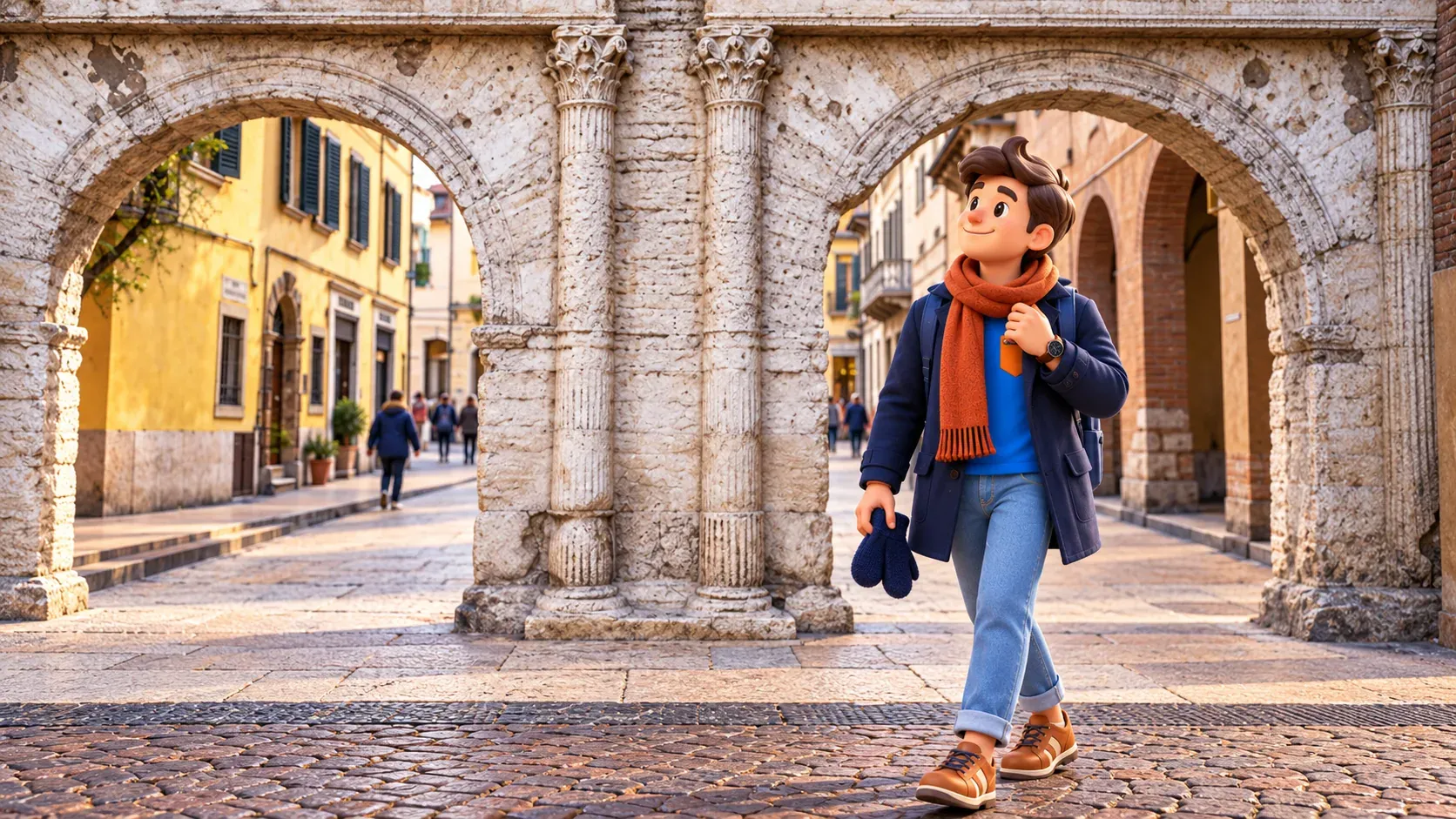
Reach Bra and give the pause some room
From the Erbe area, follow Via Mazzini towards Piazza Bra. This finishes the daylight connection across the centre and brings you to the possible evening stop. Movement and short observations are included in the walking allowance. Shopping, extra attractions and long window-shopping stops increase the duration.
For the pause, choose an open business where you can sit inside and have food or a drink. A particular table, menu or available seat is not guaranteed. Let the stop provide the rest you need now, without turning it into another compulsory expedition to the city’s most famous address.
If evening light is still a long way off, return to your accommodation and leave the square for a separate short outing. Add both journeys separately. Sightseeing allowances do not include every possible approach from every part of the city. A long interval between activities can remain free instead of becoming another attraction.
Agree on the next decision before stepping outside again. You can finish after the meal, come back to the Arena later or simply walk a little around Bra. When those possibilities are understood, the evening need not become a debate about which additional sight must urgently be fitted in.
Use RoadMe to shape the whole trip around your preferred balance of art, city details and pauses. The app connects those interests with your pace, making it easier to bring winter days together into a personal plan.
See the Arena outside in the evening
Allow about 20–30 minutes on Piazza Bra for a short evening impression. Look at the Arena’s outer wall and the way the large amphitheatre sits beside city lights. Entry is unnecessary for this section. Lighting and available public space can change with works or events, so respond to the arrangements on your actual evening.
A walk around the square is different from a performance. Avoid carrying Verona’s summer opera image over to every winter date. If you want a show, choose an actual event separately through its official calendar, venue and time. This small outing stands alone and does not depend on buying a concert ticket.
Bra has more than an ancient story. Buildings from later periods frame it, and the Liston belongs to the city’s tradition of strolling. Move your gaze from amphitheatre arches to the way people use the square today. An evening need not deliver a new list of facts to become a memorable part of the trip.
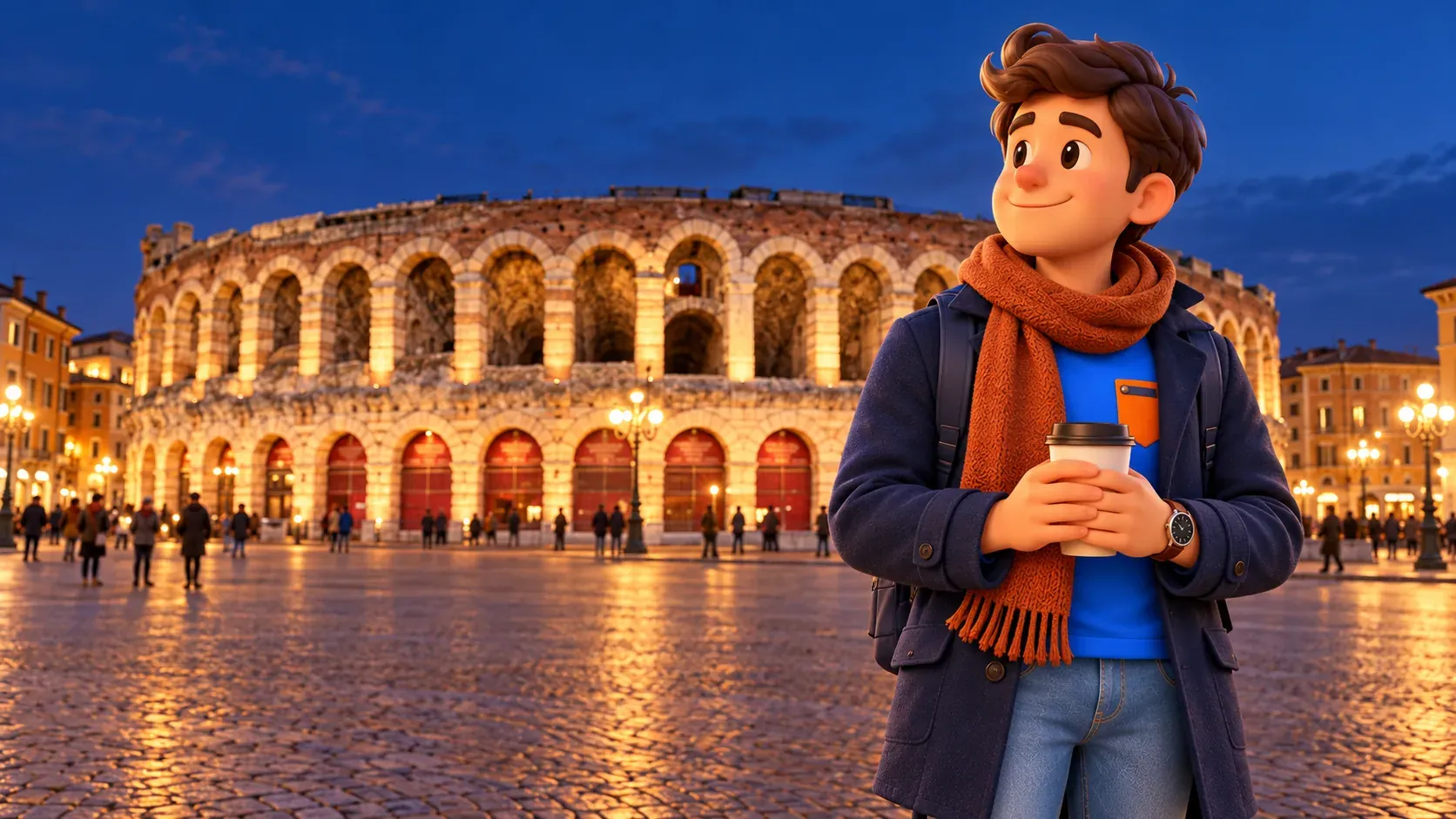
Keep the visit independent of festive dates
Christmas markets, decorations and special activities have their own dates and organisation. A December photograph does not establish the same setting in January or February. If a seasonal event matters to you, check your particular year and add it as a separate activity, allowing its location and duration.
For persistent rain, our Verona plan with one museum and short outdoor sections offers another approach. An ordinary winter day needs only one collection, daylight details and a familiar square after dark. Other ideas can wait until another day brings more time and inclination.