
Verona from above: Lamberti Tower, San Pietro or Giardino Giusti?
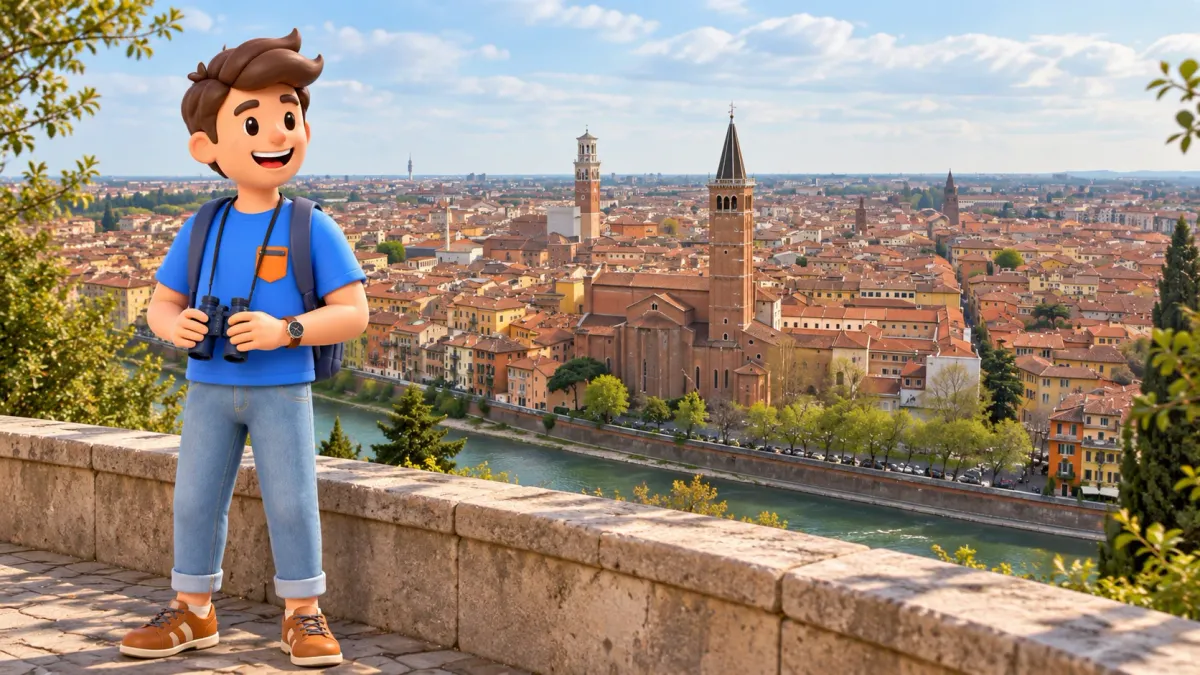
The best view of Verona depends on what you want to see. Lamberti Tower reveals the city from within, giving roofs and familiar squares a different scale. San Pietro is about looking across the city from the hillside and river. At Giardino Giusti, greenery, paths and a gradual change of height are part of how the picture unfolds.
Rather than completing three climbs in a row, choose one. That leaves time for the view itself and the walk towards it, instead of spending the outing transferring between viewpoints. Here are the differences and a way to fit your choice into the day without expecting identical weather or access in every season.
Choose the picture you would like to see
If you want to understand the old centre’s shape, consider Lamberti. For a broad first impression from outside that centre, choose San Pietro. If a garden walk matters and the panorama should form part of it, choose Giusti. These are different activities even when all the photographs include terracotta roofs.
RoadMe makes preparing the whole trip around your interests and pace much more convenient. Try connecting viewpoints, city walks and downtime in the app, so a beautiful view has a natural place in your personal itinerary.
Consider where you will be before the climb and where you must return afterwards. Apparent closeness on a city map does not establish equal effort: movement inside a tower, on hillside stairs and along garden slopes works differently. Leave room for a comfortable descent as well as the ascent.
The highest position need not become the strongest memory. One traveller enjoys recognising a nearby palace; another wants to see the river between urban neighbourhoods. A first visit needs only one chosen perspective that you can mentally return to when walking the streets below.
Lamberti: looking at the centre from its heart
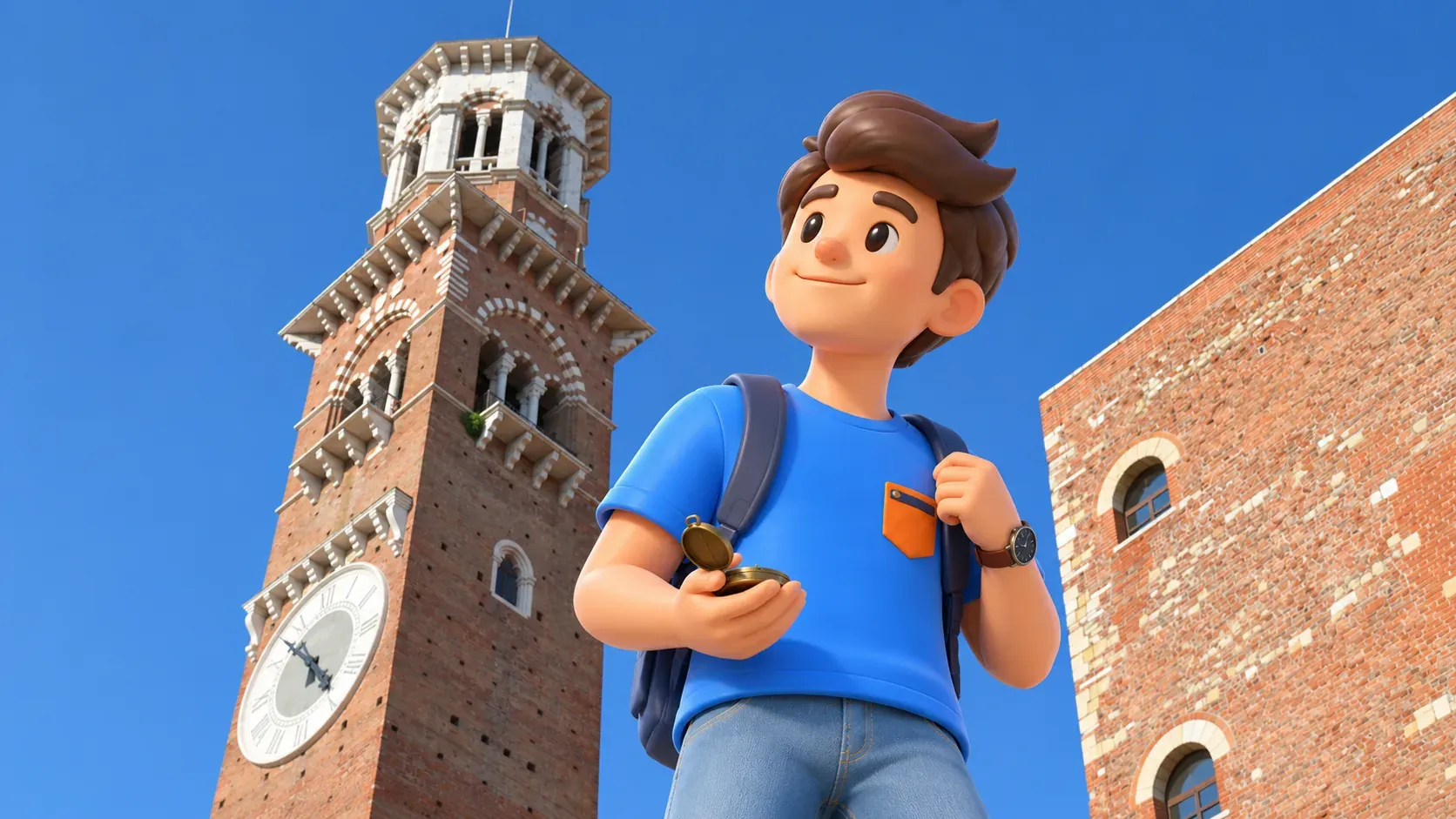
The tower stands beside Erbe and Signori. Think of it as a separate vertical extension of a walk around those squares. Below, you encounter facades and passages; above, you see the relationships between roofs, courtyards and building volumes. It can connect familiar fragments into a more understandable whole.
The tower itself has several historical layers. Its original construction belongs to the twelfth century, with later changes shaping today’s silhouette. The bells served civic purposes, including calling the council together. The structure is 84 metres high: that describes the tower, rather than promising that every visitor platform is at precisely that elevation.
Choose a couple of places you already know from below. Try identifying them through their relationship with neighbouring roofs. There is no need to turn the panorama into a test on every Verona bell tower. Recognising a single direction can do more for your sense of the city than hurriedly naming ten monuments.
A lift is available, but its presence should not be understood as a guarantee of an entirely step-free visit. The tourism office separately identifies stairs and access limitations. If avoiding steps is essential, confirm the whole route you need instead of asking only whether a lift exists.
We suggest around 60–90 minutes for a selected tower visit, including going up, looking and coming down, without an additional queue. Add a 30–45-minute pause and 15–20 minutes of flexibility for roughly 105–155 minutes in the area. Travel from accommodation and the return are extra. These are editorial allowances, not recorded walking times.
Afterwards you can stay on one neighbouring square. It is unnecessary to hurry across the river to validate the view with another angle. Returning briefly to a familiar facade can instead help you feel the difference between looking from above and meeting it at street level.
San Pietro: looking across the city from the hill
Distance creates the experience here: the skyline, roofs and river form a larger picture. Choose this if you want an overview in which Lamberti itself can become a recognisable landmark. It is a different encounter from standing within the centre and looking down.
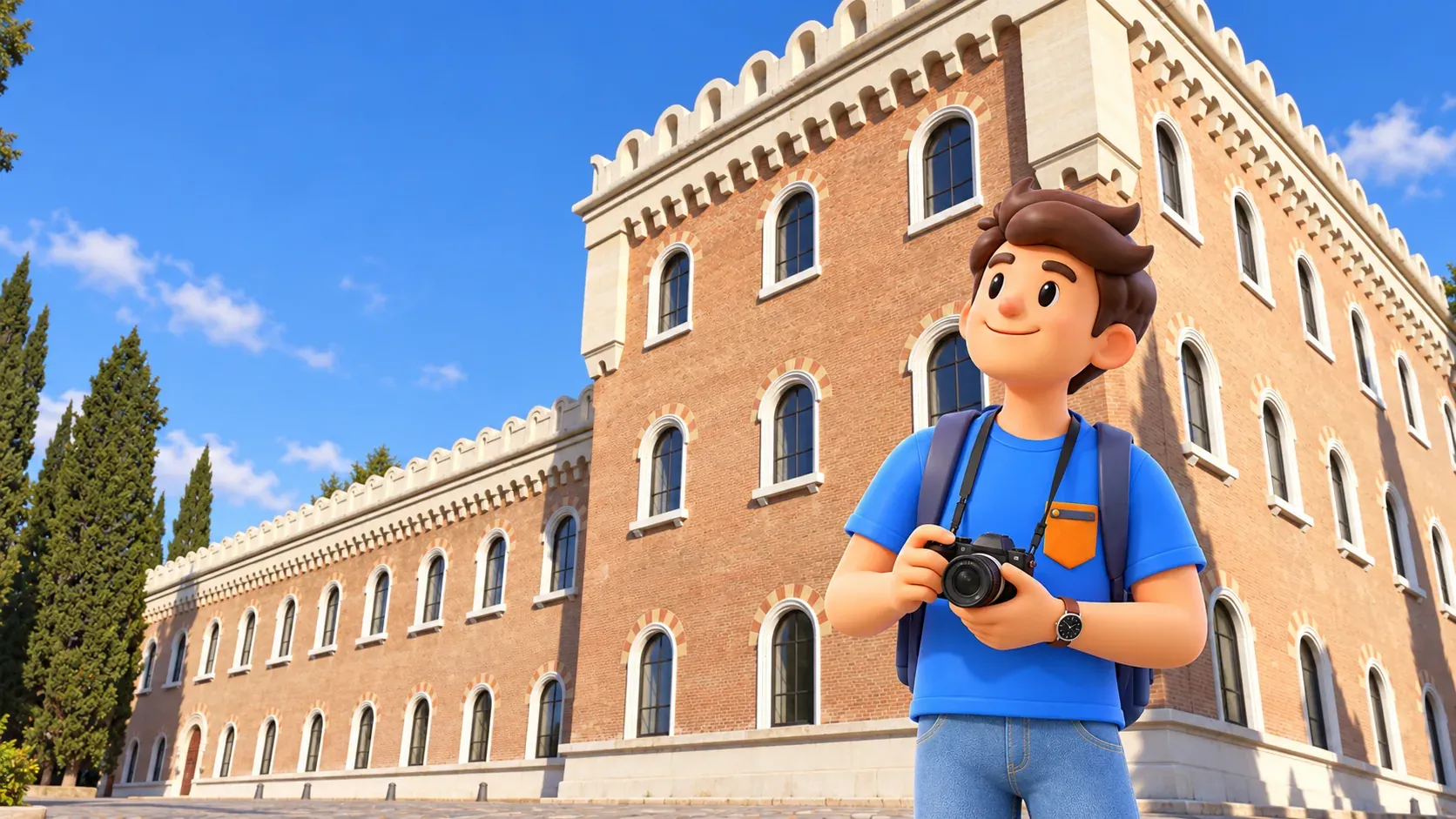
Distinguish the outdoor belvedere from entry into Castel San Pietro. The existing building is associated with nineteenth-century Austrian barracks on a site with earlier structures; its interior is not open for ordinary visits. This plan concerns the view outside, rather than a castle tour.
You can climb on foot or use the funicular when it is operating. The ride itself is short, but approaching the lower station, waiting, moving at the top and returning remain parts of the outing. The funicular is separate paid transport, rather than another name for the viewpoint.
To reduce stairs, check your approach to the station and the route from the upper stop first. Information about the funicular’s own accessibility does not automatically describe every section of your walk. Decide how to descend before going up, particularly when the return ride matters to your pace.
For an outing starting in the Ponte Pietra river area, including your chosen ascent, observation and return downhill, allow approximately 90–120 minutes. Add a 30–45-minute pause and 15–20 minutes of flexibility: around 135–185 minutes altogether. This is a bounded visit, rather than a tour of every hillside. Accommodation journeys and additional queues are extra.
Do more than take one photograph. Look first at broad lines and then select a particular city fragment. The river helps explain the distance between banks, while different building heights give the skyline its texture. You need neither the very edge nor a closed passage to make this observation interesting.
San Pietro is often associated with sunset, but daylight works for an enjoyable visit too. Sun, cloud and season change the impression. If evening matters, compare sunset with the operating times of your intended descent. Do not assume the funicular will remain available after the final photograph.
Giardino Giusti: height within a garden walk
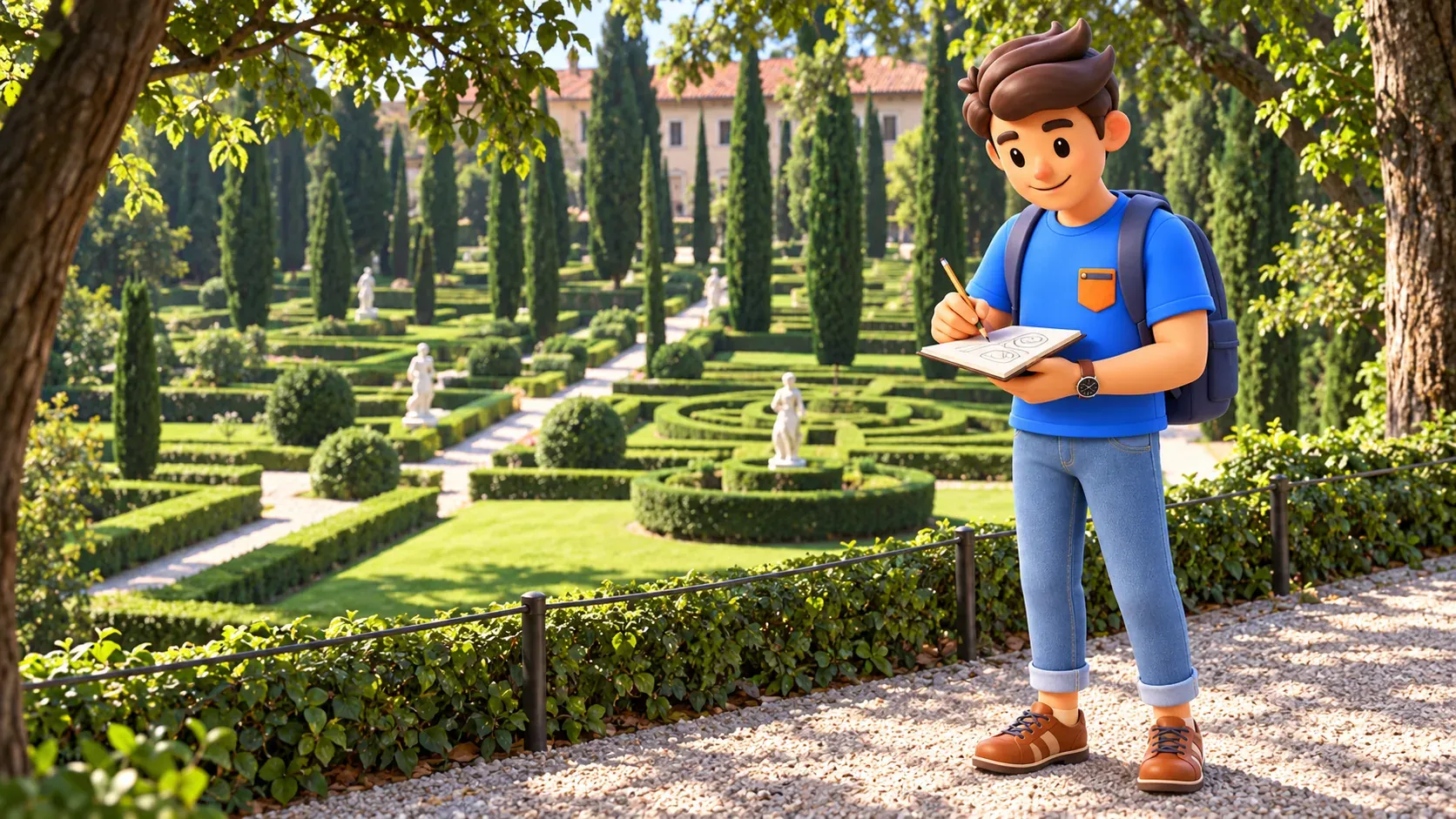
Choose Giusti when you want time in a historic garden as well as a city view. The lower formal patterns, vertical cypresses and transition to a higher wooded setting matter here. The change concerns how you look around, not just the elevation above the ground.
The garden’s design belongs to the culture of the Italian Renaissance, with later changes as well. This is more than a convenient green platform for a panorama. Paths, decorative elements and changing perspectives create a sequence of impressions, making the journey worthy of attention alongside the final view.
Start by noticing the lower pattern of paths and compare it from above after climbing. Circles, straight lines, statues and trees become parts of a composition. That exercise can be rewarding even if you care more about gardens than identifying every distant city monument.
Upper areas require climbing, including stairs. A more level lower garden does not establish identical access to all viewpoints. If stairs do not suit you, confirm the available sections beforehand and decide whether the garden appeals without the upper belvedere. That is a meaningful choice, rather than a minor detail to discover after admission.
This is a paid garden visit, so choose it for the wider experience rather than solely the shortest way to a view. Allow around 90–120 minutes for a selected walk including the upper part when suitable. With a 30–45-minute pause and 15–20 minutes of flexibility, that gives roughly 135–185 minutes, excluding approach, return, queues and additional interior visits.
Do not build a picnic or access to lawns for a particular photograph into the basic plan. Follow the visitor paths. A slower pace means being able to remain with a composition, rather than using every part of a historic garden as an ordinary municipal park.
Match access with your return time
Lamberti’s ordinary opening hours are 10am–6pm Monday to Friday and 10.30am–7pm on weekends and public holidays, with final admission twenty minutes before closing. Technical and holiday changes are possible. An evening private event does not establish ordinary public access at night.
The funicular runs a seasonal timetable: winter closing can be much earlier than summer closing. Check your day, the end of service and ticket-office limits. Giusti also has seasonal hours and occasional closures; at preparation, the stated hours are 10am–6pm with last entry at 5pm. Do not transfer that timetable automatically to every summer visit.
If visibility disappoints or the climb no longer suits your group, keep the day at street level. You need not replace one viewpoint with two others merely to rescue the original plan. Our compact Verona outings with less walking can help choose a smaller area for that day.
With RoadMe, it is easier to distribute interesting places across your days and create a personal trip with the right balance of walking and rest. The app connects experiences into a convenient sequence around your pace, reducing the need to start planning again each morning.
Leave a little time after the view without another compulsory height to reach. Sit down, discuss what you noticed or return to one familiar street. A panorama becomes part of knowing Verona when it helps you keep noticing the city, rather than ending only as a saved photograph.


