Which Venice Museum Should You Choose If You Only Have Time for One?

Choose the Doge’s Palace for Venetian government and ceremonial interiors, the Gallerie dell’Accademia for Venetian painting from the fourteenth to eighteenth centuries, or the Peggy Guggenheim Collection for twentieth-century art. If this is your first visit and you have no strong art preference, the palace offers a useful introduction to the city. Your own curiosity should decide the winner.
Allow roughly two hours inside your chosen museum, with entry, travel and a break added separately. That is a planning estimate for a selective visit, rather than a promise to see every room. The aim here is to choose one rewarding experience and build a manageable part of your day around it.
Choose the question you want the museum to answer
What would you like to understand afterwards: how Venice governed itself, how its painters used colour and space, or how twentieth-century artists changed familiar ways of seeing? Each question leads somewhere different. A famous name on a sightseeing list is less useful than an interest you would actually enjoy pursuing for a couple of hours.
Try RoadMe to have the app work out a personal plan for your whole trip around your interests, dates and pace. It makes choosing a museum and fitting it into your wider journey much easier and more effective.
| Your main interest | First choice | What shapes the visit |
|---|---|---|
| Venetian government and history | Doge’s Palace | State rooms, architecture and political ceremony |
| Historic Venetian painting | Gallerie dell’Accademia | Looking closely at an art collection |
| Twentieth-century art | Peggy Guggenheim Collection | A collection in its former owner’s home |
Next apply the practical filters: opening day, the particular spaces you can access, ticket conditions and your available window. These can settle a close decision without making one museum universally better. Discuss the choice with your companion before booking, especially if one of you enjoys long galleries while the other prefers buildings and stories.
Doge’s Palace: understand the city through its seat of power
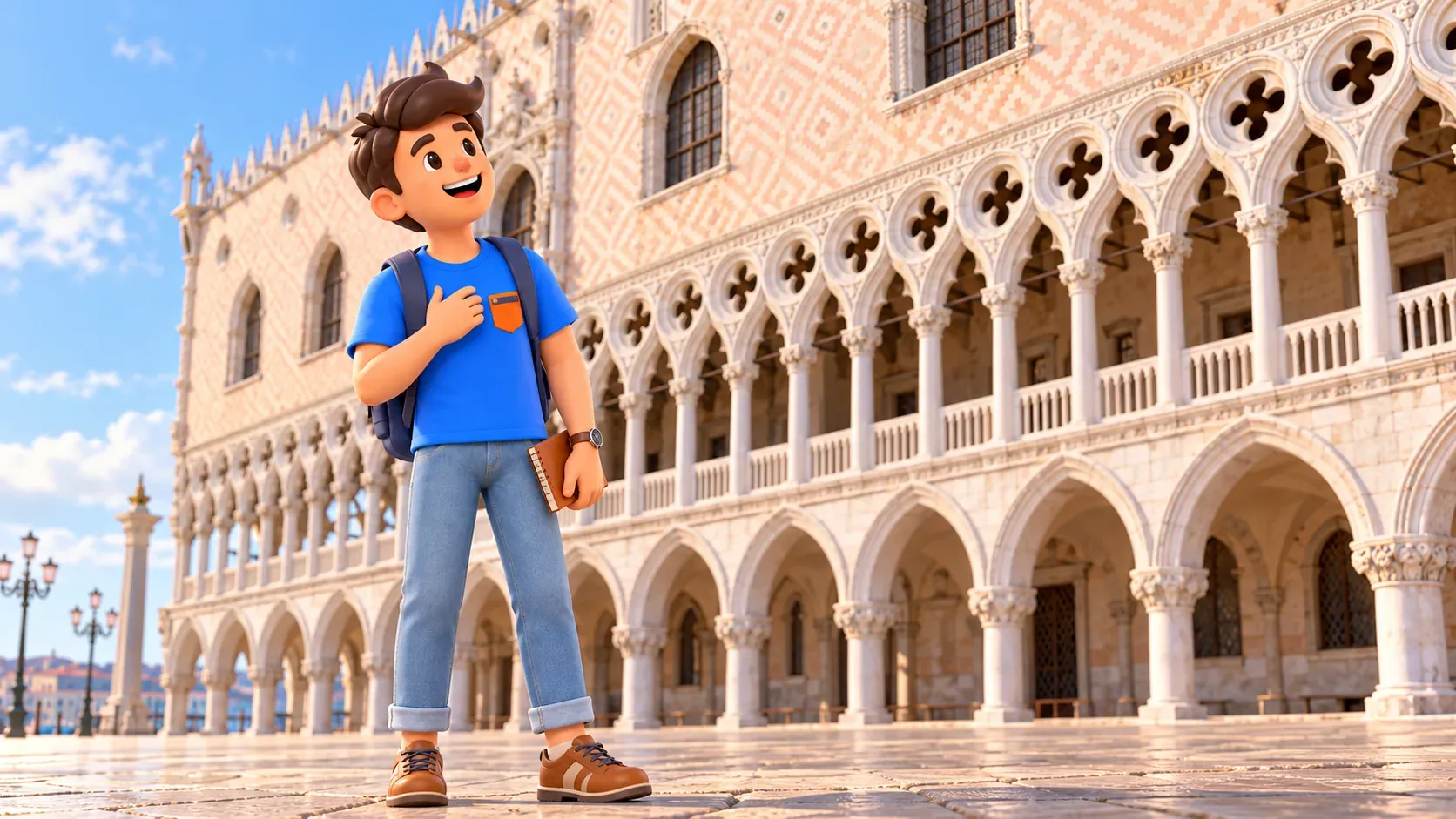
The Doge’s Palace suits visitors interested in how the Venetian Republic presented and administered itself. The building matters as much as the paintings: courtyard, ceremonial circulation and large institutional chambers form a connected experience. Although the doge lived here, this was much more than a wealthy individual’s residence with an impressive collection attached.
The Great Council and Senate were among the bodies that met in its rooms. Decoration helped project an image of the state. Ask what an arriving visitor was supposed to feel, and the scale and imagery become easier to read together. You do not need to identify every ceiling figure to follow that idea.
For a first visit, give the courtyard, ceremonial transitions and council chambers your main attention. The regular itinerary also continues through the Bridge of Sighs to the New Prisons, subject to the relevant access restrictions. Two hours means making choices within the ordinary visit, rather than lingering equally in every section of this substantial complex.
The Secret Itineraries and Hidden Doge’s Treasures are separate special visits with booking conditions, not extras quietly included in any standard admission. Choose one deliberately if its particular subject interests you, and reconsider your time allowance. An appealing tour title alone is not a reason to attach another appointment to your only museum window.
Accademia: follow the visual language of Venice
Choose the Gallerie dell’Accademia if spending most of your visit in front of paintings sounds appealing. Its focus is Venetian and Veneto painting from the fourteenth to eighteenth centuries. The task differs from the palace: your attention goes primarily to pictures and their changing visual language, rather than to the spaces in which government operated.
The galleries occupy the historic Carità complex, associated with a church, convent and confraternity. The collection’s early nineteenth-century formation connected artistic education with the preservation of works from former religious and civic settings. The galleries opened to the public in 1817. That background helps explain why pictures originally made for different purposes now meet in one museum.
You do not have to learn several centuries in a single afternoon. Choose a few works in the rooms currently open and compare light, gesture and space. Look from a distance before moving closer to one detail. Following a personal question is often more memorable than photographing every label while trying to keep up with a checklist.
Check current information about works not on display before making a particular painting the reason for your trip. Ownership does not guarantee continuous exhibition: loans, conservation and gallery changes can intervene. A historical collection catalogue and a current visitor itinerary answer different questions, especially when one work would determine your entire day.
Peggy Guggenheim Collection: modern art with a personal starting point
The Peggy Guggenheim Collection is the strongest match of these three if European and North American twentieth-century art is your interest. It occupies Palazzo Venier dei Leoni on the Grand Canal, Peggy Guggenheim’s former home. The history of an individual collector gives you a useful way into a subject that can otherwise feel very broad.
Try pairing a work you immediately like with another you find puzzling. You do not need to arrive already enthusiastic about abstraction. Notice movement, scale, shape or the absence of an expected subject, and compare your reactions with your companion’s. Disagreement can make the visit more interesting without requiring either person to supply the correct answer.
The museum includes several parts, including its sculpture garden and temporary exhibition spaces. A two-hour allowance does not mean examining all of them in detail. For your one museum visit, you might concentrate on the permanent collection and a selected part of the garden. Treat a temporary exhibition as a separate choice after checking its subject and dates.
The garden belongs to the museum visit; it is not a free public passage beside the canal. Food and drinks are not permitted in the museum spaces, including the garden. Plan a snack break elsewhere in a suitable place. That avoids building your day around an imagined picnic or an entrance directly from the water.

Turn two hours inside into a realistic outing
A useful starting allowance is about three hours from reaching the entrance of your chosen museum. Think of 120 minutes looking, 25 for entry procedures and possible waiting, 15 for a break after leaving, and 20 for flexibility and small nearby movements. These are editorial planning allowances, not measured queues or an official timed session.
Travel from your accommodation, the return journey, a full meal and a longer walk all sit outside that window. If entry takes longer, enlarge the window or shorten what follows. Do not preserve every later stop by racing through the galleries. With only an hour available after admission, deliberately select a small part instead of expecting a full introduction.
Choose an exit time as well as an entry time, leaving a clear gap before dinner or another reservation. A fascinating picture feels different when it makes you late. Also remember that the final admission time does not provide the same experience as arriving earlier: room clearance can begin before the published closing time.
A museum’s closed day can simplify your choice. Place your most desired visit on a suitable date first, then arrange the other walks around it. Rearranging an afternoon before you travel is usually easier than finding an alternative outside a closed door when the rest of the day already contains fixed appointments.
Check the current calendar before deciding
As checked on 17 October 2026, the Accademia publishes ordinary hours of Tuesday to Sunday, 9am–7pm. Ticket sales end at 6pm and visitors are ushered towards the exit from 6.30pm. Monday is outside that ordinary schedule. Older references to an early opening and a Monday morning visit should not be used to build this plan; check the museum calendar for exceptions.
The Peggy Guggenheim Collection opens 10am–6pm, closing on Tuesdays and 25 December. Last admission is 5pm, with rooms cleared from 5.50pm. The Doge’s Palace opens daily: 9am–7pm from April through October and 9am–6pm from November through March, with last entry an hour before closing. Check any changes for your actual date.
Read the palace ticket conditions particularly carefully: tickets without a specified entry time provide admission from noon. The museum being open at nine does not make every ticket valid then. At the Accademia, free first Sundays have separate arrangements: ordinary reservations are unavailable and admission follows arrival order. That is not a shared free-entry rule for all three museums.
Know what your ticket and access arrangements cover
The St Mark’s Square Museums ticket containing the Doge’s Palace does not include the basilica. Other museums within that product do not have to become extra visits in your short window. Similarly, the MUVE Museum Pass does not unite the Accademia and Peggy Guggenheim Collection with the palace. Start with your chosen admission before considering a broader product.
Ordinary tickets can be purchased at museum ticket offices; advance purchase can help organise the day but does not remove every check or wait. The Accademia identifies TicketOne as its authorised online seller. Check the payment options that work for your circumstances before relying on an online transaction, rather than assuming any bank card will necessarily succeed.
Check accessibility for the rooms you actually want. The palace lift does not make the prisons, Armoury or Secret Itineraries accessible. At the Guggenheim, platform lifts serve several areas, with exceptions including the final two temporary exhibition rooms and the internal shop. The Accademia has a lift to its first floor. None of this establishes a step-free journey from every hotel.
Arrange large luggage storage before your visit. The palace does not admit or store suitcases and prohibited bulky items, and the Guggenheim also restricts large bags. Cloakroom arrangements differ between institutions. On a departure day, decide where your belongings will stay while you are inside, rather than treating a museum ticket as a luggage-storage solution.

Keep the rest of the day in the same area
After the palace, leave time for the public spaces around St Mark’s. After the Accademia or Guggenheim, continue exploring Dorsoduro without adding another museum simply because it is nearby. For a longer continuation, choose a suitable part of our Dorsoduro walk and recalculate the time from your actual museum exit.
RoadMe makes it much easier to turn this choice into a personal plan for your whole trip, working out an itinerary around your interests and available days. Try setting a relaxed pace so that the museum fits a journey with room to pause.
With companions, agree on one shared interest and permission to stop. A child might look for a repeated colour or gesture; adults could each choose one memorable work. These are personal ways of looking, not included museum programmes. Check any guided tour or audio language separately: a multilingual service does not necessarily include the language you need.
Let your preference settle the decision: palace for government and architecture, Accademia for historic Venetian painting, Guggenheim for twentieth-century art and a collector’s story. Match that interest with the calendar and access conditions, leave a buffer at the entrance, and protect some free time afterwards. One thoughtful visit can give the rest of Venice more meaning.