Taling Chan or Khlong Lat Mayom: choosing a Bangkok floating market

The phrase floating market can create an expectation of a canal filled entirely with trading boats. Around Bangkok, the experience also happens on land: walking between stalls, choosing lunch, sitting near the water and perhaps taking a separate boat trip. Taling Chan and Khlong Lat Mayom are good examples of why choosing by atmosphere and activity works better than chasing a single photograph. Neither needs to become an all-day checklist.
Both lie in western Bangkok, but they are separate destinations, not neighbouring entrances on one pedestrian route. Choose one as your main weekend daytime outing. Give it enough room for food and a pause, and decide separately whether you want a boat. The useful question is how you want to spend the visit, rather than which name sounds more famous or promises the most spectacular fleet.
Choose the part of the experience that matters
Start with Taling Chan if a canalside setting and a possible boat excursion are your main interests. Start with Khlong Lat Mayom if you would like food browsing and a meal to lead the day, with the canal as part of the setting. These are planning emphases, not exclusive identities: both have food and water connections. Your companions’ interests matter more than winning an argument about the better market.
With RoadMe, planning the whole Bangkok trip becomes much more convenient: the app develops a personal itinerary around your interests, available time and preferred pace. Let your chosen market take its proper place among meals, canal experiences and the other days you want to enjoy.
If someone mainly wants to eat and someone else hopes to travel on water, agree on that distinction before leaving. A boat may be possible without being necessary, and a market meal can be a complete outing. Avoid promising an excursion to the group until you know its actual arrangements. A shared, modest purpose leaves more freedom than a list built from other people’s photographs.
Taling Chan: keep the canal in view
Taling Chan Floating Market is associated with the Chak Phra canal near the district office. Its appeal brings together food, local produce, stalls and the setting of a waterside community. Look at the relationship between walkway, dining areas and canal rather than judge the visit by the number of boats in sight. The land-based approach belongs to the experience too. You do not need to shop from a boat to appreciate the place.
Use the first part of the visit to orientate. Find where you can stand comfortably without blocking customers or traders, then make a small selection. Vegetables, fruit or prepared food can give the walk a useful thread. What is sold and how it is displayed will vary. A particular photograph is an illustration of a visit, not a daily timetable for the arrangement of boats, products and people.
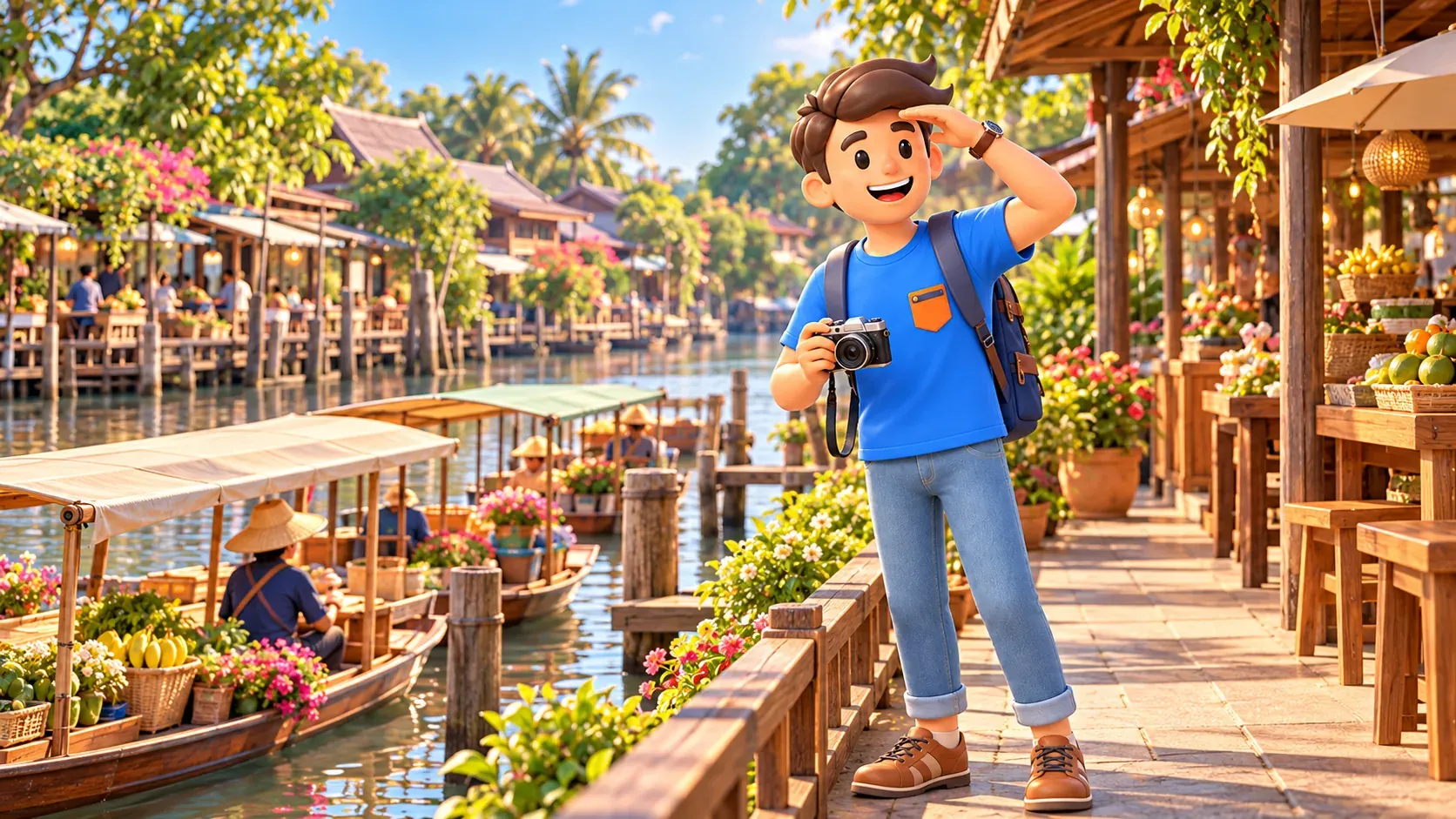
The canal helps explain a different view of Bangkok, where movement and neighbourhood life relate to water as well as roads. It is a living setting rather than a stage waiting for visitors. Let people work and pass. A photograph taken from a suitable public position, with permission for a close portrait, can hold more meaning than reaching across a stall or blocking a narrow section for the perfect frame.
Khlong Lat Mayom: make food the main thread
Khlong Lat Mayom is on Bang Ramat Road in the Taling Chan district. It offers substantial browsing on land alongside its canal identity. Thai food, sweets, produce and other goods make it a sensible choice when your main wish is to look, choose and sit down to eat. Do not arrive expecting all trade to take place from moving boats. Walking through a covered market can be the heart of this particular outing.
The government’s account connects the market with a local initiative led by Chuan Chuchan to bring income into the community. That background gives a useful perspective: the interest is not only a picturesque boat scene but the ways a neighbourhood presents and sells its products. You need not imagine an unchanged ancient market to value it. A contemporary community business can be worth visiting on its own terms.
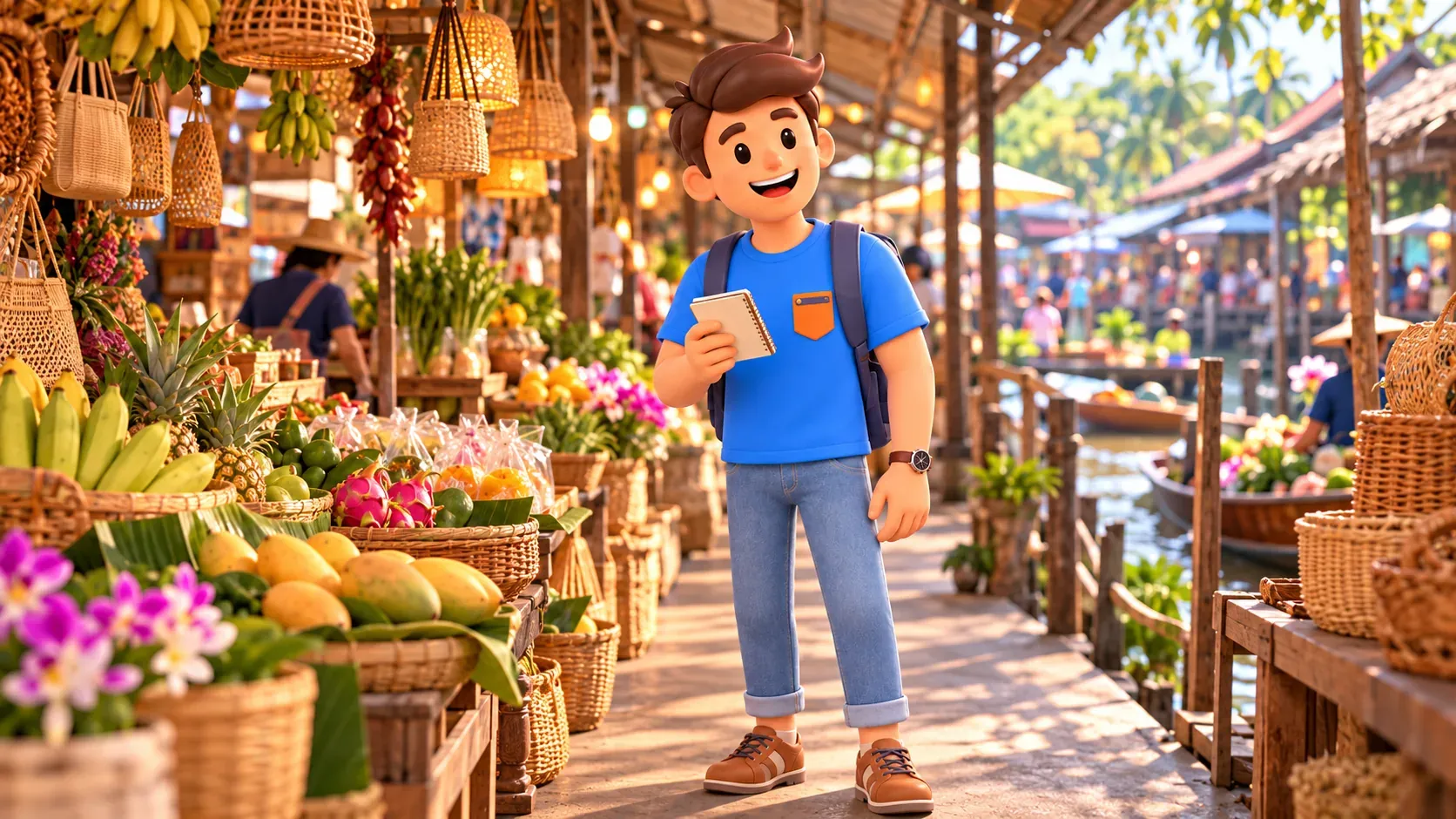
Choose a manageable food interest, perhaps looking at sweets or comparing the ingredients in prepared dishes. Ask what a portion includes and establish the price before ordering. There is no compulsory tasting sequence here. A few observations followed by one satisfying meal can work better than ordering something at every turn. Leave room to change your mind once you have seen what is available that day.
Choose a weekend daytime visit
For an ordinary first plan, use Saturday or Sunday in daylight as the reference for either market. Public holidays may have their own arrangements, so confirm your actual date. These are not interchangeable with a city night market or a daily shopping centre. Published opening windows differ between official descriptions; individual traders and services may also keep their own hours. Do not build the meal or boat around an assumed last-minute arrival.
Think in terms of a comfortable daytime visit rather than collecting exact opening and closing times from an old guide. Check the market and the service that matters to you before departure. A broad operating day does not establish that a particular kitchen, vendor or boat will be available throughout it. If you can only travel late, reconsider whether the intended experience still fits rather than treating any open stall as the complete market.
A three-hour market plan, before travel
A useful starting allowance for either market is fifteen minutes to orientate, seventy-five for selected browsing, forty-five for a meal and seated rest, fifteen to leave and thirty as a buffer. That makes about three hours locally. It is an editorial planning allowance, not a guided tour duration or a claim that you can see everything. Your actual journeys from and back to the hotel come in addition.
Keep the buffer for ordinary delays and decisions. A longer meal may be a better use of it than another stretch of stalls. If you add a boat trip, add its real waiting, boarding and travel time as well; do not quietly take the whole ride out of lunch or the return journey. The outing should remain understandable before it grows. Recalculate from the moment you leave your accommodation to the moment you expect to return.
A boat ride is a separate decision
Boat excursions are part of the possibilities around these canal markets, but the market visit does not automatically include a ride. Establish what is actually operating on your date, the departure and return points, the route and its duration, and whether the quoted amount is for a person or a boat. Understand the arrangements before agreeing. An excursion described elsewhere is not a promise of the same departure on your visit.

Ask about boarding and seating if those details matter to your group, and check suitable life jackets with the operator. A waterside location alone does not make every boarding arrangement convenient for every traveller. You can enjoy the market from land if the available excursion does not suit you. Declining a boat does not turn the day into a failure; it simply keeps the activity aligned with the people actually taking part.
The value of a canal trip can be the changing view of houses, vegetation and ordinary waterside spaces. It does not require an extra temple stop, animal activity or a guaranteed encounter. Choose a route for what it genuinely includes, without assuming that an old description of several connected markets is a fixed shuttle service. A boat excursion and public transport fulfil different purposes and may have entirely different arrangements.
Plan the real approach and the return
For Taling Chan, Bang Khun Non on the MRT Blue Line can be part of an approach, followed by an actual road connection. It is not a statement that the market entrance is beside the station. For Khlong Lat Mayom, plan the final approach to the market itself. A trip described as a short drive from central Bangkok is not a reliable duration from every hotel, on every weekend or in every traffic condition.
Choose a clear destination and a return arrangement before starting. Leave time to find a suitable meeting place and to account for the next part of your day. Shared district names do not make the two markets a casual walk between neighbouring stalls. If you deliberately want both, treat the connection as a new journey and shorten the visits accordingly. For most first visits, one market gives the meal and canal setting more breathing room.
Keep the pause and leave room for another day
Make sitting down part of the plan, not a reward for finishing every aisle. Include food, drinks and transport in your practical spending allowance; a market’s admission arrangements do not describe the cost of the whole day. Ask about quantities before buying and take only what you actually want. A relaxed conversation over lunch may become the clearest memory of the place, even if the most photographed stall was not part of your visit.

If general shopping or an evening of vintage browsing is closer to your interests, our comparison of Chatuchak, Or Tor Kor and Srinakarin offers a different choice. If a canal neighbourhood and a cultural visit matter more than a weekend market, consider our separate half-day idea in Thonburi. Neither is an automatic extension of today’s outing: each deserves its own timing.
RoadMe makes it easier and more effective to turn these separate ideas into a personal trip rather than a collection of disconnected visits. Let the app work out your overall itinerary around the interests and pace that make Bangkok enjoyable for you.
One market is enough for a good first visit
Choose Taling Chan for a canal-led outing or Khlong Lat Mayom for a food-led one, while allowing either place to offer more than that starting point. Confirm the weekend date, leave room for a meal and count the actual journeys. Add a boat only when its arrangements suit you. A good floating-market visit is measured by the experience you wanted, not by the number of markets or boats you managed to collect.