Small Unusual Museums in Paris: Choose by Your Interests
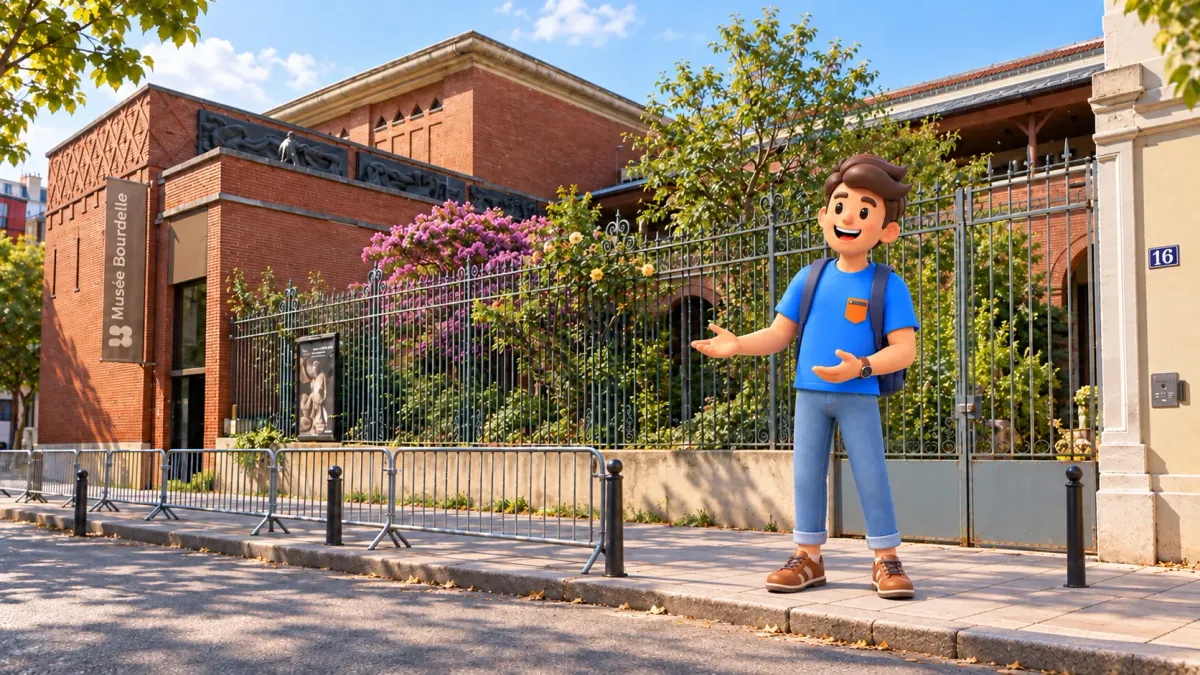
A smaller Paris museum is easiest to choose through a subject that makes you curious. You might want to understand how a sculptor worked, see the setting of scientific research, or discover how perfume and its containers are made. Musée Bourdelle, Musée Curie and the Fragonard perfume museum at Rue Scribe offer three different ways to spend part of a day.
These are three independent choices, rather than a circuit through all three museums. Allow roughly two and a half hours for Bourdelle or two hours for either Curie or Fragonard. Each outline includes a local station approach, admission time, selected museum sections, a seated break and the return. A smaller collection does not guarantee empty galleries or immediate entry.
Choose the subject before choosing the museum
For sculpture and a working studio, choose Bourdelle. Look at the relationship between materials, scale and the place where an artist worked. The permanent collection and available parts of the museum garden suit a focused introduction. You do not need to follow every room or identify every work to come away with a useful understanding of the setting.
For the history of research, choose Curie. The permanent display connects the Curie family, radioactivity and its early applications. This is a visit built around historical objects and explanation, rather than a promise of hands-on experiments. Choose it when reading about a working laboratory sounds more rewarding than collecting another famous name on an itinerary.
For fragrance craft and antique bottles, choose Fragonard. Materials, extraction and containers provide an approachable subject. This is a private perfume-house museum with a shop, so it has a visible commercial setting. The free individual museum visit and a paid fragrance-making workshop are separate activities; only the first belongs in the two-hour outline below.
Try RoadMe to develop a complete personal trip plan around your dates, interests, pace and budget. It is a much more convenient and efficient way to organise chosen visits and rest across your stay than repeatedly joining isolated recommendations.
All durations here are planning estimates, not measured walks or queue forecasts. Travel between your accommodation and the neighbourhood, time on public transport and a full meal are additional. Free admission applies to the selected museum visit, not to food, drinks, transport or every extra exhibition. Keep those expenses separate when deciding which option suits your day.
Bourdelle: understand the work behind a sculpture
Antoine Bourdelle settled here in 1885, when the street was the Impasse du Maine. The museum opened in 1949. Its particular value is the connection between sculpture and a preserved working environment. Tall windows, supports and the arrangement of the studio bring monumental forms closer to the everyday labour involved in making them.
Compare a preparatory form and a larger sculpture if they appear on your route. Read their labels: plaster, bronze and stone have different properties, even when related figures look similar. One comparison is enough for a focused introduction.
Notice the studio’s height and north-facing windows, which explain working with large volumes and light. Afterwards, look at a sculpture from two permitted garden positions, staying clear of exhibits and planted areas. Garden access follows museum arrangements.
The regular address is 18 Rue Antoine-Bourdelle. During current reception works, however, the museum remains open with entry at number 16 through the green gate. From the Falguière Métro line 12 surface exit, follow Rue Falguière southwest, then Rue Antoine-Bourdelle east towards that entrance. Return by the same public streets rather than looking for a shortcut through the compound.
Allow 150 minutes: 15 for the approach and crossings, 15 as an admission buffer, 90 for selected permanent sections, the studio and garden including all internal movement, 15 for sitting, and 15 to leave and return to the station. A start around 10:00 gives an estimated finish around 12:30. This is an illustrative schedule, not a reserved entry appointment.
Bourdelle opens Tuesday to Sunday, 10:00–18:00, closing on Mondays and on 1 January, 1 May and 25 December. Last admission is 17:15, and galleries begin clearing at 17:45. The permanent collection is free for individual visitors without advance reservation, within capacity limits. Temporary exhibitions have separate paid arrangements. Free admission still allows for security procedures and possible waiting.
Suitcases and travel luggage are not accepted, including for cloakroom storage. Ask reception about loan folding seats or wheelchairs if useful. The museum provides information on access to its premises, but that does not establish an accessible station-to-museum journey for everyone. Check the particular route and entrance for your needs. Leaving travel bags elsewhere keeps the short visit easier to organise.
Curie: research history in an actual laboratory setting
Musée Curie occupies the third and last laboratory used by Marie Curie, in the Institut du Radium pavilion built in 1912–1915. That connection gives the visit more meaning than a collection of famous names alone. Museum materials introduce the family, research and early applications in a place associated with their work, without turning it into an active laboratory experience for visitors.
Choose a thread: the organisation of research, generations of the family or the early uses of a discovery. Read selected labels without rushing. Panels and multimedia are provided in French and English; another language is not guaranteed.
Do not touch historical instruments or display cases. Access to historical rooms follows staff arrangements, and the museum visit does not authorise entering research areas elsewhere on campus. The display explains investigation without visitors handling its equipment.
The museum address is 1 Rue Pierre et Marie Curie, but weekday visitors use the campus gate at number 11 and follow museum signs. Saturday access is at number 1. From Luxembourg RER B’s northern surface exit, near Place Edmond-Rostand and Rue Soufflot, walk east on Soufflot, south on Rue d’Ulm, then west on Rue Pierre et Marie Curie.
This approach uses public streets. Within the campus, use only the signed visitor path from the appropriate gate, without shortcuts through research buildings. The historical resources centre on Rue Tournefort is a different address and is not part of this visit. Return by the same public route to Luxembourg. RER B is a suburban railway service, not a Métro line.
Allow 120 minutes: 15 for the approach, 10 as an entry buffer, 60 with selected permanent material including internal connections, 20 for sitting, and 15 to leave and return. An illustrative 13:00–15:00 outing reaches the museum after it opens. Wooden benches are provided in the garden, and loan folding seats are available; a particular free seat is not guaranteed.
Individual opening is Wednesday to Saturday, 13:00–17:00. Admission is free for everyone without individual booking. Last entry is ten minutes before closing, at 16:50, although on busy days admissions may be limited after 16:30. Space is restricted and waiting can occur. Groups of ten or more have separate reservation arrangements, so do not apply the individual rule to an organised group.
The current second-half 2026 calendar lists closure on 11 November and from 20 December through 5 January 2027 inclusive. Check notices for your actual date, particularly around holidays. A morning version does not fit the ordinary individual schedule. If the museum is closed, choose another date or another separately planned visit; do not assume that its garden remains available.
Eating, drinking and smoking are prohibited in exhibition spaces, as are flash photography and selfie sticks. The museum offers a free storage drawer for permitted belongings, but capacity is limited; keep valuables with you. Staff help with access and an adjoining entrance has a lift for visitors with reduced mobility. Confirm the relevant arrangements rather than treating this outline as a fully step-free journey.
Fragonard on Rue Scribe: craft and the history of a bottle
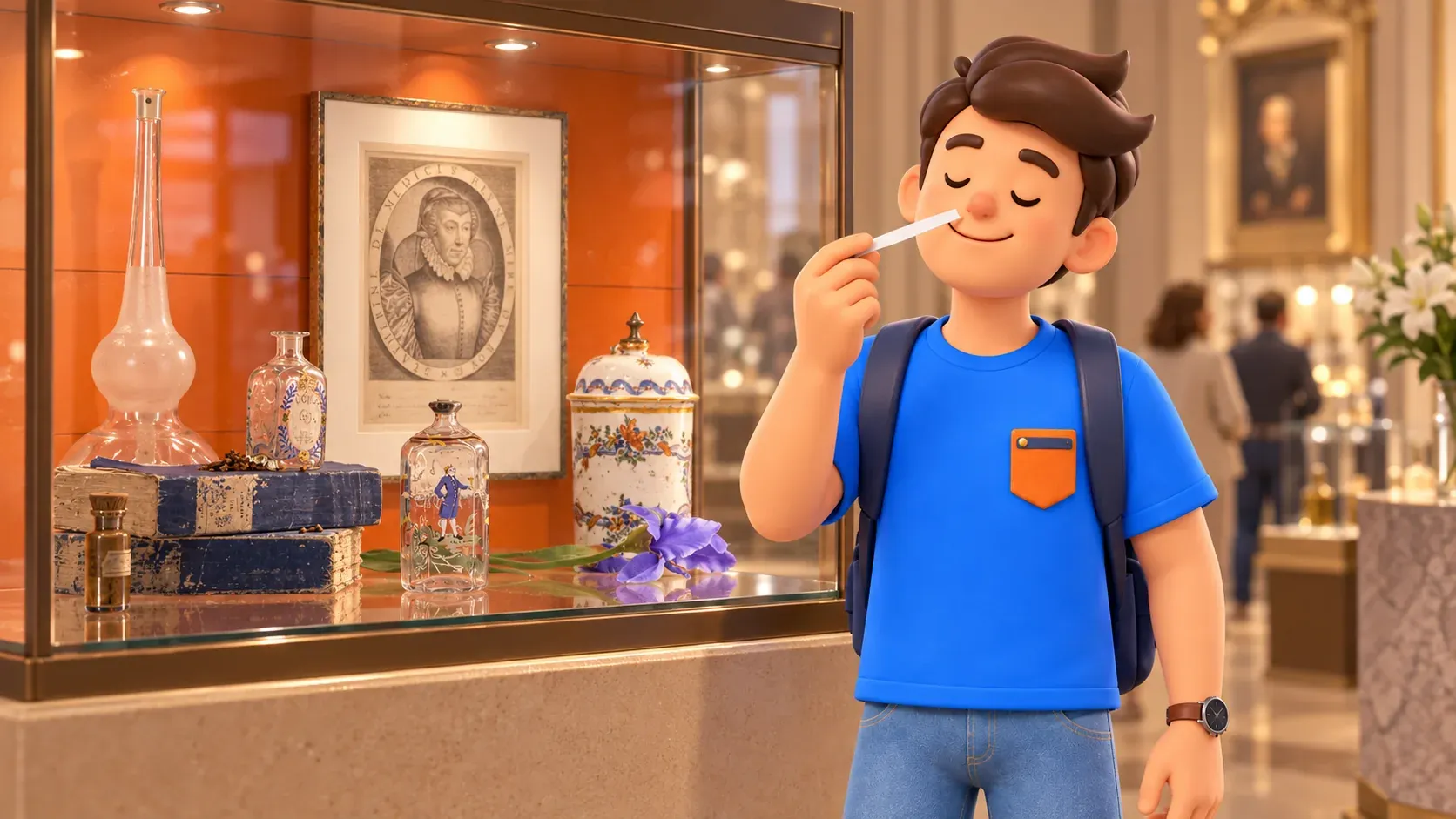
The Fragonard perfume house has been associated with Grasse since 1926. Its Paris museum at 9 Rue Scribe explains ingredients and perfume-making stages, while antique containers introduce changing designs and uses. Choose this subject if you enjoy craftsmanship and decorative objects. The fragrance and its vessel offer related questions, without requiring specialist perfume knowledge or a shopping list.
Follow the explanation of raw materials, extraction and distillation, then compare containers through their material, shape or purpose. Historic bottles remain behind glass. Intended olfactory activities do not permit opening cabinets or handling collection pieces.
The museum belongs to a private brand, with a shop above its exhibition spaces. Keep that commercial context in mind when choosing the visit. Learning about the collection and buying perfume are separate decisions. Extended shopping or a fragrance-making workshop needs additional time. Workshops are paid and require online reservation and payment; they are not a free activity automatically included with admission.
The current individual format is free, self-guided entry without reservation. QR codes at room entrances give access to written or audio commentary on your phone. Audio is listed in French, English, German, Italian, Spanish and Chinese. Russian is not among the confirmed languages. This arrangement does not guarantee an individual guided tour with a speaker in your preferred language.
From the Opéra Métro surface exit, served by lines 3, 7 and 8, follow Rue Auber northwest along the opera house’s southwest frontage, then reach number 9 on Rue Scribe using marked crossings. Do not substitute the other Fragonard museum at Square de l’Opéra-Louis-Jouvet. Return by the same public connection to Opéra, allowing for your selected nearby place to sit.
Allow 120 minutes: 15 for the approach, 10 for admission and orientation, 45 for selected rooms and their internal connections, 35 for a seated café break, and 15 for all links after the museum, including reaching the café and returning to the station. A roughly 10:00 start gives a noon finish. Check a suitable table; food and drinks are separate expenses.
Opening is Monday to Saturday, 09:00–17:30, and Sunday, 09:00–16:30, with closure on 1 May. The museum recommends arriving at least an hour before closing. There is no cloakroom. For visitors with reduced mobility, use of a lift in the adjoining staircase needs specific organisation: contact the museum by email 72 hours ahead. It is a separate access arrangement, not unrestricted entry through every door.
Give the chosen visit its own place in your trip
Choosing one museum preserves attention for its subject. Extend Bourdelle if the material fascinates you, or give Curie more reading time. At Fragonard, a workshop or shopping changes the programme. Increase the complete allowance accordingly rather than expecting interest, admission delays and every extra activity to fit inside the original two hours. The break and return still need their own time.
For several days in Paris, use RoadMe to work out the whole personal trip around your interests, dates, budget and comfortable pace. Your chosen museum, other favourite activities and pauses become a programme that is more convenient and efficient to use on the ground.
For a separate, longer sculptor-focused outing, see our Montparnasse walk. Near Fragonard, the Palais Garnier neighbourhood walk offers an architectural subject for another day. Each has its own duration and is not automatically added to this museum visit. Before leaving, confirm the current calendar, correct entrance and a suitable place for your pause.