San Miguel, San Antón or San Fernando: choose a Madrid market

To include a market in a Madrid walk, choose one by neighbourhood and purpose. San Miguel connects easily with Plaza Mayor and the old centre for a food stop. San Antón combines fresh-food shopping and eating in Chueca. San Fernando reveals how produce, small businesses and meeting places connect in Lavapiés. Allow around two and a half hours for a short neighbourhood walk with food at one market. There is no need to transfer between all three. Part of the pleasure is staying in one area long enough to notice its ordinary rhythm.
Decide whether to taste, shop or explore
A market can provide lunch, a small purchase for your accommodation or a reason to see another district. These purposes suggest different visiting times. For prepared food, check the individual business; for produce, check the shopping stalls. Late food-service hours do not promise that every fishmonger or greengrocer is working. Decide how much seated rest you need. A short tasting at a counter differs from a restaurant lunch. If the group wants a table and a long conversation, check that particular format rather than inferring it from the word market.
It is easier to connect a food stop with the rest of your trip in RoadMe, which develops a personal itinerary around your interests, dates, pace and budget. Try planning the whole journey in the app so markets, nearby walks and rest fit naturally into each day.
Do not choose only through a promise of the most authentic Madrid. All three markets belong to a changing city and welcome different visitors. Day, time, open stalls and your purpose affect the experience. A famous hall can offer interesting architecture; a less famous address guarantees neither quiet nor a low bill. Replace an authenticity contest with a simple question: which market fits today’s neighbourhood, appetite and available time? That gives you a clear reason to enter without examining every stall merely to complete a comparison.
San Miguel: a tasting stop beside Plaza Mayor
San Miguel stands on its namesake square beside Plaza Mayor. It opened as a food market in May 1916 and adopted its modern gastronomic format in May 2009. The iron structure matters: columns, bracing and glazing let you study the hall alongside its counters. It is one of Madrid’s surviving examples of this architectural tradition. You need not seek an unusual ingredient to make the visit worthwhile. Sometimes looking up at the structure first, then choosing something matching your actual appetite, gives the stop a clearer purpose than ordering immediately.
Choose San Miguel when you are already exploring the old centre and want a food break without travelling to another neighbourhood. Begin with a short look around. Compare several offerings, portion sizes and prices, then order what interests you. Tasting need not become a duty to experience all Spanish cuisine at once. A modest selection can leave a clearer impression than numerous unrelated purchases. Equally, a tasting does not automatically make a complete lunch. Think about the selected portions and your group’s needs rather than letting an attractive display make every decision.
At the time checked, the market’s website lists Sunday–Thursday 10:00–midnight and Friday, Saturday and the eve of public holidays 10:00–01:00. Check individual offerings and temporary changes for your date. Avoid making the entire evening depend on one available chair: seating depends on the situation. For a long, relaxed meal, establish the appropriate venue and arrangements separately. A shared roof makes a convenient food address, but does not promise no queues, immediate service or identical operations at every counter. Let the stop remain flexible enough to enjoy what is available.
A short connection can begin at Mayor, visit the market, continue to Plaza de la Villa and return towards the starting area. This is a small piece of the old centre with pauses. Our two-hour walk from Sol towards Almudena offers a longer sequence of squares and façades. Its duration is separate: a substantial market stop does not fit unnoticed inside it. Shorten the exterior walk if food is today’s priority. One district, an architectural observation and a considered meal can be more rewarding than preserving every stop after an unexpected queue.
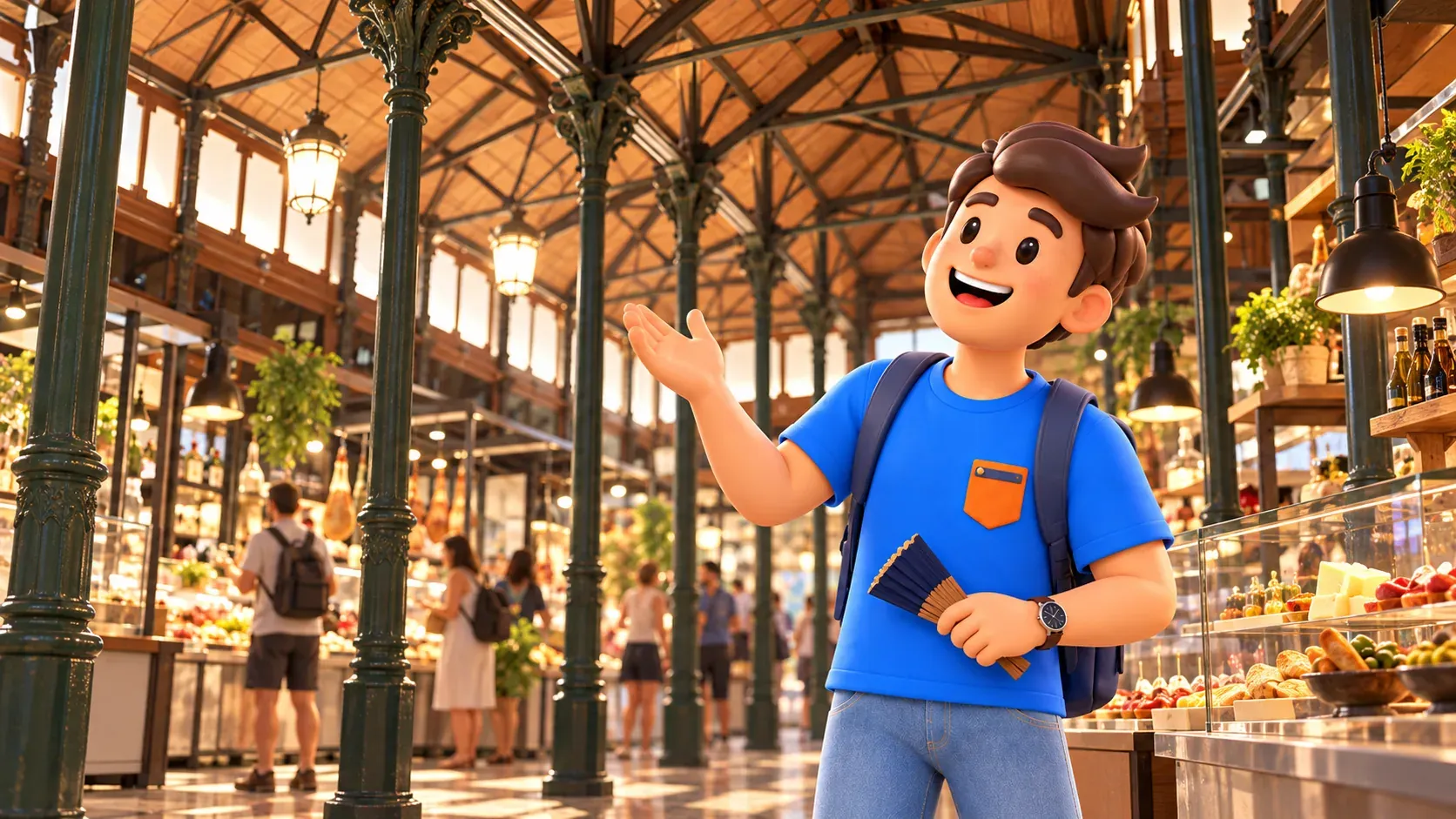
San Antón: produce and eating in Chueca
San Antón is at Calle de Augusto Figueroa 24, near Plaza de Chueca. Its history began with wooden market stalls in the nineteenth century; the first dedicated building opened in 1945. Today’s complex is not that hall left unchanged. The old market was demolished in 2007 and the new one opened in May 2011, with further updates later. This brief story helps explain a city adapting commerce to changing habits, keeping a relationship with fresh food while developing places to eat and meet. The building belongs to that ongoing process.
Distinguish the levels and purpose of your stop. The market combines fresh-food selling and prepared food, with a restaurant and terrace upstairs. These represent different ways to spend time. Do not assume the terrace is a free general observation deck with guaranteed access and a table. Check restaurant arrangements if that is your plan. For an ordinary market pause, looking around and selecting one suitable counter can be enough. Visiting every floor is unnecessary to understand the mixed model: ingredients for home and ready-to-eat meals share a contemporary city building.
The owner lists shopping stalls Monday–Saturday 09:30–21:30, food stalls daily noon–midnight, and the restaurant daily 13:00–01:00. These general hours do not apply without exception to every business. Sunday eating differs from routine fresh-food shopping. For a walk with lunch, aim around midday and check the selected place. This avoids arriving at a kitchen too early after reading only the shopping area’s opening time.
Begin at Plaza de Chueca, approach along nearby streets, then make a small connection towards Plaza de Pedro Zerolo and return to the starting neighbourhood. The loop gives eating a street setting. Our two-hour Chueca walk introduces a fuller architectural sequence and has its own timing. Adding a substantial meal changes the overall allowance. Keep free minutes afterwards so the next journey does not start with a rushed departure from the table.

San Fernando: shopping within Lavapiés life
San Fernando Market is at Calle de Embajadores 41. The building opened in 1944, designed by Casto Fernández-Shaw. Its formal façade can initially suggest a public institution of another kind, but a municipal market lies behind it. Interior aisles and the central space make sense as a small network of shopping streets under a roof. Its history involves neighbourhood provisioning and later commercial change. That gives a reason to look beyond food alone: small businesses and people using a common place within the district are part of the market’s interest.
San Fernando brings together food, prepared meals and other activities, including non-food businesses. You can visit with curiosity about a neighbourhood market rather than a compulsory menu. Notice differences between counters while leaving routes clear for shoppers. Ask before photographing people or goods closely. You are entering a working space. It need not function as an exhibition arranged for travellers, and one open café cannot explain the whole district. Several observations and a short conversation with a trader can reveal more than collecting names without making any real purchase or connection.
For produce shopping, choose a weekday or Saturday after checking the stalls you need. Municipal information specifically describes Sunday as leisure and food-service operation, rather than ordinary trading by the entire market. Official directory pages differ on some evening hours, so clarify a late visit rather than relying on an uncertain closing time. The daytime framework below avoids that conflict. If steps matter, identify a suitable entrance: the formal staircase is not the only option, and the city also lists street-level access. Check the particular approach against your needs and current conditions.
Start at Plaza de Lavapiés and approach the market through the Embajadores area. After food, choose a small loop along nearby Tribulete and Mesón de Paredes streets, returning towards the square. This is an exterior neighbourhood look, without entering residential courtyards or library rooms. Our half-day Lavapiés itinerary offers a broader cultural programme. Do not add the complete route to this pause without increasing the time. If today’s interest is shopping and conversation, keep a substantial cultural visit for another day and finish after a modest walk.
Two and a half hours around one market
The framework is an editorial estimate, not a measured walk. It works for one of the three short neighbourhood options, with accommodation travel and onward transport counted separately. Tuesday–Saturday around noon–14:30 can serve as an example, after checking your chosen food business. It does not guarantee simultaneous opening of every kitchen and stall. A long restaurant lunch, substantial shopping or an indoor museum visit needs additional time. Do not mechanically transfer the same plan to a late evening or Sunday, when the purpose and operation of trading can differ.
- 30 minutes: a short approach from the chosen square to one market, with exterior observations.
- 20 minutes: look at the offering, compare portions and choose without attempting to inspect everything.
- 40 minutes: eat in the selected format, extending the block when waiting or service requires it.
- 30 minutes: walk nearby streets and return to a clear local finishing area.
- 15 minutes: rest away from a trading aisle.
- 15 minutes: reserve for orientation and small delays.
Make the stop more enjoyable
Before ordering, establish portion size, price and where you can eat it. A beautiful small dish need not replace lunch, while several additions change the total. Discuss important ingredient requirements with the trader rather than guessing from appearance. For accommodation purchases, consider when you will return and how you will store them. Carrying a bulky bag through a museum day can be inconvenient. Choose what you need now, so the market helps the walk rather than turning it into transport for purchases made without thinking about the rest of the day.
Leave room to change the length of the pause. If a chosen counter has a queue, shorten the following loop or select another suitable food option within the same market. You need not cross the city to rescue a snack. If the group is tired, give sitting and talking priority over another round of stalls. Buying something small, understanding one feature of the building and noticing how it connects with its street can make a complete visit. Completeness comes from a useful experience rather than the number of counters inspected.
To make food part of a convenient journey, try a personal trip plan in RoadMe. The app develops days around your interests and pace, connecting suitable walks, important visits and rest without making you assemble every stop yourself.

San Miguel fits a food introduction beside the old centre; San Antón combines shopping and eating in Chueca; San Fernando offers a look at a Lavapiés neighbourhood market. Choose through today’s route rather than an obligatory ranking. One attentive visit and a small walk nearby can be enough. Madrid becomes easier to understand when you notice the relationship between food, trade and place, rather than only the names above counters.