Sagrada Família Tickets: Entry Options and Tower Visits
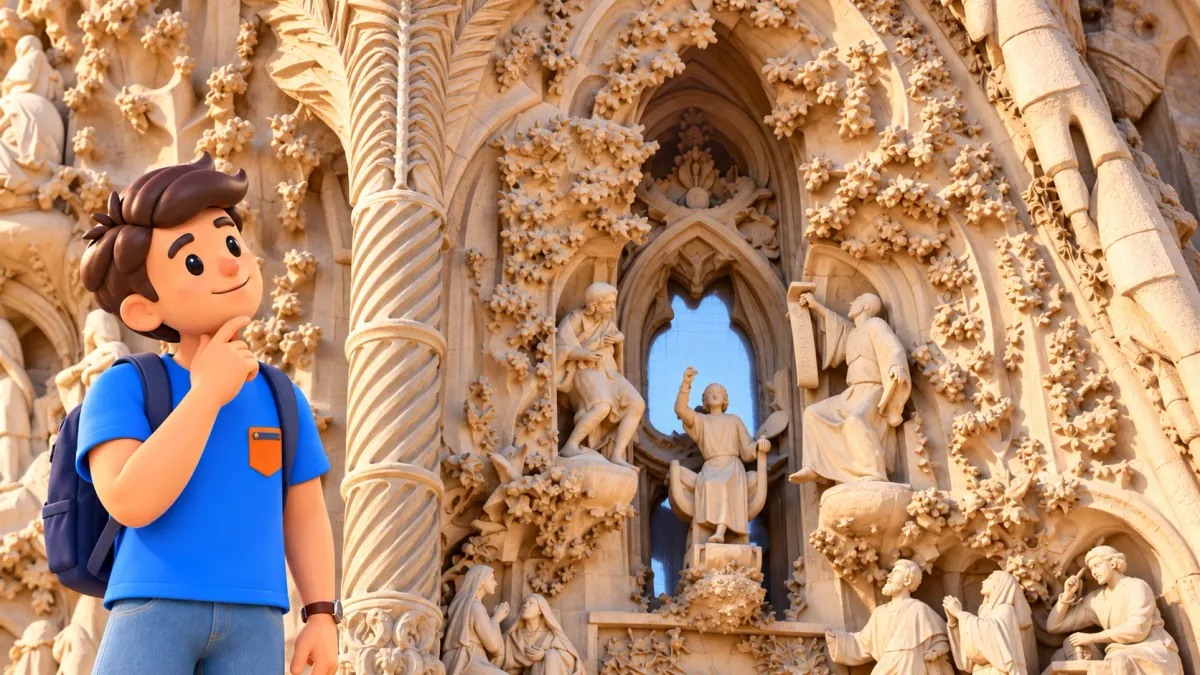
For a first visit to the Sagrada Família, choose the ordinary basilica ticket if your priority is the interior, stained glass and museum. Add a guided tour if you want a live explanation. Add a tower only if everyone using that option meets its restrictions and is comfortable walking down: the lift takes visitors up, not back down.
The official individual prices checked on 25 October 2026 are €26 for the basilica, €30 with a guided tour, €36 with one tower, and €40 with a guided tour and one tower. A tower ticket does not mean both façades or unrestricted access to the central towers. The practical choice is between four visiting formats, not between a “complete” and an “incomplete” experience.
Choose the experience before the more expensive ticket
The ordinary ticket already covers the main reason many people visit: being inside Gaudí's basilica. You can study the light, branching columns and relationship between the façades and the interior without a tower ascent. A tower adds another perspective; a live guide adds explanation. Neither extra automatically makes the visit better for your party.
| Official individual option | General price per person | What changes |
|---|---|---|
| Sagrada Família | €26 | Basilica and museum, with the official app audioguide; no tower |
| With guided tour | €30 | Live guided visit; no tower |
| With tower | €36 | One selected façade tower, subject to access conditions |
| With guided tour and tower | €40 | Live guided visit plus one selected tower |
Once you have chosen the visit, try RoadMe: in supported cities, the app prepares a complete personal trip plan around your dates, interests and pace. It is a convenient way to give the basilica enough space in the day instead of independently fitting every visit, journey and break around the ticket.
These are official general rates, not the price of every package sold elsewhere. Before paying, check the actual date, visitor category, included services and final total. A similar-looking offer may add a meeting service, another attraction or a different cancellation policy rather than more access inside the basilica.
What the ordinary ticket includes
The basic individual product includes the basilica and its museum, plus the downloadable audioguide in the official Sagrada Família app. It does not include the towers or the crypt. Do not interpret “basilica admission” as entry to every religious space, construction area or tower visible from the street.
The museum is useful for understanding the project rather than treating the building only as a backdrop. The history begins with the cornerstone laid in 1882; Gaudí took over in 1883. Models and explanations help connect what you see with a building developed across generations. The fact that one part has reached a milestone does not mean the whole complex is finished.
The ordinary product describes roughly an hour as an indicative visit, not a personal deadline imposed by the audioguide. Its published content says visitors may explore the basilica and museum at their own pace. Opening, closing, staff instructions and any booked extra still govern the practical time available.
Audio or a live guide: choose how you want to understand it
The included audioguide is downloaded through the official app. Its listed versions are about 45 minutes and an express 25 minutes; those running times are not the total visit duration. Bring charged equipment and earphones, download before arrival and check that the content opens on your device.
The official information lists audio in multiple languages, including English, Russian, French, German and Spanish. A live guided tour has its own available languages and times, which can vary by season. Do not assume that the audio-language list means a guide in the same language is offered at every hour.
The guided section lasts approximately 50 minutes according to the product details. The museum and Liturgical path are not part of that guided section; the product says you may visit them independently afterwards. Distinguish what is included in admission from what the guide accompanies you through.
Choose a guide if explanation and the chance to follow a structured account matter most. Choose audio if you prefer to pause, repeat a section or move at your own pace. For a family, verify the suitability of the actual content rather than assuming an adult audioguide becomes a children's activity because the child's entrance is free.
The official child-audio descriptions are not fully consistent between the product summary and sales conditions. If a child's audio provision determines your purchase, ask the booking service before paying. Avoid promising each child a particular format simply from the presence of the app icon.
What one tower visit actually means
You select one tower option during booking: a tower on the Nativity façade or on the Passion façade. The ordinary combined ticket does not provide both. Check that the chosen façade appears correctly before completing payment; do not expect to choose again at the lift because you have changed your mind.
The official description associates the Nativity option with views towards the east of Barcelona and the Passion option with views towards the city centre. Use those differences as a preference, not as a guaranteed ranking. Weather, what interests you and actual availability matter more than an unsupported claim that one is always the best.
Do not confuse a façade tower with the central tower of Jesus Christ or with all the towers in the building's overall design. The individual tower products checked for this guide offer the two façade choices. Seeing a new tower in a photograph, a construction announcement or a virtual experience does not add it to your physical admission.
Choose the available suitable option if the ascent itself is important, or keep the basilica-only visit if neither choice works. You do not need to buy an unsuitable slot merely to repeat a popular photograph. A view through the tower openings is an architectural experience, not a guarantee of an open rooftop terrace or unrestricted movement around the building.
The lift goes up; the way down is on foot
This condition is central to the purchase. Visitors ascend by lift and descend by stairs. A lift icon must not be read as a step-free return journey. If walking down is unsuitable, choose a basilica visit without towers and ask visitor services about the appropriate arrangements for the rest of the visit.
Children under six cannot enter the towers; children under sixteen need an adult. The age limits apply even if a child qualifies for a free admission category. A child's willingness to try the climb does not replace the access requirement, and a stroller is not a way to avoid the descent.
The tower conditions exclude wheelchairs and strollers and list restrictions including reduced mobility, pregnancy, vertigo, claustrophobia and certain heart or respiratory conditions. These are the venue's access rules, not a medical assessment of you. If you are unsure whether they apply, clarify the situation with the venue before choosing a tower ticket.
There is also an inconsistency worth resolving for older visitors: the detailed conditions include older people in the restriction wording, while the price list publishes senior tower rates. Do not treat a discounted price as clearance to ascend. Ask for written clarification for the actual visitor instead of guessing a universal age threshold.
A mixed party need not make the same choice for everyone. You can plan different suitable formats, provided a child has the required adult accompaniment and the bookings work together. Agree where to meet afterwards and do not assume somebody can wait inside a restricted lift area without the appropriate ticket.
Book the admission and extra times carefully
Start with the official individual product and the date in Barcelona local time. Select the visitor categories, the live tour language if applicable and the tower choice where offered. Then check every scheduled component on the booking summary. A date alone does not tell you when the basilica, guide or tower activity begins.
Ticket names should match each visitor's identity document. Official photo identification is required at entry, together with proof of a concession when used. Check spelling before paying; personal, non-transferable tickets are not a flexible reservation that can simply be passed to another traveller.
The official FAQ says tickets are currently released roughly two months ahead. This is an approximate sales horizon, not a guarantee that every tower or language will be offered exactly sixty days before your preferred visit. Availability in the live calendar decides what can actually be booked.
Save the real ticket, not only a payment notification or a seller's general confirmation page. The official FAQ accepts a ticket in the app, downloaded to the phone or printed, with its code readable for scanning. Store a usable copy for the day and make sure each member of the party can reach the required ticket.
Late arrival is not a safe backup plan: the FAQ states that tickets are valid for the selected time and late visitors cannot enter. Allow for reaching the correct entrance and security checks. A timed or “skip-the-line” product does not mean that screening and all waiting disappear.
The general method for comparing inclusions, time and change conditions is explained in our guide to attraction tickets, concessions and refunds. Here, apply that method to the specific Sagrada Família product rather than transferring a different museum's policy.
Weather, tower closure and changing your own plans
Towers can close because of adverse weather, faults or maintenance. The detailed tower rule in the official sales conditions expressly provides for a partial refund of the tower service in those cases, rather than refunding the basilica visit. Other changes to accessible spaces do not automatically create the same entitlement.
Some product-summary wording is broader and says closures do not result in a ticket refund. Keep the accepted terms with your order and use the detailed tower and refund provisions when contacting the seller about a cancelled ascent. Do not promise your group that any closed area will produce a full refund.
For a closure decided by the organiser, the detailed conditions describe an automatic refund through the original payment method. Where a qualifying request must be submitted, the conditions set a maximum of fifteen days from the originally scheduled visit. Keep the booking reference and contact the booking service promptly if the expected adjustment is unclear or missing.
Changing your mind is a different case. Official tickets are not freely changeable or refundable as a general rule. The FAQ asks for requests at least 48 hours before the visit and official proof within 48 hours; the full conditions define the exceptional grounds. Sending a request is not confirmation that any cancellation reason will be accepted.
If buying through another company, first establish that it is an authorised sales channel and read its own product conditions. The basilica's terms prohibit unauthorised resale but also recognise expressly authorised distributors. Do not assume either that every third-party ticket is valid or that every non-basilica seller is automatically invalid.
Compare final totals and the actual service, not only “official”, “priority” or “free cancellation” in a headline. A third-party tour can have its own meeting point and cancellation deadline. Its instructions do not replace the identification, age and security requirements for the visit itself.
Bags, clothing and a phone ready for the visit
The tower lockers are for temporarily leaving bags and backpacks during the ascent. They are not a general suitcase-storage service for a day in Barcelona. The official FAQ says there are no lockers for suitcases; collect tower belongings as soon as you return. Arrange other luggage storage before arriving if needed.
Bring a manageable selection of belongings and expect inspection. Check the dress rules before setting out: no swimwear or transparent clothing, and trousers or skirts must reach at least mid-thigh. Entering barefoot is not allowed. A casual daytime visit remains a visit to a Catholic church.
Keep the interior quiet. The designated quiet hour is 09:00–10:00, with visits continuing under the silence and earphone requirements; this does not create a 09:00 opening on days whose published admission begins later. Elsewhere in the visit, a phone speaker is still a poor substitute for your own headphones.
Eat before or after the visit rather than planning a picnic inside. Respect photography restrictions and ask about equipment before bringing professional gear. Do not assume that tourist admission authorises a commercial or promotional shoot, or that a tower slot is a reservation of a private photo location.
Use RoadMe to organise the rest of the trip as a personal programme around what interests you, with a pace that leaves room for the visit and a break. In a supported city, it is more convenient to work from that complete plan while keeping the basilica's confirmed booking conditions separately available.
A final decision without overfilling the day
Choose ordinary admission for the interior and museum, guided admission for a live explanation, and a tower only when its extra viewpoint suits the actual visitors. Check the chosen façade, all times, identity details, concession evidence and the total before payment. Then save the ticket and conditions together.
Leave a comfortable gap after the visit rather than committing immediately to another distant timed entrance. The separate guide to planning paid visits in Barcelona without rushing explains that wider choice. You can enjoy the Sagrada Família properly without turning the rest of the day into a sequence of deadlines.