Porta Nuova or CityLife: Which Milan District Should You Visit?

Choose Porta Nuova if you want a compact introduction to contemporary Milan through Piazza Gae Aulenti, the planted landscape of BAM and views of Bosco Verticale. Choose CityLife if your main interest is comparing three striking tower shapes, with a park and shopping nearby. Either can fill a pleasant two-hour outing outdoors. The useful choice is which experience fits your day; you do not need both to understand that Milan’s architecture extends well beyond its cathedral.
Start with the kind of afternoon you actually want
Porta Nuova suits a visit built around the relationship between a square, a botanical park and planted residential buildings. CityLife puts the contrast between individual skyscrapers more clearly at the centre of the outing. Both districts combine homes, workplaces and public space, so these are useful emphases rather than rigid categories. Neither is simply an open-air museum with an entrance and a compulsory circuit.
Try RoadMe for a personal trip plan built around your interests, dates, pace and budget. Planning the whole stay in the app makes it more convenient and efficient to fit the right modern district between cultural visits, meals and rest.
| Your main interest | Start with | What to concentrate on |
|---|---|---|
| A square, greenery and planted balconies | Porta Nuova | Gae Aulenti, BAM and exterior views of Bosco Verticale |
| Distinctive tower profiles | CityLife | The straight, twisting and curved silhouettes around Tre Torri |
| A walk followed by shopping | CityLife | Keep the park outing and retail time separate |
| Continuing towards Corso Como or Isola | Porta Nuova | Choose one neighbourhood continuation rather than adding everything |
For a first visit with limited time, decide on one district before leaving your accommodation. Check the journey there, identify a clear meeting point and agree how much walking everyone wants. A companion interested in plants and another interested in architecture can enjoy the same afternoon, provided there is room to stop. The easiest shared plan often has one strong focus and a comfortable finish.
Porta Nuova: look at the connections between buildings
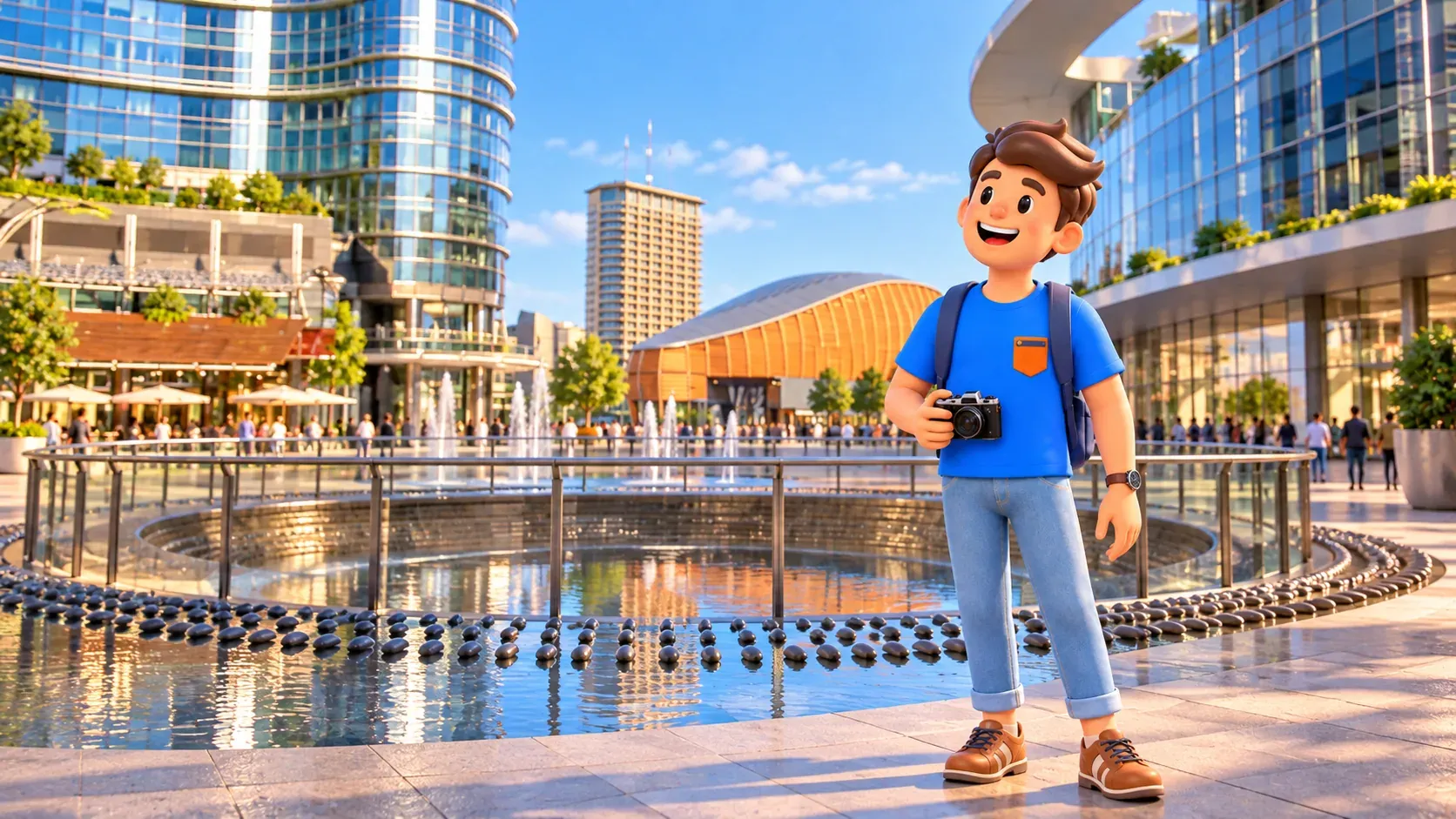
Piazza Gae Aulenti provides an identifiable starting point near Porta Garibaldi. Its curved glass surroundings, water features and pedestrian setting make a strong contrast with the historic centre. From here, the green spaces of BAM and the planted balconies of Bosco Verticale give the visit a coherent direction. The interest lies in moving between different kinds of urban space, rather than counting every tall building visible on the horizon.
The district emerged through a major regeneration project linking areas with different earlier identities. The former Varesine railway site belongs to that story. You do not need a detailed planning history to appreciate the change: notice how a contemporary public square connects with a park, station approaches and older streets beyond. Those transitions make the district more interesting than an isolated skyline photograph.
BAM means Biblioteca degli Alberi Milano, the Library of Trees. This is a public park, not a library building where visitors borrow books. Designed by Inside Outside | Petra Blaisse, it uses planting, paths, irregular fields and circular groups of trees to organise the landscape. Give yourself time to look at a planted area at ground level as well as at the towers above it.
Bosco Verticale adds a different relationship between greenery and buildings. Completed in 2014 by Boeri Studio, the two residential towers incorporate trees and other planting into projecting balconies. They are people’s homes. The ordinary visitor experience is looking from public space, not entering apartments, using residents’ lifts or touring balcony gardens. A photograph of a private interior does not establish public admission.
CityLife: compare forms, then step back into the park
At CityLife, Piazza Tre Torri gives you a clear starting point beside the M5 metro station. The district grew from the redevelopment of Milan’s former trade-fair grounds. It now combines offices, residences, retail and public green space. That change of use is a useful historical anchor: this is a new piece of everyday city life on land once associated with exhibitions.
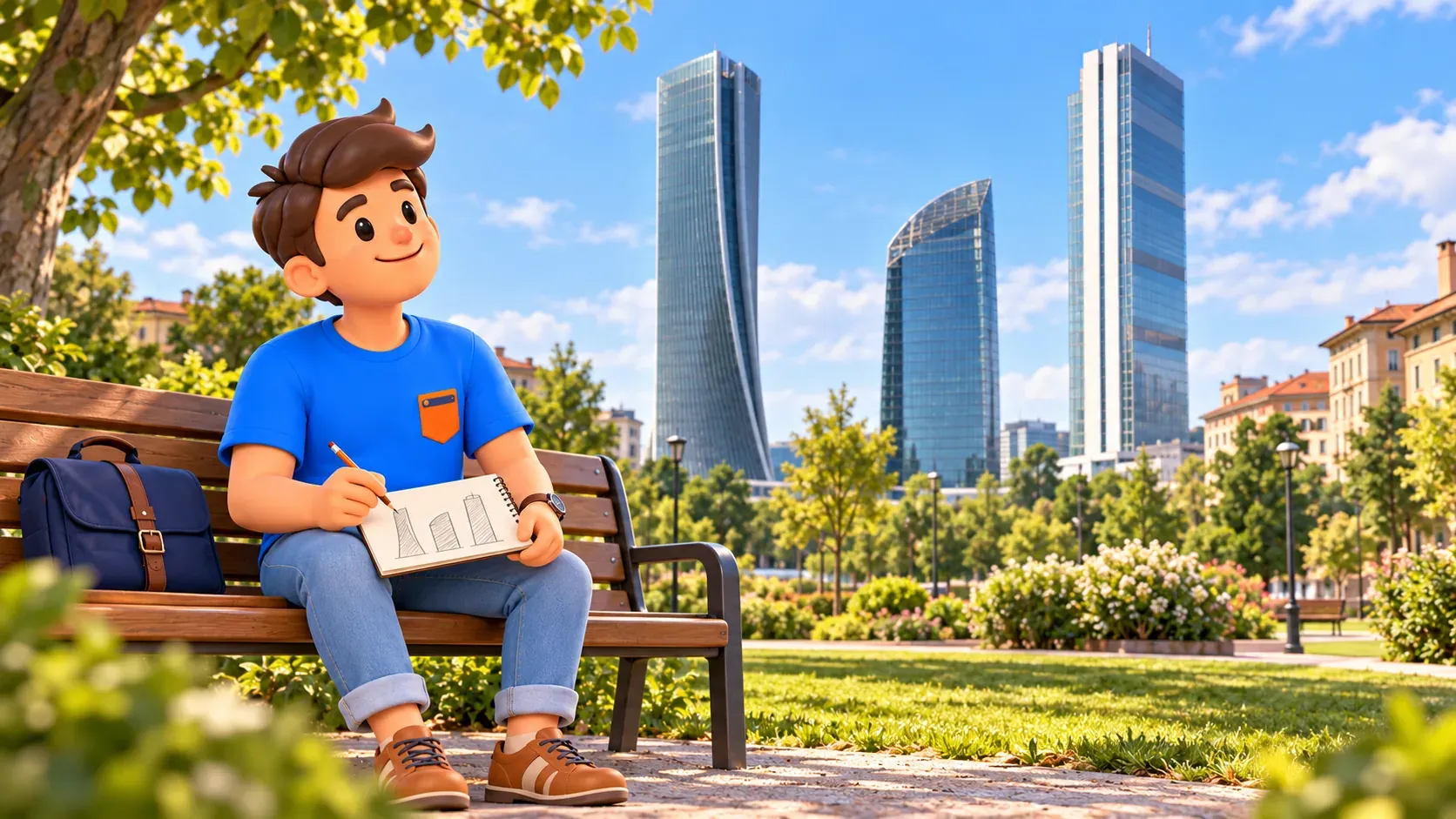
The three best-known tower profiles offer an approachable architecture exercise. The straight Allianz tower was designed by Arata Isozaki and Andrea Maffei; the twisting Generali tower is associated with Zaha Hadid; the curved PwC tower with Daniel Libeskind. Look at how each silhouette changes when seen beside its neighbours. You can enjoy the comparison without memorising heights, records or technical specifications.
Then change scale. The park and residential exteriors make it possible to move from distant profiles to the spaces people pass through. Hadid’s flowing residential forms are a different architectural experience from her office tower. Keep to public paths and respect private entrances. The point is to see how the district accommodates different activities, not to seek access to every striking doorway.
The public park’s first section opened in 2013, and later phases have changed the district. Older photographs may show construction that no longer describes the same building’s condition. Use current signs and permitted paths on the day. A crane in a historical image is not a reason to label an entire neighbourhood unfinished, just as an attractive promotional image does not guarantee an empty lawn.
Two hours means one district, with room to enjoy it
A practical allowance for either choice is 65 minutes for the main views and green spaces, 15 for local connections, 20 for a seated pause and 20 in reserve. That totals 120 minutes. The walking and looking will overlap naturally; the division is a planning aid rather than an instruction to stop watching the clock at every corner. Start counting at Gae Aulenti or Tre Torri, not at a distant hotel.
Travel to the starting square and onward from the finish is additional. So are a substantial meal, a long shopping session, a scheduled activity or an extended detour through neighbouring streets. If something appeals to you, choose it deliberately and change the finish. The reserve is useful for orientation and an unhurried pace; it is not a hidden slot for an extra major attraction.
Someone with only an hour should simplify further: choose the main square and one nearby green section, then leave comfortably. Someone with half a day can linger, sketch or explore the relationship between the park and buildings. More time need not mean more districts. It can mean seeing the same place with enough attention to remember something beyond its most recognisable photograph.
Free public space does not mean access to every tower
The core of both outings is an ordinary walk through public outdoor spaces without an attraction admission charge. Transport, food, shopping and separately arranged activities are different costs. There is no need to buy a tower ticket simply to appreciate the architecture from the square or park. Equally, seeing an office lobby from outside does not make it part of a public sightseeing route.
Do not assume that the tallest building offers a daily observation deck. CityLife’s three towers are office buildings, while Bosco Verticale is residential. Any exceptional opening requires its own current confirmation and conditions. Keep an exterior walk independent of such arrangements, so a private entrance or an unavailable special event cannot undo the afternoon you planned.
Park access and shop opening are also different questions. A public path being available does not establish that a particular café, toilet or shop is open at that hour. For a daylight outing, check any service that matters to you and follow local notices. Treat events, temporary restrictions and maintenance as things to verify for your date, rather than assuming every published programme runs continuously.
Choose comfort as carefully as architecture
Both districts contain open spaces, so greenery should not be read as a promise of uninterrupted shade. Consider the forecast, daylight and how long your group enjoys being outdoors. A seated break belongs in the plan even if nobody wants to shop. Choose clothing and footwear for the actual conditions, and shorten the outing if a longer walk has stopped being enjoyable.
BAM identifies wheelchair access from Via Gaetano de Castillia, Piazza Gae Aulenti and Passeggiata Veronelli, along with accessible picnic tables. That is useful information about particular facilities, not a complete assessment of every approach, metro exit or route across the district. If step-free travel matters, check the operator’s current lift information and contact the relevant venue about your specific needs.
For photography, begin by enjoying one view with the camera put away. Then choose a position that keeps pedestrian routes clear and respects residents and office entrances. Public architecture can be photographed thoughtfully without turning private balconies into a spectacle. The most satisfying image may show how planting, seating and building edges work together, rather than trying to squeeze every tower into one frame.

Visit both only when the comparison is the purpose
Architecture enthusiasts may reasonably want both districts on the same day. Allow about five hours rather than trying to fit two complete outings into a two-hour slot. One possible budget is two hours in Porta Nuova, 30 minutes for the connection, two hours at CityLife and another 30 in reserve. Meals longer than the short pauses included in each outing need extra time.
The M5 links Garibaldi FS with Tre Torri; from Garibaldi, the relevant direction is San Siro Stadio. The 30-minute connection allowance covers reaching the platform, waiting, travelling and emerging towards the next square. It is an estimate, not a claim that the train ride itself takes half an hour or that every service is running normally. Check ATM’s current journey information before setting off.
Use RoadMe to turn an interest in architecture into a personal plan for the whole trip. The app makes it easier to organise the days around what you enjoy, with enough time for neighbourhoods, cultural visits and a comfortable pace.
If you choose one district, our two-hour Porta Nuova walk and CityLife architecture walk provide the next level of planning detail in the same spirit. Conditions were checked on 17 October 2026; confirm transport and essential services for your visit. Pick Porta Nuova for the square–park–planted-balcony sequence, or CityLife for the conversation between three tower forms. Either choice can make a complete afternoon.