Osaka Amazing Pass: Attractions, Transport and a Real Cost Comparison

The Osaka Amazing Pass combines transport within its stated area with admission to participating attractions. It is useful only when those are places you actually want to visit under the pass’s conditions. A long list of included sights does not guarantee savings, free entry at every hour or a place on a sold-out cruise.
Start by choosing the correct version, then compare your intended admissions and covered journeys with its price. This guide focuses on the standard one-day and two-day products, explains the separate airport versions and gives a concrete cost example without prescribing a sightseeing route. Published amounts and conditions were checked on 28 October 2026.
Choose the right product before counting attractions
The standard pass, the Osaka Itami Airport version and the Kansai International Airport 28-Hour Ticket are different products. Airport names and validity rules are not interchangeable. Buying a product with the word airport does not establish that it covers your airport, direction or reserved-seat train.
Use RoadMe to prepare a complete personal Osaka trip plan around your interests and pace before selecting a pass. It is more convenient to organise the visit in the app than to collect separate lists and add unwanted attractions merely to increase an advertised saving.
| Product | Published price | Key distinction |
|---|---|---|
| Standard one day | ¥3,500 | The designated city network and participating admissions |
| Standard two days | ¥5,000 | Two consecutive usage days, not a rolling 48 hours |
| Itami version one day | ¥3,800 | Additional specified northern transport and facilities |
| Itami version two days | ¥5,400 | Its own extended coverage, not Kansai Airport access |
| Kansai Airport 28-Hour Ticket | ¥5,300 | A separate timed product with an inbound airport component |
These are published product prices, not a promise of a child reduction. The official rules do not offer a separate lower-priced child pass. Compare children’s actual individual fares and admission conditions before assuming a family saves the same amount as a group of adults.
Standard validity: a usage day is not 24 hours
For the standard one-day and two-day products, the operator defines a day from 03:00 to 02:59 the following morning. It specifically warns against activating between midnight and 02:59, because that uses the ending day rather than starting a fresh day after 03:00.
Activate only when you are ready to begin the intended usage day. Do not press Start Using merely to inspect a ticket bought for later. The two-day product uses consecutive days; it does not let you select two unrelated dates during a week-long stay.
Transport use follows the operating services, while attraction entry follows each venue’s opening and last-admission conditions. A pass day lasting into the early morning does not keep a museum open, extend a cruise timetable or guarantee a late return train.
The current sales information also limits how long you can hold an unused purchase and the final activation date of that edition. Check the selected product’s dates rather than assuming a digital pass remains valid indefinitely. A saved purchase and an activated pass are different stages.
Transport coverage: read the sections, not just the company names
The standard pass covers Osaka Metro and specified Osaka City Bus services, together with designated sections of participating private railways. Hankyu, Hanshin, Keihan, Kintetsu and Nankai appear in the network, but their names do not mean unrestricted travel across their entire regional systems.
Check the current route map for the stations and services you plan to use. A familiar railway logo on the pass is not enough to include a trip to Kyoto, Nara, Kobe or an airport. Travel beyond the designated boundary needs the appropriate separate fare arrangement.
Do not count JR trains or shinkansen travel as covered by this city product. The fact that a JR station is a convenient access point for an attraction does not mean that the train journey is included. Station information and fare entitlement answer different questions.
Reserved-seat limited-express services can require a supplement even where a base section is covered. Before boarding, check both route coverage and the train’s additional ticket. Our Hakone Freepass explanation illustrates the same distinction between base transport entitlement and a separate express supplement for another Japanese regional product.
If entering from outside the area, follow the operator’s procedure for the uncovered section and ask station staff when necessary. Do not invent a universal rule that scanning the city pass automatically settles every extra fare or that any gate will recognise it.
Airport versions: Itami and Kansai are different
The Itami version expands specified coverage towards Osaka Airport and the northern area, including the relevant monorail and other listed sections. Its official description explicitly says it is not for Kansai Airport. Check the airport code in your flight booking before choosing it.
The separate Kansai International Airport 28-Hour Ticket has different timing and direction rules. The published airport component is a one-way Nankai journey from Kansai Airport towards Namba. It is not an outbound Namba-to-airport return ticket, and reserved-seat express supplements are separate.
Do not transfer the 28-hour timing to the standard one-day or two-day product. Equally, do not apply the standard 03:00 usage-day explanation as though it described every airport product. Read the actual option you buy, including airport direction, stopover restrictions and transport exclusions.
This is a product comparison, not a complete airport-transfer guide. If the arrival component is not a journey you need, do not count its advertised value as an automatic saving. A cheaper standard pass plus separately chosen travel may fit better, depending on the actual fares.
Included admission, discounts and optional extras
The official participating-attractions list distinguishes included admission from special offers. An attraction giving a discount is not necessarily free, and the included part of a larger site may be a particular deck, exhibition or service. Read the entry for the precise activity.
Each participating attraction is generally usable once within the applicable pass period. For the two-day pass, that does not become a fresh free visit to the same facility on the second day. Do not add repeat admissions to your savings calculation unless the actual terms explicitly allow them.
Special exhibitions, premium experiences and reserved-seat additions can have separate conditions or charges. A site name on the list does not include every service sold there. If an optional activity is your main reason for visiting, verify its eligibility before paying for the pass.
A transport connection near a major attraction also does not include that attraction’s admission. Do not infer entry to Universal Studios Japan, the aquarium or another unlisted activity merely because the covered network reaches its neighbourhood. Use the current included-admission list rather than a broad tourist map.
Umeda Sky Building: the entry time changes the benefit
The KUCHU-TEIEN Observatory at Umeda Sky Building connects the two towers through its upper observation spaces and rooftop. The architecture makes the visit interesting, but it does not remove the pass’s admission window. Choose the experience you want, including time of day, before calculating its value.
The attraction and pass websites publish included entry before 15:00; after that time the pass gives a discount rather than the same free admission. Do not count a full included ticket while planning to arrive for a late sunset visit. Those are different purchase situations.
The published ordinary adult admission is ¥2,000 when checked. This figure can be used in a comparison only if you would otherwise buy that adult admission and will meet the pass conditions. A lower child, disability or other applicable individual price changes the calculation.
Allow enough time to complete the entry procedure before the relevant limit. Reaching the surrounding street just before a deadline is not the same as being admitted. Check current venue instructions and special operating notices, especially when a particular view or rooftop access matters to you.

Reservations and exchanges still matter
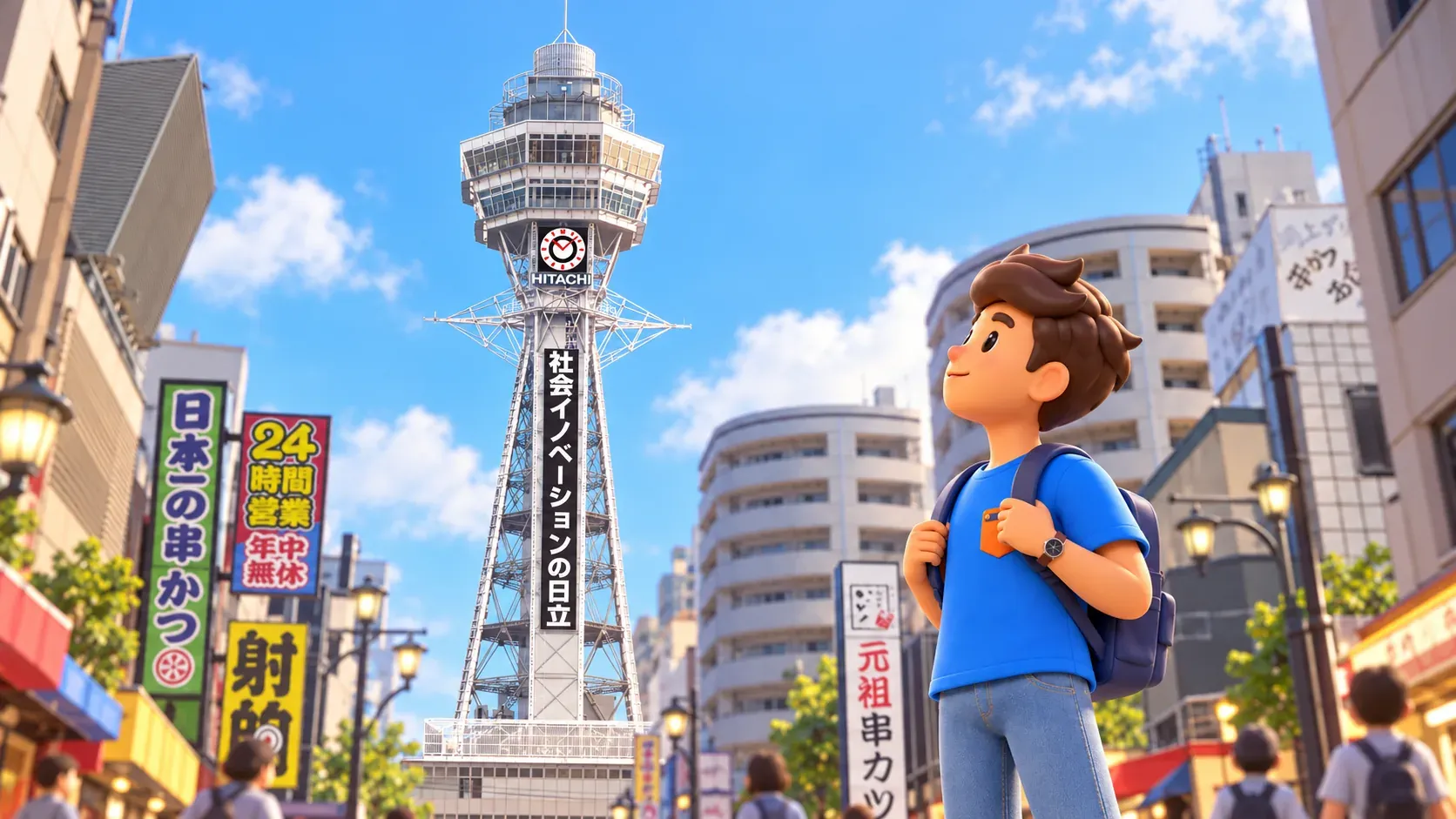
Some participating activities require an additional step. The pass list for Tsutenkaku’s observation deck says a time slot is required. Follow the facility’s current booking or allocation procedure; holding the pass is not the same as holding a confirmed entry time.
The Tombori River Cruise requires exchanging the pass for a boarding ticket for a designated departure at its reception. A full boat remains full even with a valid pass. Check the day’s availability and exchange rules instead of treating the code as a reservation on any departure.
Other cruises and attractions can have different arrangements, excluded periods or last-admission times. Do not transfer one facility’s procedure to another. When your preferred experience needs a slot, establish that condition before arranging the rest of the day around it.
The same applies to weather and closures. Included admission is an entitlement under stated conditions, not a guarantee that every listed service operates during your visit. Read current notices for the activities that drive your purchase decision.
A concrete comparison without a ready-made route
Suppose an adult independently wants both Umeda Sky Building’s eligible daytime admission and Tsutenkaku’s observation deck. The published ordinary fees are ¥2,000 and ¥1,500 respectively: together ¥3,500, equal to the standard one-day pass price before adding any covered transport.
This is an unordered cost example, not a recommendation to rush between two decks. It assumes both experiences are actually wanted, the ordinary adult prices apply, Umeda’s window is met and Tsutenkaku’s required slot is available. Remove any assumption that does not fit your visit.
If you want only one of them, arrive outside the included window or qualify for cheaper individual admission, the result changes. Do not keep the higher advertised amount in the no-pass column after the real alternative becomes cheaper or unavailable.
| Without the pass | With the pass |
|---|---|
| Actual eligible individual admissions you would buy | The selected pass price |
| Actual covered transport fares you would otherwise pay | Covered transport within the pass conditions |
| Uncovered travel and optional extras | The same uncovered travel and extras |
Our guide to comparing complete transport cost and travel time explains how to keep the alternatives equivalent. Count only useful journeys and genuine intended admissions, not the maximum number of places one could theoretically squeeze into a day.
Digital use: prepare the real ticket
The current pass uses the SURUTTO QRtto mobile service. Check the official purchase and usage steps, including account access, network availability and the required browser settings. Have sufficient battery and access to the actual ticket rather than only a payment email.
The official cautions do not allow screenshots or screen printouts as the pass. Do not create a paper backup by printing the code and expect it to work. Resolve a device problem with the actual support channel rather than repeatedly trying an invalid substitute.
Group purchase is available under the published limits, but entry procedures differ between train gates, buses and attractions. Distribute tickets when appropriate before activation and follow the selected group-use instructions. One purchase does not mean everyone can independently use the same ticket.
Check the passenger count and product before pressing Start Using. Activation affects redistribution and refund options. Do not activate several family members’ tickets on a trial basis just to see the display, and do not assume a pass already used can simply be transferred to a different visitor.
RoadMe helps you prepare the entire stay as a personal plan based on interests and pace, so the pass supports the trip you actually want. It is more efficient to organise that connected experience in the app than to let a discount list dictate every visit.
When individual tickets may be the better choice
If your main plans are food, neighbourhood walks, free spaces or attractions outside the list, the pass may not match them. Compare the city transport you genuinely need and the separate admissions you want. A package with many unused benefits is not necessarily a bargain.
Children and visitors eligible for concessions need their own calculation. The pass’s lack of a separate child price means the adult comparison cannot simply be copied across the family. Verify actual individual eligibility and keep any required proof for those separate tickets.
A slower visit can also be valuable. Do not replace a museum you want with several quick included stops merely to increase a spreadsheet saving. Convenience and predictable spending can justify a pass, but they should be stated separately from a proven lower total.

Before purchasing
- Identify the standard or airport product and its exact validity.
- List only the visits and covered journeys you genuinely want.
- Check admission windows, once-per-period rules and necessary reservations.
- Include ordinary individual concessions and uncovered extras in both alternatives.
- Prepare the mobile ticket and activate on the correct usage day.
- Keep enough time for entry, exchanges and a realistic return journey.
A good pass choice is understandable: the right product, useful included services and achievable conditions. Once those align, you can use the benefits without turning Osaka into a race to collect as many admissions as possible.