Hakone Freepass: What It Covers, Extra Fares and When It Pays Off
The Hakone Freepass covers designated transport in the Hakone area for two or three consecutive days. A version starting at Shinjuku also includes one return journey on the relevant Odakyu section; the Odawara version does not cover travel between Shinjuku and Odawara. The Limited Express Romancecar surcharge is separate. Those three distinctions matter more than the word unlimited.
Choose the pass by your entry point and the journeys you actually want, then compare the covered fares with the pass price. It is not automatically cheaper for every visit. This guide explains the coverage, current published adult prices and extra charges without turning the ticket into a compulsory sightseeing itinerary.
Which Hakone Freepass fits your arrival?
Start with how you will reach the area and where you will go afterwards. A return visit from Shinjuku is different from reaching Odawara on another railway and continuing elsewhere. Do not buy the Shinjuku version simply because your accommodation is somewhere in Tokyo, or assume the local version covers a later train back to the capital.
With RoadMe, you can prepare a personal trip plan around your interests and pace before choosing transport tickets. Building the whole visit in the app is more convenient than collecting separate lists and adding journeys simply to make a pass appear worthwhile.
| Your situation | Version to compare | Important limit |
|---|---|---|
| Starting and returning on Odakyu from Shinjuku | Shinjuku-departure Freepass | The outside section is one return journey, not unlimited Tokyo travel |
| Arriving at Odawara independently | Odawara / Hakone-area-only Freepass | Your journey to Odawara is separate |
| Continuing elsewhere after Hakone | Local pass plus the actual onward ticket | Do not count an unused return journey as a saving |
| Wanting only a small number of rides | Individual fares as well as the pass | Convenience does not prove a lower total |
This is a purchasing framework, not a route to follow. Select the places and activities that interest you first. The pass should serve those choices; it should not become a reason to fill the visit with transfers you would otherwise skip.
Published prices and validity
Odakyu’s published adult prices checked on 28 October 2026 are listed below. They refer to the named departure versions, not every possible originating station. Confirm your date, passenger category and chosen sales channel before payment. A pass price is not a reservation of a Romancecar seat.
| Adult Freepass | Two days | Three days |
|---|---|---|
| From Shinjuku | ¥7,100 | ¥7,500 |
| From Odawara, Hakone area only | ¥6,000 | ¥6,400 |
The validity is consecutive calendar days, rather than a rolling 48-hour or 72-hour period. Check the start date and the validity printed or displayed on your ticket. Beginning late in the day does not create an extra morning after the final valid date.
The two-day version can be used during a one-day visit, but you are still paying for that product. Whether it saves money depends on the rides used, not on a rule that every day trip needs or must avoid the pass. Likewise, a three-day product is useful only when its actual validity fits your stay.
Child categories have their own terms. Do not apply the adult table to every younger traveller or infer that a reserved seat for a small child is automatically free. Check both the Freepass and any separate limited-express seat conditions for your party.
What the pass covers within Hakone
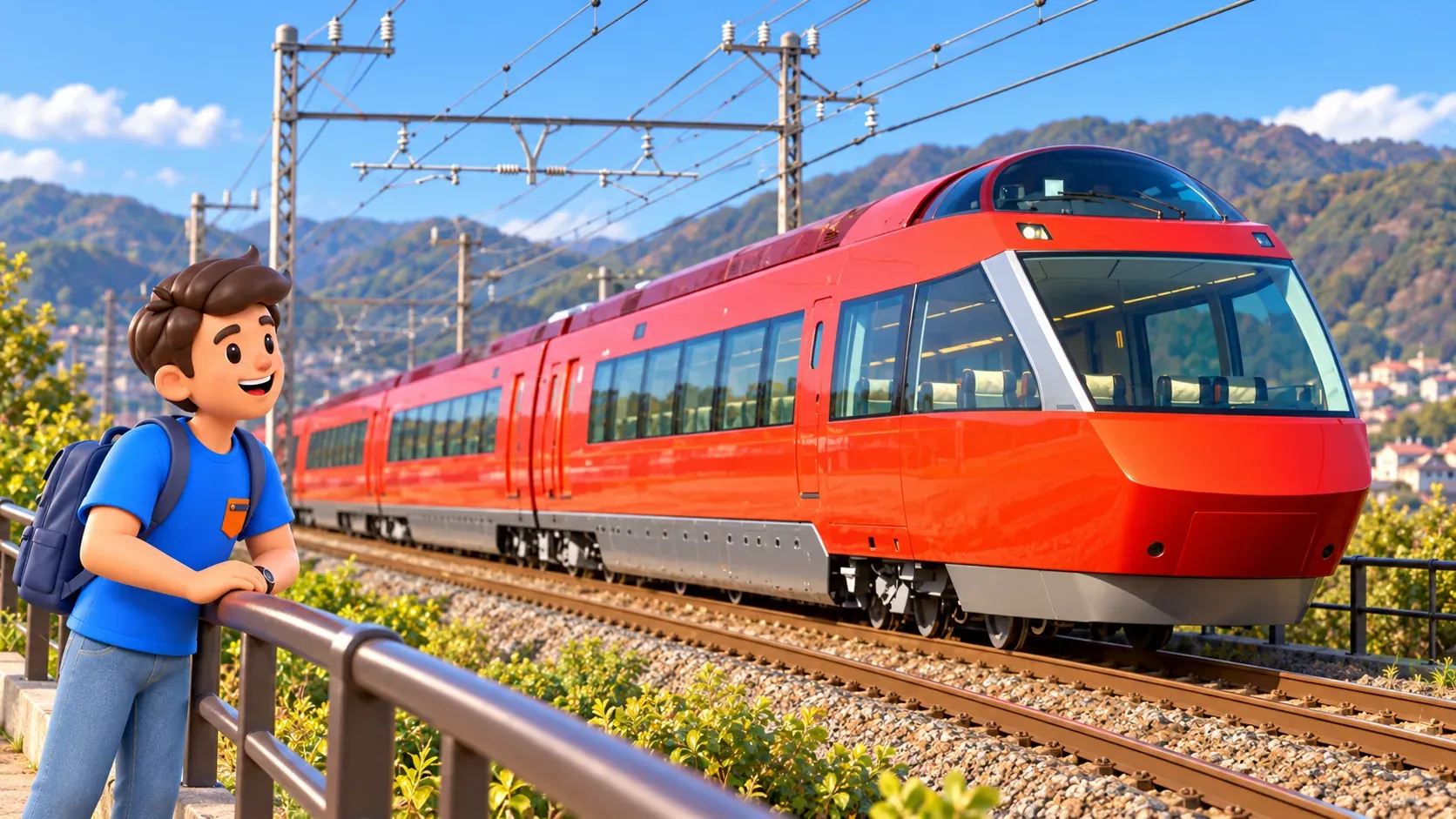
The covered network includes the Hakone Tozan train and cable car, Hakone Ropeway, Hakone Sightseeing Cruise and specified bus services. The operator describes eight types of transport, but that number is not permission to board every service carrying passengers in the region.
For buses, check the operator, line and designated section on the current coverage map. Hakone Tozan Bus, the Kanko Shisetsu Meguri service, Odakyu Highway Bus and Tokai Bus appear within the published network under their conditions. A similarly placed stop does not prove that another company’s bus is covered.
Hakone Navi explicitly excludes Izu-Hakone Bus from this pass. Do not substitute that service because it appears to go in the same general direction. If you travel outside a covered section, the uncovered part can require a separate fare.
The Hakone Sightseeing Cruise is the named covered service on Lake Ashi. Do not read this as coverage of every boat, cruise product or premium cabin. Confirm the actual operator and any special-class supplement. The scenery being the same does not make two boat companies interchangeable for a transport ticket.
The Hakone Tozan Cable Car and Hakone Ropeway are also different systems. The former is the rail-based cable connection between Gora and Sounzan; the latter is the aerial gondola system. Keeping the names distinct helps you check the relevant timetable, station and service notice.
What unlimited does not include
A transport pass is not general free entry to museums, hot springs, hotels or every attraction. The Freepass offers benefits at designated participating facilities, but a discount is not the same as included admission. Read the benefit and present the valid pass as required before buying the separate service.
JR trains, the shinkansen journey to Odawara and ordinary city transport used to reach Shinjuku should not be counted as included unless the actual product explicitly covers them. If you arrive by another railway, budget for that journey separately when comparing the local pass.
Nor does unlimited travel guarantee an available seat, priority boarding or operation in bad weather. Reserved passengers can have priority on specified bus services, and trains, gondolas and boats have their own operating arrangements. A valid pass does not remove those practical limits.
With a departure-station version, the Odakyu return component is limited. The official leaflet also says that after returning to the departure station the pass cannot be used again. Do not imagine two separate out-and-back visits simply because the ticket still displays a multi-day validity period.
Romancecar: base fare and supplement are different tickets
To use the Limited Express Romancecar, you need the base journey entitlement and a limited-express ticket. A suitable Shinjuku-departure Freepass provides the relevant base component, but not the supplement. Holding the pass alone is therefore not enough to board that reserved-seat train.
Odakyu lists a standard adult supplement of ¥1,200 one way between Shinjuku and Hakone-Yumoto. The selected online channel may offer a different purchase amount, so use the final booking screen for your train. Do not apply this exact supplement to every possible pair of stations.
A published example is the two-day Shinjuku pass at ¥7,100 plus two standard ¥1,200 supplements, totalling ¥9,500 for using Romancecar in both directions. This explains the cost of that combination. It is not a claim that the pass saves that amount or that every passenger must choose the limited express.
All Romancecar seats are reserved. Select the actual service and place under its booking procedure rather than assuming the transport pass reserves one. A panoramic image of a particular train does not guarantee that model or an observation seat on your chosen departure.
With the Odawara version, travelling beyond its coverage towards Shinjuku needs the separate base fare as well as any Romancecar supplement. Paying only the supplement does not extend the local pass to Tokyo. This is especially important if you entered the region from a different part of Japan.
How to decide whether it pays off
Make a list of the journeys you actually expect to take, with endpoints and direction. Look up the current individual fare for each covered ride and add only those journeys. Keep transport not covered by the pass in a separate column so you do not credit the Freepass with a saving it cannot provide.
| Without a pass | With a pass |
|---|---|
| Sum of actual individual base fares | Correct Freepass price |
| Any chosen limited-express supplements | The same chosen supplements not included |
| Uncovered transport and optional extras | Uncovered transport and optional extras |
Compare the totals, not the pass against a larger bundle of fares you do not intend to use. If you would not take a cruise or extra ride without the pass, adding its full fare as a guaranteed saving overstates the benefit. Convenience may still have value, but it is a separate reason to buy.
For arrival at Odawara, compare local individual fares against the local pass. For a Shinjuku return, include the relevant ordinary Odakyu base journeys in the no-pass column. Do not compare the Shinjuku product with a local-only fare total while forgetting the outside journey, or add that journey twice.
Use the same travel choices in both columns. If you want Romancecar either way, its supplements remain on both sides; they are not a saving created by the pass. If you prefer ordinary services, do not add a limited-express upgrade simply because the pass advertisement shows the train.
Our guide to comparing complete transport cost and travel time explains this method more generally. For Hakone, the key is to compare the same entry point, journeys and comfort choices rather than treating every ride in a promotional loop as compulsory.
Digital or paper: choose the product you can actually use
The pass can be bought digitally or as a paper ticket through the operator’s listed sales options. A digital ticket is used on a smartphone under the selected channel’s instructions. Keep access to the actual ticket and sufficient battery; do not assume an email receipt or an arbitrary screenshot is a valid replacement.
For a family or group, check the exact current option before buying. Official pages contain different wording about one-device group use and individual-phone requirements. Do not generalise one instruction across every digital product. Confirm the available group option, how tickets are shown and whether all users must remain together.
If your group cannot satisfy the selected digital conditions, ask about paper tickets at an authorised counter instead of discovering the limitation at a gate. A convenient purchase method is one your entire party can use throughout the trip, not merely the one that is fastest to pay for.
At gates and boarding points, follow the instructions for that ticket format. The procedure can differ between railway gates, buses and boats. Keep the pass available until the journey and any return component are complete; do not discard it after the first ride.
RoadMe helps you prepare the whole trip as a personal plan based on your interests and pace, including time for the experiences you value beyond transport. Planning that connected visit in the app is more efficient than building the day around disconnected ticket recommendations.
Closures, weather and the value of a flexible plan
Check the current operating information for the services important to your visit. Ropeways and boats can be affected by weather or planned maintenance. The pass is a ticket entitlement, not a promise that every mode will run throughout its validity.
If a service stops, follow the operator’s actual replacement and assistance information. Do not assume any nearby bus is an authorised replacement or that a taxi becomes covered. A published maintenance replacement and an unexpected disruption can have different arrangements.
Refunds also depend on the product, use and circumstances. Ask the operator or the selected sales channel, keeping the pass and purchase details. Do not calculate a guaranteed refund by dividing the pass into eight equal parts or assume that missing one ride refunds the full purchase.
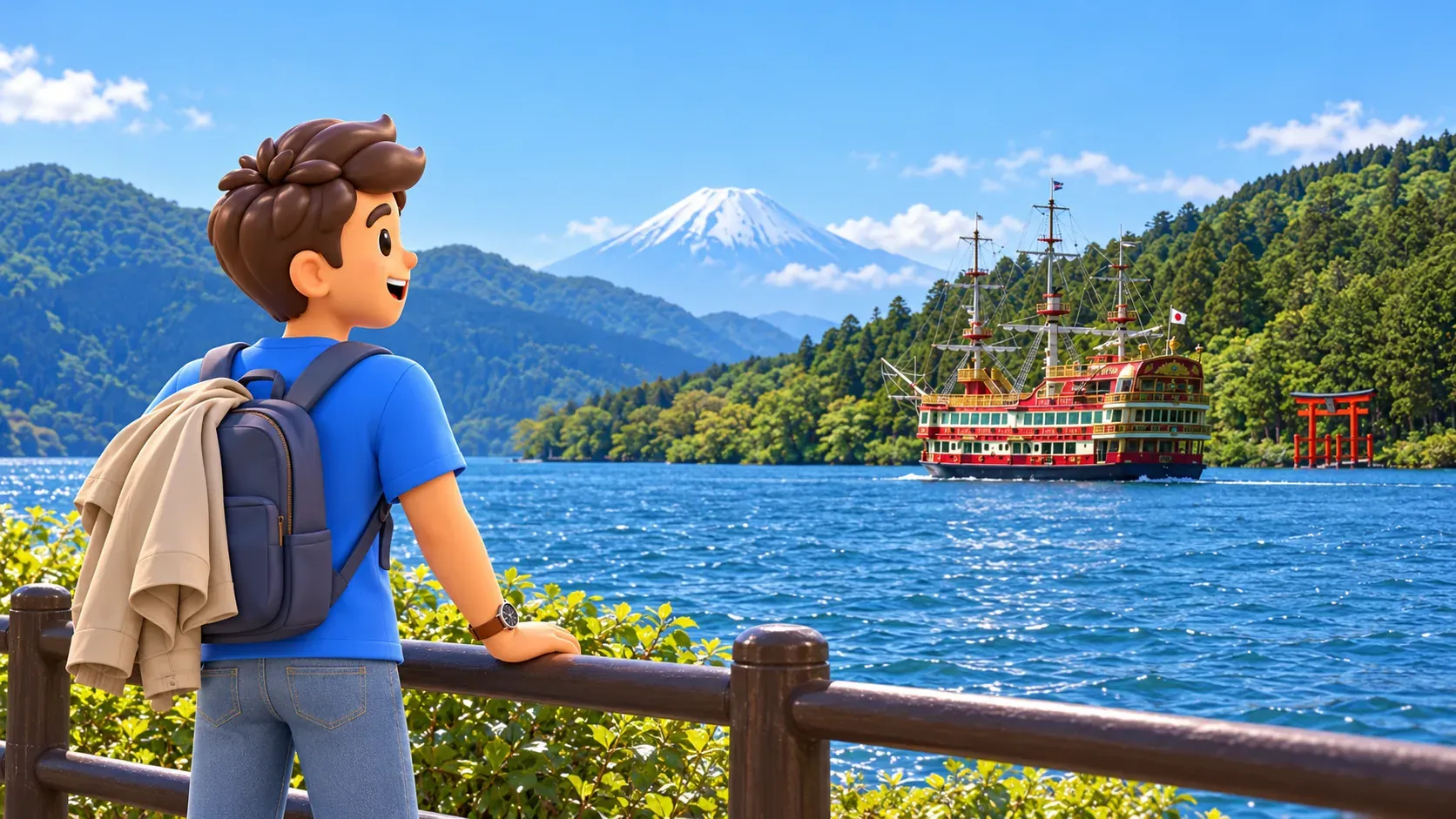
Weather can change the scenery as well as transport. A photograph showing Mount Fuji illustrates a possible view, not a guaranteed one. Decide whether the experiences remain interesting to you without that view rather than buying a pass solely on the expectation of a particular photograph.
Accommodation and the pace of the visit
An overnight stay can make a multi-day pass easier to use, but it does not automatically make it good value. Account for the journeys you will take from the actual accommodation and any hotel shuttle. Do not add unused public rides just because they appear in a standard sightseeing circuit.
If your stay is in a ryokan, check meal and arrival times before fixing transport. Our guide to choosing a ryokan in Japan explains room, food and bath arrangements. A transport pass does not reserve the accommodation or remove the need to coordinate with it.

Before you buy
- Identify your entry point, onward destination and actual covered journeys.
- Select two or three consecutive days with the right starting date.
- Read the current coverage map, especially bus operators and boat services.
- Add any Romancecar supplement and reserve the train separately if wanted.
- Compare equivalent totals with and without the pass.
- Choose a ticket format your group can use and check operating notices.
The Freepass is most useful when its network and validity match the trip you want. Once that fit is clear, it can simplify transport without becoming a reason to rush through activities or pay for an outside journey you do not need.