Omega Mart, ARTE or Museum of Illusions: which experience fits you?

Omega Mart, ARTE MUSEUM and Museum of Illusions can all produce striking photographs, yet the visit behind the photograph feels quite different. One invites curiosity about an invented world, another surrounds you with moving digital imagery, and the third turns perception into a game you can share. Choosing by the brightest promotional picture can therefore lead to the wrong kind of afternoon.
A better starting point is what you want to do once the camera is put away. Explore and connect details? Stand inside an atmosphere? Experiment with an effect and laugh at the result? This comparison helps you choose one experience that fits your interests. It is not a plan to visit all three in a day, and it leaves Omega Mart’s discoveries for you to make yourself.
Start with your preferred kind of attention
RoadMe makes it much easier to turn that preference into a personal trip: the app plans your itinerary around your interests, available time and pace. Your chosen museum becomes part of a coherent day rather than another booking you have to fit in yourself.
For Omega Mart, the useful word is curiosity. You get more from a visit when you enjoy noticing things and deciding where to direct your attention. For ARTE, think atmosphere: movement, scale and the relationship between projected images and the space around you. At Museum of Illusions, think participation: an image or room encourages you to test what your eyes tell you.
None of these modes is automatically more sophisticated or more worthwhile. A traveler who likes a sustained fictional environment may find a sequence of optical demonstrations too brief. Someone hoping for a cheerful shared activity may prefer exactly that clarity. The point is to match the form of participation with the energy you have today.
There is also a practical difference in geography. Omega Mart is inside AREA15 at 3215 South Rancho Drive. ARTE and Museum of Illusions are both at 63 CityCenter, 3716 South Las Vegas Boulevard, but occupy different units and have separate entrances and tickets. Being in the same building does not turn them into one attraction or make buying both necessary.
Omega Mart: choose it for exploration and an invented world
Meow Wolf’s Omega Mart uses the familiar appearance of a supermarket as the starting point for an immersive art experience. Its interest lies in how design, humor and a fictional setting make ordinary expectations unreliable. You do not need an advance explanation of every discovery to enjoy that premise; too much preparation can take away part of the pleasure.
Choose it if you like following your own curiosity and are comfortable with an experience that asks for more than a quick circuit of photo stops. It can suit companions who enjoy comparing what they noticed. You do not have to turn the visit into a test, agree on one interpretation or prove that you found everything.
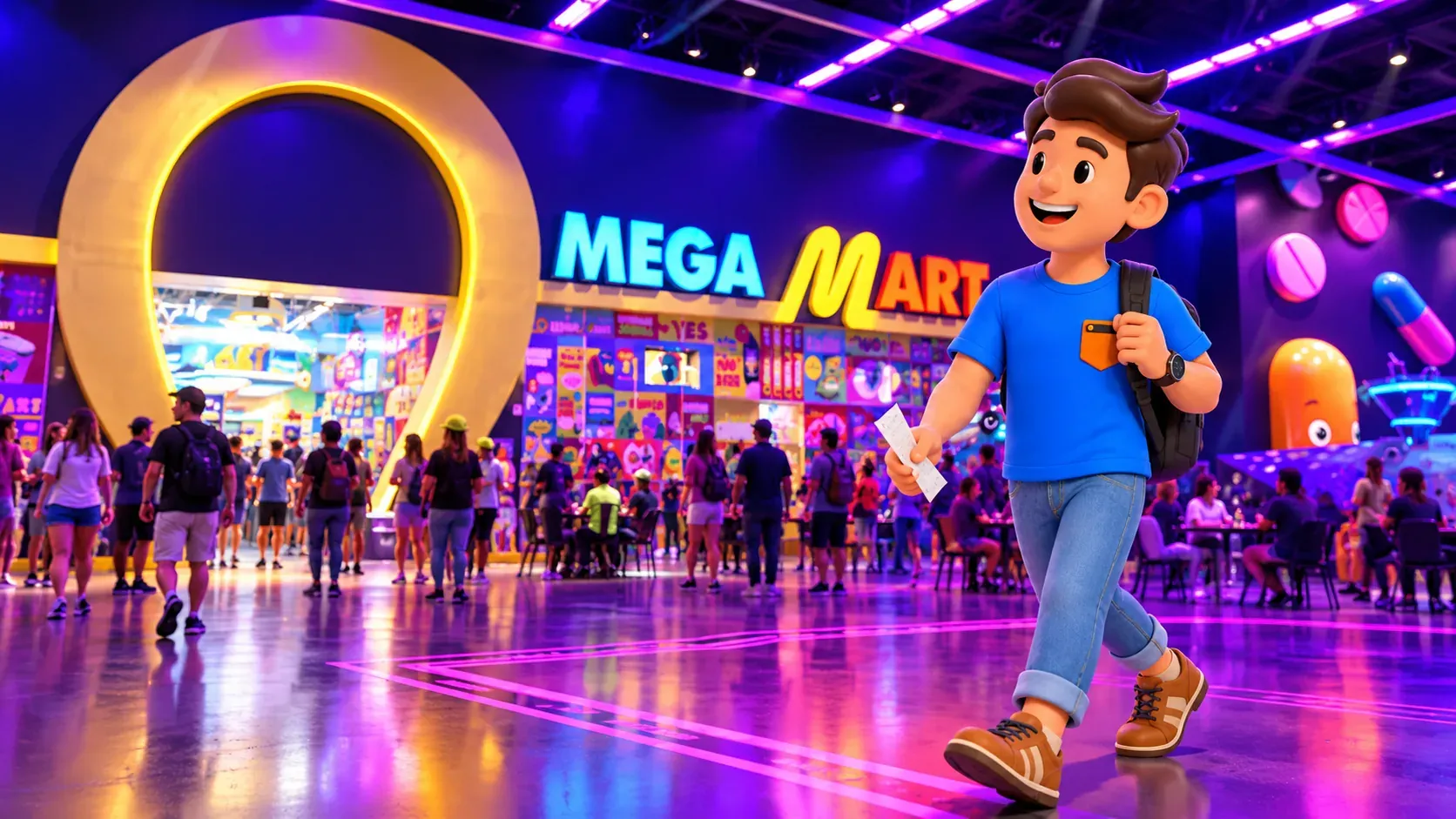
Keep enough space in the day to become absorbed. A generous allowance is an editorial planning choice, not a promise about queues or how long every visitor will stay. The important decision is to avoid putting a demanding timed reservation immediately after an experience you want to explore without watching the clock.
Book the actual Omega Mart product for the intended date and entry, rather than assuming that general access to AREA15 covers it. Ordinary undesignated entry welcomes all ages, while some events are restricted to adults aged 21 and over. Check your selected session and the surrounding venue’s current rules, especially for an evening family visit.
The operator does not permit re-entry once you leave. That matters if your usual museum habit is to step outside for a meal and return. Arrange food and a useful break before entering, and read the conditions of your booking. This is a stronger reason to plan carefully than any desire to race through a checklist of rooms.
ARTE MUSEUM: choose it for digital landscapes and atmosphere
ARTE MUSEUM builds its experience around large-scale digital imagery. Nature-inspired scenes and the way images occupy walls, floors and reflections are central to the format. The value is not simply that a picture is large: it is that the visitor’s sense of scale changes when an image becomes an environment.
That makes it a good candidate when you want to watch rather than solve, and when you are happy to spend time with a moving scene without a single correct result. You can notice how an image changes while you remain still, or how the same composition feels from another permitted position. Looking for a small number of favorite moments is more rewarding than collecting every possible photograph.
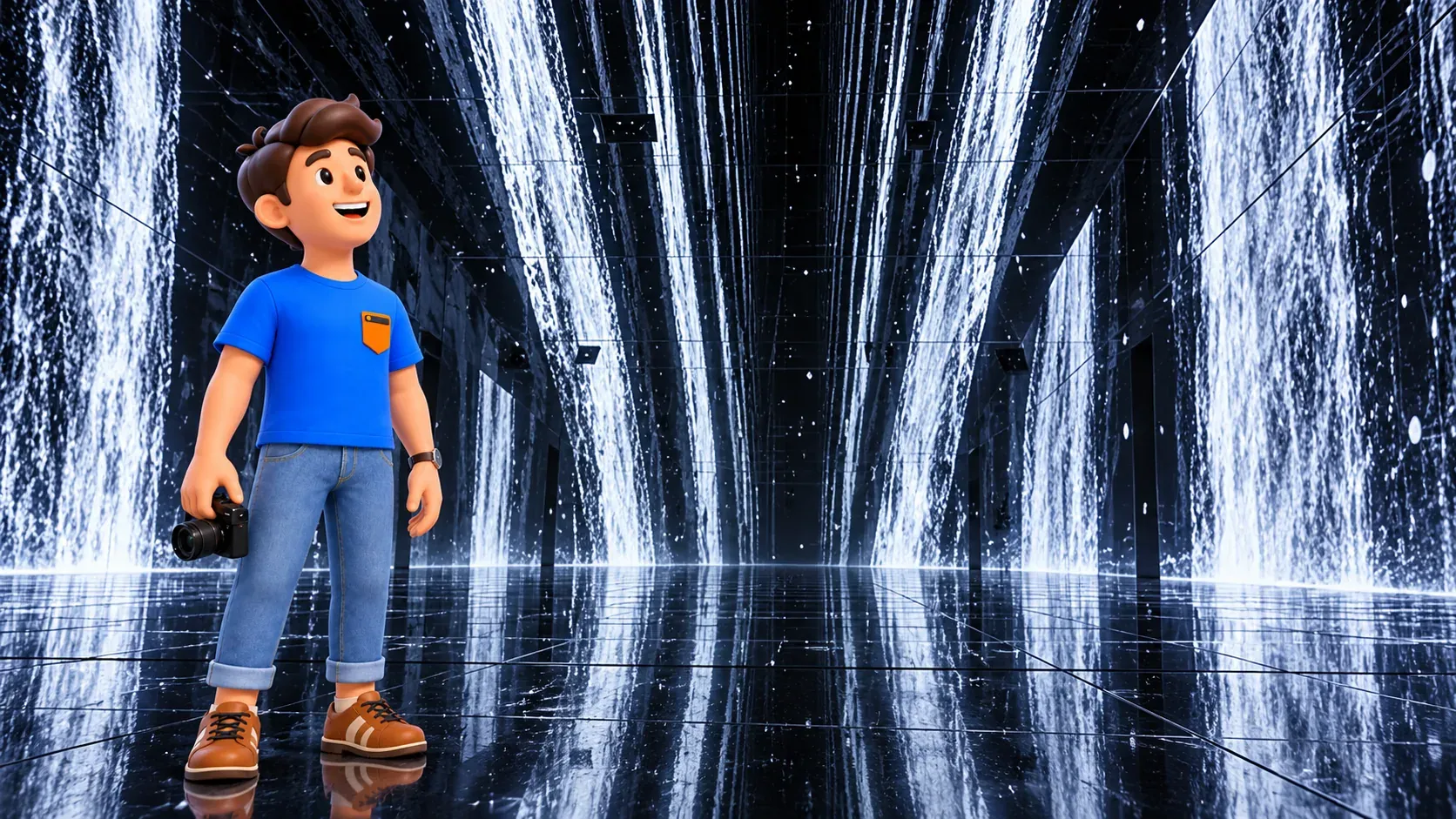
The official exhibition material includes WATERFALL INFINITE, which uses cascading imagery and reflective space. The illustration here is an artistic interpretation, not a guarantee of an identical scene or viewing position during your visit. Check the current exhibition if a particular work is the main reason you want to go.
ARTE is on the second floor at 63 CityCenter, Suite 208. Current published hours are daily from 10 am to 10 pm, with last admission at 9 pm. The operator describes roughly an hour as an average visit; it is an orientation, not a requirement to move at that speed. Allow for finding the correct entrance and any wait before the exhibition.
Check what your chosen ticket includes. General admission excludes ARTE CAFE; a photograph of a drink experience does not mean it comes with every ticket. The distinction is useful even if you have no interest in the cafe, because it lets you compare the products you actually intend to buy.
Digital art is not necessarily a low-stimulation rest. Dim spaces, mirrors, sound and changing light may feel intense. If anyone in your party has particular sensory or access needs, read the current visitor guidance and ask the venue about the relevant elements before booking. Children under 12 must be accompanied by a guardian.
Museum of Illusions: choose it for shared experiments
Museum of Illusions focuses on optical effects, installations and rooms that challenge perception. Its particular pleasure is active comparison: what seems to be happening, what a camera shows, and what changes when you move or look again. It suits an outing where you want a clear sequence of small surprises rather than one long fictional environment.
It can work well for companions who enjoy taking turns and helping each other frame a picture. The photograph is part of the activity, but it need not be the only reward. Ask what makes an effect convincing, notice when your first impression fails, and enjoy the gap between knowing something is an illusion and still seeing it.
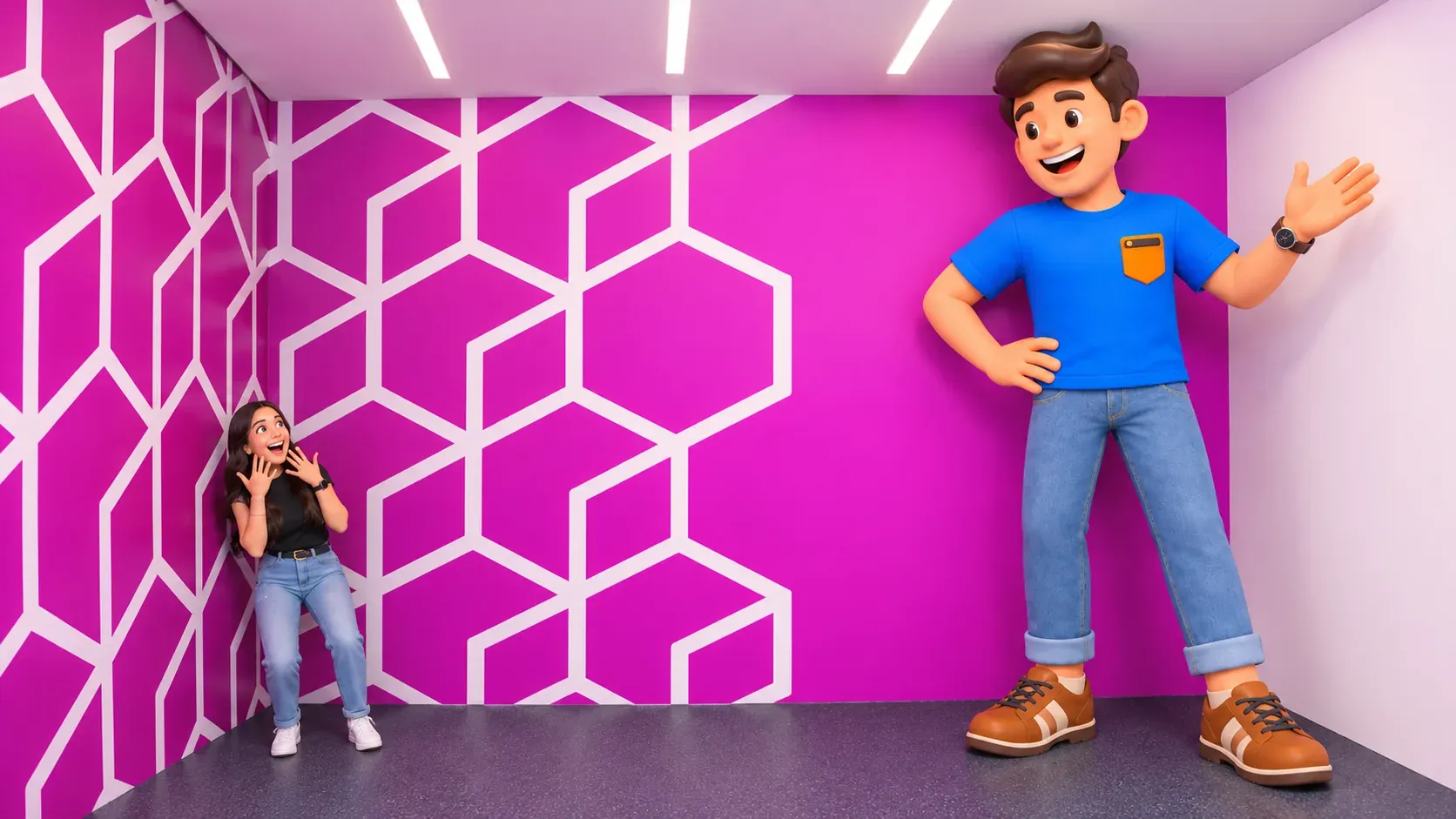
You will find the Las Vegas museum in Suite 1.02 at 63 CityCenter, separate from ARTE upstairs. The published general schedule is Sunday through Thursday from 10 am to 10 pm, and Friday and Saturday from 10 am to midnight. Holiday schedules can differ, so check your date instead of relying on a blanket midnight closing time.
The operator gives 45–90 minutes as a typical visit, without a strict time limit. That makes it a useful possibility when you want a more compact indoor activity, but it does not guarantee an empty museum or instant access to every popular photo position. Leave a little breathing room rather than treating the lower estimate as a deadline.
The museum states that it is wheelchair accessible, with some slanted-floor rooms that can be bypassed. Particular lighting effects or balance-related elements may still matter to an individual visitor. Contact the venue about specific requirements; the same label, “interactive museum,” does not mean every element works equally for everyone.
Choose for your companions, not only for yourself
For a couple, the useful question is whether you want to explore together, watch together or play together. For a family, consider the child’s interest in looking, following a theme or posing, rather than assuming an all-ages policy guarantees enjoyment. For friends, agree on how much of the visit you want to spend taking pictures.
A visitor who dislikes being photographed can still enjoy art, but may not want an outing built mainly around turns in front of a camera. Someone who loves a fictional setting may want time to follow details that another person would happily skip. A short conversation before buying is easier than negotiating competing expectations after entry.
Do not use indoor status as the only reason to choose. All three can offer a break from outdoor conditions, but a busy, visually intense exhibition is different from a quiet seated rest. Plan a proper pause elsewhere if that is what your day needs.
Give the chosen experience a sensible place in the trip
RoadMe builds a personalized plan for the whole trip around your interests, available time and preferred pace. It is a more convenient way to connect the experience you actually want with the rest of your travel day, including room to enjoy it.
Before buying, check the selected date, ticket type, entry conditions and what is included. Compare the total choice, including travel and any optional extras, rather than assuming the lowest headline offer describes the same product at each venue. This article deliberately avoids a fixed price ranking because your actual date and product matter.
If you already have a day around the central Strip, the CityCenter location may make ARTE or Museum of Illusions easier to fit. If Omega Mart is the experience you most want, give the AREA15 journey its own place in the plan. Convenience helps choose between equally appealing options; it should not force you into a format you do not enjoy.
The final decision can be simple: curiosity and an invented world point toward Omega Mart, digital atmosphere toward ARTE, playful perception toward Museum of Illusions. Pick the one you would still want to experience without posting a photograph, and give it enough attention to become a real memory of Las Vegas.