Moscow in the evening: choose a river walk for the light
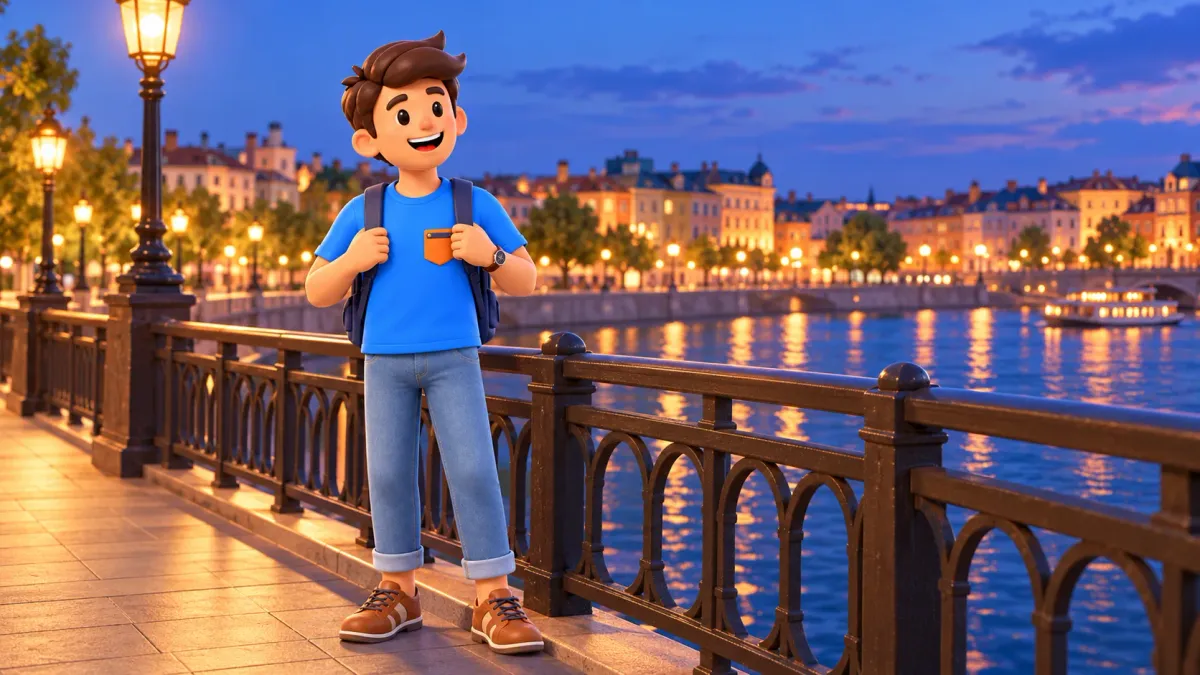
Moscow changes after daylight fades. A pale wall stands out against blue sky, glass towers become less solid, and light breaks into shifting bands on the river. Enjoying that transformation does not require a compulsory journey across the whole centre. Choose one urban subject and leave time to stop, look and return without trying to collect every famous evening photograph.
Two different outings work well. A central option connects Patriarshy Bridge with the exterior of GES-2 and surrounding buildings. Another concentrates on the Moscow City skyline from the opposite riverbank. These are separate evenings, rather than one continuous walking route. Their scale and atmosphere are easier to appreciate when a transfer between districts is not competing with time spent looking.
Choose one subject for the evening
For an introduction to the river in the historical centre, Patriarshy Bridge lets you compare a major architectural silhouette, nearby water and the island’s lower buildings. For a contemporary urban scale, choose the towers across the river. Decide according to your interests and accommodation, rather than treating the most frequently shared photograph as an instruction that every visitor must follow.
Try RoadMe for a complete personal trip plan shaped by your interests, dates and pace. Connecting an evening walk with the rest of your Moscow stay makes the sequence more convenient and efficient, leaving energy for the views and a relaxed ending.
Starting before full darkness can help you understand the setting before the light changes. Timing depends on season and weather; this walk has no universal hour when every building’s illumination switches on. Do not base the evening on a guaranteed sunset, identical window lighting or perfectly reflective water. Sky, wind and the actual operation of buildings all influence the experience.
Roughly ninety minutes to two hours can be a useful allowance for the outdoor portion and small pauses. This is an editorial estimate rather than a measured route. Exhibitions, dinner and travel to the district require separate time. Decide how the evening will end first, preserving a return margin instead of searching for the last convenient transport connection after a lengthy riverside stop.
Patriarshy Bridge: look in more than one direction
Kropotkinskaya Metro station is a useful reference for the central option. Using current access information, approach the Cathedral of Christ the Saviour and Patriarshy Bridge. This plan considers the cathedral from outside: interior admission, services and visiting hours need separate checking. The pedestrian bridge provides changing viewpoints without making a religious interior part of the required programme.
First look across the broad Moskva River and take in the outline of the bank. Then turn towards the cathedral and compare the nearer building with more distant architecture. One perfect photograph need not contain everything. Several brief observations explain the setting more clearly: bridge, water and city occupy different layers rather than forming a flat picture waiting to be copied.
The bridge system continues across the island and Vodootvodny Canal towards Yakimanka. When adapting the walk, distinguish the main river from the canal and know which bank you are reaching. A visible descent is not automatically the right path to the next destination. Current signs and permitted approaches matter more than an attractive line drawn through a block before your visit.
Stop away from the main flow and remain inside the railings. If crowded, take a short look and find more space further along rather than holding the centre for a photograph. Stand steadily, look without a screen and then take the picture. Walking backwards, reaching through a railing or blocking the passage with equipment adds little to understanding the view.
GES-2: an industrial form beside the water
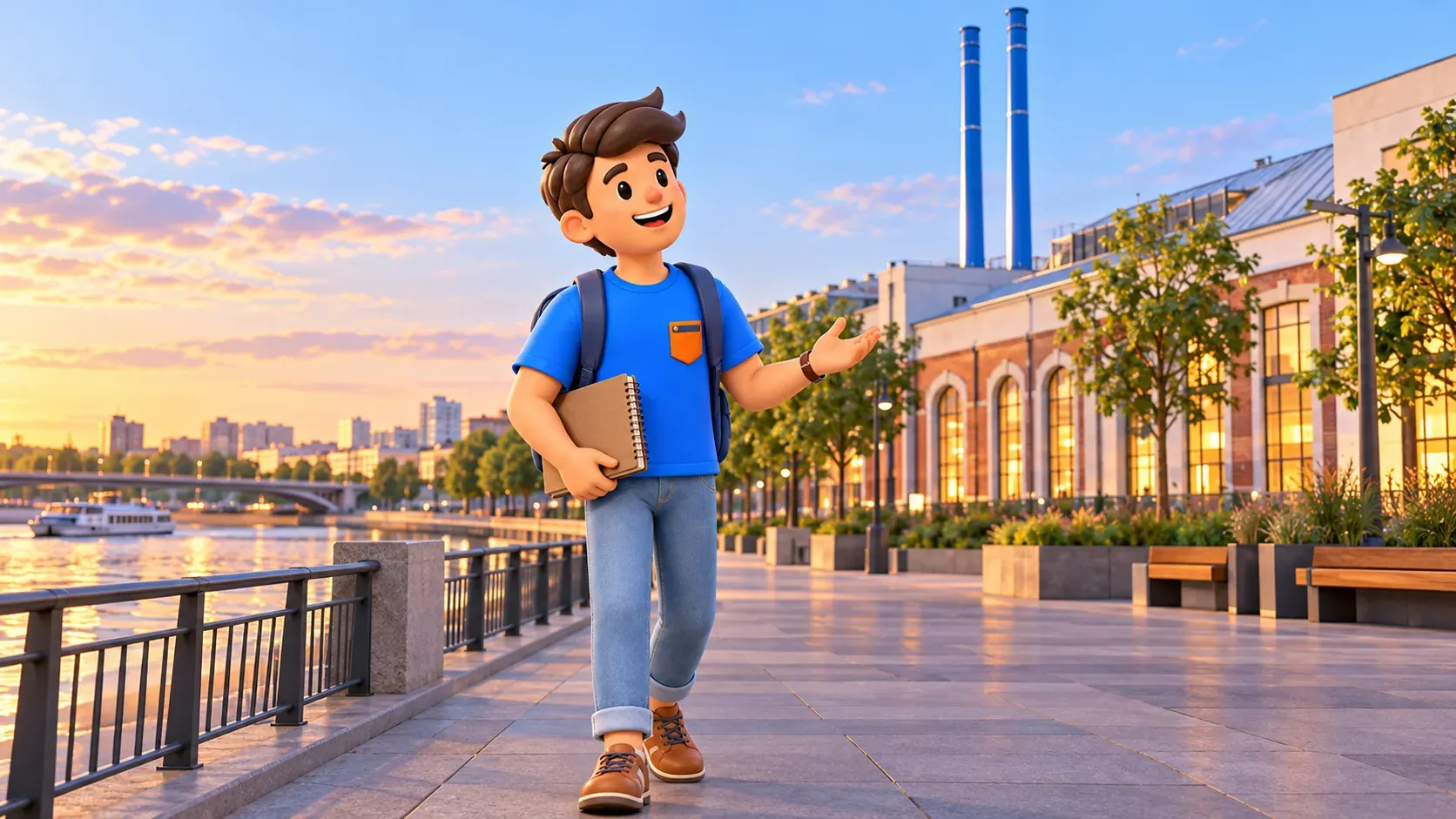
GES-2 House of Culture is at 15 Bolotnaya Embankment. Its industrial character, broad volumes and blue pipes create a different outdoor subject. Choose an available public approach and compare this extended building with the cathedral’s more vertical silhouette. You do not have to enter to appreciate the change in the character of the surrounding urban environment.
Distinguish exterior observation, building admission and exhibition access. Under the current GES-2 rules, entering requires registration for a specified arrival interval or an event ticket. Exhibition admission is paid. A general entrance registration does not replace the relevant exhibition ticket, and a description of an open cultural space should not be understood as unrestricted admission to every programme.
When checked on 23 October 2026, the official site advertised Monday–Sunday opening from 11am to 10pm. Recheck the specific date and programme; the rules allow earlier closing in individual cases. An interior visit needs its own time for registration and checks. Treat it as a chosen activity, rather than an assumed quick passage on the way to another river view.
The House on the Embankment: keep the focus outside
Neighbouring buildings help complete the central subject. The House on the Embankment is associated with Boris Iofan’s design, and construction of the complex was completed in 1931. For this evening, an exterior look at its scale and extent from available public space is enough. A residential building is not a visitor set with compulsory access to staircases or courtyards.
The House on the Embankment museum should not be treated as a dependable evening stop. Its official site retains an announcement that the museum closed for redisplay on 23 January 2023, without an announced reopening date. Outdoor tours or an old schedule visible on a page do not establish that the exhibition is open. This outing promises no museum interior and remains a complete exterior introduction.
After several observations, finish the central walk and return towards your selected transport. Plan from your actual position instead of assuming every step must be retraced. Being on the island or already across the canal changes nearby approaches. Do not continue down a long embankment solely because the lights further away appear brighter than those beside you.
Moscow City: choose the view across the river
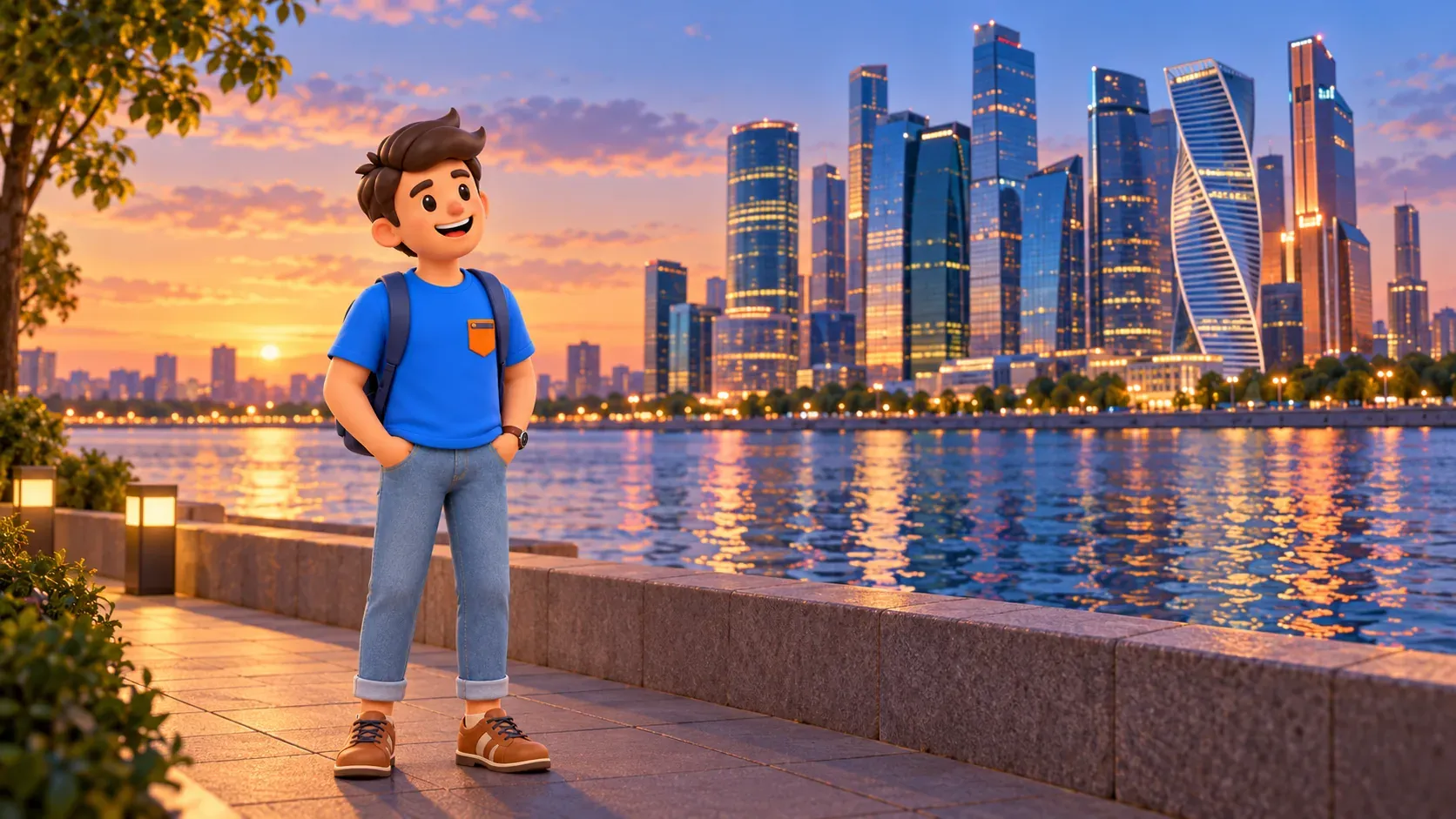
For another evening, select an available public part of Taras Shevchenko Embankment on the Kutuzovsky Prospekt side. Here the business district’s towers stand across the Moskva River rather than directly overhead. Start with the group’s outline, then compare straighter volumes with Evolution Tower’s twisting form. Choose the precise stopping point according to the pedestrian approach and current works.
From the opposite bank, you can read the towers together instead of experiencing separate glass walls at their bases. Notice differences in height, the intervals between buildings and reflections. You need not learn each tower’s floor count to understand the rhythm. The water may fragment light or reflect very little under the actual conditions; that belongs to the evening rather than proving you chose badly.
Bagration pedestrian bridge is excluded as a crossing. The official transport portal’s notice provides for closure for reconstruction from 12 May 2025 until 31 December 2030. Older descriptions of walking from Moscow City through its covered gallery are outdated. Do not base your return on crossing the river there, and do not count on the bridge as an indoor break.
Travel directly to your selected side and return from that side, checking present pedestrian connections and transport. Arriving among the skyscrapers and seeing them from the opposite bank are different choices. Do not select a station solely because its name includes City when your destination is the facing embankment. If the approach is inconvenient, change the viewpoint rather than looking for a way through a construction fence.
Before leaving for either option, agree on the intended bank and the way back with your companions. That small decision prevents different expectations about crossing the river after dark and keeps the final journey manageable.
Take fewer photographs and notice more
Begin with one broad view, one detail of light and one reflection. That can form a coherent impression without constant searching for another frame. Let your eyes understand the space before raising the phone. If a photograph misses the atmosphere, simply look for another moment. What you experience need not match a camera’s limitations or another person’s heavily edited picture.
Inside GES-2, separate photography rules apply: a phone is permitted, without professional photographic equipment, flash, tripod or other listed apparatus. Taking a street picture does not grant permission for a staged interior shoot. If going inside is not part of your plan, keep equipment decisions simple. For the outdoor walk, consideration for passages, residents and fellow visitors is the useful starting point.
RoadMe can create a complete personal trip plan for your interests, dates and pace, connecting evening views with your other Moscow experiences. Try the app to choose a useful order in advance and leave time for travelling and a calm finish.

Finish before the evening becomes tiring
An open river setting can feel less comfortable than a nearby street. Adapt the length to weather and company, particularly after a busy day. On difficult surfaces, choose clear lit approaches and omit unnecessary descents. Bridges and embankments do not guarantee a step-free route: visitors with limited mobility should confirm particular connections before setting out, rather than relying on the apparent simplicity of a map.
Choose dinner or a cafe as a separate stop with its own current opening arrangements and budget. Light in a window does not guarantee a table, and a cultural building’s hours do not establish those of every venue inside. Preserve a simple ending: a brief pause and a journey to convenient transport. Another district need not be added once the main view has come together.
The central option leaves a sequence of cathedral, industrial building, residential complex and water. The City option reveals relationships between towers, open sky and the river separating you from them. They are different Moscows. One selected evening spent without rushing can reveal the city more clearly than an attempt to collect all its lights during a single extended crossing.