Autumn in Moscow: choose one park walk

An autumn walk in Moscow works best when you choose the kind of landscape you want: woodland paths, palace architecture beside ponds, or a wide river view. Neskuchny Garden, Tsaritsyno and Kolomenskoye offer three distinct outings. They belong on different days, since travelling between them would consume the time you hoped to spend outdoors. For a first visit, one park with a clear finish is enough; you do not need to add every pavilion and museum inside it.
Allow roughly two to three hours for one of the walks below, including the approach and pauses. This is an editorial planning estimate rather than a measured track. Photography, children, wet surfaces and a museum visit can change it substantially. Decide how long you want to remain outside and how you will get back. Leaving early when rain arrives then becomes a sensible adjustment, while a dry interval gives you room to extend the chosen part.
Choose a landscape before choosing a famous name
Pick Neskuchny Garden for enclosed paths beneath trees and a possible transition to the Moskva River. Choose Tsaritsyno for ponds, red brick and landscaped alleys, accepting current restrictions around the Grand Palace. Choose Kolomenskoye for open skies, river panoramas and the distinctive outline of the Ascension Church. Its openness is an advantage in clear weather, but calls for a shorter plan when cold rain and strong wind make standing around less appealing.
RoadMe can shape your chosen park into a personal plan around your interests, dates and pace, leaving more time for photographs or reducing the walking. For an autumn day, one main outing and an easy finish make a useful starting point.
There is no guaranteed date for golden autumn, nor will every corner of Moscow look the same. Tree species, recent weather and the particular year all matter; wind can transform the canopy quickly. Choose somewhere that remains interesting without peak foliage. In Neskuchny, that means woodland depth and changing levels; in Tsaritsyno, the composition of water and architecture; in Kolomenskoye, the river and open ground. Leaf colour then becomes a welcome detail rather than the condition on which your entire day depends.
Neskuchny Garden: woodland paths towards the river
Begin on the Leninsky Prospekt side, using the current garden map to select a public entrance and an approach from Leninsky Prospekt metro. The administrative address for the wider Gorky Park on Krymsky Val is not the entrance you need: it lies at another end of a long park corridor. First follow internal paths beneath the trees. If the surfaces and your energy allow, descend towards the river and continue in the direction of the Andreyevsky pedestrian bridge.
The interest here lies in changes of scale rather than one supposedly perfect patch of autumn colour. Higher paths enclose the view; turns and small openings gradually reveal the landscape, before the water opens it out. The garden developed from historic estates, and surviving buildings add another layer. You need not find every pavilion and grotto. Select one accessible exterior landmark from the park map, then let the rest of the walk be a chance to notice the trees instead of checking off names.
A possible finish crosses the Andreyevsky pedestrian bridge to Frunzenskaya Embankment and continues to Frunzenskaya metro, provided the crossing is open and the steps and distance suit you. This takes you to the opposite bank; it is not another stop within the garden. If slopes and level changes are unwelcome, plan a shorter return to your starting entrance on the upper paths. Being an urban park does not automatically make the whole route flat or suitable for every buggy or mobility aid.
As checked on 23 October 2026, Gorky Park's official website reports partial closures in the Parterre, including Fountain Square and the Main Entrance. That does not mean the whole of Neskuchny Garden is closed, but it also does not justify plotting an approach through any neighbouring section. An independent entrance from Leninsky Prospekt makes sense for this outing. Check the current notices; Pushkinskaya Embankment also has specific restrictions on bicycles and other personal transport, so a walking plan should not become an assumed cycle-hire route.

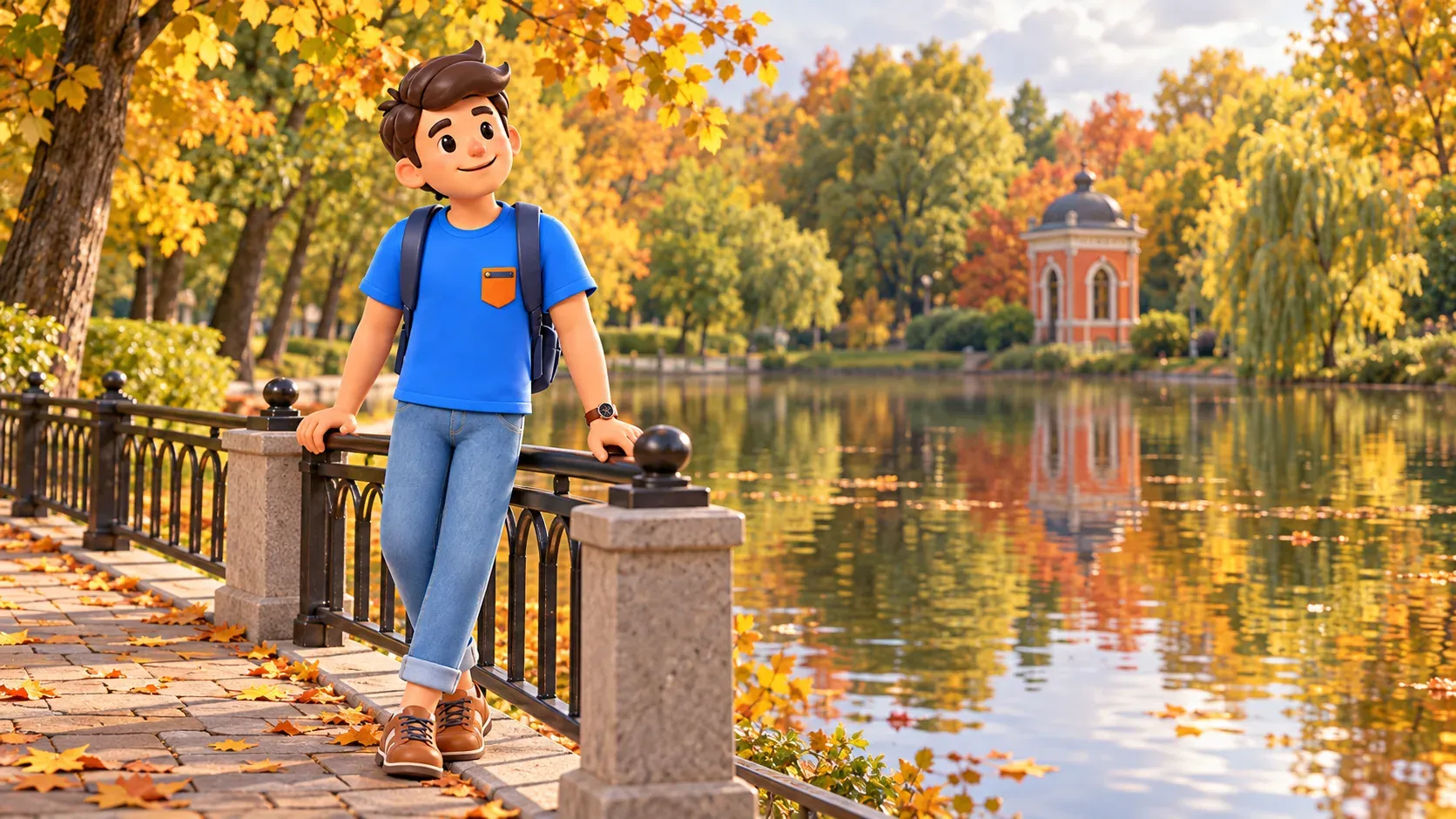
Tsaritsyno: ponds and architecture, with a repair caveat
Starting at Tsaritsyno metro gives a clear sequence: the Central Gate, water and dam, then views of the palace ensemble from permitted areas. The museum's official directions use exit 2 and the passage beneath railway bridges towards the Central Gate. Still follow current station navigation on the day. Once inside, resist rushing straight into the deeper park. The ponds and their banks already provide a satisfying first section, particularly if you enjoy reflections, trees and pauses with a broad view.
There is a significant current limitation. On 23 October 2026 the museum reports repair work on the Grand Palace towers, scaffolding and restricted passage along all sides of the building. Do not expect an unobstructed circuit or an entirely clear palace photograph. Look from permitted public areas and continue towards accessible park paths. Barriers are not a photography challenge to solve. Check the latest notice before travelling, especially if the palace exterior was your main reason for choosing this park.
After the exterior views, choose a modest stretch of landscaped woodland. Either return to the Central Gate and the same metro station or, with enough time, finish at the Park Gate on the Orekhovo side. The latter requires a suitable connection of open paths on the current map; it is not an instruction to complete the entire reserve. Returning through familiar gates is often the better choice if rain begins or the first part has taken longer than expected.
The park and museum buildings have different arrangements. Park entry is free; palaces, exhibitions and greenhouses have their own tickets and schedules. The museum's usual closure is Monday, while the greenhouses also close on Tuesday, so neither should be your sole rain shelter without a date check. The musical fountain is seasonal too: its usual official season ends on 30 September. A late-autumn outing should rely on ponds and landscape rather than a promised water show or summer food kiosks.

Kolomenskoye: open skies and one riverside section
First decide whether you want the historic area around the Ascension Church or a walk on the renovated embankment. These are two useful emphases within one extensive reserve, not a reason to cover every corner. For a historic start, use Kolomenskaya metro and a currently open entrance towards the principal historic area, then continue towards the Sovereign's Courtyard and an exterior view of the church. Confirm the approach on the museum's present map, since improvement work can change familiar connections.
Near the church, pause for the open view before deciding whether to descend to the water. Notice its tall tent-shaped outline and the space above the river. Going down adds walking and raises the question of climbing back or finding another exit. After rain, avoid shortcuts across slopes or grass. Stay on open, marked paths even if a photograph suggests you can simply follow your line of sight to the river. A view and a practical access route are different things.
For a riverside priority, start instead from the Klenovy Bulvar metro side. The official museum describes the embankment, opened after improvement works, along the Moskva River towards Saburovsky Bridge. Choose an accessible stretch, walk to a comfortable turning point and return towards your selected exit. You do not have to reach the bridge or visit every new leisure area. An announcement that the embankment is open should not be read as a promise that every attraction throughout the reserve is open simultaneously.
The Palace of Tsar Alexei Mikhailovich occupies another part of the grounds and is unnecessary for this short autumn outing. If that palace is what interests you most, give it its own approach and visiting time. Here, a historic outline with a view, or one manageable riverside section, is enough. Kolomenskoye rewards leaving space between stops. An unhurried pause can tell you more about the landscape than reaching another famous name after a long and increasingly hurried crossing.
Fit the walk to the autumn weather
Check the forecast for the hours of your outing, not just the day's weather symbol. Rain, wind and temperature feel different under trees and beside exposed water. With only a short dry window, favour the nearest suitable park and an easy return route. In settled clear weather, allow more time near the river. Evening lighting cannot replace daylight for foliage and first impressions, so do not leave the main section until darkness if autumn colour is your reason for visiting.
If the weather changes, RoadMe can help rework a personal outing for your date, interests and comfortable pace. Keeping one main park and shortening an optional extension leaves room for a proper rest.
Choose shoes for wet leaves and walking, and clothing that allows you to adjust layers. Paths may be damp even when rain has stopped; a climb in Neskuchny and a stationary riverside pause produce different sensations. Water or a flask is useful, but does not replace a realistic food stop. Seasonal kiosks may be closed, and a wet bench should not be the only rest opportunity in your plan. Decide where you could stop or leave before anyone becomes tired and cold.
With children, give the walk one simple purpose: comparing leaves, looking at reflections or sketching an outline. None requires feeding wildlife, picking plants or leaving paths. For a buggy or reduced mobility, check the specific entrances, gradients and connections rather than a general accessible-park label. When unsure, use a shorter comfortable section and return the same way. A destination that appears close on a screen may still involve a steep or inconvenient approach in the real landscape.
Check the current notices and choose a finish
Before setting out, consult your chosen park's latest notices, its map and the conditions for one museum visit if you want one. In Neskuchny, check your approach around closed neighbouring sections; in Tsaritsyno, the Grand Palace restrictions; in Kolomenskoye, open connections between historic grounds and embankment. Do not extend an old closure notice to the entire park or interpret the opening of one area as unrestricted access everywhere. These distinctions matter more than a long list of attractions.
Set your finish in advance: the original entrance, a selected metro station or a short pause near the exit. Include the journey afterwards if you have a theatre ticket, train or dinner reservation. Two to three hours in a park does not automatically include crossing Moscow. Once you have enjoyed a memorable view, a quiet stretch beneath trees and a good conversation, another museum is not necessary merely to make the day appear complete.
The choice is straightforward: Neskuchny for woodland scale and a transition towards the river, Tsaritsyno for ponds and architectural composition with repair restrictions, Kolomenskoye for air and broad views. Keep the other parks for another day. Autumn becomes easier to notice when you have time to stop in one place, rather than make three brief appearances between long journeys.