Kyoto Tea Ceremony: Choosing a Group, Private or Kimono Experience
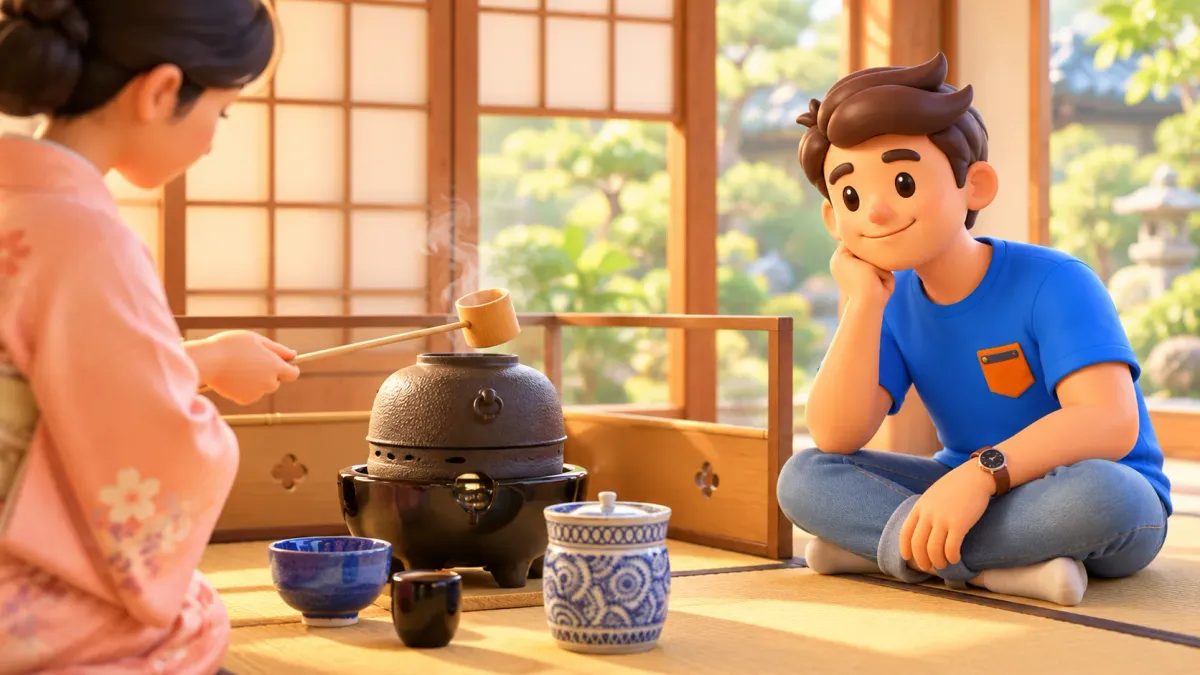
For a first tea ceremony in Kyoto, choose the language and type of participation before choosing a beautiful room. A shared introductory session can be enough if you want to watch the host prepare tea and make a bowl yourself. A private session is more useful when you need interpretation, a different pace or arrangements for your family. Kimono rental is a separate decision, not a condition of taking part.
The important differences are often outside the headline: which branch you will visit, whether the advertised time means arrival or the start of the ceremony, who can join, and what the clothing package includes. This guide explains how to compare those details without treating every matcha workshop as a full formal tea gathering. Provider examples were checked on 26 October 2026; the conditions of your selected booking take precedence.
Choose the experience you actually want
Start with the part you most want to remember: watching an attentive host, understanding the utensils, trying the whisk, asking questions or wearing traditional clothing. These can be combined, but a photograph of someone in a kimono does not tell you which elements are included. Look for a written description of the session rather than relying on the cover image.
| Your priority | A useful starting format | Confirm before booking |
|---|---|---|
| A first introduction | A shared, explained ceremony | Language, number of guests and opportunity to make matcha |
| Questions and a personal pace | A private room or session | Whether the room is exclusively yours and how interpretation works |
| Traditional clothing and photographs | A ceremony with optional kimono rental | Dressing time, accessories, photography and return deadline |
| A family visit | A session that explicitly accepts the children's ages | Admission, participation and any restrictions around hot water |
| Comfort without floor seating | A venue with confirmed chairs and suitable access | Steps, entrance, toilet and an available chair for your session |
For the wider trip, try RoadMe: in supported cities, the app works out a personal day-by-day plan around your interests, dates and pace. It is a more convenient way to organise the experiences you care about than piecing together disconnected saved places during the trip.
What the tea ceremony adds to a bowl of matcha
Chado, also called chanoyu, is the Way of Tea. Its interest lies in the relationship between host, guest, utensils and the setting, as well as the drink. The Urasenke tradition describes harmony, respect, purity and tranquillity as its guiding principles. That helps explain why a quiet room, a carefully placed flower or a deliberate movement can matter as much as the finished tea.
Sen Rikyu, a tea master of the sixteenth century, was central to the development of this tradition. You do not need to memorise a chronology to appreciate a first visit. Ask what the host has selected for the occasion and notice how ordinary actions are given attention. A short visitor introduction is not the same thing as the full gathering called chaji, and does not need to pretend that it is.
Shared and private sessions: what you are paying for
In a shared session, other bookings join yours. The host follows a common schedule, and questions must fit the group. This can work very well for a first experience when you understand the teaching language and are comfortable observing alongside others. Check the stated group limit: the label “small group” has no single meaning across providers.
A private booking should specify what is reserved exclusively. It might mean a room for your party, a separate time slot or an additional charge on top of individual admission. It does not automatically include a longer ceremony, a photographer, a meal or interpretation. Read the programme and pricing basis together before comparing it with a shared ticket.

Watch a demonstration or prepare your own tea?
Look for an explicit distinction between watching and doing. A demonstration centres on the host's preparation; a hands-on element lets you use the whisk under guidance. Some introductory programmes combine both. A matcha café order or a tasting flight may be enjoyable, but it answers a different wish from learning how the ceremony is presented.
For a beginner, there is no need to arrive with a memorised sequence of bowl turns. Follow the teacher's directions for that session. Different schools and introductory formats need not present exactly the same gestures. A guide that insists on one universal movement for every Kyoto venue is less useful than a host who explains the practice in front of you.
Check the spoken language, not just the booking page
A website available in your language does not prove that the instructor speaks it. Ask which language is used live, whether the whole explanation is translated and whether questions can be answered in that language. Written notes, subtitles and a bilingual booking form are different services.
Camellia states that its ceremonies are conducted in English. Its published arrangements place a guest's interpreter in a private ceremony rather than a shared one. That is a useful example of why you should settle interpretation before paying; it is not a rule for every tea room in Kyoto. TIA lists explanations in English and Japanese, again for its own programme.
If you would like French, German, Spanish or another language, request confirmation for the date and branch you will actually attend. Avoid reserving an English session on the assumption that a companion can translate continuously without agreement. Translation changes the rhythm and the space needed, so the host should know what you plan.
Kimono rental: optional clothing with its own timetable
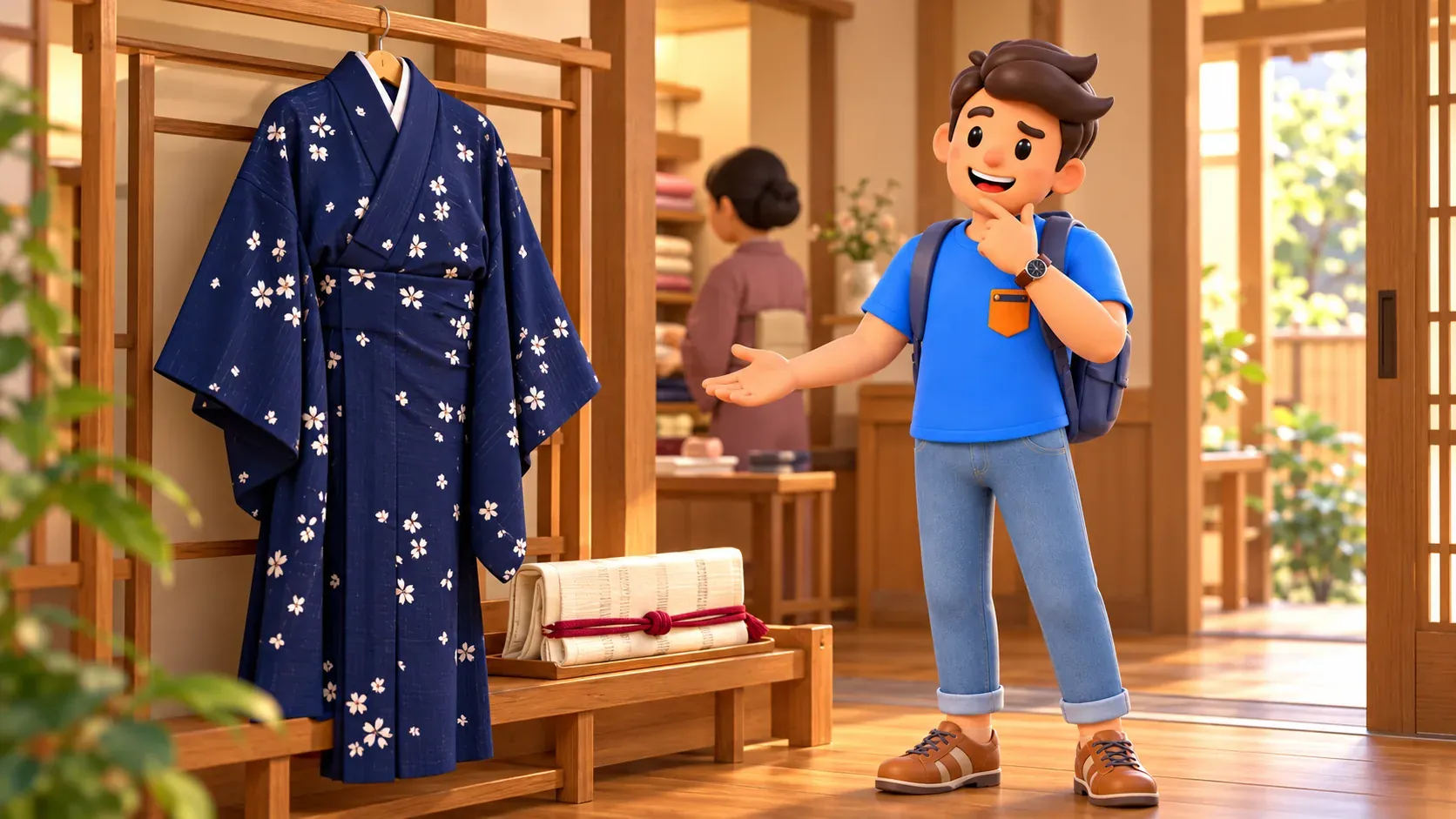
You can choose an introductory ceremony without renting a kimono. TIA explicitly welcomes everyday clothes, and other providers offer clothing as an optional addition. The kimono package makes sense if dressing and the photographs are part of what you want from the day; it is not a purchase needed to make your interest in tea legitimate.
Check what the rental actually contains: clothing, obi, dressing assistance, suitable footwear, hair styling, accessories and storage for your own clothes. Do not assume that a photograph includes every visible item in the basic package. Koto, for example, says that hair setting is not included in its kimono dressing service. Another provider's inclusion list may be different.
The timetable can change just as much as the price. Some operators ask you to arrive before the ceremony for dressing; at others the reservation time is your arrival time and the tea session follows later. Also establish when and where you must return the clothes. A hotel-return option, where offered, is a distinct service with its own conditions, not a universal entitlement.
Compare the complete cost rather than the cheapest headline
Put competing offers on the same basis: the same date, number and ages of participants, language, privacy and clothing choices. A fee per person is not directly comparable with a room fee. An advertised private supplement may be added to each guest's ordinary ticket. Check the final total for your party, not a search result's starting price.
List the inclusions that matter to you: demonstration, your own matcha-making, tea, sweet, clothing, hair arrangement, translation and photographs. A shorter package is not necessarily poor value; it may simply contain fewer of the elements you do not need. Equally, a larger total is not proof of a deeper cultural encounter.
Read whether tax, a booking charge or an optional service appears later in checkout. Keep a copy of the selected package and cancellation terms. For the broader calculation, use our Japan travel budget guide and place this visit in the experiences budget rather than treating it as an unplanned small extra.
Allow time for arrival, dressing and the visit
There is no single duration for a Kyoto tea ceremony. TIA describes an introduction of about 20–30 minutes; Camellia's Flower Teahouse lists 45-minute sessions. These are provider examples, not a citywide minimum or a guarantee that any similarly named booking has the same programme.
Build the booking into the day using the total time you will spend, including finding the entrance, checking in, changing clothes if applicable and leaving calmly. A second-floor venue needs more than a map pin at street level. Save the branch name and entrance instructions alongside your confirmation so that you do not arrive at another location with the same brand.
Choose the branch before adding other visits
A ceremony near the places already important to you may be more convenient than a room across the city that looks marginally prettier online. Compare the actual address, public transport approach and onward commitments. A brand's Kyoto locations can differ in accessibility, clothing services and the people they can accommodate.
Use RoadMe to work out the surrounding cultural visits as a personal plan in supported cities, with your available time and preferred pace built in. Following one considered plan in the app is more convenient than repeatedly deciding how to connect a ceremony with the rest of the day.
If your dates are still flexible, our guide to the best time to visit Japan explains the wider seasonal choices. A popular travel period does not make every tea session unavailable, but checking your preferred date before fixing the rest of the day avoids an unnecessary constraint.
Floor seating and step-free access are separate questions
A chair solves one seating issue; it does not remove stairs on the way to the room. Ask separately about the entrance, floor level, steps, doorway and toilet, as well as the type and availability of seating. State what you need rather than relying on a broad “accessible” label.
Flower Teahouse says its tea rooms are upstairs and asks guests with mobility concerns to contact it about alternatives. Camellia identifies different arrangements at its other venues. Koto says chairs can be prepared for guests who find floor seating difficult. These examples show why the exact branch matters more than the business name alone.
Children, sweets and individual requirements
Check admission and participation separately for each child's age. A child may be allowed to accompany an adult without taking part in preparing hot matcha, while another provider may not admit that age group at all. A private reservation does not automatically override those rules. Ask what happens if a child needs to leave during the session.
Tell the host about food allergies before booking and ask about the actual sweet, ingredients and possible substitutions. A venue's description of a sweet does not by itself establish the absence of cross-contact. TIA explicitly says it cannot guarantee complete allergen removal. If an arrangement is essential to your participation, obtain a clear answer instead of relying on a booking note alone.
Etiquette that helps rather than makes you nervous
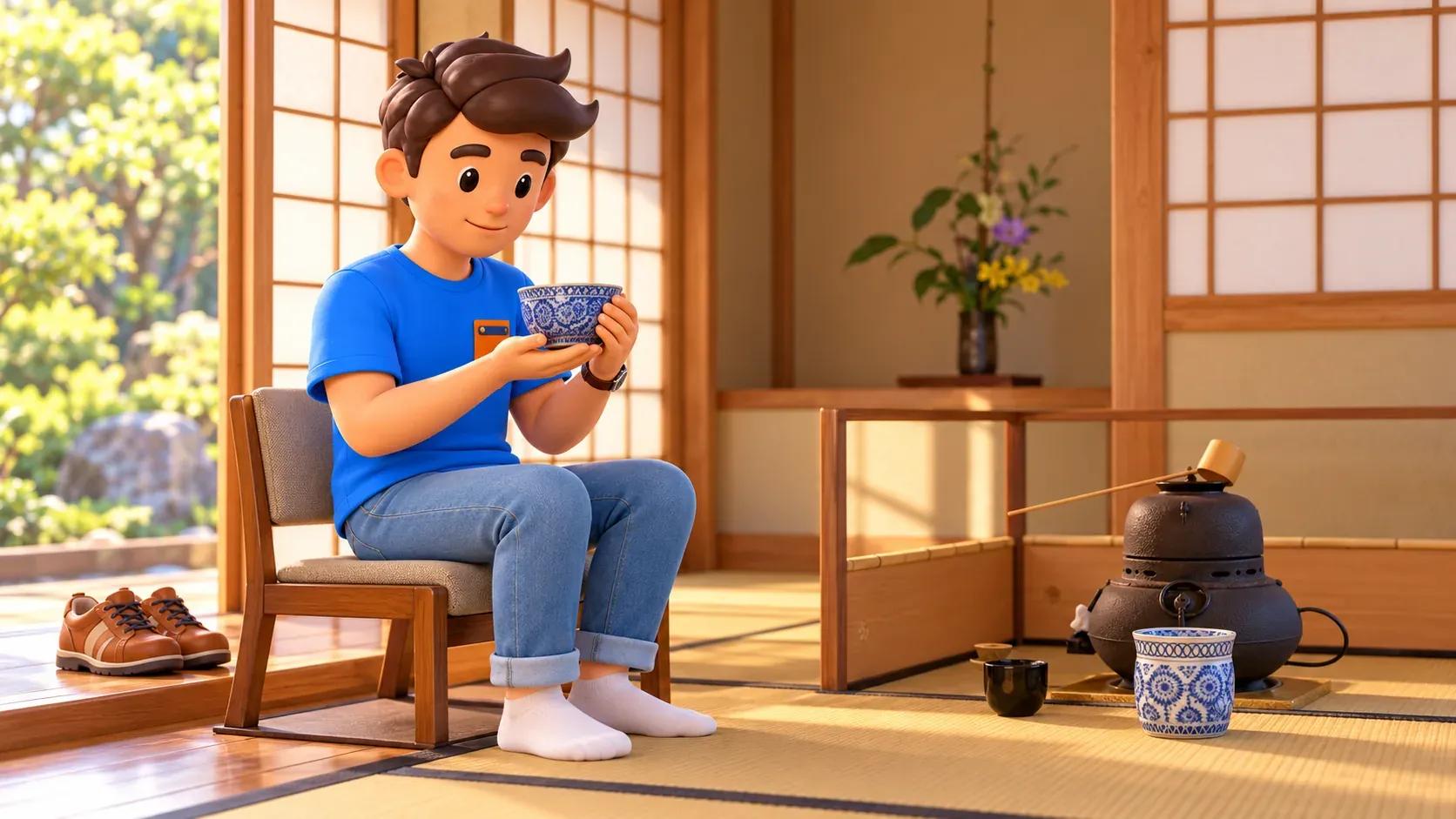
Arrive ready to follow the room's instructions. Wear clean socks if requested, take off shoes at the indicated boundary and ask before touching display objects or tools not handed to you. Keep your phone quiet. If the host asks you to remove jewellery before handling a bowl, do so carefully rather than trying to balance a camera and utensils at once.
Photographs and video are separate permissions. Camellia permits photographs in shared sessions with privacy and flash restrictions, while its published rules do not allow video. Other hosts set their own conditions. Ask at the start, keep other guests out of your frame unless they agree and leave the central demonstration visible to everyone.
For the surrounding everyday situations, our guide to Japanese etiquette for visitors covers shoes, meals and photographs more broadly. Inside the tea room, one calm question is better than performing an elaborate rule remembered from another setting. You are attending an introduction, not an examination in ceremonial expertise.
Before paying: a short booking check
- Match the branch, date, local start or arrival time and spoken language.
- Confirm shared or exclusive use, party size and each child's participation.
- Establish demonstration versus hands-on activity and the tea and sweet included.
- Check chairs, stairs and any essential dietary arrangements directly.
- Read the clothing inclusions, dressing appointment and return conditions.
- Save the complete price, payment confirmation and cancellation deadline.
If you buy through a booking platform, compare its package description with the operator's information for the same product. A platform may sell a particular version or apply its own cancellation terms. Resolve contradictions before purchase. Keep the confirmation available offline; a saved search result is not evidence of a reservation.
If you are late or need to change the booking
Contact the operator or booking channel named in your confirmation. Explain the booking reference and situation, and ask what is possible. Do not assume that a short delay can be added to the end of a shared session or that a different branch can accept you. Another group may already be scheduled afterwards.
Questions worth settling before your first ceremony
Must I know the rules in advance?
No specialist knowledge is needed for a visitor introduction. Choose an explained programme and listen to the instructor. Curiosity and consideration are more useful than trying to reproduce every gesture perfectly.
What makes the right choice?
A programme you understand, a format you can comfortably join and a complete booking that matches your day. Once those practical questions are settled, you can spend the ceremony noticing the host, the utensils and the tea itself.