Japan Etiquette for Tourists: Shoes, Food and Public Spaces
Japanese etiquette becomes much easier when you focus on three things: keep shared space usable, respect the boundary between outside and inside, and follow the instructions of the place you are visiting. You do not need to memorise a ceremonial handbook before taking a train or ordering lunch.
This guide explains everyday situations for a first visit: shoes, meals, public transport, rubbish and photographs. It separates considerate habits from restrictions at a particular venue. A custom is not automatically a national law, and a rule displayed in one Kyoto lane does not describe every street in Japan. Guidance was checked on 25 October 2026.
The most useful rule: notice the space you are sharing
Before joining a queue, entering a room or taking a photograph, pause long enough to see what other people need to do. A station is a workplace and a transport interchange; a narrow historic street can also be somebody's route home. Moving aside before opening a map often matters more than getting the depth of a bow exactly right.
| Situation | A useful first action | Avoid assuming |
|---|---|---|
| Entrance with shoes and slippers | Look for the boundary and ask where to change | Every building has the same footwear rule |
| Busy train platform | Follow the queue and leave the door clear | An empty space is automatically a boarding position |
| Food bought to take away | Ask where it can be eaten | Any pavement or shop entrance is a dining area |
| A tempting photograph | Check permission, signs and the people around you | An attractive doorway is open to visitors |
For the sightseeing itself, try RoadMe: in supported cities, the app builds a complete personal plan around your interests, dates and pace. Having the day organised makes it easier to enjoy each place without constantly stopping in busy passageways to decide what comes next.
Keep local instructions above a general list of manners. Staff may direct visitors differently because of cleaning, a ceremony or crowd control. If an instruction is unclear, stop out of the way and ask rather than following another tourist into an area that may be restricted.
Shoes: change at the boundary, not halfway across the floor
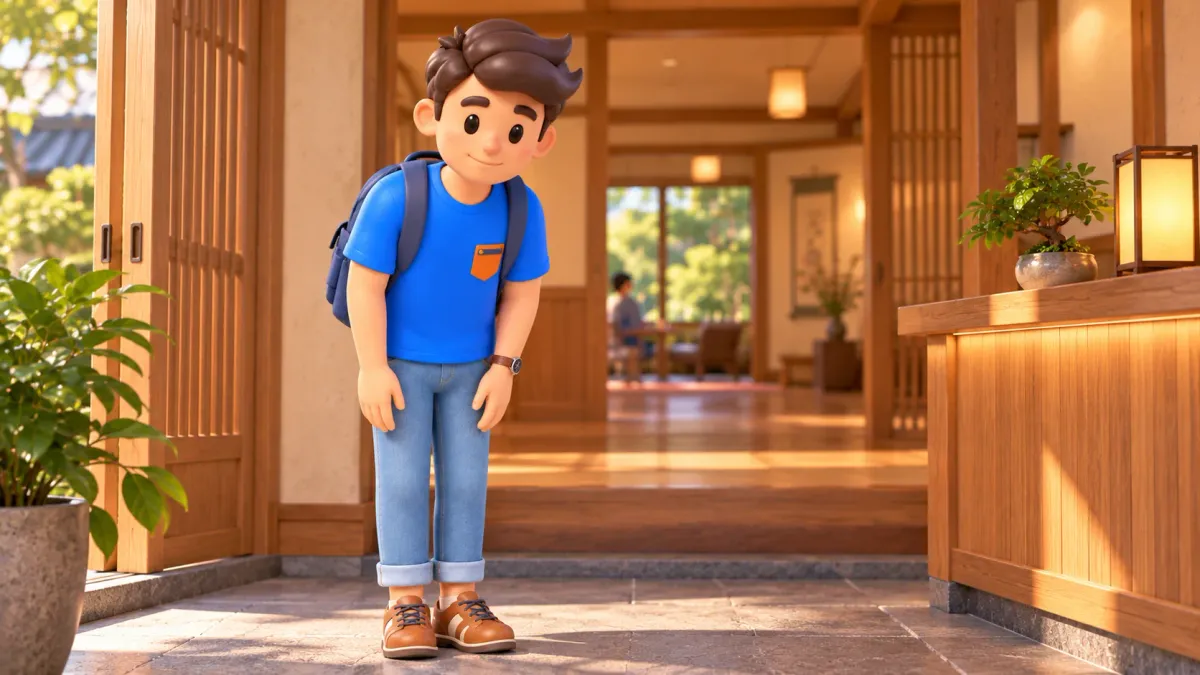
Outdoor shoes normally come off in Japanese homes, and footwear restrictions also apply at some traditional accommodation, restaurants, temples and other attractions. Look for a step, a shoe rack, slippers or a sign. The important distinction is between an outdoor surface and the clean interior, not simply between a modern and an old building.
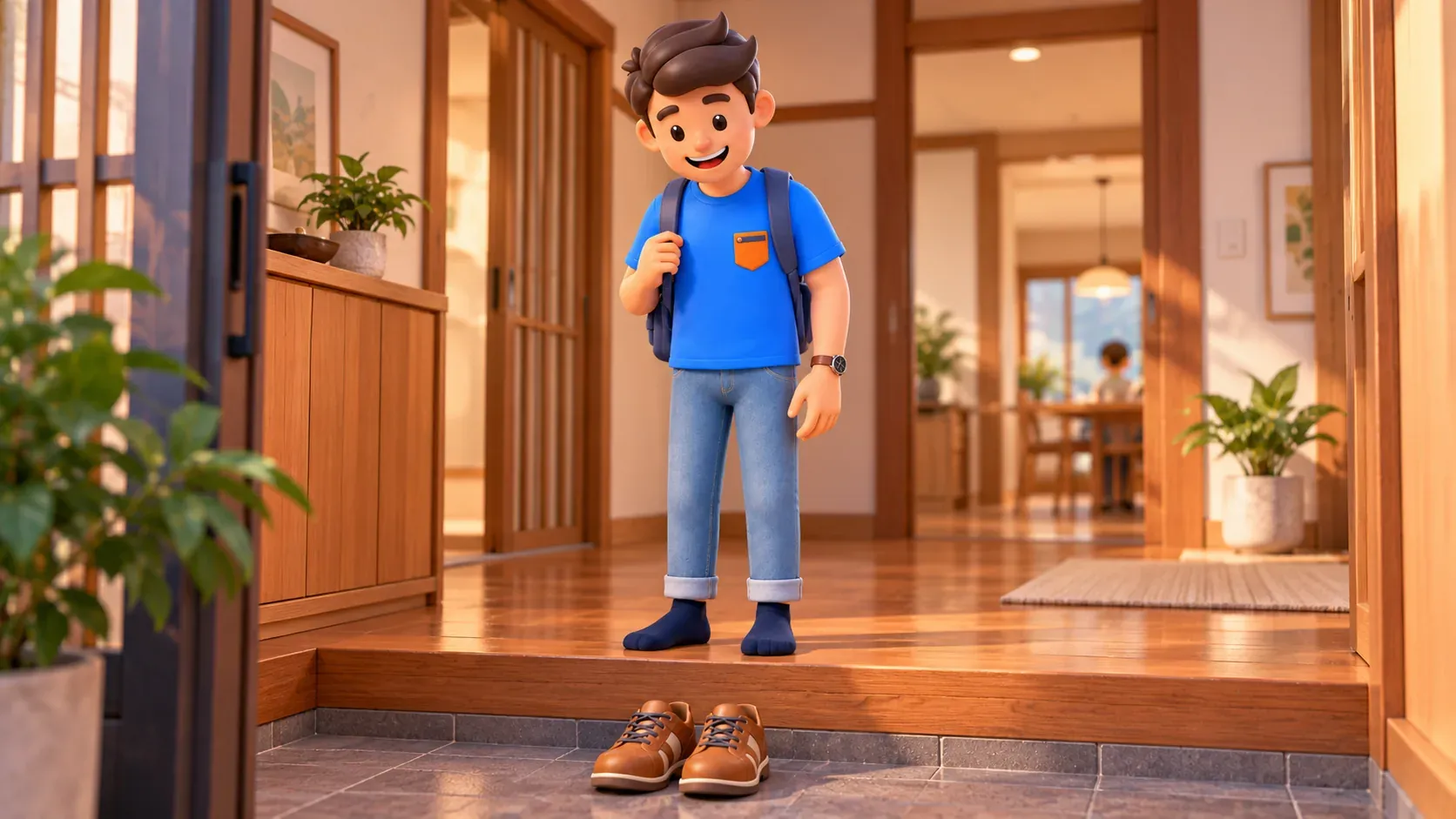
At a genkan, the entrance area where shoes are changed, step out of your shoes onto the interior side without first walking there in them. Leave the shoes neatly where instructed. Do not stand on the outdoor floor in socks and then carry its dirt inside. If the arrangement is different or space is tight, ask staff to show you the correct place.
Slippers are not suitable for tatami. Take them off before stepping onto the mats, even if you have worn them through the corridor. Where separate toilet slippers are supplied, leave those at the toilet when you finish; they are not the pair to wear back to the dining room. Check the actual arrangement rather than looking for a universal colour code.
A temple courtyard and its indoor hall may have different rules. Do not remove shoes at an outdoor gate just because a guide says “shoes off at temples”. Follow the entrance of the specific space you are entering. Likewise, ordinary hotel reception areas and many restaurants do not operate as shoe-free interiors.
Queues, trains and a phone that does not disturb the carriage
Join the line indicated by signs or floor markings and let passengers leave before boarding. Prepare your ticket or travel card before the gate, then move away from the exit before checking directions. Keep companions and suitcases together without spreading across the full passage.
On crowded trains, keep a backpack in front of you or use an appropriate rack instead of leaving it on your back where it can hit other passengers. Do not put a bag on a seat needed by somebody else. Make sure a suitcase cannot roll or obstruct the door, and follow the operator's separate luggage rules.
Quiet conversation is different from a phone call. Set your phone to silent, keep conversations low and use headphones at a volume that does not spill out. Tokyo Metro asks passengers to refrain from calls during the ride; near priority seats in busy periods it also asks them to turn phones off. Follow the notices of the operator you are using.
Give priority seats to passengers who need them, including older people, pregnant passengers and people with disabilities or infants. A need is not always visible. Do not turn the decision into a public interrogation or assume that a young-looking passenger cannot need a seat.
Eating a meal on a commuter train is generally discouraged. A long-distance train can be different: JR Central explicitly permits food and drink at your seat on the Tokaido Shinkansen. Keep smells, packaging and rubbish under control. The fact that a bento is appropriate on one train does not make a busy urban carriage the same setting.
If you must take a call on a long-distance train, use the area permitted by that operator rather than speaking at your seat. JR Central points passengers towards the deck between cars. Do not apply that advice to an urban train without a suitable space, and do not block connecting doors while standing there.
Eating out: a few gestures matter more than perfect technique
You can ask for a fork or spoon if chopsticks are difficult, although a small traditional establishment may not have an alternative. Avoid pretending to be skilled and then using chopsticks to push dishes around the table. It is better to eat comfortably and considerately than to turn a meal into a performance.
Do not leave chopsticks standing vertically in rice or pass food directly from one person's chopsticks to another's. Those gestures have funeral associations. Put chopsticks on the rest when taking a break. For a shared dish, use the serving utensils provided and transfer a portion to your own plate rather than eating directly from the communal platter.
Do not point at people with chopsticks, wave them while talking or use them to spear food. If a piece is awkward, ask for help or another utensil. A host may demonstrate how to eat a particular dish; that local explanation is more useful than trying to apply a strict rule to every plate.
Noodle slurping is accepted, but you are not obliged to make a noise to prove you like the meal. Sushi may be eaten with chopsticks or the hands, depending on the food and setting. Watch how the dish is served and ask if uncertain, especially at a counter where the chef explains the sequence.
An oshibori, the small wet towel often offered at a restaurant, is for your hands. Use it and return it neatly to its tray or place beside you. Do not treat it as a towel for your face or as a cloth for cleaning your belongings. Avoid strong fragrance at a meal where subtle aromas are part of the experience.
The bill, a small appetiser and the question of tipping
Tipping is not customary for ordinary restaurant, taxi and hotel service in Japan. Paying the stated total and offering a sincere thank-you is normally enough. Do not leave extra cash on the table and assume it will be understood as a tip rather than forgotten change.
This does not mean that accepting any tip is illegal or that every guide follows the same arrangement. A private guide or interpreter accustomed to international clients may have different practices. If you are considering a discretionary gesture in that setting, clarify the arrangement; do not transfer it to every café purchase.
Some restaurants, particularly izakaya, have a table charge that may come with a small appetiser called otoshi. It is not necessarily a free sample. Check the menu and ask about the charge before ordering if it matters to your decision. A service charge, a table charge and an optional tip describe different things.
Follow the restaurant's payment procedure: it may involve taking a bill to the till rather than paying at the table. If a payment tray is provided, use it as directed. Check accepted methods before ordering when you need a particular card or cash arrangement, and keep the question simple and practical.
Reservations deserve the same courtesy as the meal itself. Arrive at the agreed time and tell the restaurant promptly if delayed or unable to attend. A small kitchen may have bought and prepared ingredients for the reservation. Read cancellation conditions separately; a polite apology does not automatically remove a charge you accepted.
Street food and rubbish: plan a place to stop
Instead of eating while weaving through pedestrians, ask the seller where you can enjoy the food. A stall's designated space, a permitted seating area or another suitable stopping place makes the meal easier for everyone. Do not stand in a shop doorway, occupy a private entrance or lean food against a display.
Eating while walking is discouraged in many settings, but describing it as a single nationwide criminal ban is inaccurate. There can be local restrictions, venue rules and places designed for outdoor dining. Follow the actual signs and the seller's guidance, rather than treating either “always forbidden” or “everywhere acceptable” as a reliable rule.
Public bins may be hard to find. Carry a small bag for wrappers until you reach an appropriate bin or your accommodation's disposal point. A recycling container marked for bottles and cans is not a general rubbish bin; do not push a takeaway meal into it because it is the first opening you see.
Some convenience stores provide bins or eating space, but these are branch-specific services with their own instructions. Our guide to Japanese convenience stores and visitor services explains how to check a branch instead of assuming every familiar sign promises seating and waste disposal.
Take your rubbish when leaving a train, bench or viewpoint. Separate it according to the labels at the place where you dispose of it. Do not create a universal sorting chart from one town's system: categories and collection arrangements can differ between municipalities and accommodation providers.

Photographs: permission includes people and the place
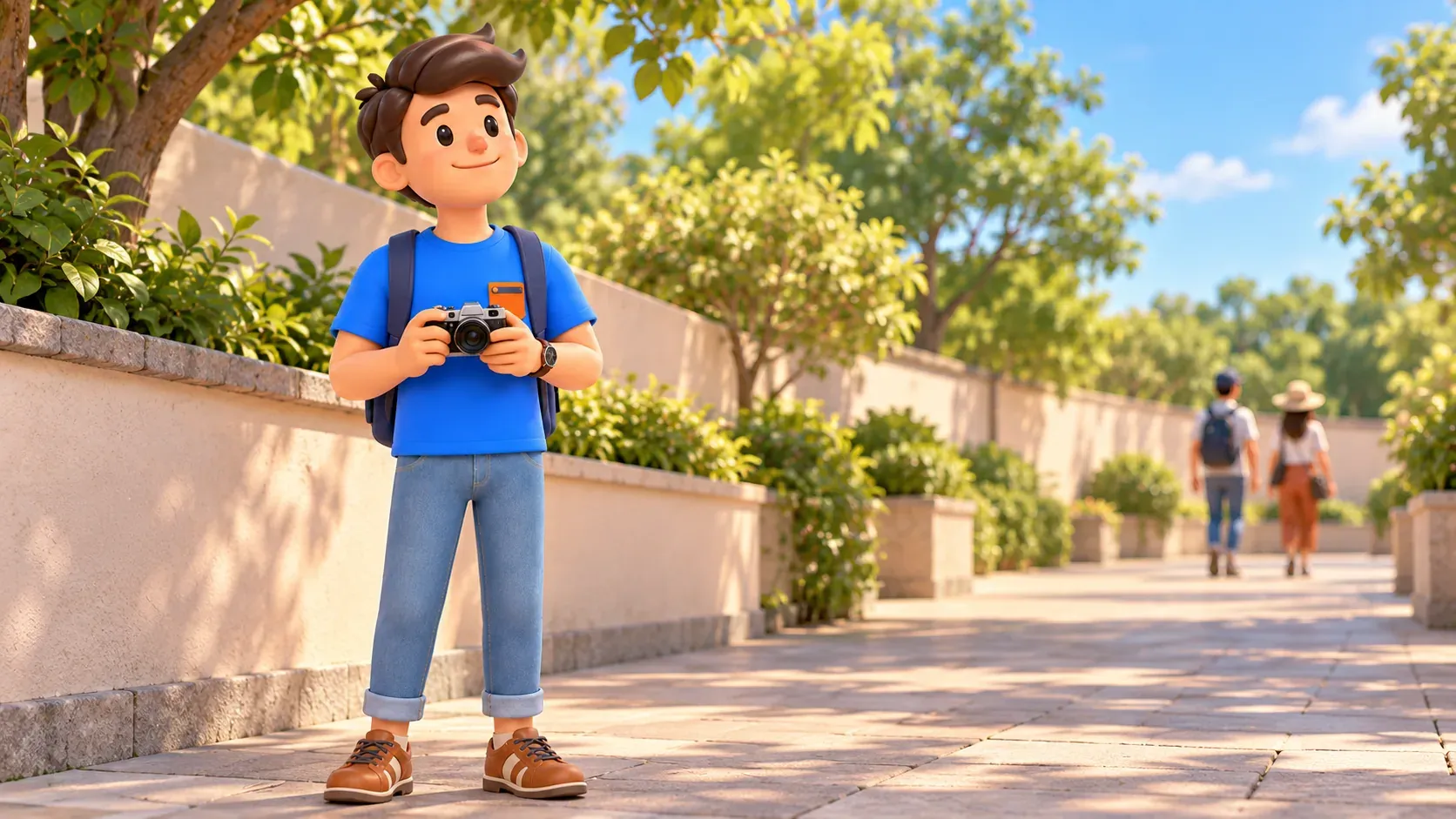
Before raising a camera, check whether photography is allowed and whether any restriction concerns flash, a particular room or the entire site. An open door does not establish permission to enter, and an absence of a barrier does not turn a private lane into a public attraction.
Ask before taking a recognisable portrait. If the person declines, lower the camera and move on. Avoid following somebody, blocking their way or treating working people as part of a tourist performance. A photograph is not worth intruding on a person's day.
Southern Gionmachi in Kyoto explicitly asks visitors not to stop, touch, follow or take unauthorised photographs of geiko and maiko. Its guidance also addresses private property, noise and obstructing roads. Read the area's current signs; do not turn a particular district's restrictions into the claim that all photographs throughout Kyoto are banned.
At stations, passenger movement and railway safety take priority over a picture. Tokyo Metro asks visitors not to use flash or lighting equipment, obstruct circulation with equipment or enter restricted areas. Follow staff instructions and keep clear of platform edges and gates; a tripod is not permission to occupy the available space.
Temples, shrines and accommodation have their own boundaries
A Buddhist temple and a Shinto shrine are different religious settings. Clapping is part of the usual prayer practice at many shrines, but it is not the standard practice at Buddhist temples. Visitors can observe respectfully without imitating an unfamiliar ritual. Follow local instructions if you choose to participate.
These are living religious places, not only architecture to collect. Keep voices low around prayer, avoid blocking worshippers and do not touch objects or enter closed areas for a better view. A quiet moment spent noticing materials and the use of the space can add more to a visit than another photograph.
Accommodation rules are similarly specific: where to remove shoes, which slippers to use and where supplied clothing may be worn. Our guide to choosing a ryokan stay covers the room, meals and bath arrangements. Check the actual property's instructions instead of turning one inn's routine into a rule for every Japanese hotel.
RoadMe makes it more convenient to build the whole sightseeing day around your interests and preferred pace in a supported city. Try a personal plan that leaves room for meals and unhurried visits, then confirm each venue's admission and behaviour rules separately.
If you make a mistake, correct the action calmly
If somebody points out the wrong slippers, a queue or a photography rule, stop and follow the instruction. A brief “sumimasen” and putting the situation right is more useful than a long explanation. You do not need to defend the mistake by producing a different guide on your phone.
Before leaving for the day, silence the phone, pack socks and a small rubbish bag, and save any booking conditions. At each entrance, look for footwear and camera instructions. At each shared space, check that you and your bags leave others room to pass. These habits make everyday travel easier without requiring you to master every Japanese custom.