Which Hong Kong art museum: M+, Palace Museum or Museum of Art?

If Hong Kong leaves time for just one art museum, choose by the question that interests you. How does contemporary visual culture work? What can an old object reveal about skill and courtly life? How is the city connected to Chinese painting and maritime trade? Those questions lead to different museums and offer a better starting point than the size of a building.
M+, the Hong Kong Palace Museum and the Hong Kong Museum of Art are not substitutes for one another. This guide helps you choose one by interest, district and attention, without cataloguing every collection. Allow roughly two to three hours for a focused visit, or three to five hours with food and a short continuation nearby. These estimates exclude travel, queues and separate programmes.
Choose a subject rather than a ranking winner
Begin with something simple: what would you willingly examine for more than a few minutes? The design of an everyday object, old ceramics, an ink landscape or a picture of the city? Art-history expertise is unnecessary. Curiosity about one subject is more useful than choosing whichever institution seems officially most important. A meaningful encounter matters more than collecting recognised names.
A helpful first distinction is M+ for visual culture connecting art, design and architecture; the Palace Museum for Chinese artistic heritage and close attention to objects; and the Museum of Art for Chinese and Hong Kong art and the city's trading connections. These are starting points, not rigid boundaries. The actual exhibitions may reveal overlaps as well as differences.
RoadMe makes it easier to work out a personal plan for the whole trip, shaping a route around your interests, available time and pace. Start with the museum subject that appeals and distribute the surrounding experiences without overloading the day.
Next, look at the current exhibition. A museum's collection and what is displayed today are different things. Even a good choice by overall subject needs a programme check. An object may be in storage, a gallery may be changing displays or a special project may need another ticket. Do not make the journey depend only on a catalogue photograph.
With companions, agree on the length of the visit and a meeting point in an allowed public area. One person may spend longer with a gallery while another reads interpretation. Everyone need not move identically. A shared pause keeps the day together without turning different interests into an indefinite wait by the exit. Agree on this before attention starts to fade.
M+ when the images of modern life interest you
M+ in West Kowloon approaches twentieth- and twenty-first-century visual culture more broadly than a conventional picture gallery. Design, architecture, moving image and visual art sit alongside one another. Its attention to Hong Kong can reveal cultural value in things easily overlooked as background in everyday city life: an image, an object or a way of shaping a space.
Choose it if you want to ask how modern images are made and how they influence perception. Someone less interested in looking only at paintings may find another entry point here. A model or design object offers a different conversation about creativity. The existence of that collecting field does not, however, promise that a particular favourite object will be in a gallery on your date.
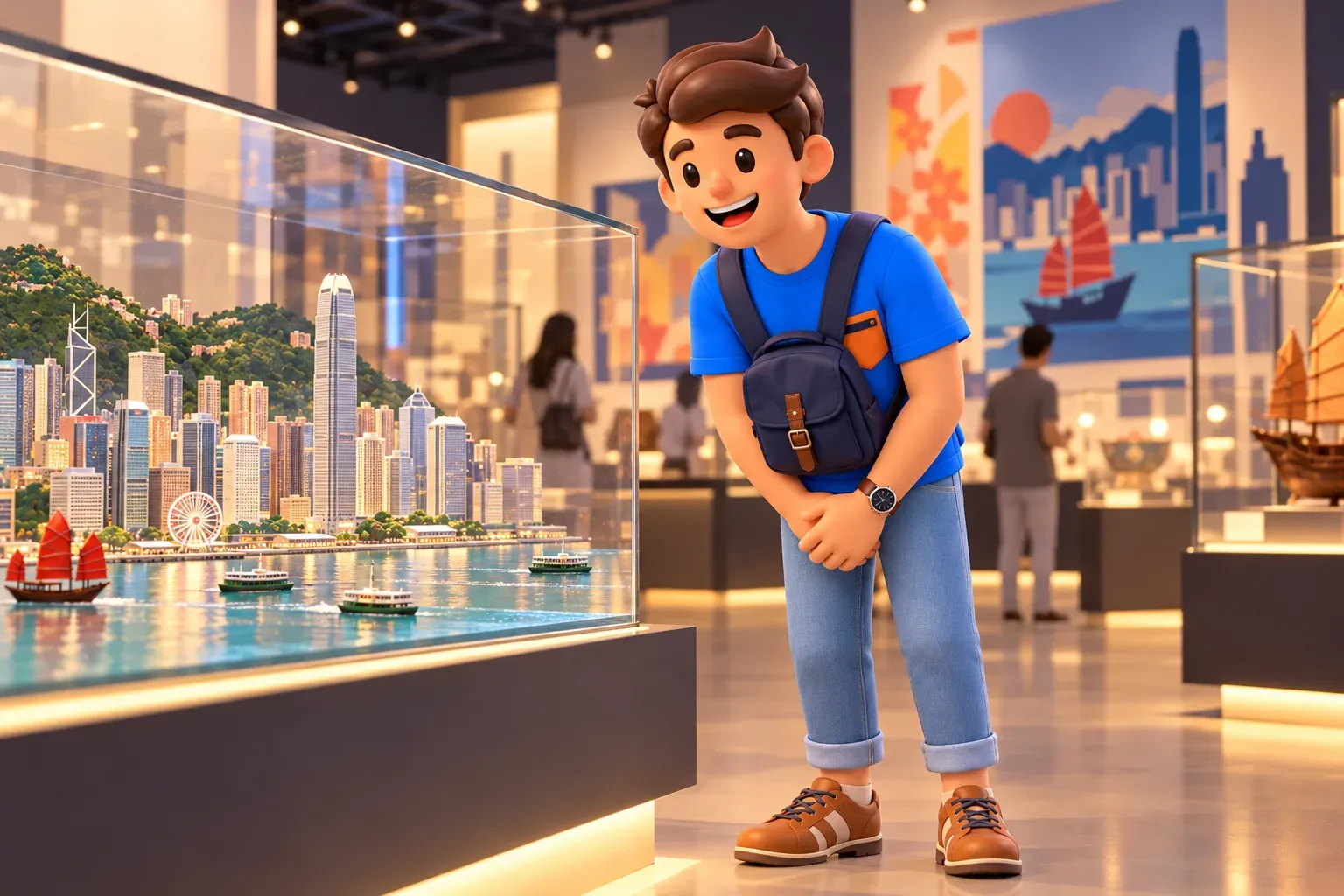
For a first visit, define one focus: an exhibition, a design subject or material connected with the city's visual culture. Do not attempt every discipline at once. After several works, pause and ask what connects them. Those relationships explain M+'s character more effectively than its scale alone. A smaller selection can leave you with clearer ideas than a rapid circuit through everything accessible.
The building contributes to the experience, but examining architecture and entering ticketed exhibitions are separate possibilities. Some public spaces are free, while chosen galleries require the appropriate admission. Cinema screenings and events are not automatically included. Check the actual option before buying, so your expectations match the programme you intend to see rather than the institution's entire possible offering.
If the art feels unfamiliar, do not begin by seeking the one correct explanation. Start with form, material and your own question, then read a short interpretation. You do not have to like every work for the visit to be interesting. A few observations that change how you notice an ordinary urban object or image are already a worthwhile result.
The Palace Museum when the object draws you in
The Hong Kong Palace Museum is also in West Kowloon, but its central focus differs. Created in collaboration with Beijing's Palace Museum, it presents Chinese art and culture within a broader context. It is a modern Hong Kong museum institution, not a surviving imperial palace or the Forbidden City transported into another district. That distinction helps set the right expectation for the visit.
It suits an interest in craftsmanship, materials, ornament and how things were used. A small object may reward more attention than a large room. Form and detail can suggest labour, purpose and the environment in which something existed. This kind of visit has value without becoming a contest to see the greatest possible number of treasures or photograph every case.
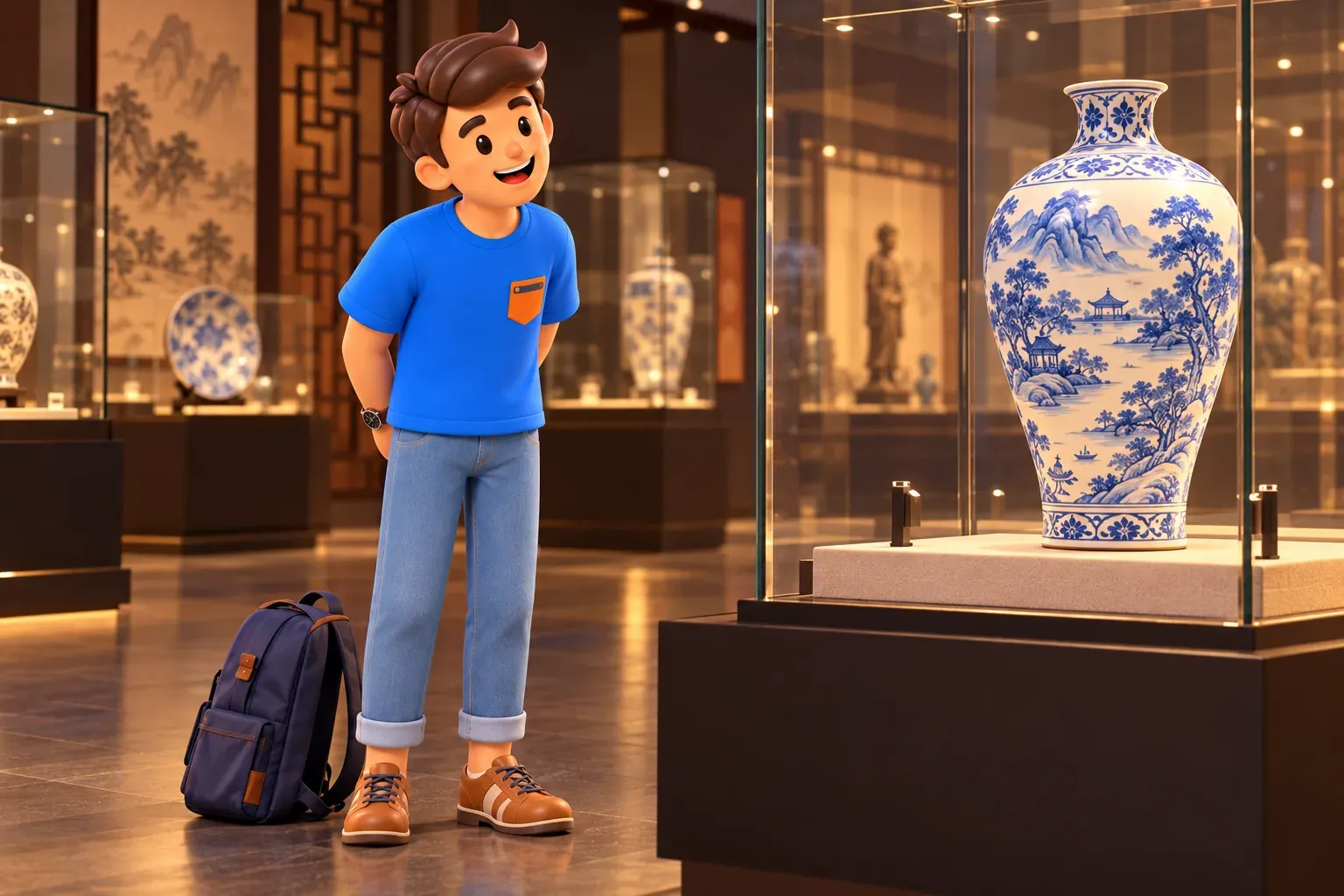
Choose one current theme and examine objects within it. First notice silhouette and material, then read the interpretation and return to a detail you missed. You do not need to memorise every dynasty in advance. A few clear links between object, technique and human history can make a stronger visit than a long sequence of dates that never connects with what you are seeing.
Do not assume every gallery is always available. Check temporary closures and which ticket covers the section you want. A collection total in the museum's general description is not a promise to see all those objects in one day. If a specific exhibition motivates the journey, begin with its availability before choosing your time, transport and meal arrangements.
With children, choose a small question about how an object was made or why its form was useful. This is more approachable than reading every label in order. Do not promise interaction in every gallery or permission to touch objects. Quiet observation can still be engaging when the duration matches a child's age and curiosity, with a pause before tiredness takes over.
The Museum of Art for art and Hong Kong's own story
The Hong Kong Museum of Art stands on Salisbury Road in Tsim Sha Tsui beside the harbour. Its collecting areas include Chinese painting and calligraphy, antiquities, modern and Hong Kong art, and art connected with China's trading contacts. This combination suits visitors who want to relate art to the city they are travelling through, rather than separate the museum completely from the streets outside.
Do not treat it only as a free alternative to the other two. It has an identity of its own, connecting collections, local creativity and the movement of images. Historical maritime trade can provide a bridge to the harbour outside, but your actual visit depends on exhibitions open for the date. The collecting categories are an orientation tool, not a guarantee of a particular display.
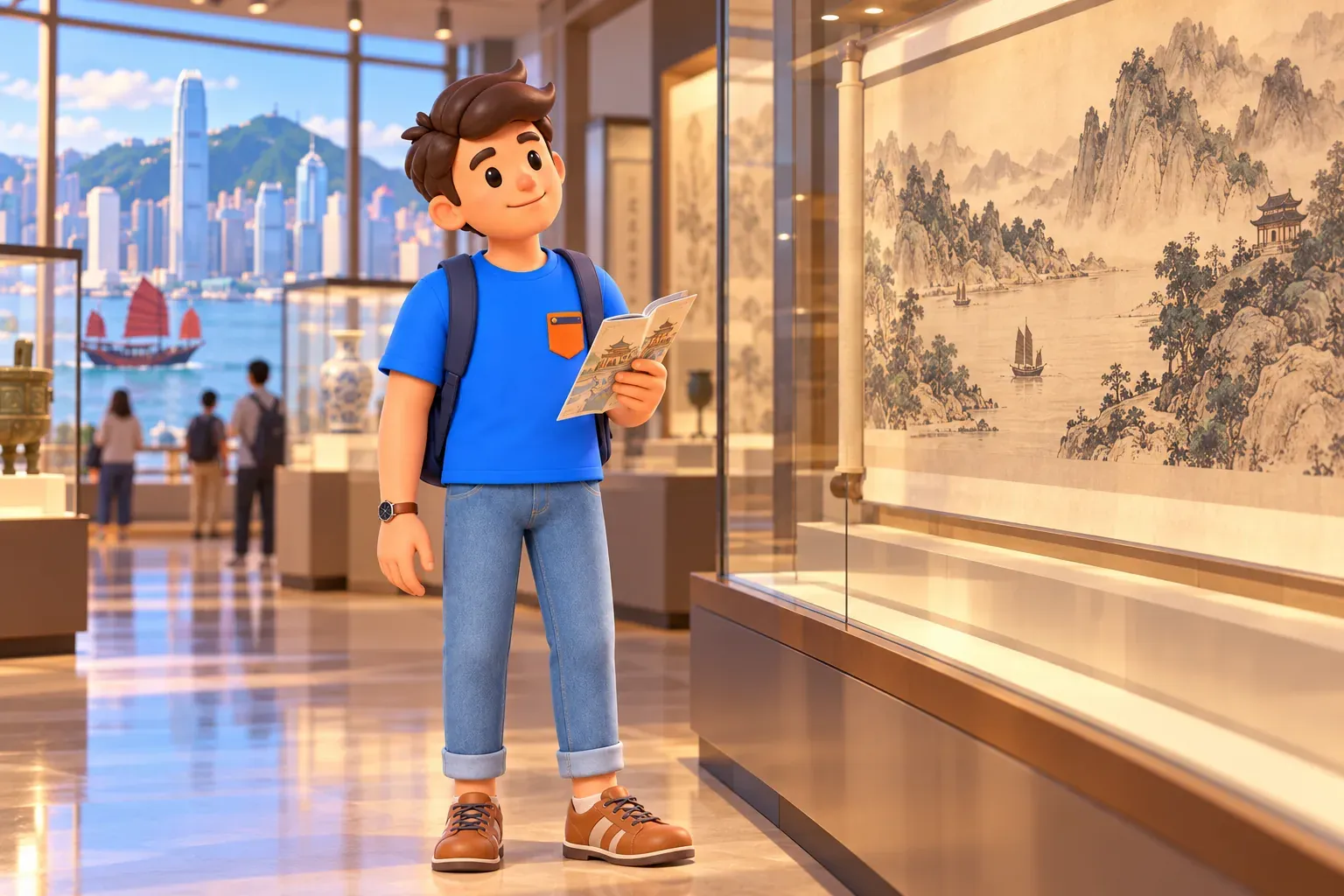
If painting and calligraphy appeal, begin with one current exhibition and notice the relationship between line, empty space and composition. Reading the characters is not necessary to see rhythm and movement. Interpretation still matters, helping you avoid replacing a work's history with your first impression. Observe, read briefly and look again: that is a sufficient method for a first encounter without specialist preparation.
In RoadMe, it is more convenient to build a personal trip route around those interests, with museums, city walks and rest planned at your pace. Try choosing one substantial art experience and giving it enough room within the journey.
General museum admission is free, but special exhibitions may have separate charges and conditions. Free does not mean every programme can be added without checking. Equally, a small free block can provide a real art experience when you have chosen a subject. Cost does not automatically determine the intellectual demands of a visit or the amount of attention it deserves.
Time, tickets and district: three practical filters
Check the calendar first. M+ normally closes on Mondays, with public-holiday and special exceptions. Closure is announced for 31 October 2026 and special opening for 2 November. The Palace Museum normally closes on Tuesdays except public holidays. The Museum of Art normally closes on Thursdays except public holidays. Additional holiday arrangements and temporary gallery closures need a separate look before departure.
Then match your ticket to the exhibition. General entry, a special display, a tour and a screening can have different conditions. Do not buy the widest option only through fear of missing out. Understand what you want to see and how long you can give it. Every collection in a large institution is rarely a sensible goal for a first short visit.
Finally consider the district. M+ and the Palace Museum are both in West Kowloon, but proximity does not make two major visits automatically comfortable. The Museum of Art occupies a different Tsim Sha Tsui hub. One anchor, food and an optional short continuation nearby generally make a clearer first-day plan than trying to cross all three institutions off a list.
After the galleries, assess energy. If weather allows, a short waterside stretch can give you room to talk about what you saw. It is optional, and transfers are not guaranteed to be entirely covered. In rain, our district options with museums and indoor spaces offer another framework. Do not overload the evening with another major cultural block simply because it appears close on the map.
If the choice still feels difficult
Read the current exhibition descriptions and choose the one that makes you want to ask a question. For modern ways of creating images, begin with M+. For craftsmanship and Chinese objects, consider the Palace Museum. For art connected with Hong Kong, painting and trading contacts, try the Museum of Art. This decision needs neither a universal ranking nor a guess at somebody else's preferences.
Afterwards, keep two or three impressions rather than a list of completed rooms: an unexpected form, an object's story or a connection between an image and the city. The museum can then continue into your next walk. Other institutions can wait for another day or trip. One attentive choice is enough to discover an artistic side of Hong Kong and decide what you would like to explore further.