Hong Kong in the rain: choose an indoor day by district

A rainy Hong Kong day becomes easier to reshape when you keep one interesting theme and reduce the moving around. Replacing a waterfront walk does not require a journey through three districts to collect several museums. Choose one main place, give it proper attention, eat nearby and decide about any continuation afterwards.
Here are four independent options: Tsim Sha Tsui museums, one major West Kowloon museum, Central Market and The Mills in Tsuen Wan. They are alternatives, not a citywide itinerary. Allow roughly two to three hours for a main museum, or three to five hours with food and a modest addition. These are planning estimates, excluding travel, queues and waiting for a particular show.
Choose a district, then check the actual opening
Start with where you are and what the group enjoys. Tsim Sha Tsui offers art, space or science themes. West Kowloon suits one substantial art experience. Central Market provides a looser city break with architecture and food. The Mills makes sense for industrial history and textiles, particularly if Tsuen Wan was already part of your plans.
Being indoors should not be the only reason for choosing somewhere. A museum that interests nobody can be tiring in any weather. Set a simple purpose: spend time with several artworks, understand a scientific idea or discover the city's manufacturing past. That gives the day value of its own, rather than making it a long wait for sunshine.
RoadMe makes it easier to work out a personal trip plan around your interests, available time and pace. Start with the experiences you want, and use the app to shape a coherent route in which an indoor day belongs to the journey.
Before leaving, check today's venue notices, access to the exhibition you want and the relevant ticket. Ordinary rain and severe weather are different situations: warnings can change museum operations and transport. These options assume conditions suitable for visiting. A roof does not guarantee that a building will admit visitors during a storm or that the journey there will operate normally.
Consider the approach as well as the destination. Station exits, ramps, crossings and queues may include exposed sections. Nearby buildings do not automatically share a continuous dry connection. Carry a compact umbrella and allow time to move calmly. Once inside, staying longer may be a better choice than making another transfer simply because you originally planned one.
Tsim Sha Tsui: art with an optional continuation
The Hong Kong Museum of Art on Salisbury Road is a good anchor for a quieter day. Art and collections offer ways to think about the city and different visual traditions. You do not need to cover the whole museum. Pick an exhibition or a few galleries that interest you, leaving room to stop at works that invite a second look.
This is more than shelter from the rain. Compare how artists use materials, space or images of a city. If museums are unfamiliar territory, begin with an easy question: which work caught your attention, and why? A few considered observations can make a stronger memory than photographing everything as evidence that you completed the building.
The normal closing day is Thursday, except public holidays, with additional holiday exceptions to check. General admission is free, but special exhibitions can have separate charges and conditions. Check the actual exhibition rather than extending the word free to the entire programme. Weekend hours should not be assumed to apply to an ordinary weekday evening.

Follow the museum with a meal. If rain eases, a short continuation nearby can work, but the waterfront is not compulsory. The nearby Space Museum is another option only if interest and timing align. In persistent rain, one satisfying exhibition and an unhurried lunch can be more enjoyable than repeated short visits linked by wet crossings.
With children, choose science or space
The Science Museum in Tsim Sha Tsui East can provide a separate family anchor. Its value lies in connecting observation with an explanation of how something works. Let children choose a few themes and return to a favourite rather than requiring every display. Adults benefit from the same approach: one understandable question is easier to enjoy than an uninterrupted stream of information.
The usual closing day is Thursday, except public holidays, with special holiday arrangements to verify. Do not promise that a particular interactive exhibit will operate or that every temporary exhibition comes with one ticket. Check the programme you want and its admission conditions. Ticket-office hours can end before gallery hours, so the building's closing time is not the only relevant deadline.
The Space Museum offers a different family theme. Its exhibition halls and Space Theatre shows require separate attention: visiting the museum does not guarantee a seat at the next screening. Check show time, language and availability. Children under three are not admitted to the theatre; that restriction should not be presented as a ban on every museum space.

The Space Museum normally closes on Tuesdays except public holidays, and its ordinary weekday opening begins at 1pm. Do not build an unconfirmed morning visit into a family plan. Weekends have different hours. If a suitable show is unavailable, decide whether the exhibition halls interest you instead of waiting for a long time merely because it is raining outside.
A useful family sequence is one museum, food and an open-ended remainder. The science museum and the space dome are within the same broad district, but they are not neighbouring galleries in one building. Travel and queues can use up the energy you hoped to save. Keep a second full museum visit for another day, when curiosity has had time to return.
West Kowloon: give one major museum enough time
Choose M+ for visual culture, with art considered alongside design, architecture and moving images. It can anchor a rainy day without depending on a clear harbour panorama. Identify an exhibition or subject that appeals and organise the visit around it, rather than promising yourself a complete tour of every level and public space.
The Hong Kong Palace Museum invites a different focus on Chinese artistic heritage, objects and craftsmanship. The two museums share a district, but their content is not interchangeable. For a first visit, choose one. Separate tickets and a transfer between buildings add little if the first substantial exhibition has already left you ready for a rest.
M+ normally closes on Mondays, with public-holiday and announced exceptions. It has announced closure on 31 October 2026 and special opening on 2 November. The Palace Museum normally closes on Tuesdays except public holidays. Some galleries can also be temporarily unavailable. Before buying, check whether the exhibition that motivates your visit is actually accessible, rather than assuming every gallery is open.
Distinguish public areas from galleries requiring the appropriate ticket. Free entry to one part of a building does not unlock all exhibitions, cinema screenings or special programmes. A roof garden and a cultural-district walk are optional in this weather. The indoor visit should be satisfying without relying on an outdoor addition or a view that the clouds may conceal.
Planning in RoadMe is a more convenient way to shape the whole trip around your interests and pace, balancing art, neighbourhood walks and rest. Try a personal route that gives one substantial museum visit room to breathe instead of competing with several following stops.
Central Market for a shorter city break
If you are already on Hong Kong Island and do not want a half-day museum visit, consider Central Market. The present 1939 building retains the character of a pre-war trading space, with horizontal lines and practical architecture. Its interest comes from the continuation of everyday city life in a reused building, rather than simply another opportunity to shop.
Keep the sequence small: explore accessible public spaces, notice a few features of the older structure, choose food or a drink and decide what comes next. Roughly one and a half to two and a half hours with a break is a reasonable planning allowance. That does not promise a permanent exhibition or a particular event; programmes and tenants change.
The operator lists normal complex hours of 10am to 10pm, but individual areas and businesses have their own schedules. Check a specific restaurant or shop separately if it matters to your plan. Do not add a long continuation up Central's steps and slopes just because the rain pauses briefly. Being able to finish comfortably nearby is a strength of this option.
The Mills for industrial history under a roof
The Mills in Tsuen Wan suits an interest in Hong Kong's working and manufacturing history. It occupies former Nan Fung cotton-spinning factory buildings. Surviving industrial features help explain a city shaped by production as well as finance and trade. The architecture forms part of the story even without a detailed visit to every exhibition or retail space inside.
Begin with accessible interiors and traces of the former use, then add CHAT if its programme appeals and it is open. The Centre for Heritage, Arts and Textile is a separate institution within the complex. The Mills' usual 10am–10pm hours do not mean CHAT and every tenant operate that long. CHAT normally opens 11am–7pm and closes on Tuesdays.
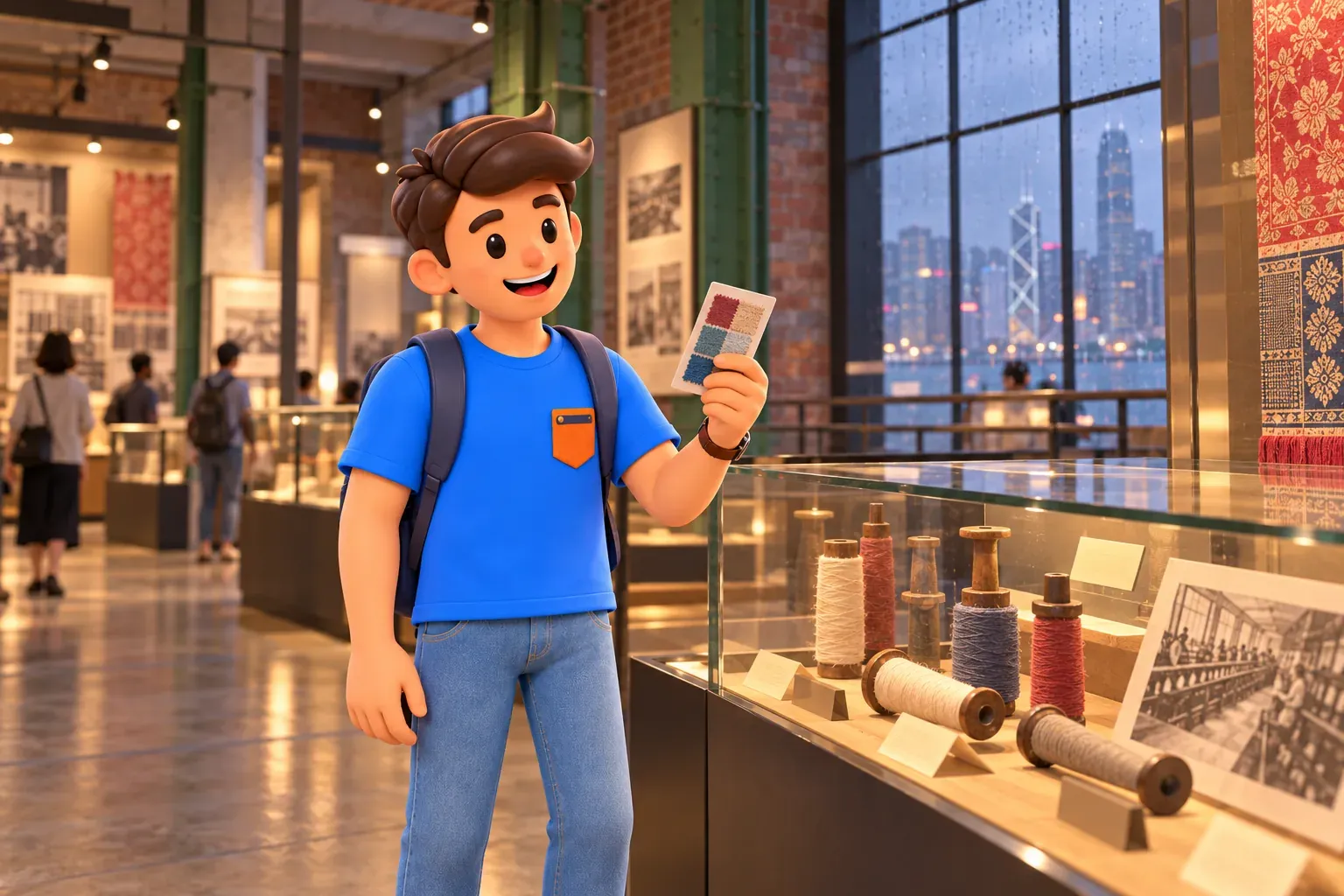
CHAT has its own visiting arrangements. Timed sessions with limited free tickets have been announced for weekends and public holidays; check the current procedure instead of assuming immediate entry at any hour. A workshop, a guided tour and a gallery visit are different possibilities. Being in the building does not automatically include participation in each programme or access to a particular session.
Do not add The Mills after a full Tsim Sha Tsui museum day merely to find another indoor destination. Choose it as a separate district option. The approach includes a network of walkways, but that does not guarantee every step stays dry. Finish with food at a suitable open business and leave enough time for the return journey without another compulsory stop.
Make the choice in a few practical steps
Ask where you are, what interests the group and how much energy remains. Check one main venue's opening and suitable ticket next, then choose food nearby. Only afterwards decide whether a second short block is worthwhile. This order avoids spending the rainy morning trying to assemble a perfect combination from ten competing alternatives.
If the weather improves, return to outdoor plans gradually. A short nearby walk is easier to fit than a sudden long transfer chasing a sunset. If rain continues, finish earlier if that feels right. A well-chosen exhibition, conversation over lunch and a clear journey back already make a worthwhile day. Changing the form of the trip does not require filling every free minute with another attraction.