Golden Mount or Mahanakhon: which Bangkok view should you choose?

A view over Bangkok can be a temple visit with a climb or a modern tower experience with lifts and a rooftop. Golden Mount and Mahanakhon offer different kinds of time as much as different perspectives. Choose between them by the experience you want around the view, rather than treating height alone as a measure of a successful visit.
Golden Mount belongs to Wat Saket in the old town. Mahanakhon SkyWalk is in the Silom–Sathorn area. They are not neighbouring stops on a short walking route, and there is no need to cross Bangkok to complete both in one evening. If you have room for one panorama, give that choice enough time for arrival, the visit itself and an unhurried pause afterwards.
The quick choice: temple hill or city tower
Choose Golden Mount if you want a religious setting, a gradual outdoor ascent and a view connected with the old town. Choose Mahanakhon if the idea of a contemporary skyscraper, a much higher perspective and a managed observation experience appeals more. Neither choice is a substitute for walking around Bangkok at street level. They offer a different way to understand the scale and texture of a place you are already exploring.
With RoadMe, it is much easier to build a personal Bangkok trip around your interests, time and comfortable pace. Let the app work out the whole itinerary so your chosen viewpoint fits the surrounding visits and useful pauses, rather than becoming a hurried detour.
Ask three practical questions before choosing: do you want a climb, how do you feel about height, and which area already fits your day? A temple enthusiast may find meaning in the approach to Golden Mount even without an exceptional sky. Someone interested in contemporary architecture may enjoy Mahanakhon’s exterior before the lift journey begins. Knowing which part matters makes the decision less dependent on a single photograph.
Golden Mount: the approach is part of the visit
Golden Mount is an artificial hill crowned by a golden chedi within the Wat Saket complex. The Tourism Authority of Thailand describes its completion during the reign of Rama V and a spiral ascent of 344 steps. That combination explains its character: a constructed sacred landmark rising above the surrounding city, rather than a natural mountain excursion. The urban setting remains part of the experience throughout.
Allow about ninety minutes for a visit at your own pace, including the ascent, time near the top and the descent. This is an estimate, not a measured promise for every visitor. Leave room to pause on suitable level areas without obstructing others. Reaching the upper viewpoint is only half of the movement; you still need to return down and continue to your actual departure point.

The stairway makes physical effort a real selection criterion. Consider the steps alongside the walking already planned for the day, the weather and the group’s pace. A short map distance does not remove the climb. If stairs are a substantial barrier for someone travelling with you, do not describe this as a straightforward accessible substitute for a tower. Choose a format everyone can enjoy and establish the actual entrance conditions beforehand.
A view with a religious setting
The golden chedi gives the ascent a purpose beyond the panorama. Treat the surroundings as a place used for worship, with appropriate clothing and respect for people visiting for religious reasons. Follow the instructions for individual areas and avoid arranging a photograph that blocks movement. You can look closely at the architecture while remembering that your holiday schedule is only one of the activities taking place here.
The view is useful for noticing the relation between lower rooftops, streets and the wider city. Rather than trying to name every building, pick a few layers to observe. What seems close together from above that felt separate on foot? Where does a cluster of roofs give way to newer structures? Such questions make the visit worthwhile without requiring perfect visibility or a detailed identification exercise.

Golden Mount fits naturally into an old-town day when you have left energy for the climb. Our short walk around the Giant Swing describes another old-town outing. Consider it separately rather than attaching the entire route automatically. A viewpoint plus a modest nearby interest and a good break can be a more satisfying combination than a dense list of temple entrances.
Mahanakhon: a modern change of scale
Mahanakhon’s distinctive pixelated façade makes the tower an architectural subject in its own right. Designed by Ole Scheeren, it presents a very different city image from a hill and golden chedi. Look at the exterior from an appropriate public place before entering if contemporary design interests you. The shape helps explain why this building is recognisable even to someone who has never visited the observation areas.
SkyWalk combines an indoor observation level on floor 74 with an outdoor rooftop area on floor 78. The operator identifies The Peak at 314 metres and the Glass Tray at 310 metres. Those are different parts of the experience, not reasons to assume that every ticket, every weather condition or every visitor involves exactly the same sequence. Confirm what your selected admission includes before choosing it.
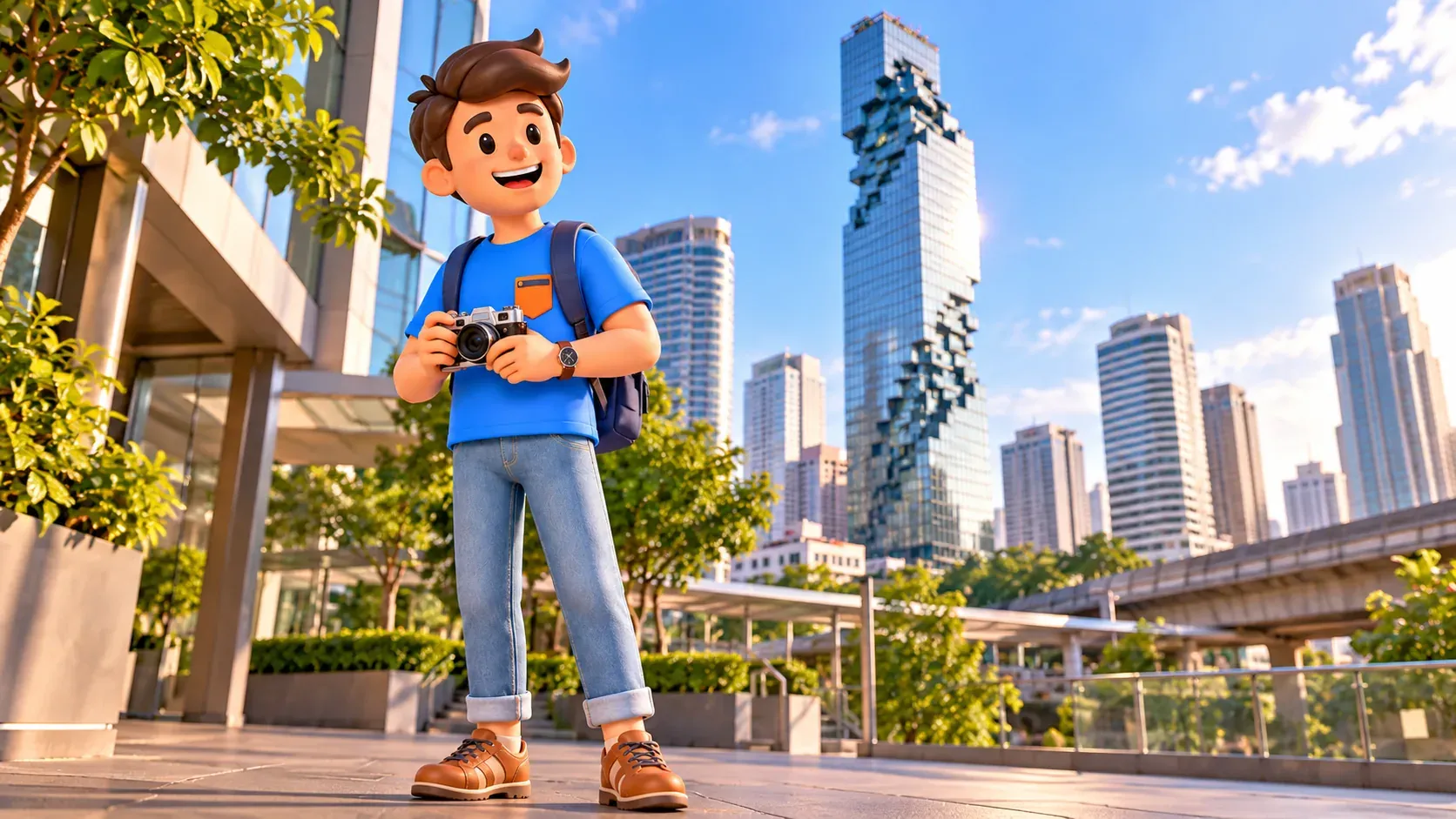
The upper perspective makes the spread of modern Bangkok part of the main attraction. Spend some time looking before taking photographs: the broad city pattern can be more memorable than a rapid collection of skyline images. If a particular outdoor element is your main reason for paying, establish its availability. You can also decide whether the indoor part would still make the visit worthwhile for you if the rooftop cannot be used.
Lifts change the effort, not every access question
The lift journey makes Mahanakhon a different physical proposition from Golden Mount’s stairs. It does not remove arrival, security, standing time or movement between the areas you choose. The operator describes the building as wheelchair friendly; contact the visitor team about the precise route and assistance relevant to your needs. A general description of the building should not become a promise about every optional experience or every individual transfer.
Check baggage and photography restrictions before leaving your accommodation. Do not assume that a sightseeing backpack or equipment you have used elsewhere can accompany you through all of SkyWalk. Read the current rules and follow staff directions for each area. Travelling with fewer unnecessary belongings can simplify the outing, but arrangements should be established rather than invented from an illustration or an old visitor’s photograph.
Height also deserves an honest discussion within the group. Someone who enjoys a city panorama may not want a glass-floor experience. The indoor observation area is still high above the city, so being inside does not automatically resolve discomfort with height. Choose according to what the person actually wants to do, and ask the visitor team for details if useful. Nobody needs to perform an optional activity to make the ticket feel justified.
Choose a time without promising sunset
For either visit, begin with the current opening and admission conditions. At Mahanakhon, distinguish SkyWalk entry from rooftop bar hours, packages and other experiences in the building. A late-opening bar does not establish the latest admission to your selected observation ticket. At Golden Mount, leave sufficient time for both ascent and descent within permitted access. A published closing time is not a target arrival time.
Rain or storms can temporarily close Mahanakhon’s outdoor observation area, including the Glass Tray and The Peak, according to the operator. Do not build your only possible evening around guaranteed outdoor access. Golden Mount also involves outdoor movement. Neither provides a promise of a clear horizon, comfortable conditions or a colourful sunset. A plan remains more useful when the view is one valued part of the outing rather than a guaranteed weather event.
Daylight helps you read details; a later visit can change the city’s appearance. Decide which you prefer and whether the practical timing works. If you want to stay through changing light, account for the longer visit, your selected ticket and the journey afterwards. You do not need to wait several extra hours simply because sunset is commonly suggested. The best time for your day also depends on energy, meals and the rest of the trip.
Give either choice its own small outing
For Golden Mount, a useful allowance is about ninety minutes for the visit and thirty for seated rest afterwards, with transport added separately. For Mahanakhon, reserve around two hours for entry arrangements and the observation visit, plus forty-five minutes for a pause. Queues and personal preferences can change both estimates. Neither is a timed reservation, and neither includes the journey from your hotel.

Mahanakhon can belong to a day in Silom–Sathorn, but location alone is not a reason to add every nearby outing. Our Sathorn half-day idea offers a different rhythm to consider on its own terms. Choose one main interest and establish the actual connections. Returning to street level for a proper meal or rest is part of the visit’s practical shape.
RoadMe makes organising the whole stay more convenient and effective by developing a personal plan around your interests and pace. Use the app to place the viewpoint you choose among the Bangkok days you actually want, with enough room for travel, food and rest.
Decide by the experience you want to keep
Compare the actual admission that applies to you, including selected time and inclusions, rather than an old headline price. Keep travel and a pause in the same calculation. Golden Mount gives a temple setting and a stairway-led approach; Mahanakhon gives a contemporary tower and a much higher change of scale. One is not a failed version of the other. The more useful question is which experience fits your interests and your day.
Choose before setting off, confirm the conditions that matter and leave the other viewpoint for another visit if you still want it. A single panorama given proper time can connect the city’s details more clearly than two rushed admissions. The memory may be the climb, the chedi, the tower’s unusual shape or the moment Bangkok’s size becomes apparent. Give that moment room rather than measuring the day by height alone.