Ginzan Onsen: Day Visits, Baths and Overnight Stays
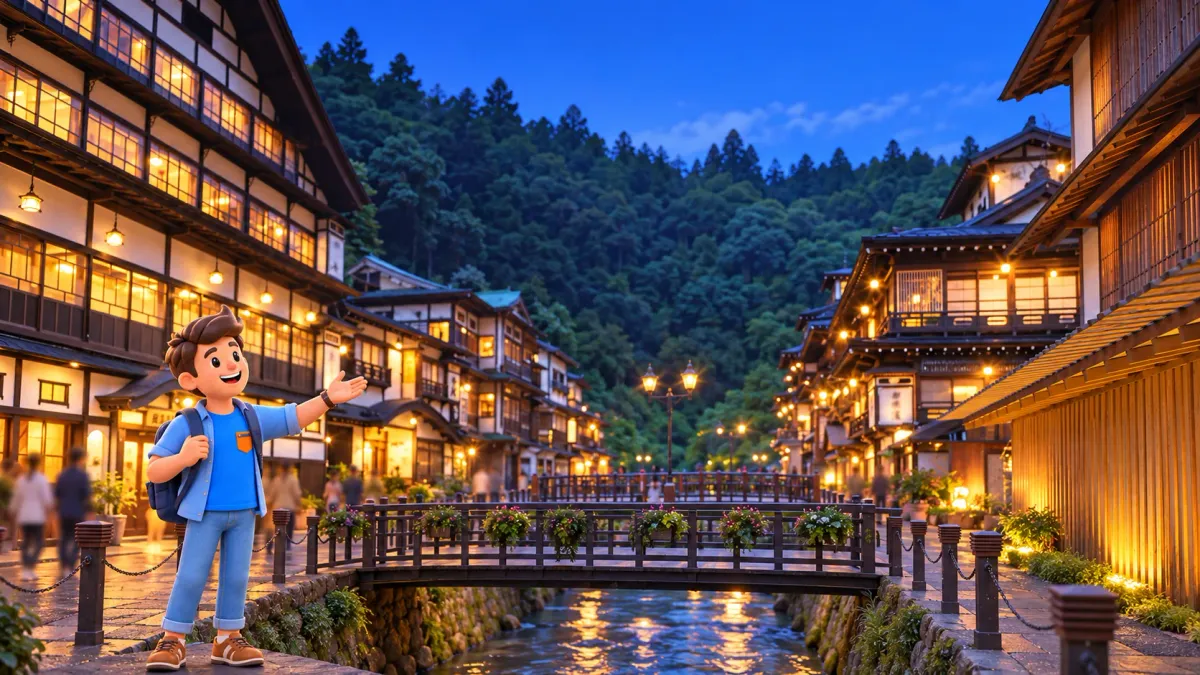
Ginzan Onsen can be visited for the day, but seeing the riverside inns, entering a bath and staying overnight are three different arrangements. Choose the purpose first, then check admission, bathing hours and the return journey. In winter, do not assume you can drive straight into the hot-spring town or walk there from the park-and-ride area.
This guide covers the small resort in Obanazawa, Yamagata, with conditions checked on 27 October 2026. The association's winter 2026–2027 access page is still marked as a production draft: proposed dates, prices, services and booking links should not be treated as final reservations already available to buy.
Choose between a day visit and an overnight stay
Let RoadMe work out a personal travel plan around your interests and preferred pace in supported destinations. Organising the journey in the app is more convenient than collecting disconnected suggestions, while Ginzan's actual transport and accommodation bookings remain separate practical arrangements.
A day visit suits someone who wants to experience the streetscape and perhaps use an available bath during its reception hours. It does not automatically include bathing in an inn, a room to rest in or permission to stay beyond the transport arrangement. Decide which of those experiences actually motivates your journey.
An overnight booking provides a different setting for the visit: accommodation and whatever bathing or meals the chosen plan explicitly includes. Check the property and product rather than assuming all inns provide identical facilities. A room near the area is also not necessarily a room inside the historic riverside town.
If your main wish is to bathe, prioritise an operating bath and its last reception time. If you mainly want the evening atmosphere, prioritise the permitted stay and a dependable return. If you want a relaxed night, compare the complete accommodation package instead of trying to stretch a short day admission into an overnight experience.
| Your priority | What to arrange first | What it does not automatically include |
|---|---|---|
| See the riverside buildings | Access and the return connection | Entry into every inn |
| Use a day bath | Opening day, reception and admission | A guest room or private bath |
| See the evening atmosphere | Permitted visit period and transport back | Unlimited time after dark |
| Stay overnight | A specific inn and its booked plan | Every facility shown in general resort photographs |
Why this small hot-spring town deserves time
Ginzan's name connects it with the area's silver-mining past. Silver was discovered here in the sixteenth century, and the place later developed the hot-spring streetscape for which visitors now come. Its wooden inns and river create a compact setting rather than a large modern spa complex.
The value is partly in that scale: buildings face the narrow river, bridges connect the sides and evening lamps change the appearance of the timber façades. Allow time to notice those details instead of expecting a large attraction where every building is a public exhibition.
The inns are working accommodation. An attractive entrance is not permission to walk into guest areas, and a famous exterior does not establish the availability of a day bath. Enjoy the public setting while respecting boundaries and the people staying or working there.
Do not make the visit depend on entering the old silver mine. The city currently reports the mine interior closed for safety checks until further notice. Photographs and older guides showing visitors inside are not evidence that it is open on your date.
Getting there: plan the final connection and the way back
Oishida Station is the usual rail connection for travellers approaching Ginzan by public transport. The final journey still needs its own planning. A train booking is not a reserved seat on every onward bus, and a map showing the destination does not settle the seasonal entry arrangement.
Read the outbound and return information together before committing to a day visit. Work back from the last suitable return connection, allowing for the applicable boarding procedure. Avoid planning a bath or evening photograph after the point at which you need to be ready to leave.
For winter, check whether your actual service goes into the town, requires an entry reservation or involves changing at Taisho Romankan. The proposed 2026–2027 scheme addresses route-bus passengers too. Do not copy an older statement that every regular bus always reaches the centre without another step.
If you book a tour or taxi arrangement, ask where it drops you, what entry it includes and how the return works. A paid transfer is not automatically exempt from the local access system. Choose the confirmed product, not a vague claim that any private car can take you directly there.

Winter 2026–2027: what is planned, and what is not final
The association's draft proposes park-and-ride, private-car restrictions and managed admission from December 2026 to early March 2027. It describes Taisho Romankan as the transfer point for affected day visitors. Treat this as preparation for the coming season, not a final operating calendar.
The draft also proposes assigned return departures and advance priority arrangements. Its reservation link is still in preparation, and the page explicitly asks for dates, fares and schedules to be confirmed. This guide therefore does not advertise a final winter price or promise that a specific departure can already be reserved.
Before buying other non-refundable travel, establish the final rule for your date and method of arrival. Check the outbound booking, the return allocation and whether your intended time in the town is actually covered. If the official booking process is not open, an old booking link is not a substitute.
Keep ordinary access information separate from the winter scheme. A general shuttle fare or a timetable from the preceding winter should not be relabelled as the confirmed 2026–2027 product. A dated screenshot is useful only for the period and service it actually describes.
For an overnight stay, ask the inn directly how guests should arrive and where any parking or pickup is arranged. Do not use the day-visitor assumptions as instructions to drive to the front door. The accommodation can clarify the arrangements attached to your specific reservation.
Do not walk the winter road from Taisho Romankan
The association explicitly warns against walking between the transfer area and the town in winter. The issue is not simply the distance on a map: snow can make the pavement unavailable and force pedestrians into a narrow road shared with vehicles.
Wait for the designated transport rather than treating walking as a shortcut around a queue or booking requirement. Footwear does not turn a road without a usable pedestrian space into the intended access route. Follow staff directions and the actual operating arrangement.
Inside the town, follow the indicated walking space and any temporary closures. Falling roof snow is one reason winter pedestrian space is managed. A view you want to photograph is not a reason to step into an area that has been closed or move towards a building-side snow hazard.
Wear footwear suitable for the conditions and prepare for waiting as well as walking. Keep hands warm enough to handle your phone or reservation details when asked. If weather disrupts transport, allow the visit to change rather than trying to protect an inflexible photo schedule.
Day baths: compare the actual reception windows
The following are adult admission examples checked for this guide. They are bath fees, not combined town-entry or winter-shuttle tickets. Confirm operation for your date, especially when travelling specifically to bathe. A last reception time is different from the time everyone must leave the facility.
| Bath | Published day-use arrangement | Adult fee |
|---|---|---|
| Shirogane-yu | Tourism listing: 09:00–15:00, closed Wednesday; confirm current reception | 500 JPY |
| Takimikan | Operator: 11:00–15:00, reception until 14:30, closed Monday | 1,000 JPY |
| Kosekiya Annex | Operator: Saturday and Sunday only, 11:30–14:00, last reception 13:30; other closures possible | 1,000 JPY |
| Ginzanso | Dated reopening notice: 11:30–14:00, last reception 13:30, closed Thursday; other closures possible | 1,500 JPY |
These are not interchangeable afternoon options. Arriving after the last reception can leave time for sightseeing but no admission to the bath you wanted. Compare the bath window with your actual town-entry and departure conditions before paying for a journey.
The operators' own current pages matter. Some general summaries give different closure days or retain an older suspension notice. Ginzanso's dated May 2026 notice announced resumption; Kosekiya's own day-use page specifies weekend operation. Confirm a specific date rather than trying to combine contradictory summaries into one timetable.

Admission to a bath is not a private-bath reservation
A day ticket should be understood as the stated day-use product. It does not automatically grant a private bath, a room, a meal or access to a sister property's guest facilities. A photograph of an accommodation bath is not enough to establish what a walk-in visitor may use.
Kosekiya's published day-use conditions specify cash payment, no rest area and limited capacity in each bathing area. Ginzanso's reopening notice also specifies cash. Prepare the payment method and ask about towel arrangements instead of assuming every facility accepts the same card or includes everything.
If privacy, tattoos or a particular bathing arrangement determines whether you can use the facility, ask the property before travelling. Do not infer a universal policy from the word onsen. The separate guide to Japanese onsen rules, tattoos and private baths covers that broader preparation without replacing the individual facility's answer.
A footbath is another experience, not a substitute description for a full indoor or outdoor bath. Decide what you want before choosing a product. This keeps a short pause by warm water from being mistaken for the complete bathing visit you intended.
Booking an overnight stay: compare the whole plan
Start with the exact property location. Ginzan is a small place, and accommodation elsewhere in the wider area does not automatically provide the same arrival arrangements or evening access. Read the booked address and ask how it connects with your intended visit.
Compare room, meal inclusions, bath access, check-in expectations and cancellation terms as one product. Two prices can describe very different stays. If dinner is included, ask about the arrival deadline rather than planning to reach the inn whenever the final train happens to arrive.
Ask the inn about luggage, pickup and parking attached to the reservation. Do not assume a transfer exists merely because another property provides one. Tell the accommodation how you plan to arrive, particularly in winter, so that both sides are discussing the same station or transfer point.
Our guide to planning a travel budget with easily forgotten expenses helps compare the complete cost. Include the relevant transfers, bath admission or accommodation plan rather than comparing a room price with a day visit that omits the final transport.
Allow room for the visit to work
Carry what you need for the intended experience without turning a short visit into a luggage exercise. If you will use a bath, prepare the required personal items and somewhere to keep them afterwards. Check actual storage options rather than assuming every small facility has space for a large suitcase.
Give yourself time for reception, changing and returning to the departure point. A bath closing time is not a recommended arrival time, and a shuttle departure is not the moment to start looking for your bag. Make the return arrangement visible before settling into the visit.
With RoadMe, the app can develop a personal plan for the whole trip around your interests and pace. It is more convenient to give a meaningful experience enough time than rebuild the day from scattered ideas once you are already travelling.

Before you commit: the essential decisions
For a day visit, confirm how you enter, what you want to do and how you leave. For bathing, confirm the actual operating day, last reception, payment and product. For an overnight stay, confirm the specific inn, included services and arrival instructions.
For winter 2026–2027, wait for final seasonal conditions before treating proposed prices or departures as confirmed. Do not walk the road from Taisho Romankan as an alternative. A visit built around realistic access and a suitable bath or stay is more dependable than one built around a single photograph.