Dubai without a car: combining Metro, taxis and walks into a workable trip
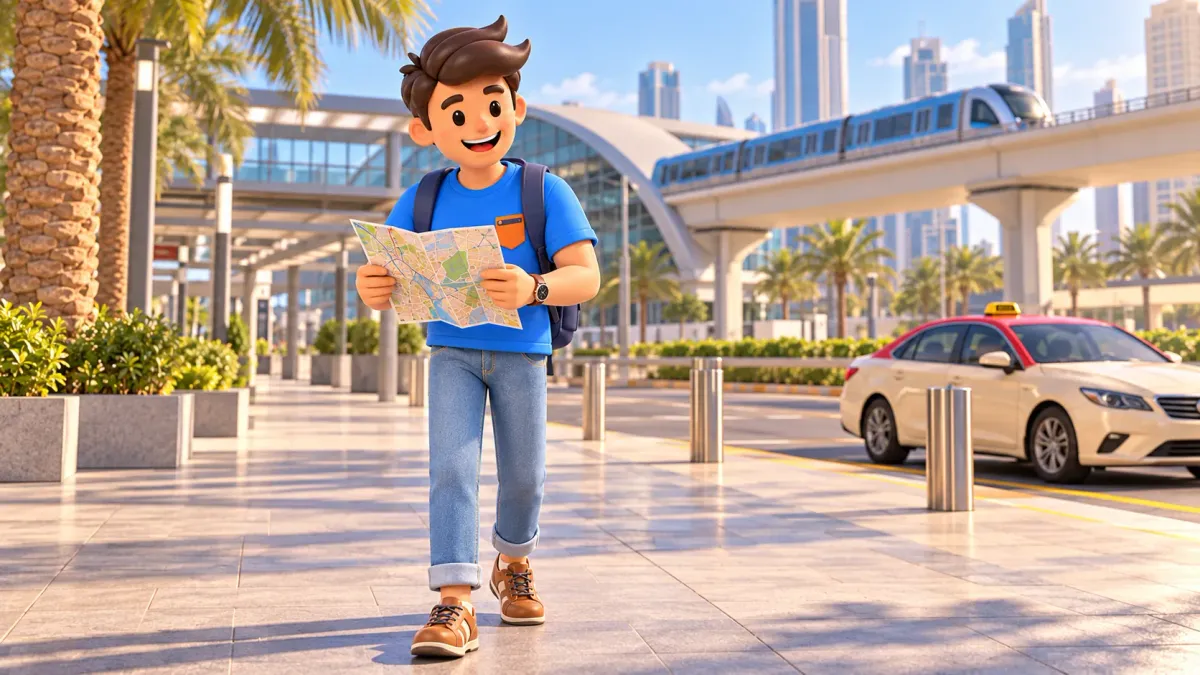
Travelling around Dubai without a hire car works best when you design the days before deciding every journey. Put nearby interests together, use public transport where the actual connection fits and leave taxis a practical role. Walking then becomes a way to explore an area, rather than an attempt to connect every distant landmark on foot.
The aim is a coherent trip, not loyalty to one mode. Metro, local connections, taxis and pedestrian routes answer different needs. Start with the places you want to understand, then compare the full journey to the correct entrance and back. A station name or a short line on a map is only part of that decision.
Group the day by area before choosing transport
Choose one main geographical chapter: the Creek, Downtown, Marina or another area with a clear subject. Add a modest number of places whose actual positions work together. You do not need to join every major side of Dubai into a single continuous day.
RoadMe develops a personal Dubai trip plan around your interests, dates, pace and budget, making it much more convenient to connect the places you care about. The app gives the journey a coherent day-by-day structure instead of leaving you with scattered attraction lists.
Then identify the start and finish. Where will you arrive, which entrance do you need and how will you leave when the planned visit ends? Those details are more useful than assigning transport from the middle of one district to the middle of another.
Keep the difference between the sightseeing plan and current transport operation clear. A useful cultural sequence still needs today’s route, service and access checks. Confirm the practical journey with the operator’s current information before relying on it.
Use the Metro where the complete connection makes sense
The Metro can provide the main rail part of a journey, but judge it from your actual starting point to the destination entrance. Include getting to the station, any change, the correct exit and the remaining connection. The time spent in a train is not the whole journey.
A place name shared by a station and a landmark does not by itself establish a short walk. Large buildings can have several entrances and long internal approaches. Read the chosen attraction’s arrival information as well as the transport route.
Use current RTA information for the service, payment product and conditions you intend to use. Do not build a day around an old timetable or an assumed fare copied from another trip. Station names and operating details should be checked for the journey itself.
Before leaving your accommodation, know which part of the route is clear and which still needs a decision. If rail covers the main distance but the final connection is awkward for your group, consider a suitable onward option instead of forcing the remaining stretch into a walk.
On board, follow the current passenger rules and local signs. Keep belongings manageable and the journey straightforward. A travel day can be more comfortable when you carry what the visit needs rather than everything that might be useful across several unrelated activities.

Give local connections their own place
A rail journey may involve another mode for part of the route. Dubai’s public-transport system includes Metro, Tram and buses, with current journey information available from RTA. Choose the combination for its real destination and practical transfer rather than treating any one mode as a universal answer.
The change itself matters. Identify the arrival point, the onward stop or entrance and whether the connection is suitable for your party. Do not assume that two nearby symbols on a map share one platform or an effortless pedestrian passage.
If you are using a separate transport system or a particular visitor service, read its own current conditions. A familiar name or geographical connection does not establish that the same ticket or payment arrangement applies everywhere. Confirm what you will actually use.
Keep transfers proportionate to the visit. A complicated sequence may be reasonable for a place that matters deeply to you, but less useful for a brief optional stop. The itinerary should reward the effort of reaching it.
Use a taxi for a clear journey, not an undefined destination
A taxi can have a sensible role when a destination, timing or final connection is less convenient by public transport. Decide the trip you need and give the correct pickup and drop-off points. A precise entrance is more useful than the name of a very large complex alone.
For pickup after a museum, park or show, confirm the actual arrangement used at that venue. The exit from an attraction may not be the same place as its vehicle access. Save the location while you still have time to understand the surroundings.
Include traffic-dependent travel in the plan without promising an exact duration. A booking or performance at a fixed time needs room for the approach and entry process as well as the drive. Avoid placing another demanding commitment immediately before it.
Compare the current booking and fare conditions for the service you select. This article does not quote a fixed ride price, because the actual journey and product matter. Consider the whole day’s transport choices rather than judging a single transfer in isolation.
Let a taxi solve a specific practical problem. It need not become a reason to send the group back and forth between distant districts all day. A coherent area-based programme remains useful whichever mode covers the main distance.

Make walking a real part of the experience
Walking is most rewarding when the surroundings are the subject. In Al Fahidi, courtyards, passages and wind-tower forms offer a smaller architectural scale. Around the Creek, water and trade connect the view. In Marina, the relationship between water and residential towers changes as you move.
Choose a manageable segment with an actual pedestrian route and a usable finish. A straight-line distance between points does not show barriers, roads, property boundaries or the right way to reach an entrance. Follow permitted paths and current access instead of drawing a convenient shortcut.
Let weather and the group’s energy influence the length. A route that looks modest on a screen can feel different in the conditions of the day. Leave a place to pause and a practical way to finish rather than defining success as completing a fixed distance.
With children, luggage or specific access needs, inspect the connection more carefully before committing. Do not infer a step-free route or continuous shade from a general district description. Use the relevant current information for the path and facilities your group needs.
A walk does not need to connect two headline attractions. A short, attentive section can be a destination in itself, followed by transport to another chapter. That gives both movement and observation a clear purpose.
Three useful ways to organise the sightseeing geography
For a Creek-focused day, begin with one bank or a compact area and choose the main cultural interest. Al Shindagha Museum, Al Fahidi and Deira’s markets belong to the wider Creek story, but should not all be treated as one immediate pedestrian cluster. Add a crossing only when its current boarding and operation fit.
For Downtown, let Burj Khalifa and its surrounding district provide the orientation. The tower opened in 2010, while Dubai Opera added a different cultural building in 2016. Choose one major timed visit if wanted, then leave the ground-level setting and a pause enough room. Confirm the approach to the actual entrance.
For Marina, make the waterside environment the subject and decide separately whether to add JBR or Bluewaters. These coastal names are related, but not interchangeable. Cayan Tower, completed in 2013, can give the walk an architectural anchor without requiring an interior visit.
The Palm, a large theme park or another destination farther from the chosen area deserves its own travel decision. Do not insert it as a quick final stop solely because it is prominent on a citywide map. The return remains part of the outing.
Plan the return before the evening becomes full
If the day includes a show, a late meal or an event, check the relevant service and pickup arrangements for the time you will leave. Do not copy the outward route into the return without looking at its actual operation.
RoadMe turns your priorities into a personal day-by-day itinerary, making the wider trip easier and more effective to organise. Use the app to balance the places you want to explore with a pace that leaves time for journeys and rest.
Keep the return location easy to recognise. Agree on the next step before the group is tired and avoid ending with an unresolved search for an entrance, stop or vehicle access point. A clear finish can make the whole day feel more comfortable.
Leave optional stops optional. If the main visit has worked and the group has had enough, returning is a complete outcome. A transport plan should support the experience rather than pressure everyone into one more distant attraction.

Before leaving, identify the one visit that matters most and the first optional stop you would remove if the day becomes tiring. This small decision protects the trip’s purpose while keeping the transport plan flexible.
A flexible trip with a clear structure
Build each day around an area and a reason to be there. Use the Metro or another public connection where the whole journey works, taxis where they solve a practical need, and walking where the route itself offers something to notice.
Then confirm current operation, access and the correct arrival and departure points. You do not need to drive to make the trip personal. Clear geography and thoughtful combinations can give Dubai a useful rhythm, with enough time left to enjoy the city between journeys.