DMZ Tours from Seoul: Formats, ID Requirements and Possible Changes
A DMZ tour from Seoul is an organised visit to specified sites near the inter-Korean border, not permission to wander through the demilitarised zone. Choose a product by its named stops, departure arrangements, identification rules and policy for restricted access. A standard Paju tour, a railway package and a visit to the Joint Security Area are different products.
For an overseas visitor taking the Paju Peace Tour, bring your actual valid passport and follow the operator's instructions. A passport photograph is not a substitute. Official and operator information was reviewed on 28 October 2026; access can still change before or during your visit, so a booking should never be read as guaranteed entry to every advertised stop.
Understand the visit before comparing prices
Start with what you want to understand: the history of division, memorial places, the Third Tunnel or the view from Dora Observatory. Then check which of those places your selected product actually names. The label “DMZ” covers several experiences and does not identify one standard ticket.
Try RoadMe to work out a complete personal trip plan around your interests and the time needed for this excursion. Planning in the app is more convenient than collecting separate suggestions, and helps the rest of your Seoul stay fit around a day with uncertain return times.
The DMZ grew from the 1953 Korean War armistice and remains a controlled border region. The Civilian Control Line, often shortened to CCL, is another relevant boundary for visitors. Tourist descriptions may use “DMZ tour” for places around the actual zone as well as controlled-access sites; the name does not mean you cross into North Korea.
| Format | What it means | Check carefully |
|---|---|---|
| Paju tour from Seoul | Transport and a specified programme sold together | Meeting point, stops, guide language and extras |
| Paju city Peace Tour | Local controlled-access visit starting at Imjingak | Getting there, ticket arrangements and guide provision |
| Railway package | A separate organised rail-based product | Actual operating date, boarding and included sites |
| JSA / Panmunjeom | A distinct visit with its own access conditions | Official availability and eligibility, never assumed |
| Imjingak visit | A memorial-area visit outside the restricted tour | What is open and any separately paid attractions |
DMZ, JSA and a JSA museum are not interchangeable
The Joint Security Area at Panmunjeom is the place associated with the well-known blue conference buildings. It is not automatically included in a Third Tunnel and Dora Observatory tour. A photograph of those buildings on a sales page does not establish access to them.
VISITKOREA's regional page, last updated on 30 October 2025, states that Panmunjeom is closed to civilian tours. We could not independently confirm a later general reopening from the readable official information reviewed for this guide. Do not plan on JSA access without a current official confirmation that applies to your visit.
Also distinguish a museum experience from the real location. DGO Travel's published Third Tunnel product describes a JSA Experience Museum with recreated conference rooms. That is a museum feature; it is not evidence that the package enters the actual JSA. Read the full stop name rather than relying on the acronym.
Ask any seller advertising JSA what exact place is visited, which authority currently permits access, who is eligible and what happens if that part is unavailable. A historical operator list or an old reopening article is not enough to settle today's booking.
Choose a Seoul departure or a local Paju departure
A package starting in Seoul can simplify the journey, but pickup arrangements vary. Confirm the station exit, street side or hotel entrance, the meeting time and the return location. A central drop-off is not necessarily a return to your hotel, and “pickup available” may apply only to selected areas.
Check the actual spoken language. A booking page in your language does not promise a guide who speaks it. DGO's published product, for example, lists English or Chinese guiding. If historical explanation is the main reason for going, understanding the commentary matters more than saving a small amount on the headline price.
Starting at Imjingak independently is different from entering the controlled area independently. Paju operates a local Peace Tour, while the municipal visitor page says a separate tour guide is not provided. Someone who wants guided interpretation should verify that it is included in the chosen arrangement.
For a local departure, research the actual onward transport and the return before paying. Do not transfer a Seoul package's meeting instructions to a city-run ticket. Our guide to planning an independent trip helps organise the broader travel decisions without confusing transport to a meeting point with admission beyond it.
Identification: bring the original and match your booking
Paju's official visitor rules list passports, Alien Registration Cards and US military identification for foreign visitors. For a short-stay overseas tourist, the actual valid passport is the straightforward document to bring. The page expressly rejects identification copies and photographs; a saved scan is not an entry document.
Enter passenger information accurately and follow the selected operator's submission deadline. Use the document and spelling required by the booking process. Do not assume another person's data can temporarily hold your place or that a correction can always be made at the meeting point.
Check the requirements for every traveller, including children, rather than assuming one adult's passport covers a whole party. Paju allows minors accompanied by an adult guardian, but that does not settle every private product's age, seat or document arrangements. Ask the seller about your actual family.
Keep the passport secure but reachable for the requested checks. Provide personal details through the legitimate booking channel and keep the confirmation available separately. A voucher proves a purchase; it does not replace identity verification or any access decision.
Calendar rules and cancellations need separate checks
The municipal Paju page lists closure on Mondays, public holidays falling on weekdays, and the days of Seollal and Chuseok. It also states that security, weather or safety conditions can stop the programme without advance notice. These rules concern that visit, not every attraction or tour sold under a DMZ label.
The same page gives 09:00–14:30 for ticketing and booked-ticket issuance, with possible earlier closure when places sell out. This is not a Seoul pickup timetable and does not guarantee a seat until the final minute. Use the departure time and reporting deadline on your own confirmation.
Read two different policies: what happens if you cancel, and what happens if the authorities restrict access. A seller may offer an alternative programme, a partial change or another remedy under its terms. “Free cancellation” in a listing is not automatically a promise of a full refund after a restricted stop is replaced.
For busy dates, our guide to advance reservations and peak-season planning helps prioritise commitments. Here the aim is to reserve a suitable product while keeping realistic flexibility; booking earlier cannot remove the authorities' right to close access.

Compare what is included, including optional additions
Put competing offers side by side using the final price for the same party and date. List return transport, admission, guide language, meals and selected additions. A low price for meeting in Paju is not directly comparable with a Seoul departure that includes the journey.
Bridges, gondola rides, museum visits or a conversation programme may be optional. Check whether they require selection at checkout and whether they extend the day. DGO's published inclusions, for instance, distinguish selected bridge or gondola options and exclude meals and drinks.
Do not assume that “private” removes access restrictions or guarantees a separate vehicle throughout every controlled section. Ask what remains private and where the organised access procedure applies. The important benefit may be pickup or commentary, not a different right of entry.
Check luggage, child seating and accessibility directly. “Stroller accessible” and “wheelchair accessible” are different claims, and a coach can have steps even when a visitor area is level. Confirm which parts a traveller can use and how any skipped section affects the rest of the party.
The Third Tunnel is a physical activity, not just a photo stop
Paju's official rules describe a narrow interior and steep approach, with restrictions possible for visitors who cannot manage it. Consider whether the descent and return suit you before choosing the product. An ordinary walk around Seoul does not answer how comfortable you will be underground.
If confined spaces, breathing difficulties or limited mobility are relevant, tell the operator and ask about waiting outside. Do not treat a tour's general suitability label as individual medical clearance. The useful travel question is which parts can be skipped, where you wait and how you rejoin the group.
Ask which access method your booked departure uses and whether it can change. Do not assume a lift, rail vehicle or step-free alternative simply because an old photo shows equipment. Follow the actual instructions on helmets, storage and permitted belongings.
Wear footwear suitable for the surfaces and conditions described by the operator. Bring manageable layers and rain protection when needed, while keeping the day bag small enough for the rules. A long list of equipment is less useful than knowing what may actually enter each part.
Dora Observatory, photographs and what you can really see
Dora Observatory is a controlled-access sightseeing stop, not somewhere to approach freely because it appears on a map. VISITKOREA describes access through the DMZ Peace Tour from Imjingak. A reserved excursion does not make every deck or room available on every day.
The view depends on visibility and the areas open to visitors. Do not buy on a promise of seeing a specific distant detail in all weather. The explanation and historical context can remain worthwhile even when haze or operational restrictions limit the view.
Be particularly careful with photo advice. Paju's published visitor rules prohibit photography and video, including drones, on its Peace Tour course. Follow the applicable restrictions and staff instructions; do not assume a camera is permitted because a commercial listing or an older traveller's album contains photographs.
Keep a phone or camera away during restricted movement and checks unless instructed otherwise. An illustration of a site is not permission to photograph it. Do not leave designated paths or cross a barrier for a better view, a shortcut or a picture.

Railway packages and Imjingak deserve accurate expectations
Do not rely on an old statement that every DMZ train remains suspended. Korail announced the resumption of a DMZ Peace-Link tourist train in April 2026. Equally, that announcement is not a current operating calendar: confirm the exact departure and included visits with the rail product seller.
A rail-based package is not an unrestricted commuter train into the border area and not a train across to North Korea. Check booking, identification, meeting point and connected transport as one product. Do not assume the Third Tunnel or any other stop is included because another rail itinerary once visited it.
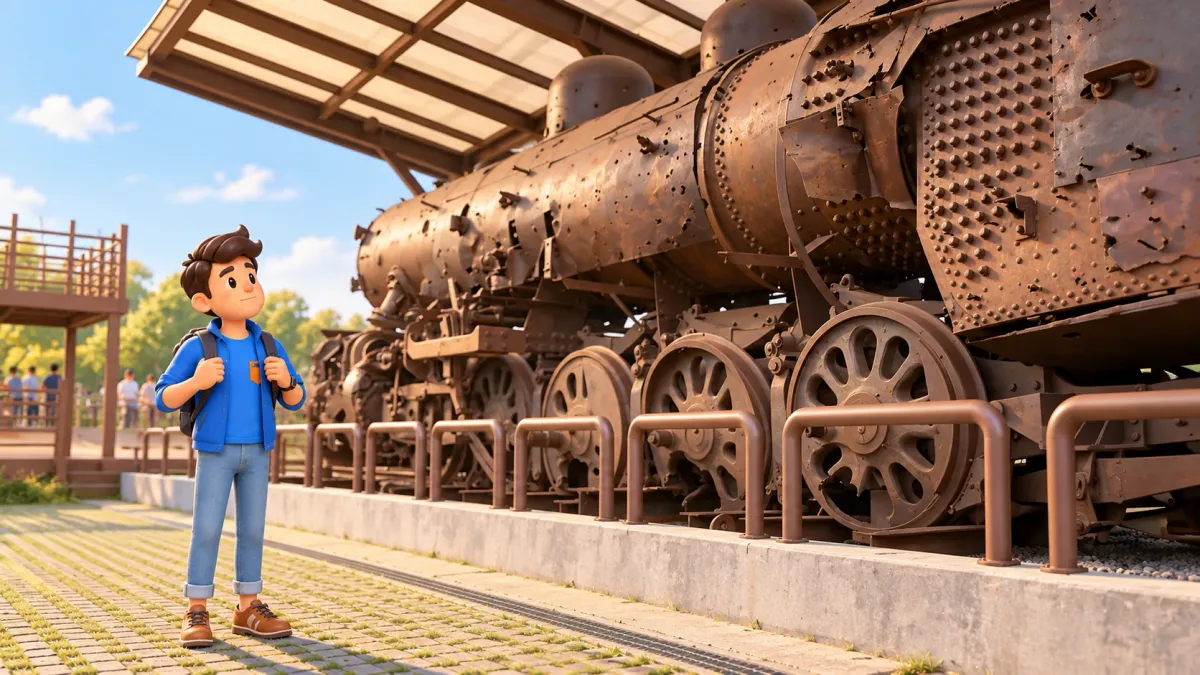
Imjingak itself offers a different kind of visit, with memorials connected to division and separated families. The damaged Jangdan steam locomotive displayed there is a preserved historical object, not the train used for today's excursion. Its condition helps explain why the area matters beyond the idea of looking across a border.
A visit to the public memorial area does not grant access to the controlled stops. If an excursion changes, ask what the replacement actually includes rather than accepting that any place near the border is equivalent. Choose whether that revised experience still meets your interests under the booking conditions.
Leave room after the excursion
Allow for traffic, waiting and altered access procedures when planning the rest of the day. Avoid placing a non-refundable airport transfer or a tightly timed performance immediately after the advertised return. Use the actual drop-off point and a sensible margin, not just the printed tour duration.
Check whether food is included and when you are likely to have a suitable break. Bring permitted essentials and ask about stops rather than assuming a continuous choice of cafés or toilets. After an early start, an uncomplicated meal and rest may be more useful than another fixed booking.

In RoadMe, build a personal plan for the whole stay with your interests, realistic travel time and recovery in mind. The app makes it easier and more effective to connect this excursion with the rest of the trip while keeping the evening flexible.
Before paying, confirm the exact product, original ID, reporting time, guide language, physical demands and access-change policy. Then reconfirm the departure near the visit. Clear expectations make this historically important day more useful than a promise of visiting every border landmark.