Best Time to Visit Italy: Cities, Coasts and Mountain Seasons
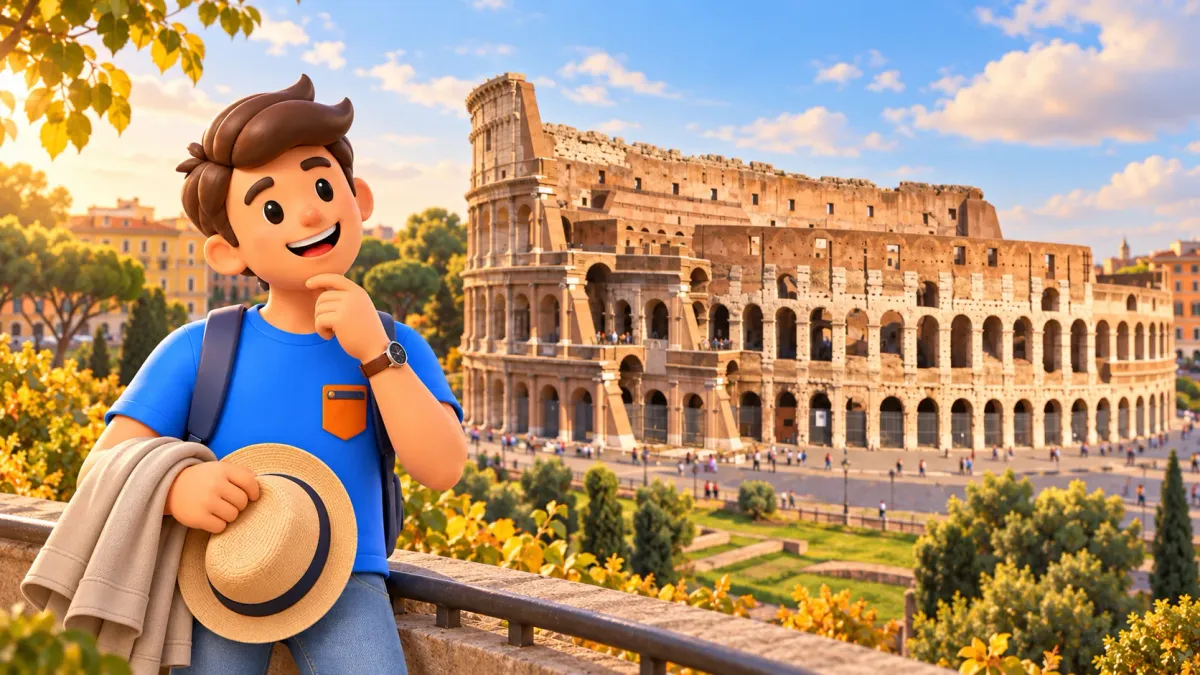
The best time to visit Italy depends on the holiday you actually want. For long walks through art cities, compare spring and autumn first. For a seaside holiday centred on swimming, start with summer and then examine the neighbouring months on your chosen coast. For the Dolomites, check the operating season of the specific lifts and mountain huts before you book a flight.
This guide separates cities, coasts, lakes and mountains rather than promising one perfect Italian month. Information checked on 26 October 2026. Suggested periods are planning starting points, not forecasts, guaranteed swimming conditions or evidence that a particular week will be cheap.
Choose the activity that determines your dates
| Main reason to travel | First period to compare | What can change the decision |
|---|---|---|
| Rome, Florence and other art cities on foot | April–May and September–October | Heat, rain, holiday dates and admission availability |
| Regular beach swimming | June–September | Actual coast, water, wind and beach services |
| Lake towns and boat connections | Spring to autumn | The timetable for the precise dates and land alternatives |
| High mountain summer activities | The local summer operating season | Snow, trail condition, individual lifts and huts |
| Museums, food and city life in winter | Winter outside or around an event you deliberately choose | Opening days, heating, shorter daylight and local demand |
| Ski holiday | The resort's confirmed winter season | Open slopes and lifts, snow conditions and ability level |
These windows are intentionally broad. A seaside lunch in April and daily sea swimming are different objectives. A green valley in May says little about a high path above it. Write down the experience you would be most disappointed to miss, then test its availability before fitting everything else around the same dates.
Try RoadMe to turn your interests, dates and preferred pace into a complete personal sightseeing programme in supported cities. Planning in the app makes it easier to give outdoor visits, museums and breaks realistic space in the trip.
If the dates are fixed, choose the region and the type of stay around them. If the destination and activity are fixed, keep more flexibility over the month. A discounted flight does not make a closed lift or an unsuitable swimming week fit your original holiday.
Italy has several seasonal calendars
Italy combines Alpine terrain, northern lakes, cities of the Po Valley, central hills, long coastlines and large islands. Latitude matters, but so do altitude, distance from the sea and the particular landscape. A forecast for a coastal town cannot describe the mountain above it.
It helps to distinguish three calendars. Climate describes typical seasonal conditions. Tourism calendars describe when services operate. Your own calendar includes school holidays, leave and essential reservations. A workable choice lies where those three overlap, rather than where a national weather chart has the most sunshine symbols.
Art cities: spring and autumn deserve the first comparison
For a holiday built around walking in Rome, Florence or several historic cities, April–May and September–October are sensible initial comparison windows. Spring and autumn can make a walking-heavy visit easier than the height of summer. They do not remove queues, rain or occasional heat.
Italy's national tourism advice also favours the low or middle season for city visits where possible. The practical benefit is time that you can comfortably spend outdoors. A shorter list enjoyed at a natural pace is more useful than a long list of squares crossed while looking for shade.
Roman ruins explain why activity matters. The Colosseum is an ancient amphitheatre, and its surviving exterior is part of the attraction, not simply a doorway into a modern air-conditioned museum. When choosing the season, allow for the outdoor experience as well as the booked admission.
September is still capable of feeling summery. October brings shorter evenings and a need for a rain option. April and May include public holidays and movable Easter dates, so do not translate “shoulder season” into “quiet every day”. Check the particular city and week.

July and August: change the city day, not just the packing
If summer is your only available holiday, an Italian city trip is still possible, but it needs a different pace. Avoid treating long outdoor stretches as the default. Compare indoor visits, shaded breaks and accommodation where you can recover comfortably between outings.
Do not assume that a northern city provides a mountain climate. Milan or a lowland city and an Alpine village are different environments. Equally, a coastal breeze is not a reason to ignore current heat advice. Check local conditions for the place where you will actually sleep and walk.
Accommodation details become part of the seasonal decision. Ask whether cooling is available in the booked room and on the relevant dates, not merely whether the property lists it somewhere. Good sleep and a manageable return to your base can matter more than an extra landmark.
Coasts: separate beach atmosphere from swimming
June–September is a useful first comparison window for a conventional Italian beach holiday. The beginning and end can feel very different from the middle. Decide whether you want daily swimming, a beach club with services, coastal walks or simply a town beside the water.
A warm afternoon does not establish comfortable sea temperature. Wind, waves, local restrictions and your own tolerance also affect swimming. A beach restaurant being open says nothing by itself about lifeguard cover or suitable conditions in the water. Follow the current information at the actual beach.
For spring or autumn, ask more specific questions: are the services you need operating, how will you reach the beach, and is there an enjoyable alternative on a wet or windy day? A coastal holiday can work beautifully without swimming every day if that is the holiday you intentionally choose.
Sicily and Sardinia: autumn potential with local limits
The islands deserve their own comparison rather than borrowing the calendar of a northern beach. Sardinia's official tourism material highlights autumn coastal experiences. That supports considering the season; it does not guarantee a calm sea, warm water or summer services on a particular date.
In the shoulder season, examine ferry or flight arrangements alongside accommodation. For an island excursion, use the operator's timetable and cancellation information for your date. A summer photograph of a boat trip is not evidence that the same excursion runs in late autumn.
If swimming is non-negotiable, accept that a longer possible season still comes with uncertainty. If coast, archaeology, town life and food all appeal, you have more ways to enjoy the trip when the water is uninviting. This is a choice of holiday, not a forecast trick.
The northern lakes: check the boat, not only the view
Lake Como, Garda and Maggiore combine towns, landscapes and water transport. Spring to autumn is a broad starting point for comparison, but “the lake is open” is not a meaningful transport condition. You need the timetable for your exact boarding point, destination and return.
Navigazione Laghi publishes dated timetables, and the Lombardy regional transport material distinguishes seasonal service periods. That is a useful reminder to avoid reusing a summer screenshot for a later visit. Some travel remains possible outside peak summer; that does not mean every sightseeing connection is unchanged.
For a stay without a car, choose the base after checking the transport. Note the last useful return, any change and the land alternative if your preferred boat is unavailable. A room across the water can be convenient with one timetable and awkward with another.
The Dolomites and Alps: there is no universal opening day
For high mountain summer activities, the operating calendar is often more decisive than the national season label. Val Gardena's published 2026 lift schedule shows different opening and closing dates within the same area. A network's overall summer period is not a promise that every lift runs throughout it.
Spring also varies by altitude. Trentino's tourism guidance notes lingering high-altitude snow and mountain huts that remain closed until summer, alongside lower options that open earlier. A sunny valley photograph cannot confirm that a higher path is suitable for an ordinary walking holiday.
Check the chosen lift in both directions, the relevant hut directly, the condition of the intended path and the transport back to your accommodation. Do this before making a mountain-dependent booking, then repeat the local condition check near departure. Opening dates alone do not establish safe trail conditions.
If the dates fall between winter and summer operations, choose activities that genuinely work then rather than hoping a closed service will reopen early. Lower-level walks, towns and cultural visits can form a different holiday. They are not automatic substitutes if a particular high viewpoint is the reason you are travelling.
Winter skiing needs a separate check of the resort, open slopes and lifts, weather and your group's ability. Do not assume that a summer lift product includes winter skiing, or that one resort's season establishes operating dates across the Alps and Apennines.
Ferragosto, Easter and events: inspect the actual week
Italy's national holiday calendar includes 15 August, commonly associated with Ferragosto, as well as 25 April, 1 May and 2 June. Easter Monday moves with Easter. These dates help explain why a supposedly ordinary spring or summer week may have different demand or opening arrangements.
Do not turn that into the claim that every city business closes in August or every museum shuts on a holiday. Institutions, transport operators and independent businesses make their own arrangements. Check the places that matter to you and book the things that genuinely need a fixed place.
A major exhibition, fair or festival can also change a city's accommodation market outside the main summer season. If the event is your purpose, plan around it deliberately. If you want a quiet cultural break, compare nearby dates before assuming the whole month offers the same conditions.
Once the season is chosen, let RoadMe develop a personal trip programme around your interests and pace in supported cities. Working with a complete plan in the app is more convenient than trying to fit every attractive place into a day that is already full.
Winter: choose a city holiday on its own terms
Winter can suit a stay focused on galleries, churches, food and everyday urban life. It is not simply a summer holiday with a cheaper hotel. Allow for shorter daylight, warm clothing, rain alternatives and the opening calendar of the specific places you want to visit.
Check heating as carefully as you would check cooling for summer. A pleasant-looking room or terrace in a photograph gives little information about evening comfort. Choose a base from which the return after a museum or dinner remains straightforward.
Coastal towns continue to have residents and daily life, but a holiday dependent on seasonal leisure services needs separate confirmation. Avoid both extremes: assuming every resort is entirely shut, or assuming every summer activity continues unchanged. Ask about the essential service rather than accepting the label “year-round destination”.
Compare complete holidays, not the cheapest month
| Item to compare | Question before booking |
|---|---|
| Transport | Does the fare include the connections and baggage you actually need? |
| Accommodation | Will cooling or heating, location and cancellation terms suit the season? |
| Seasonal activity | Is the exact lift, boat or attraction available on your dates? |
| Weather flexibility | Is there an appealing alternative without an expensive extra journey? |
| Usable holiday time | How much of each day can your group comfortably enjoy? |
Compare the same number of nights and the same essential experiences. A low fare plus an inconvenient overnight connection is not directly comparable with a simple daytime arrival. Nor is a winter room in a seasonal resort equivalent to a summer beach holiday with the services you actually wanted.
Use our guide to building a travel budget with overlooked costs for the full comparison. There is no defensible fixed saving for travelling in a particular month without actual offers for your dates. Spend attention on the complete basket rather than a general promise that autumn is cheaper.

A practical booking order
- Choose the experience that matters most: city walking, swimming, lake boats, high mountains or winter sport.
- Compare two suitable periods for the precise destination rather than all of Italy.
- Check the current event and public holiday calendar for both.
- Verify the essential seasonal service and the practical return journey.
- Compare the complete trip cost, accommodation comfort and cancellation conditions.
- Near departure, use local forecasts, official warnings and current operator information to shape individual days.
For packing, start with the actual places and activities, including evening conditions and altitude changes. Our guide to travel clothing for weather and local dress rules helps turn those checks into a practical bag. Avoid using a single national temperature as the packing list.
If several seasons remain possible, choose the one with the fewest serious compromises for your main activity. Museums can make an excellent winter stay, while an Alpine viewpoint needs its own operating and weather conditions. The right Italian season is the one in which the holiday you want can actually happen.