Best Time to Visit Iceland: Daylight, Roads and Seasonal Access
For a first Iceland trip focused on landscapes and outdoor sightseeing, start by comparing June, July and August. For the northern lights, look at the darker part of the year, broadly September to April. If the Highlands are essential, choose dates around the opening of the particular roads you need: a summer booking alone does not establish access.
The best time to visit Iceland depends on which of those experiences matters most. Long daylight, dark skies and access to the interior do not peak together. This guide helps you choose a workable season before committing to flights, accommodation and transport; it is not a driving itinerary or a forecast for your travel dates.
Choose your main experience before choosing a month
Write down one experience that would make the trip worthwhile and two that would be welcome additions. Then identify the condition each needs. A landscape holiday benefits from daylight and usable access. Aurora viewing needs darkness and sufficiently clear skies. A Highland trip needs the relevant roads and local facilities to be available, as well as appropriate transport.
If you want a little of everything, accept a compromise. Late summer or early autumn can combine substantial sightseeing time with returning darkness, but neither the northern lights nor continued Highland access follows automatically. For a short first visit, fewer priorities usually make the choice clearer than trying to collect every seasonal highlight.
For the city sightseeing part of your journey, try RoadMe: the app builds a personalised day-by-day plan around your dates, interests and pace, making preparation more convenient. Check Icelandic road conditions and nature access separately with the responsible authorities.
| Main aim | Dates to investigate first | Important limitation |
|---|---|---|
| Long days for outdoor sightseeing | June–August | Wind, rain and local closures remain possible |
| Northern lights | September–April | Darkness, cloud and activity must align |
| Highland scenery | The short summer access period | Each road has its own opening and conditions |
| Quieter travel outside the summer peak | Spring or autumn | Check seasonal services and the complete cost |
| Winter landscapes and guided ice-cave activities | Winter operating dates of the chosen provider | Access is assessed locally and can be cancelled |
Summer: more daylight, rather than unlimited travel time
June to August is the main summer travel period. It is the natural starting point if your priorities are outdoor visits, green landscapes and more flexibility over the timing of a day. July and August are sensible candidates when access to the interior matters, but you must still check the specific roads rather than assuming the entire Highlands are open.
Near the June solstice, Reykjavík has roughly 21 hours between sunrise and sunset, with twilight through the remaining hours. That is different from saying the sun stays above the horizon for 24 hours everywhere in Iceland. Conditions vary with latitude and date; use the actual location when checking sunrise and sunset.
Long light can help you move an outdoor visit to another part of the day, but it does not extend opening hours, keep a restaurant kitchen open or remove tiredness. A late arrival still needs a confirmed check-in arrangement. A driver who has been awake since an early flight still needs rest, even if the evening looks like afternoon.
Summer is generally mild rather than reliably warm. Packing only for the daytime temperature leaves gaps when you wait outside, stop near spray or meet exposed wind. Plan a manageable day, with food, a dry layer and time to stop, instead of converting every extra daylight hour into another long drive.
Winter: shorter days change the shape of the trip
Winter suits travellers who actively want snowy scenery, dark evenings and seasonal guided experiences. It needs a different programme from a summer holiday. Around the darkest part of the year, the Reykjavík area has only a few hours of daylight; exact times vary by date and location.
Daylight is a planning resource. Put your main landscape visit inside it, then allow for the journey there and back, walking from the parking area and pauses. Do not count every hour from hotel checkout to dinner as outdoor sightseeing time. Twilight may be beautiful, but it does not make an unfamiliar icy path or road equivalent to a summer afternoon.
SafeTravel advises checking forecasts, allowing extra time and changing or cancelling plans when conditions become unsafe. Snow is only one factor: strong wind, drifting snow, rain and ice can make travel difficult even when a road looks clear. Four-wheel drive does not eliminate the risk of skidding.
If you are not comfortable driving in winter conditions, investigate a stay with organised excursions and workable local alternatives. A guided departure also depends on conditions and may be cancelled. Ask what happens to the booking and how you will spend that day rather than treating the presence of a driver as a promise of access.
Spring and autumn: investigate the exact weeks
Spring and autumn can suit travellers who prefer to compare dates outside the busiest summer period. They are transitional seasons, not a guarantee of summer access at a lower price. Snow and storms can affect journeys, while businesses may operate shorter hours or close seasonally.
April and May bring increasing daylight, but the arrival of light does not mean the Highlands have opened. Snowmelt can leave roads and surrounding ground too vulnerable for traffic. If your trip depends on the interior, an appealing spring fare is not enough reason to book before establishing access.
September offers returning darkness while daytime sightseeing remains possible, but conditions can move towards winter. Do not reserve a late-season Highland visit solely because a traveller drove the same road the previous September. Opening histories help explain variability; they do not grant access in another year.
For the wider decision method, see our guide to shoulder season holidays and their limitations. In Iceland, checking access and services is especially important before interpreting a quieter calendar as a simpler trip.

Northern lights: darkness is necessary, but not sufficient
September to April is a useful broad planning window for aurora travel. SafeTravel describes the possible season as extending from late August to late April. The edges vary with available darkness, so a late-August visit is not equivalent to a midwinter visit for night-sky viewing.
Choose a holiday you would enjoy even without a sighting. Cloud can obstruct the sky, activity varies and a short stay may offer no suitable night. A longer stay does not guarantee a sighting.
The Icelandic Met Office separates cloud cover from the auroral activity forecast. Read both, for the time and place you are considering. A high activity number does not tell you that your chosen viewpoint has a clear sky, and a clear forecast does not mean you should drive onto a closed or unsuitable road.
Do not build the trip around seeing the aurora in June or July: the sky is too bright. If long summer evenings are the main attraction, enjoy those on their own terms. If the northern lights are the main reason to travel, choose darker dates and accept a shorter daytime programme.
Highland roads: opening is a condition, not a fixed date
The road authority explains that snow cover and thawing ground determine when mountain roads can open. In protected areas, the surrounding landscape may also need to withstand visitors before access is allowed. A road that looks free of snow in a photograph can still be closed.
For planning, think of the Highlands as a short summer opportunity, often involving openings in June or July and closures as conditions deteriorate later in the year. Do not turn that general pattern into an opening date for a particular F-road. Sections of the same road can have different conditions.
Before committing, check three separate things: whether the road is open, whether your vehicle and rental agreement permit the journey, and whether you have the relevant experience. SafeTravel notes that not all four-wheel-drive vehicles suit all F-roads. Unbridged rivers and rough surfaces are specialist considerations, not a small upgrade from an ordinary scenic drive.
Use current information from the Icelandic Road and Coastal Administration, including its Umferðin road-condition service, together with local warnings. A saved summer map or last year's opening table cannot establish today's status. Check again before departure, not only when booking the vehicle.
Respect closures and stay on permitted roads. Do not improvise an off-road bypass around snow or damaged ground. If the Highlands are the only reason for the trip, choose a programme with a clear cancellation or alternative arrangement; if they are optional, make the rest of the holiday worthwhile without them.
Wildlife, ice caves and waterfalls follow different calendars
Puffins normally return to nesting colonies in spring and leave again during late summer. For South Iceland, the regional tourism authority identifies roughly mid-May to early August as the main viewing period. Timing varies, and a short visit does not guarantee birds at the nesting site. Respect barriers and keep away from cliff edges and burrows.
For whale watching, investigate the actual departure port and the operator's seasonal programme. A winter sailing from one harbour and a summer sailing elsewhere are different products. Ask about weather cancellations, the time outdoors and what any repeat-trip offer actually includes; wildlife does not follow a booking confirmation.
Many natural ice-cave visits are winter activities, but there are different caves and types of experience. Some providers offer other options outside winter. Confirm the specific tour, current access, required equipment and walking demands. Enter natural glacier caves only with an experienced qualified glacier guide, under suitable assessed conditions.
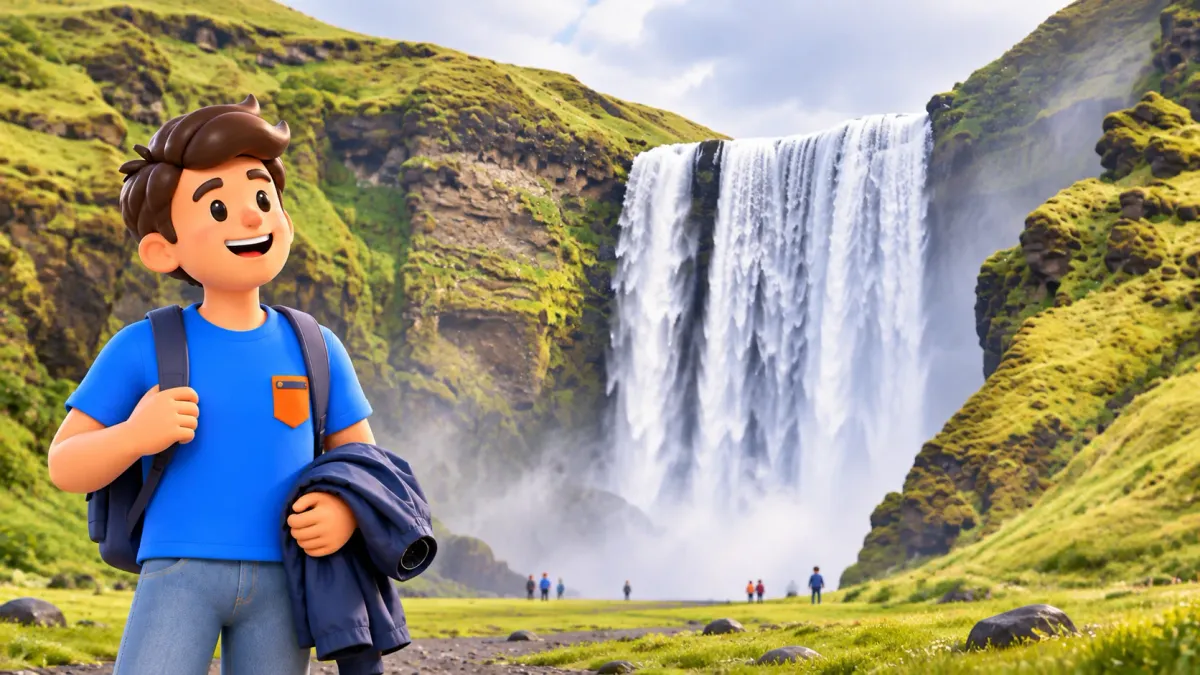
A waterfall can be the same landmark in every season while its approach changes. Skógafoss drops about 60 metres over a former sea cliff and became a protected natural monument in 1987. That geological setting is part of its appeal; winter ice, wet surfaces or local restrictions still affect which areas visitors can use.
Separate admiring a waterfall from walking a longer trail above it. The availability of a lower viewpoint does not establish that stairs, an upper path or a mountain continuation are suitable. Check the actual part you intend to visit and follow on-site instructions.
Compare the full holiday, not an advertised cheap month
Summer demand can make accommodation and vehicles harder to secure, while dates outside the peak may offer alternatives. There is no universal cheapest month for every departure city, party size and travel style. Compare live quotes for the same trip length and the experiences you genuinely want.
Include flights, baggage, transfers, accommodation, the appropriate vehicle or excursions, meals and cancellation conditions. A cheaper room far from your activities can add travel and reduce usable daylight. A low vehicle quote is not comparable if it excludes the roads or equipment required by your plan.
Check seasonal services before choosing a remote base or a camper. Some campsites operate only part of the year; restaurants, museums and excursions can have seasonal schedules too. Confirm the exact facility and dates, including evening arrival, rather than extrapolating from a summer review.
For visits in a supported city, RoadMe can turn your interests, dates and preferred pace into a complete personalised day plan, reducing the work of organising each stop yourself. Use that convenience for the city programme while checking nature excursions and seasonal access directly.

Prepare for the day you will actually spend outside
Choose layers for wind, rain, waiting and walking, not just the highest temperature in a forecast. Have appropriate outer protection, familiar footwear and a dry spare layer accessible during the day. Equipment for a specialist excursion should follow the provider's requirements, including what is supplied and what you must bring.
A long summer evening may call for warmer clothing when you stop moving; an aurora outing can involve substantial stationary time. Check whether there is shelter, transport nearby and a reasonable way to finish early. Travelling with children or companions who tire quickly makes these practical details especially relevant.
Our guide to choosing travel clothes for the weather explains how to build compatible layers. For Iceland, apply that method to every region and activity rather than packing from the forecast for Reykjavík alone.

A final check before paying for your dates
- Name your essential experience. Choose daylight, aurora, Highland access or a particular guided activity as the main requirement.
- Check the actual season. Look at the relevant locality and provider, not only a national month-by-month summary.
- Match transport and daylight. Include transfers, walking, rest and the return journey.
- Confirm services. Check accommodation arrival, food, campsites if applicable and seasonal departures.
- Compare complete quotes. Keep trip length, travellers and necessary inclusions consistent.
- Retain flexibility. Understand changes, cancellations and what you would enjoy if the main outdoor plan cannot operate.
After booking, repeat the weather, access and operator checks close to travel and during the trip. Summer is the practical starting point for broad outdoor access; darker months suit an aurora-focused holiday; spring and autumn reward careful selection of exact dates and services. The useful choice is the season that supports your priorities under conditions you are willing and able to manage.