Best Time to Visit Tunisia: Beach Weather, Sightseeing and Low Season
The best time to visit Tunisia depends on the holiday you want. Start with late spring or early autumn for a mixture of coast and sightseeing; consider summer when beach time is the main purpose; and compare the cooler part of the year for southern excursions. A single “best month” cannot promise warm swimming, comfortable ruins and full resort services at once.
Separate the Mediterranean coast, exposed inland sites and the southern desert areas. Then check your particular hotel and excursions for the travel dates. Pleasant daytime weather does not prove that an outdoor pool is heated, a beach service is operating or an excursion is running.
Choose the purpose before the month
Write down what would make the trip worthwhile: repeated sea swims, archaeological visits, time in towns, a southern excursion or a quiet hotel break. Put the main purpose first. If swimming is essential, do not buy a winter trip simply because Tunisia is warmer than home.
For a mixed holiday, compare May–June and September–October as starting windows, then refine by destination and your comfort with heat, wind and cooler water. These are planning options, not a guarantee of the conditions on a particular week.
Once the season and region are chosen, try RoadMe to work out a personalised plan for the whole stay around your interests and pace. The app makes it more convenient to organise culture, scenery and rest without overloading the days you want to spend outside.
Four holiday purposes, four sets of conditions
| Priority | First period to compare | Main check |
|---|---|---|
| Beach and regular sea swimming | Summer and early autumn | Actual sea conditions, beach service and your preferred water comfort |
| Towns and open archaeological sites | Spring and autumn | Daytime exposure, rain, site hours and transfer length |
| Southern landscapes and desert excursion | Cooler months outside the most intense summer heat | Local forecast, overnight conditions and the booked programme |
| Quiet hotel, spa or short cultural break | Low season where the property operates | Which facilities and excursions actually run |
The coast and the south do not have one climate
The official tourism description distinguishes the Mediterranean north and eastern coast from the drier interior and south. Rainfall varies considerably across the country. A national temperature headline cannot describe the conditions at every beach, town and inland stop.
On the coast, wind can change how a warm afternoon feels and whether you want to stay by the water. Inland, exposed walking and the transfer to a site can be more demanding than time in a seaside café. Compare the places you will actually use, not one countrywide weather icon.
Djerba and a northern coastal base should not automatically receive identical expectations. Nor should a southern daytime forecast decide what to pack for an overnight stay. Ask the accommodation or operator about the actual location and evening arrangements.
Climate averages help choose a broad period; a forecast helps arrange the approaching visit. Neither is a promise of safe swimming or an operating excursion. Check the local information close to departure and again before the activity that depends on it.
Spring: strong for visits, less simple for swimming
Spring is a useful starting choice for archaeological sites, town visits and a holiday with substantial time on foot. The official tourism programme highlights the season's greener landscapes and open-air heritage. Choose the pace around the day's conditions rather than filling every daylight hour.
March and April are better treated as culture-led options than a promise of a summer beach holiday. A sunny terrace does not establish comfortable sea water. If swimming is the decisive reason for travelling, compare a later date instead of relying on the air temperature alone.
May and early June can offer a compromise for a mixed trip, but the result depends on your priorities and the exact coast. Keep the possibility of cooler water and a breezy day in the decision. A flexible programme is more useful than describing the whole period as universally ideal.
Ask whether your hotel's beach facilities and outdoor services operate throughout your dates. A property accepting a booking may still offer a different seasonal programme. Check the service you intend to use, not just the fact that rooms are for sale.

Summer: make the coast the main purpose
Summer is the natural period to compare for a beach-led holiday, but heat is part of the choice. The official climate description stresses hotter inland and southern conditions. A sea breeze at the hotel should not be treated as the condition of an inland archaeological visit.
For sightseeing, use the site's current opening hours and the day's forecast to choose a manageable time. Do not assume there is extensive shade because a place is described as an attraction. Leave breaks and enough room to shorten an outdoor visit if necessary.
July and August should not be selected for a southern programme merely because a beach package is available then. Discuss the complete excursion with the operator: the walking, road sections, accommodation and current operating conditions. A vehicle with air conditioning does not cool every part of the day.
If your dates are fixed to summer, let the itinerary reflect them. A beach stay with a few proportionate cultural visits is a different product from a full inland touring holiday. There is no need to force both into the same week.
September and October: choose the actual balance
Early autumn is a useful comparison for people who want the coast and visits together. Tunisia's official autumn presentation includes both sea activities and southern landscapes. Treat that as a range of possible holiday types, not proof that every activity operates every day.
September is not automatically free of strong heat. For October, keep a wider allowance for changeable weather and choose the coast and hotel carefully if swimming matters. Avoid extending one traveller's successful late-season swim into a guarantee for all visitors.
For a mixed holiday, identify whether beach or culture wins if conditions change. That answer helps decide between a seaside base with limited indoor choices and accommodation with another genuinely useful programme. Check actual transfers and excursion days before paying.
The end of a calendar month does not close every business simultaneously. Nor does an autumn booking prove a full summer service. Request the property's specific seasonal dates and the operator's confirmation of the excursion you want.
Winter and low season: buy the holiday that is offered
Winter can suit museums, towns, open heritage sites on a suitable day and a hotel break with confirmed facilities. It should not be sold to yourself as guaranteed sea swimming. The official weather description identifies cooler, wetter conditions in the north and different southern conditions.
Rain or wind can alter the day's plan. Keep an indoor visit or a slower day that you would enjoy anyway. Choosing a property solely for its outdoor summer setting leaves fewer options if those spaces are not comfortable or operating.
Ask which restaurants, pools, spa facilities and activities are open during the stay. For a pool, establish indoor or outdoor, whether it is heated during those dates and any access conditions. “Spa hotel” does not mean every pool or treatment is included in the room rate.
For a short trip, check arrival and departure arrangements as carefully as the average weather. A limited flight or excursion timetable can consume a larger share of a brief stay. Confirm what you can actually book instead of comparing only low-season room prices.
El Jem: why the time outdoors matters
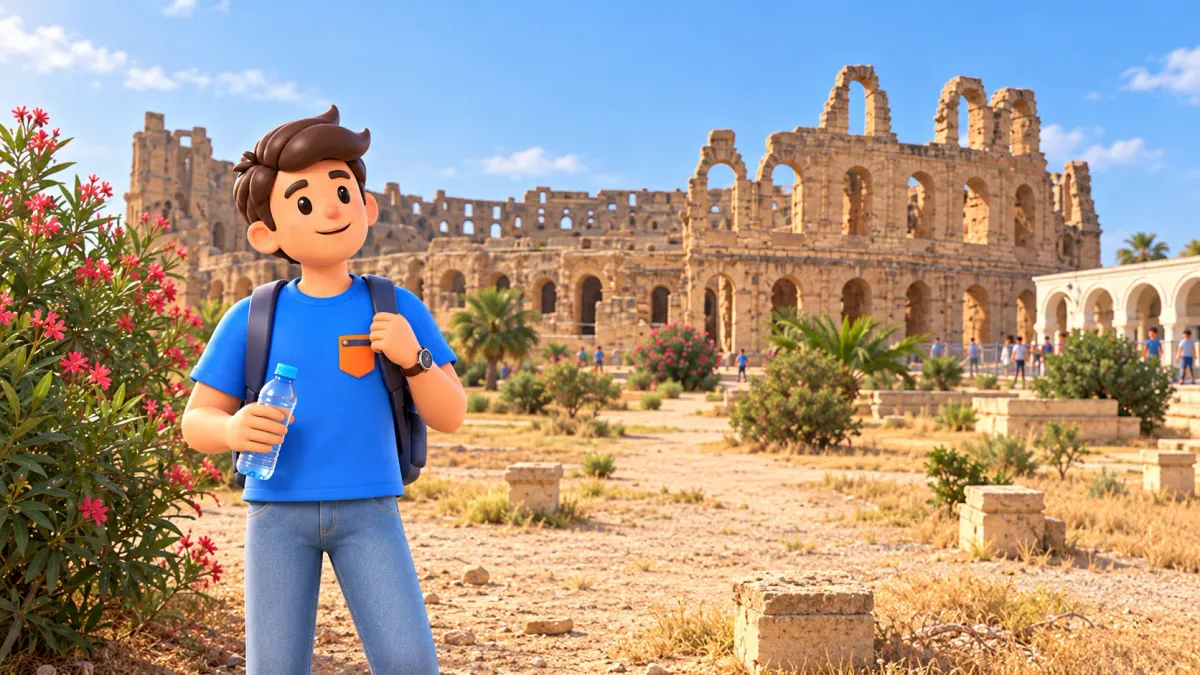
The amphitheatre at El Jem is a third-century monument, inscribed on the UNESCO World Heritage List in 1979. Its scale and surviving arcades reveal the importance of Roman urban life in this part of North Africa. It is worth allowing time to look at the structure rather than treating it as a quick photograph.
For the seasonal decision, the key is an exposed visit, not just a scenic stop on a coach journey. Consider the actual time walking around the monument and how you will manage sun, wind or rain. A comfortable hotel forecast does not answer that question.
Check the current opening arrangements and any access limitations before setting out. Historical value does not guarantee that every level or passage is open. Follow the permitted visitor areas rather than treating the damaged upper arches as a climbing invitation.
Spring or autumn may be a more comfortable starting choice for this kind of visit than the hottest part of summer. This is an editorial choice about exposure and pace, not a promise of empty grounds or a specific temperature.
The south: daytime and overnight plans are different
For southern excursions, compare the cooler part of the year before choosing the programme. The official autumn and winter material presents southern landscapes as a seasonal option. It does not establish the conditions of every road, camp or activity on your date.
An overnight requires more information than a daytime photo stop. Ask about the accommodation, bedding, evening temperature expectations and what you need to bring. A mild afternoon does not prove a warm night, especially away from the coast.
Confirm the actual departure point, road time and pace with the provider. A southern excursion from a coastal hotel can involve a substantial journey. Do not decide its suitability from the number of attractions listed in a sales description.
Read the local forecast and operating advice for the booked programme. If conditions change, ask what alternative is offered and how the booking terms apply. A desert-themed holiday is still an organised trip with practical limits, not a guarantee of clear skies.

What to ask a hotel before a low-season booking
Send a short list tied to your dates: which pool is available, whether heating is operating, whether the beach service is present, which dining options open and what happens to the activity programme. Ask about the facilities you will actually use.
Request the answer for your stay, not a general description of the property. A summer brochure can accurately show a service that does not operate in winter. Keep the reply with the booking so you can compare like with like between hotels.
If an excursion matters, confirm the departure rather than assuming the hotel will assemble a group after arrival. Ask about minimum participation, pickup, language and cancellation terms. Do not buy a culture-led trip with its central activity left entirely uncertain.
Match the alternative to your interests. Indoor leisure, a museum, a local meal and a quiet reading day are different plans. A useful fallback is something you want to do, not a vague promise that there will always be another activity.
Prices and crowds: compare the complete stay
Low season is worth checking for value, but a low room price is not a guaranteed cheap holiday. Add flights, transfers, meals, the facilities you need and actual excursions. A cheaper hotel with extra transport or unavailable services may not suit the trip.
School holidays and events can affect availability in a particular place without changing the national climate. Check your dates rather than assuming every summer week is identical or every winter week is quiet. We do not assign a universal percentage saving to a month.
Our guide to peak-season queues and bookings helps when your dates coincide with busy periods. Reserve the parts that really constrain the trip, while keeping weather-dependent outdoor choices flexible.
Compare the final booking conditions as well as the price. If your main purpose depends on one facility, consider what happens if it is unavailable. A flexible fare or another property can be more useful than the smallest initial quote.
Pack for the activities, not one countrywide forecast
For exposed visits, prepare practical walking shoes, a hat, water and suitable sun protection. Add a light layer for wind and evenings, and weather protection when the forecast requires it. The same bag need not suit a beach afternoon and an inland overnight.
Keep the day's essentials accessible during transfers. If changing between regions, check each destination's conditions rather than the weather at the airport alone. Do not leave the only useful evening layer in luggage that will not reach the overnight stop.
Before departure, check the local forecast and your confirmed opening or departure times. Climatological patterns are useful for the original month choice; current information is what helps arrange the actual day.
Make the choice with two realistic holiday versions
Compare a beach-led version and a culture-led version, or two seasons for the same purpose. For each, write the coast or region, non-negotiable activity, actual hotel inclusions, booked services and the fallback you would enjoy.
Use our independent trip planning guide to connect the dates with the rest of the stay. Avoid promising yourself every region and every activity merely because the country appears compact on a map.

In RoadMe, you can work out a complete personal trip plan combining your interests, visits and rest more conveniently. Try organising the whole stay in the app at a pace that fits the season you have actually chosen.
Choose summer primarily for the beach, spring and autumn as starting options for a mixed holiday, and cooler months for a carefully confirmed southern or cultural programme. The useful season is the one that matches your purpose and the services genuinely available.