Barcelona from above: choose the panorama that suits you
The best view of Barcelona is the one that reveals the city you actually want to see. You might enjoy recognising street patterns and familiar buildings, watching the port from a garden, or taking in a broad horizon beyond the neighbourhoods. Height alone does not answer that question. A distant summit shows a different Barcelona from a tower within the urban fabric.
Rather than ranking viewpoints, consider four different stories. Torre Glòries offers a modern perspective on the city’s structure; l’Alcalde combines the coast with a green foreground; Tibidabo brings a broad urban panorama. The Columbus Monument remains a conditional option: the official ticket page reports a temporary suspension of the ascent, so you cannot assume it will be available.
First decide what you want to look at
Imagine the impression you would like to take home: the rhythm of streets, the relationship with the sea, or the whole city between slopes and horizon. Then consider the setting of the viewpoint itself. An enclosed tower observation deck, a garden terrace and a summit with attractions offer different ways to spend time. A good choice combines an interesting view with surroundings you will enjoy.
Build that panorama into an easier trip with RoadMe: the app works out a personal day-by-day programme around your interests, dates, pace and budget. Using one considered plan is more convenient and effective than organising every outing around the rest of your visits and journeys yourself.
| Your preferred story | Consider | The main distinction |
|---|---|---|
| Street patterns and major avenues | Mirador Torre Glòries | A paid enclosed observation-deck visit |
| Port, coastline and nearby greenery | Mirador de l’Alcalde | A public garden with access arrangements |
| A broad picture of Barcelona | Tibidabo Panoramic Area | A separate outing with a return journey |
| A historic column by La Rambla | Mirador de Colom | Only after the ascent is confirmed operating again |
These are alternatives for choosing one experience, not a sequence of stops. There is no need to visit every viewpoint in one day: journeys and waiting could become more memorable than the views. On a short trip, one considered panorama often offers more than several similar photographs taken in a rush between fixed bookings.
Torre Glòries: understanding the city from within
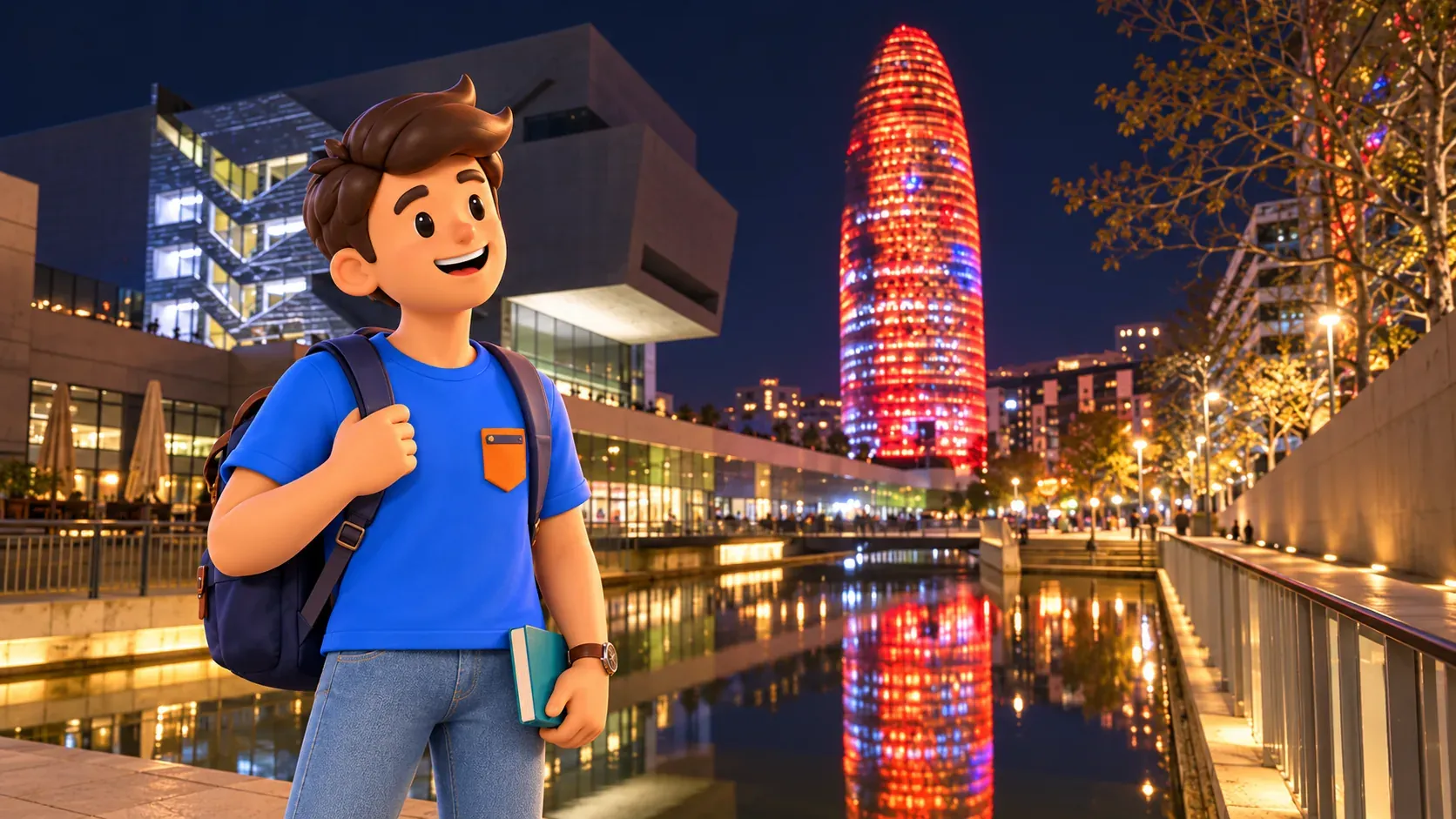
Mirador Torre Glòries suits visitors interested in reading Barcelona’s structure. From the observation deck, you can notice major avenues, differences between neighbourhoods and the relationship between individual buildings and their surroundings. “How does this connect?” is as useful a question as “What can I recognise?” Even a familiar landmark becomes part of a larger urban pattern.
Designed by Jean Nouvel and b720 Arquitectos, the tower opened in 2005 and was previously known as Torre Agbar. Its rounded form and layered exterior made the building a landmark in its own right. Visiting offers a change of roles: first you notice the tower among the neighbourhoods, then you look at those neighbourhoods from inside the tower.
General admission includes the Hyperview Barcelona exhibition and an enclosed observation deck on the 30th floor. This is not an open roof or a walk around the building’s outer edge. Choose it if the organised visit itself appeals: an alternative introduction to urban life followed by a direct look at Barcelona through the glazing.
Do not confuse the ordinary observation deck with Cloud Cities Barcelona, the work by Tomás Saraceno that offers a separate experience inside the sculpture. It belongs to a different ticket option and has its own participation conditions. You do not automatically need the broadest package to enjoy the panorama. Decide whether the additional artwork interests you rather than buying it from fear of missing the main view.
The operator describes the ordinary visit as accessible to people with reduced mobility, except for access inside Cloud Cities Barcelona. Check individual arrangements if particular conditions matter to you. Do not apply the sculpture’s physical participation restrictions to the whole deck, or assume the accessibility of the main visit extends to every extra experience.
Patience helps with photography through glass. Find an angle where reflections interfere less, without pressing equipment against the surface or blocking other visitors. Sometimes it is more rewarding to put the camera away and compare two directions. An enclosed space shelters you from immediate wind or rain, but does not remove haze outside or guarantee long-distance visibility.
L’Alcalde: a garden setting above the coast
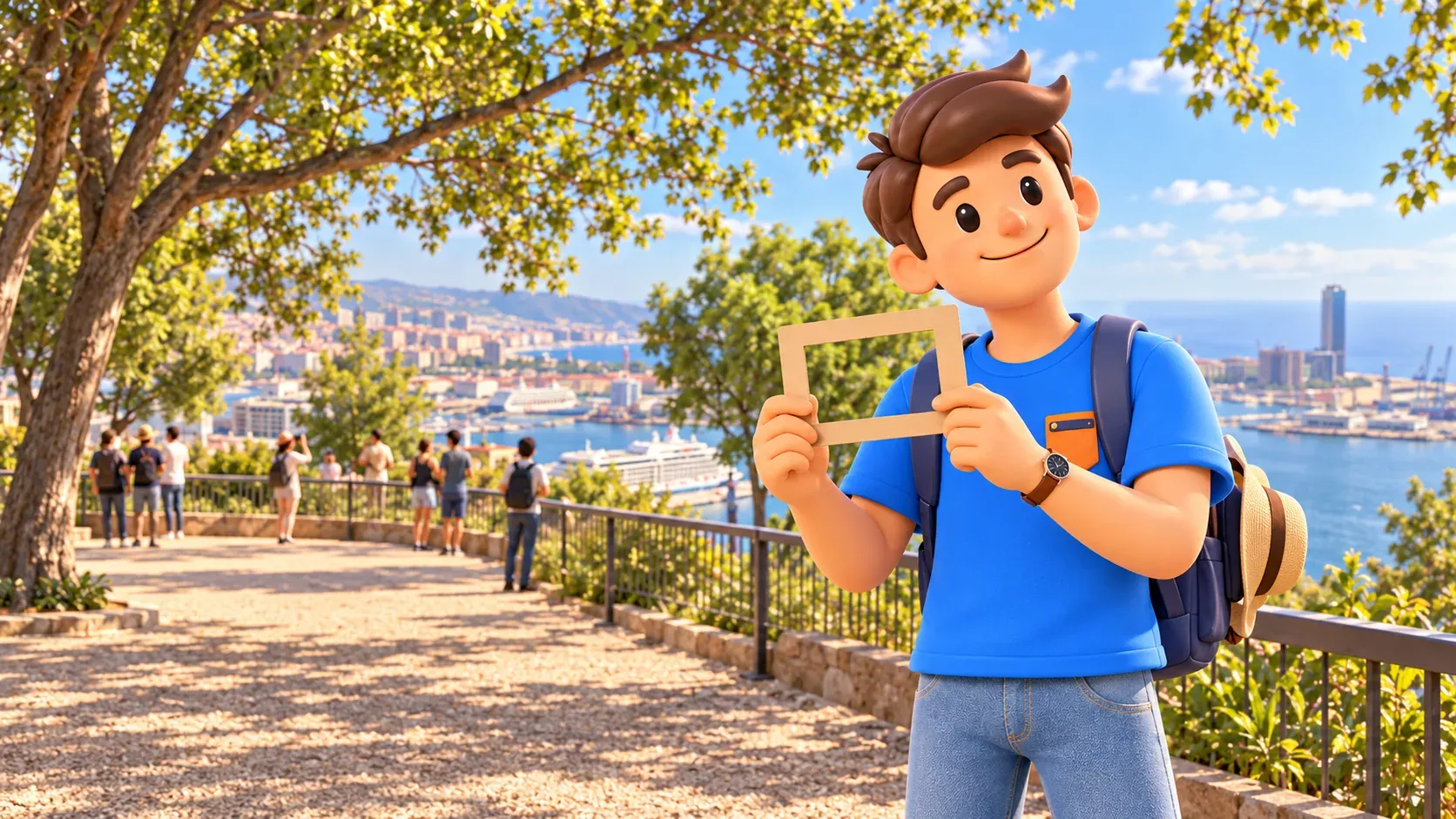
Mirador de l’Alcalde on Montjuïc offers a different kind of pause. Trees, paths and the garden railing form the foreground, with city, port and coast beyond. It suits someone who wants pleasant walking surroundings as well as a distant view. The approach and an unhurried stop become part of the experience.
The gardens opened in 1969, and their design includes mosaic work by Joan Josep Tharrats using varied materials. It is a gentle reminder that the viewpoint itself belongs to a particular period and has its own character. Look down at the surface, then towards the shore: a nearby texture and a distant view complement each other.
Start by observing relationships between larger spaces. Where does dense building end? How does the water’s edge appear? How does the working port differ from your usual image of a seaside walk? You do not need to identify every ship or building. The value lies in understanding Barcelona’s nearer coastal side differently.
A public garden does not make every Montjuïc visit or journey free. Consider suitable approaches, the terrain and the garden’s actual access arrangements. Do not count on all-night admission, continuously operating water features or shade throughout the walk. Choose a limited section that feels comfortable for your group.
If you want to combine the panorama with a longer walk, give that walk its own time. “On Montjuïc” describes many different places rather than one compact viewpoint. A garden and a view can be enough, without adding the castle, a museum and the Olympic complex to the same outing.
Tibidabo: a broad city panorama and a separate outing
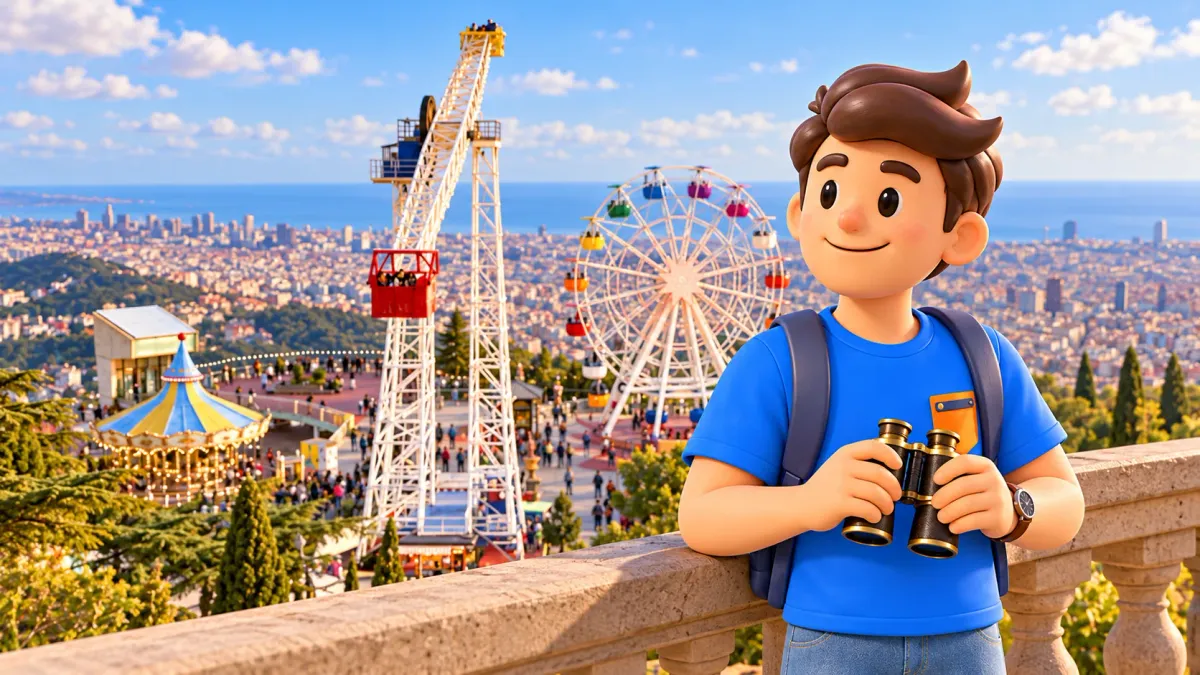
Choose Tibidabo for a more general picture. Neighbourhoods form an extensive urban fabric, and your eye follows Barcelona’s relationship with surrounding slopes and the maritime horizon. This format works when you want to leave the scale of individual streets behind for a while. Greater distance also means that some details become less distinct.
The Panoramic Area is a visit format in its own right. Entry to its space is free; transport and rides do not become free as a result. If the view is your priority, you need not turn the outing into a full amusement-park day. Agree on the purpose within your group before one person expects a quiet panorama and another expects every attraction.
The Giradabo wheel, Talaia tower and other familiar elements give the summit its atmosphere. They add a foreground to the city view without making rides compulsory. Your experience can consist of the journey, time above Barcelona and a relaxed return. Plan it as a separate outing rather than inserting it as a brief stop “on the way”.
The Panoramic Area and full amusement park have different calendars. The Cuca de Llum funicular climbs from Plaça Doctor Andreu, and reaching the lower station is another part of the journey. The T2C shuttle from Plaça Kennedy runs on full amusement-park operating days. Consider the actual outward and return arrangements rather than treating a short carriage ride as the whole journey from central Barcelona.
Visibility particularly affects expectations here. If the distant horizon matters more than the atmosphere of the setting, consider the weather before deciding to go. Height does not guarantee the clearest view. Avoid a return scheduled immediately before an evening event: an uncommitted interval afterwards helps preserve the pleasure of the outing.
The Columbus Monument: a historic option with a limitation
At the lower end of La Rambla stands the Columbus Monument, built for the 1888 Universal Exhibition. Its historic column offers a different story from a modern tower or summit: a perspective from the old port towards a city you may already have explored on foot. For now, however, it is a conditional planning option.
The official ticket page carries a notice that the viewpoint is temporarily out of service. It describes an approximate duration without a clear start date or confirmed reopening. You cannot count that period forward from today and promise the ascent will operate by your arrival. Include it only after obtaining current confirmation that service has resumed.
Seeing the monument outside and going up inside are different visits. You can observe the column from public space while respecting barriers, but that is not access to the upper gallery. If your plan depends on this view alone, choose another confirmed format and keep the monument as a separate urban detail.

Choose one panorama and keep time for Barcelona
Compare the whole visit rather than a number of metres. A paid viewpoint may fit both your interests and the day; a freely accessible space may demand a more substantial journey. Consider transport and additional experiences separately. The right choice leaves energy for the rest of your trip instead of producing the longest list of views.
If you want to connect panoramas with architecture, gardens or neighbourhood walks, give those interests to RoadMe: the app will work out a personal plan for the whole trip at your pace. It makes day-to-day travel more convenient, with less independent organising and more attention for Barcelona.
You do not need to wait for one perfect sunset photograph. Decide what light and subject interest you, then compare that wish with actual access. Last admission and closing time may differ, while public spaces can also have gates or local restrictions. Night-time illumination outside a building does not establish that its internal observation deck is admitting visitors.
Once above the city, choose one nearby detail, one urban pattern and one distant line. It is a simple way to look attentively without turning the stop into a test of landmark knowledge. If your main question is a garden walk versus a separate summit outing, use the comparison of Montjuïc and Tibidabo. The panorama becomes part of your Barcelona rather than an obligation to reproduce somebody else’s photograph.