Barcelona to Sardinia by Ferry: Porto Torres, Cabins and Cars

The ferry from Barcelona to Sardinia arrives at Porto Torres, in the island's northwest. Compare the actual sailing date, a seat or cabin, vehicle carriage and the journey after disembarkation. It is a long crossing, so the cheapest passenger fare alone is not a useful measure of the complete trip.
Grimaldi Lines operates the Barcelona–Porto Torres route. Porto Torres is not Olbia or Cagliari, and a ticket to Sardinia does not bring you equally close to every resort. Start with the place you intend to stay and work backwards to the ferry.
Decide what the ferry needs to do for your trip
This connection can suit a journey combining Spain with Sardinia, especially when taking a car, motorbike or camper. Without a vehicle, compare the airport alternative and the onward transport from Porto Torres as well. A ferry is most useful when the whole journey fits your dates and destination.
Identify the arrival address, number of travellers, luggage and whether anyone needs assistance. Then compare two complete options rather than a bare seat price against a flight including different services. Include the land journey to Barcelona's terminal and the next section on Sardinia.
After choosing your crossing, try RoadMe to work out a personalised plan for the whole trip around your interests and pace. The app makes it more convenient to organise visits and rest without overloading the day you arrive.
If you plan a return crossing, look at both directions before fixing the accommodation dates. The service is not a daily urban shuttle. A convenient outward departure does not establish a similarly convenient return at the end of your holiday.
The route at a glance
| Decision | What to check | Why it matters |
|---|---|---|
| Departure | Terminal Grimaldi, Muelle de Costa, Barcelona | Do not use a generic cruise-terminal address |
| Arrival | Porto Torres, Sardinia | Plan the next journey to your actual accommodation |
| Timing | Dated sailing, arrival day and current notices | Seasonal patterns and directions differ |
| Accommodation | Seat, passage or available cabin category | Compare the complete group's rest needs |
| Vehicle | Exact type, dimensions and booking details | Passenger and garage space are separate parts of the quote |
| Port arrival | Route-specific check-in instructions | Being near the harbour is not completing check-in |
How long is Barcelona–Porto Torres?
The operator's seasonal schedules show a long crossing, broadly around 13–15 hours depending on the departure. Use the arrival time of the selected sailing to organise the next stage. Do not turn one summer example into a fixed year-round duration.
Read the arrival date as well as the clock time. A late departure may reach Sardinia on the following day; other timetable arrangements can differ. A sailing just after midnight belongs to its stated calendar date, even when you reach the terminal the previous evening.
Compare the complete time from your accommodation in Spain to the accommodation on Sardinia. Add travel to the port, the required check-in margin, waiting, disembarkation and the onward journey. The hours at sea describe only one section.
Check current notices shortly before travelling. Weather, port operations and timetable changes can affect the journey. An important onward appointment should not depend on the earliest possible exit from the ship.
Which days does the ferry run?
Search the operator's calendar for the date you need in each direction. Availability and departure patterns change by season. An annual route description does not mean there is a sailing every day, nor that the same weekday works throughout the year.
Where comparison sites show different clocks or days, return to the selected operator sailing before buying connecting transport. Verify that the result is Barcelona → Porto Torres rather than the reverse. A convenient daytime return must not be copied into the outward timetable.
Barcelona: use the Grimaldi terminal address
The operator identifies its Barcelona terminal as Terminal Grimaldi at Muelle de Costa. Save that terminal and your boarding instructions, rather than choosing a general Barcelona port marker. The port contains different passenger facilities and a cruise transfer is not automatically your ferry transfer.
Its port guide describes access from the city and lists bus 88 from the area of Paral·lel or Drassanes to Moll Costa, with weekday operation. Check the actual day's urban service before depending on it, especially on a weekend or public holiday.
For a taxi or other car, give the ferry terminal and the correct pickup address in the city. For walking, inspect the actual approach with luggage and allow time for the port entrance. A distance to the waterfront does not measure the route to the check-in desk.
If driving from outside Barcelona, include road traffic and a usable rest margin. Do not calculate departure from a motorway travel time alone. Once inside the port, follow current operator signs and staff instructions to the correct passenger or vehicle area.
Check-in: two hours for this route
Grimaldi's Barcelona port guidance says check-in for Porto Torres takes place in the maritime station and passengers must present no later than two hours before departure. The route-specific guidance applies with or without an accompanying vehicle.
Do not replace that with a generic “one hour on foot” rule from another Sardinia route. Some general pages describe fast check-in, but the current port-specific instructions distinguish this international connection. Read the confirmation and ask the operator if instructions conflict.
At check-in, have the booking and valid travel documents for every passenger, including children, ready. The operator determines the boarding documents and procedure. Completing an online purchase does not mean you can arrive at the gangway at departure time.
Keep arrival at the port, completion of check-in and the ship's departure as separate times. A published closing time is not the recommended arrival time. Add your own margin for city traffic, finding the terminal and any assistance arrangements.
Seat or cabin: choose the actual accommodation
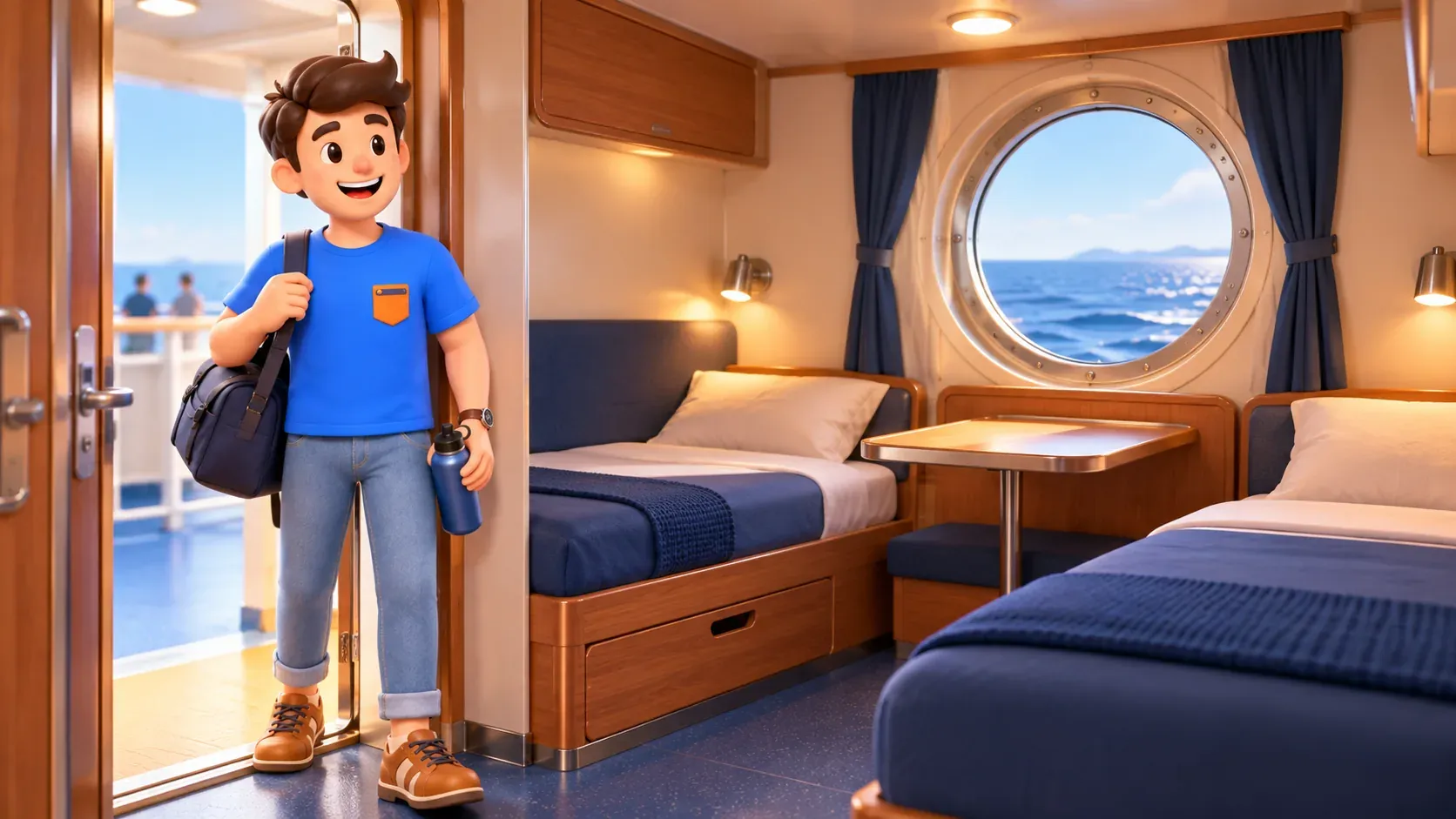
Compare what is offered on your selected sailing. A cabin gives a different opportunity to rest from a passenger seat, but the category must fit the group. Check the number of berths, private or shared use, bathroom arrangements and accessibility where relevant.
Do not assume that a low passage fare includes a private bed. Read the accommodation line before comparing totals. If a cabin is important, check its availability alongside the vehicle space; finding one does not prove the other remains available.
For an overnight journey, consider how the group normally rests in a seat and what you want to do after arrival. A cheaper option may be acceptable for one traveller and tiring for another. The value of a cabin is an individual trade-off, not a guaranteed financial saving.
Use the assigned ship's facilities rather than photographs of another vessel as the basis for decisions. Entertainment, food outlets and cabin categories can vary. The route description is an introduction, not a promise that every advertised facility operates on every departure.
The total ticket price needs the whole party
Request a quote for the exact date, all passengers and the preferred accommodation. State whether you are comparing one way or return. A price per pedestrian passenger is not comparable with a whole-car family quote until the same people and services are included.
Add the vehicle, meals you intend to buy and any optional services you actually want. Include the land journey to the terminal and onward transport on Sardinia. Treat “from” amounts on promotional pages as starting points, not available fares for your dates.
Read changes, cancellation and missed-departure conditions beside the final amount. A flexible tariff may help when the preceding journey is uncertain, but its wording decides the benefit. Do not assume free cancellation or unlimited changes from the word flexible alone.
Resident, age or other discounts have eligibility conditions. Enter the real traveller details and carry the required proof if claiming a concession. A promotional fare aimed at a defined group is not a public price for every international tourist.
Taking a car, motorbike or camper
The operator carries different vehicle categories on this route. Enter the actual category and dimensions, including relevant roof equipment, racks or trailers. Correct details matter for the garage space, not merely for the visual description of the booking.
If the vehicle changes after purchase, contact the operator and update the booking through the proper process. Do not assume a different registration or larger vehicle can be accepted because the number of passengers is unchanged. A vehicle place is a specific part of the reservation.
For a hired or leased vehicle, establish permission for the journey with the owner and insurer. The ferry booking does not decide the rental contract, geographical insurance cover or terms for taking the vehicle onto an island. Resolve those questions before buying carriage.
Keep registration and other required vehicle documents accessible during port procedures. Follow staff instructions for boarding and parking. Do not choose a vehicle deck, lane or order from an old passenger photograph.

Pack an overnight bag before entering the garage
Grimaldi says passengers cannot access the vehicle garage during the crossing. Before boarding, separate the things needed on board: documents, medication, charging equipment, a change of clothes and children's essentials. Do not leave an indispensable item in the car expecting to retrieve it later.
Keep the bag manageable through stairs, lifts and the accommodation area. Passenger baggage rules and unusual items should be checked for the selected booking. The ability to bring a vehicle does not turn every large object into unrestricted passenger luggage.
Documents, children, pets and assistance
All passengers, including minors, need the travel document appropriate to their situation. Spain and Italy being in the same European travel area does not remove the carrier's identification requirements. Check the accepted document for each nationality and any residence or visa conditions relevant to the trip.
For children, verify booking details and documents for the actual family situation. For a pet, confirm entry conditions, the selected ship's accommodation and any required reservation. A pet-friendly description does not establish availability of a particular cabin.
If you need assistance or step-free access, arrange it through the operator in advance and confirm the reporting point. The Barcelona port guide describes an assistance meeting point in the terminal. Include the next journey from Porto Torres when evaluating accessibility.
Arrival at Porto Torres is the beginning of the island journey
Porto Torres serves northwestern Sardinia. It is a different starting point from Olbia in the northeast or Cagliari in the south. Mark the accommodation and compare the actual land connection before calling any ferry arrival convenient for the island as a whole.
With a car, allow for disembarkation before starting the road estimate and consider fatigue after the crossing. Without a car, confirm transport from the exact terminal at the expected exit time. A railway or bus connection elsewhere in town is not automatically beside your ship.
If hiring on arrival, verify the pickup point, desk hours, delay policy and luggage capacity. Do not assume a rental counter is open whenever a ferry reaches port. Tell the accommodation a realistic arrival range after the complete onward journey.
For late arrival, our guide to late-night transport and room access helps connect those decisions. A confirmed room still needs a usable entrance and the correct booked night when you reach it.
Return sailing and Late Check Out
Plan Porto Torres → Barcelona independently. The operator's port guidance for Barcelona departures from Porto Torres requires presentation at the maritime station no later than two hours before departure and says boarding ends 30 minutes before. The latter is not an invitation to arrive at that time.
The operator offers free Late Check Out on selected departures when the ship stays in port, subject to the service conditions. It must be requested during boarding and may be unavailable if the itinerary changes. Do not assume a late arrival always includes a night in the cabin until morning.
Confirm whether that option actually applies before using it instead of accommodation ashore. Check where you and any vehicle go afterwards. A special service for selected sailings is not a general extension of every cabin reservation.

Make the choice with two complete quotes
Keep two dated options with the full party, vehicle, cabin or seat, terminal instructions and onward travel. Compare arrival at the intended accommodation and the rest you need, rather than choosing from one headline duration or a low starting fare.
Our independent trip planning guide helps connect the crossing with the rest of the stay. Leave the first day's commitments proportionate to the port exit, driving and recovery after the journey.
In RoadMe, you can work out a complete personal trip plan connecting your interests, visits and rest more conveniently. Try organising the whole stay in the app at a pace that fits your actual arrival.
Choose Barcelona–Porto Torres when its real dates, accommodation and onward journey work together. The important details are the correct terminal, the correct island port and a booking that includes everyone and everything travelling.