Acropolis Tickets: Timed Entry and the Museum Difference
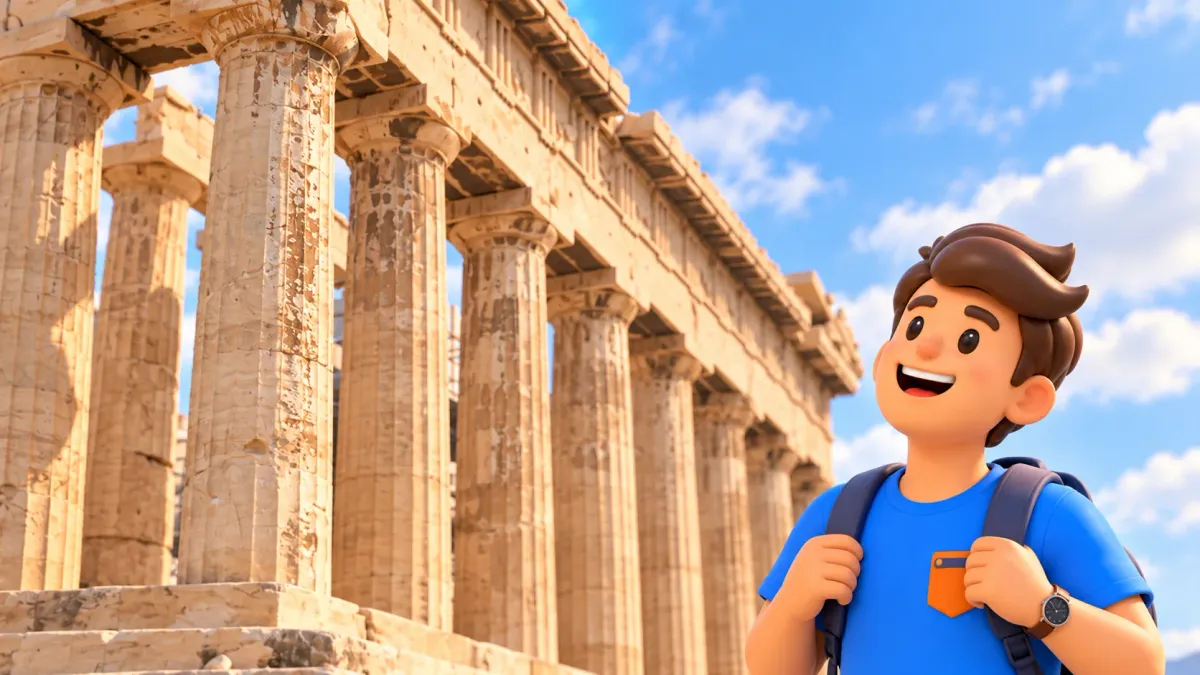
The Acropolis archaeological site and the Acropolis Museum need separate tickets. The hill is where you visit the Parthenon, Erechtheion and the ancient setting; the museum is a different building with collections and an excavation beneath it. Buying one does not automatically buy the other.
Choose the place first, then the date, visitor category and required entry time. The published full admission checked on 26 October 2026 is €30 for the Acropolis archaeological site and €20 for the museum. For one person paying both full rates, €50 is their combined arithmetic cost, not the name or price of an official combined ticket.
Identify which Acropolis experience you are buying
The word Acropolis can refer to the hill, its monuments, the museum or a commercial package containing several services. Look for the actual admission listed in the offer. A page headed Acropolis experience might sell a guided walk, an audio product, site admission or several items together.
| You want to see | Relevant admission | What it does not automatically provide |
|---|---|---|
| The Parthenon and monuments on the hill | Acropolis archaeological site and its stated scope | Admission to the separate Acropolis Museum |
| Objects displayed in the museum | Acropolis Museum ticket | Access to the hill or a Parthenon visit |
| The excavation beneath the museum | Included in the museum's stated admission | The same opening hours as every gallery or restaurant |
| A guide or narrated activity | The specifically described tour or audio service | Entrance tickets unless explicitly included |
The Parthenon is a monument within the archaeological site, not a separate contemporary museum to which you need an additional museum ticket. Conversely, the museum's name does not mean its ticket takes you through the archaeological gate.
To arrange the surrounding visit, try RoadMe: in supported cities, the app prepares a complete personal programme around your dates, interests and pace. Planning the whole trip there is more convenient than piecing together saved recommendations, while the Acropolis and museum reservations remain separately confirmed.
Compare admission prices without mixing products
The published site tariff is €30 full and €15 reduced; the museum lists €20 general and €10 reduced. Reduced prices apply only to visitors who meet the respective conditions. They are not a choice available simply because an online menu displays a cheaper category.
Start the budget with the admission that applies to each person. Add any guide, audio service or reseller fee separately. A more expensive commercial offer may contain a useful service, but it should not be presented as the direct basic admission price.
If a package includes both places, read the exact contents and obtain the admission documents for both. Confirm whether the site entry time has already been assigned or needs another reservation. One receipt showing payment is not proof that both admissions are ready to use.
Older pages can retain a multi-site combination or an old seasonal tariff. Do not treat a historic bundle as today's product merely because its name appears in a search result. Use the current archaeological booking system and the museum's own admission information to establish what is actually on sale.
Select the site time you can actually reach
The archaeological ticket is tied to the selected entry period. Treat that appointment as a real constraint, not a suggestion that you can arrive at any point during the day. Read the date and time printed on the final ticket before booking something else around it.
Distinguish the entry appointment from the site's closing time and from the length of your visit. A later closing hour does not authorise arrival outside the chosen slot. The amount of time you wish to spend inside does not move the initial check-in requirement.
Plan a comfortable arrival margin; allowing about half an hour before the selected time is a practical planning buffer, rather than a promise that every queue takes that long. Include the approach to the correct entrance, any ticket or concession procedure, and the needs of companions.
Do not build a visit around an assumed universal late-arrival allowance. Follow the instructions on the actual ticket and ask the operator about a delay. A tolerance mentioned in an old page or a seller's summary should not become a right to enter whenever convenient.
Our guide to queues and advance reservations explains how to leave breathing space around fixed admissions. Paying in advance can remove one purchase task, but it does not remove every queue, document check or operational restriction.

Choose the entry point, not just a map pin
The archaeological site has access arrangements around the hill, while the museum has its own entrance. A search result for Acropolis can lead to the museum address or a general viewpoint rather than your required gate. Check the location associated with your ticket or tour meeting instruction.
The museum is on Dionysiou Areopagitou, with Akropoli on metro line 2 listed as its nearest metro station. That is helpful orientation for the museum, not a statement that the archaeological entry checkpoint is inside the museum or directly at the metro exit.
If buying a guided product, identify whether the meeting point is the entrance itself or somewhere else. A guide's meeting time may precede the admission time. Keep both pieces of information, and follow the meeting instruction rather than heading straight to the nearest visible queue.
The archaeological admission is for one entry. The official information warns that leaving the site or the southern slope does not allow re-entry with the same ticket. If you plan to see the included areas, understand the internal visit and exit arrangement before passing through an exit for a break.
The museum ticket is also for one use on its issued date. Do not assume it can be reused on a different day because you did not finish every gallery. Ask about any particular visit arrangement before leaving rather than expecting an exception at the next entrance.
Check concessions separately for every traveller
Eligibility is not identical at the archaeological site and museum. Age, country category, the document required and the way a concession ticket is issued can all matter. Do not transfer one institution's rules to the other simply because their names refer to the same ancient hill.
The museum's published categories distinguish young EU and non-EU visitors. For example, a ten-year-old from an EU country and a ten-year-old from a non-EU country fall into different listed categories. This illustrates why child is not a universal ticket type; it is not a complete statement of the archaeological site's rules.
Check the exact age boundary in the current terms, particularly when a birthday is close to the visit. A translated summary, an older PDF and the current booking label can use different phrasing. If the boundary determines the purchase, obtain clarification instead of assuming that under and up to mean the same thing.
The museum issues reduced and free tickets at its own ticket desk after checking the necessary documents. Its ordinary online admission should not be bought automatically for someone who qualifies for another category, merely in the hope of avoiding the desk. Allow time for the actual concession procedure.
Carry the original identity and eligibility evidence requested by the institution. A student card, proof of residence or a photograph of a passport is not universally interchangeable with the document named in the conditions. For families of different nationalities, confirm each person's requirements.
The site also requires the supporting documents for a reduced or free admission to be shown when requested. Choosing that category without proof can prevent entry. The practical check is therefore both eligibility and the ability to demonstrate it on the day.
Understand why the hill and museum complement each other
The archaeological site gives the relationship between monuments and their setting: the scale of the hill, the position of buildings and their surviving architecture. The museum offers a different encounter with objects and details that cannot all be understood from the outdoor structures alone.
The Caryatids make the distinction tangible. The famous female figures supported the south porch of the Erechtheion, a building from the late fifth century BC. The figures on the monument are copies; five originals are displayed in the Acropolis Museum, while the sixth is in the British Museum.
This does not mean every ancient object is now in one museum or that all sculpture survives intact. It is a specific example of why seeing a monument outside and viewing an original object indoors are complementary experiences. Choose both if those interests justify the time and separate cost.
The museum's admission includes its stated exhibition areas and the archaeological excavation beneath the building. Check the excavation's own hours if that is a priority. It is not the same archaeological area as the Acropolis hill, despite the shared word archaeological in descriptions.

Use the correct opening calendar for each part
Site hours change with the season, and autumn schedules can shorten in stages. The museum has its own seasonal timetable and day-of-week differences. A single opening time copied from a general Athens guide is not enough for a visit involving both.
Compare three things separately: last admission, closing time and the time you need to enjoy what you came for. Entering just before the final permitted admission may leave too little usable time even if the ticket remains technically valid.
The museum's excavation, exhibitions, shops and restaurant do not necessarily have identical hours. In particular, a late restaurant opening is not permission to remain in the galleries until midnight. Read the timetable for the particular space rather than treating the building as one continuous opening period.
Free-admission calendars are also institution-specific. The museum publishes its own dates; do not assume that every free archaeological-site Sunday or holiday applies to the museum too. Free admission does not mean the absence of crowd management or the need to obtain the appropriate entry document.
For a visit around a holiday, closure or exceptional event, confirm the day's actual arrangements before payment. In unusually hot or severe conditions, check the current site announcement and follow staff instructions. A paid ticket should not be treated as a guarantee that operations cannot change.
Mobility, bags and photography require their own checks
The archaeological site and the modern museum have different accessibility arrangements. For the site's lift, the official information asks visitors to contact the responsible staff before arrival. Operation and assisted access can be affected by weather or strong wind; a historic notice that it works does not guarantee availability at your exact arrival.
Do not translate museum accessibility into a promise about every path on the hill. Describe your actual needs when checking the site arrangement, including wheelchair use or the ability to manage steps. Ask about the relevant entrance and required assistance instead of choosing the ordinary approach by default.
The museum lists ramps, lifts and accessible toilets. Those facilities make it a different visiting environment, but they do not remove the need to consider personal fatigue and the time between the two admissions. Avoid scheduling both as though moving between them were instantaneous.
At the museum, security includes a bag check with an X-ray scanner. Large bags and backpacks should be left in the cloakroom under its conditions. Keep valuable or fragile items in mind when packing, rather than planning to carry a large travel bag through all galleries.
Do not touch exhibits or take food and drink into exhibition galleries. Amateur photography is permitted with exceptions, including no photography in the Archaic Acropolis Gallery and no flash or tripod use inside. Follow the actual gallery signs; an open display is not permission to photograph every object.
Check what happens if the plan changes
Before paying, read the cancellation and change conditions of the actual seller. A time-specific cultural admission should not be treated like a flexible transport ticket. Do not assume you can reschedule freely at the gate, receive a refund after missing a slot or change the visitor category without a procedure.
Keep the confirmation, usable admission document and the seller's contact details. If a disruption affects the visit, contact the relevant operator rather than expecting the museum to amend an archaeological ticket or a reseller to change an unrelated direct purchase.
For an official closure, follow the procedure announced for that situation. The applicable terms may provide a specific solution, but that is different from a guarantee of immediate automatic repayment for every personal change of plan.
Our guide to admission times, concessions and refunds offers a checklist for comparing products. Apply it to each ticket separately: hill admission, museum admission and any extra service you choose.
With the two admissions clear, RoadMe helps organise a complete personal trip programme in a supported city according to your interests and pace. Try a plan that gives the monuments and collections enough time, with breaks and separately confirmed entry arrangements.

The purchase is ready when you know which place each ticket opens, the date and time, the correct category, the documents and the change rules. That clarity is more useful than buying the most prominent offer first and discovering at the entrance that museum and hill are different visits.