Washington in Winter: One Museum and Short City Walks

A winter Washington day can centre on one collection with small outdoor intervals. You do not have to transfer a summer memorial circuit unchanged into the cold season. Decide what interests you today: portraits and American art, the National Gallery or living plants in the Conservatory. Give the chosen place enough time and let the street become a modest experience in its own right.
The focus is a winter rhythm: limited daylight, holiday calendars and changes between outside and inside. This is not a list of every warm interior or a promise of snow. Duration remains a flexible editorial decision without measured timings for every connection. Finish after the main visit or add a small section if weather and actual access make that comfortable.
Start with daylight and the real opening time
Decide whether you want the outdoor part in daylight. If so, do not automatically leave it after a lengthy collection and late lunch. A small exterior look before admission, then a museum and calm finish can be better. If your chosen institution opens later, leave the morning lighter rather than making a long wait at a closed door an obligatory winter activity.
RoadMe can develop a personal trip plan around your interests, dates and comfortable pace, combining collections, short walks and rest. In the app, it is more convenient to distribute winter days around your chosen visits so daylight is not lost to improvised connections and waiting.
Name one main address beforehand. Several museums in different districts are unnecessary merely to make a long indoor day. Screening, belongings, finding a section and leaving also take time. One attentive visit can offer more than repeated entrances where each institution becomes a way to fill the remaining hours instead of an interest you independently wanted to explore.
Check the actual door and current approach. Proximity on a general map does not establish the entrance side or restrictions. The last outdoor section becomes noticeable if you must search an entire facade. Covered connections between all institutions are not assumed. If you need a particular accessible approach, confirm it separately rather than replacing verification with the promise of a short distance.
The calendar matters more than a general museum rule
The National Portrait Gallery and Smithsonian American Art Museum generally close on December 25. The National Gallery of Art closes on December 25 and January 1. The U.S. Botanic Garden Conservatory also closes on December 25. Do not appoint one of these as a guaranteed alternative to another on that date. For other days, still check the institution’s current notice and your exact visit.
A holiday event, evening programme and ordinary collection visit are different experiences. A separate calendar may require registration or have its own capacity. A familiar photograph of seasonal decoration does not confirm the same display this year. Choose an event after checking the programme, while keeping the main museum day understandable without depending on an optional festive addition.
Portraits and American art: a later museum rhythm
The National Portrait Gallery and Smithsonian American Art Museum share a historic building at 8th and G Streets NW. Choose a main interest and perhaps a small contrast without another inter-museum journey. One address does not require equally complete attention to both collections. Begin with the question that actually interests you rather than the need to count two museum names.
Portraits support a conversation through images of people. How do posture, expression and background shape an impression? What does the way of presenting a person communicate? Look first and read the context afterwards. Knowing every biography in advance is unnecessary. The winter format permits time with several works instead of proving completeness through the number of galleries crossed.
American art offers another emphasis in material, colour, space and artistic decisions. If that interests you more, make it primary and leave portraits possible. Choose from actually open areas: reinstallation and events can affect individual spaces. Confirm a particular period or work if it is the reason for travelling. A shared building does not guarantee every room available at once.
The general schedule runs from 11:30 to 19:00. That is useful in winter: a short daylight street section can precede later admission, and the collection need not end with daylight. Later museum hours do not prove that all nearby cafés, courtyards and programmes remain available until the same time. Each part of the day still has its own conditions.
Ordinary visits are free without entry tickets. Do not treat the covered Kogod Courtyard as a guaranteed winter pause, because events can close it. Avoid making the day depend on a free table or storage for every possession. Institutional rules determine arrangements for bags, outdoor clothing and other items before approaching the collection. An illustration does not replace those instructions.
Before or after, retain a small public-street fragment nearby if conditions suit. It provides the city itself rather than a new long tour. Notice the cultural building’s scale among ordinary facades, choose one view and continue with your day. Even that modest outside experience can be enough in winter without adding a complete district walk after the galleries.
The National Gallery: one building as the basis
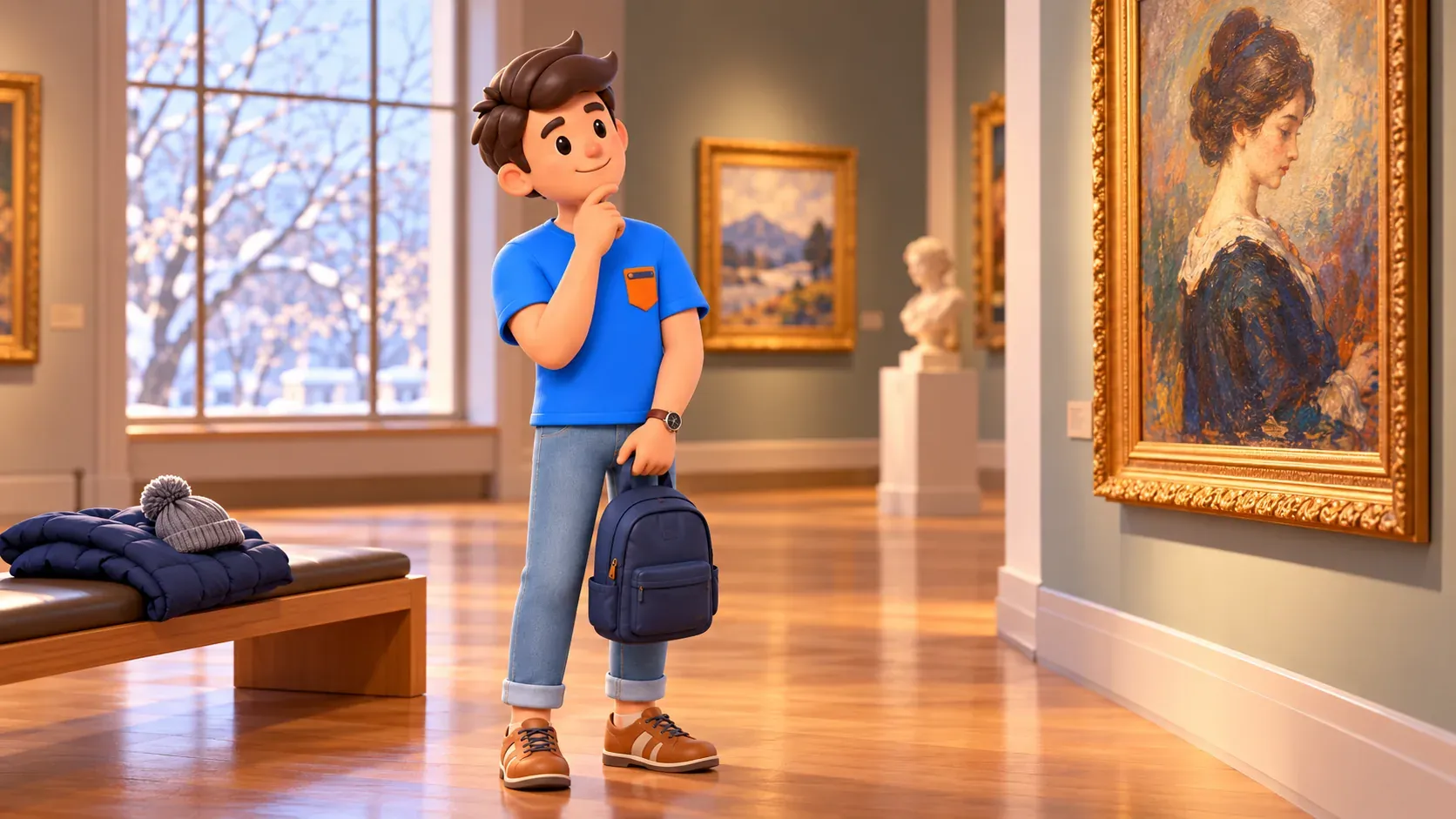
Choose the National Gallery of Art’s West or East Building as the main destination. The West suits historical art and comparison of representation; the East supports an interest in modern and contemporary art and geometric spaces. These are starting points rather than rigid traveller types. A cold-looking day does not make both complete collections compulsory or make attention last indefinitely.
Inside, retain a small question: how light works, how distance changes an impression or how materials differ. Compare several works, pause and decide whether to continue. These are personal observation ideas rather than guaranteed museum activities or objects. Your own looking keeps the visit independent without requiring a travel article to retell the complete collection and determine every individual stop.
Ordinary galleries and exhibitions are free without tickets; some events need separate free registration. General hours are 10:00 to 17:00. This can start earlier than the Portrait Gallery but also requires finishing earlier. Do not transfer one institution’s timetable to another because both concern art. The real schedule shapes the winter day as much as your chosen subject.
Select an operating entrance. At preparation, the West Building’s 7th Street entrance is closed until further notice. Review the current approach before travelling. If an indoor connection within the complex is essential, confirm the available route separately. This does not justify promising covered links to other Washington museums or removing the actual outdoor approach from the day’s planning altogether.
The Sculpture Garden, a long Mall walk and several memorials are not obligatory afterwards. Consider light, weather and energy. An exterior look at the building followed by a clear return can suffice. Architecture just experienced inside takes on another scale outdoors. One small observation can show that contrast without requiring the entire neighbourhood or every surrounding attraction before you finish.
The Conservatory: an independent winter theme
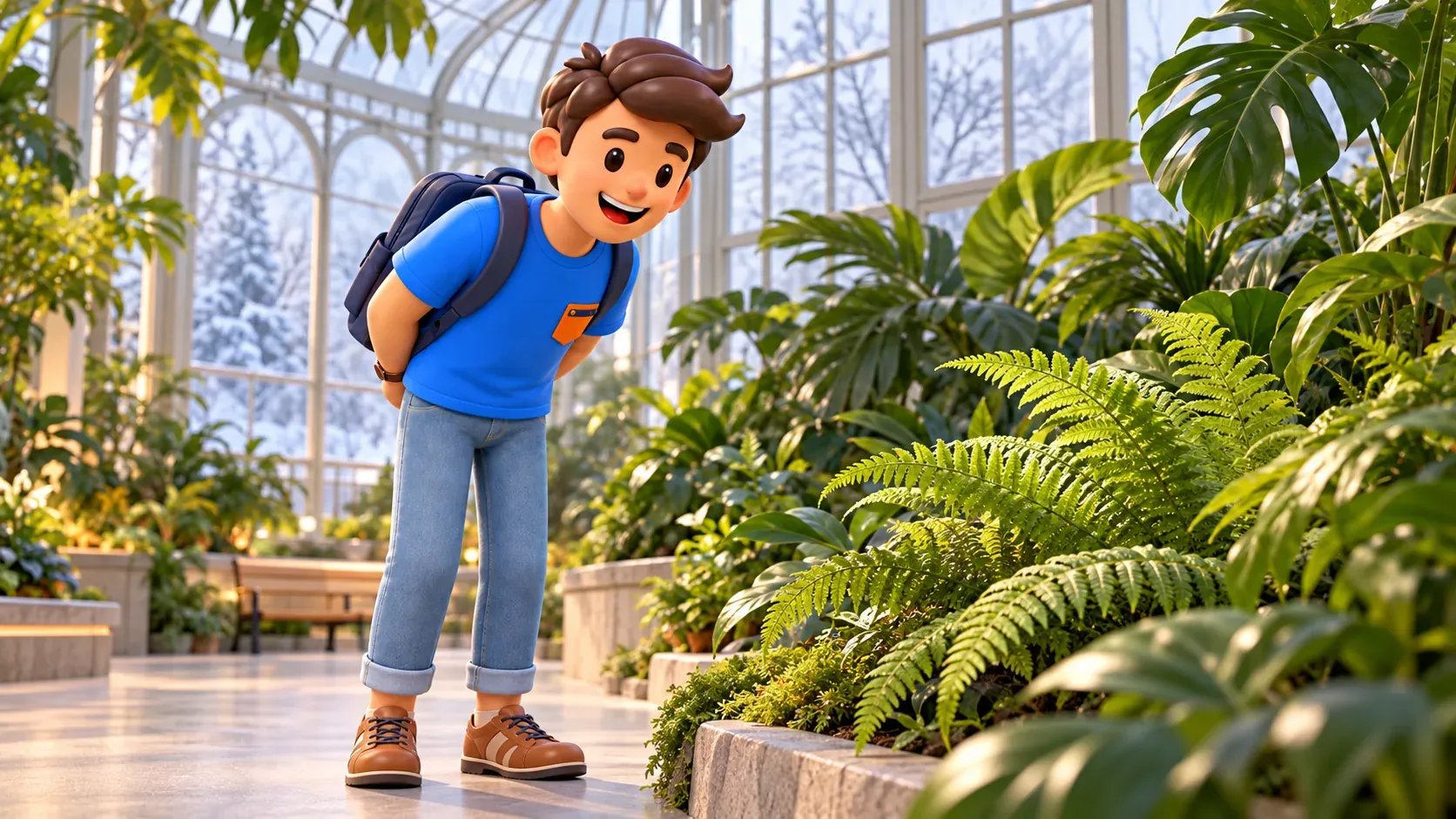
Treat the U.S. Botanic Garden Conservatory as a distinct small living plant museum format. Winter makes the contrast with the city street particularly noticeable, without requiring a promise that a certain species always blooms. Choose from the real scene: leaf forms, differing textures or ways plants adapt to different conditions. Attention to these details can give the visit its own purpose.
It is not a compulsory second stop after the Portrait Gallery in another district. If living plants appeal more than paintings, they can become the main interest of this part of the day. If adding them, account separately for travel and opening. Calling something a small break does not reduce physical distance or automatically create time for another admission and visit.
Ordinary entry is free, tickets are not required and general Conservatory hours are 10:00 to 17:00, with closure on December 25. Outdoor gardens follow their own hours. They are not an interior extension open until any time you choose. Check seasonal exhibitions or activities separately; photographs from a previous winter do not establish the current institution’s programme.
Plant environments differ from a conventional art gallery. Do not promise identical temperature, humidity or comfort in every section. Ask staff about the needed route and rules. Looking does not require touching or moving plants for an image. A small comparison of living forms provides substance even when you choose to remove the outdoor garden part entirely from the visit.
A small street section and a clear conclusion
Select one exterior fragment near the main visit if weather and access suit. Lafayette Square can be a separate city choice in its own district, not a compulsory link between all the museums here. Use only open public approaches. Access to the square and neighbouring areas changes; this winter plan does not promise a complete loop or a White House interior visit.
Snow is not required. Winter Washington can look different, and bare branches or cold light still belong to the season. A photograph is a memory rather than proof of correct weather. If conditions outside are uncomfortable, keep only the necessary approach. The museum day retains its theme without a long walk designed to match somebody else’s image of winter travel.
Choose clothing and belongings for the real transition from street to interior. Check bag and outerwear rules without assuming unlimited storage. Dinner or a later programme requires its own planning. Collection closing does not guarantee a ready continuation inside the same building. A simple route to rest can be a suitable finish rather than an incomplete ending.
Distribute energy across the trip
With several days, vary intensity. One substantial collection can have its own section and another day a smaller format. Morning and evening do not always need equal filling. A winter stay benefits from clear interests and pauses more than from continuous museum changes for the sole purpose of remaining indoors. The rhythm can change across days without making any one of them less worthwhile.
With children or different paces, agree on a small shared section. Continuing remains a decision instead of an obligation. If someone wants to finish early, prepare a clear meeting and accompaniment where required. An agreed scale lets people look calmly, instead of negotiating at every stop who is tired and who has not seen enough. Different responses do not require constant disagreement.
Food also occupies real time. A café on the map does not guarantee a table, suitable menu or museum-matching hours. Allow time for arrangements after leaving or confirm an available option. Do not shorten rest to restore an overly tight timetable. One attentive museum experience already gives the day substance, even without the additional activities imagined before the journey.

In RoadMe, it is easier to prepare a personal plan for the whole journey, distributing collections, neighbourhoods, small walks and rest according to your interests and pace. Winter Washington can then have a considered rhythm where the main visit does not disappear between improvised connections and new compulsory addresses.
Choose one museum centre, confirm its calendar and keep the street small. If the collection is the first decision, read our guide to choosing one Smithsonian museum. A good winter city day needs an interest, time for it and a calm finish suited to your trip, rather than a long exposed route.