Rainy Washington: Plan the Day Around One Museum Area

Rain in Washington does not require an urgent new itinerary filled with indoor stops. Often, choosing one museum area, reducing the approach outside and leaving time to look carefully is enough. Portraits and American art, the National Gallery’s collections or the National Building Museum offer different versions of that day. Choose for your interests and the actual calendar rather than replacing every cancelled outdoor stop.
These are three alternatives: the shared National Portrait Gallery and Smithsonian American Art Museum building, one main National Gallery of Art building, or the National Building Museum on a suitable opening day. Do not join them all. The purpose is to reduce connections and decisions, not to compete over the number of interiors reached before the rain finally stops.
Choose one museum centre for the day
Consider where you start, what you want to see and which institution is actually open. The closest landmark on a general map may have an entrance on another side or be a different part of the organisation. In a rain plan, the actual door matters more than an attractive line through several blocks. Build the beginning, pause and finish from that practical point.
RoadMe can develop a personal plan for the complete trip around your interests, dates and comfortable pace, giving museums and walks appropriate space. In the app, it is more convenient to organise a rainy day with rest than to connect improvised indoor stops with long outdoor approaches.
Do not move the entire outdoor list inside at the same intensity. Museums also require attention, reading, decisions and movement. If several memorials were cancelled, one meaningful collection section is not an inadequate replacement. Give it time and remove unnecessary urgency. A good rain day may be shorter than the original plan and still leave a clearer impression.
Distinguish a small walk in light rain from conditions in which moving between buildings is uncomfortable. The first can allow a modest outdoor section afterwards. The second may call for only the necessary approach. Do not promise yourself an improvement at a particular hour or fill every moment until evening while waiting for a suitable gap in the weather.
Check the approach and belongings
Confirm your date’s hours, the open entrance and visitor rules. A small day kit is easier than luggage and a large umbrella requiring arrangements before the galleries. The Smithsonian American Art Museum restricts large umbrellas and backpacks in galleries; staff may ask visitors to carry smaller backpacks by hand or in front. Do not assume storage is available without checking.
Check the current journey from your own starting point. A nearby station does not guarantee identical exits and approaches every day. Neighbouring institutions are not all connected under cover. If a covered route determines your choice, confirm it rather than inferring it from adjacent buildings. This article does not promise a continuous dry connection across several independent museums in Washington.
Portrait Gallery and American Art: two approaches in one building
The National Portrait Gallery and Smithsonian American Art Museum share a historic building at 8th and G Streets NW. That is a useful rainy-day distinction from two museums on separate streets. Choose one main interest and a small contrast in the same complex if you want it. Seeing every accessible floor simply to fulfil two institutional names is unnecessary.
Portraits invite a view of history through people and their representation. Notice expression, pose, background and scale. Recognising every person beforehand is not required. Begin with the impression an image creates and then read the context. This can make the visit meaningful without turning it into a long compulsory list of biographies or a test of historical knowledge.
American art offers another emphasis: how an artist organises colour, material and space, or what changes between forms of representation. Choose a few works from an open section. Do not assume every historical gallery is available simultaneously; areas may close for reinstallation. A particular work or period needs checking if it is the reason the day is being organised.
The building also has a story associated with its earlier Patent Office use, beyond today’s collections. That brief context helps you notice the relationship between a large public interior and individual works. An additional complete architectural tour is not necessary when the main interest is attentive looking. The structure can support the visit without becoming another full checklist of its own.
Ordinary admission is free, with no entry tickets required. The current general schedule opens at 11:30, later than some Mall museums. Do not build a morning around the assumption that every museum door opens at the same hour. Check your actual holiday or event calendar before heading there to spend an extended period away from the rain.
The covered Kogod Courtyard may seem an obvious place for a pause, but it can close for events. This plan does not depend on guaranteed courtyard access or promise a café seat. Confirm it separately if it is central to your interest. The collections and a calm conclusion within the chosen district remain a sufficient basis without that extra section.
The National Gallery: choose one main building
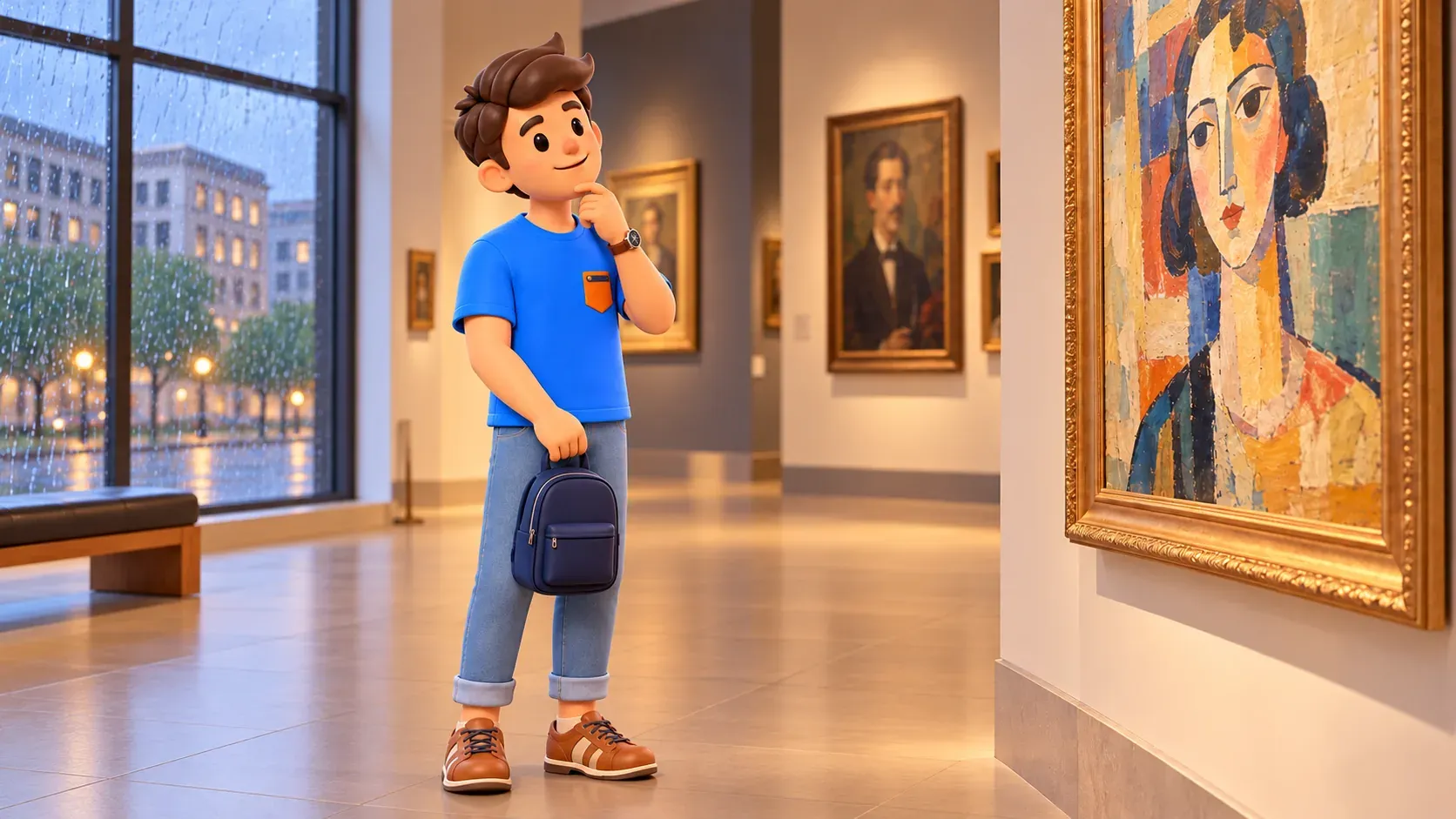
At the National Gallery of Art, begin with content. Choose the West Building if historical art and comparing forms of representation appeal today. Choose the East Building for a stronger interest in modern and contemporary art and its relationship with geometric spaces. These are starting points rather than fixed categories of taste. Follow your own question through the currently available collection.
Rain does not make a complete visit to both buildings compulsory. Name one as the main destination and keep the second optional after a pause. That prevents the day from depending on every floor and connection. If moving within the complex without going outside is essential, confirm the current available route with staff. It does not establish covered links to other institutions elsewhere.
Ordinary galleries and exhibitions are free without entry tickets; some events have separate free registration. Distinguish looking at the collection from attending a scheduled programme. General hours are 10:00 to 17:00, with closure on December 25 and January 1. A particular event should not automatically be treated as an extension of the ordinary museum day or an available walk-in activity.
Select an operating entrance before travelling. At the time of preparation, the West Building’s 7th Street entrance is closed until further notice. Check the open approach rather than walking the facade in rain hoping any door will work. Locate the entrance side and last part of the journey, particularly where specific access arrangements matter to your own visit.
Inside, try a small comparison: how two works use light, how material changes an impression or how architecture alters the distance from an object. These are editorial observation ideas, not compulsory museum tasks. You can remain with one work and finish a section earlier when the interest feels complete. The number of galleries crossed does not have to become the day’s final assessment.
Keep the Sculpture Garden as a separate weather decision. It is outdoors rather than a covered continuation of the galleries. If rain eases and you want to go outside, confirm access and consider conditions. Otherwise the art day retains its value. There is no need to step out merely to obtain an image that once seemed necessary to complete the itinerary.
The Building Museum: for architectural space
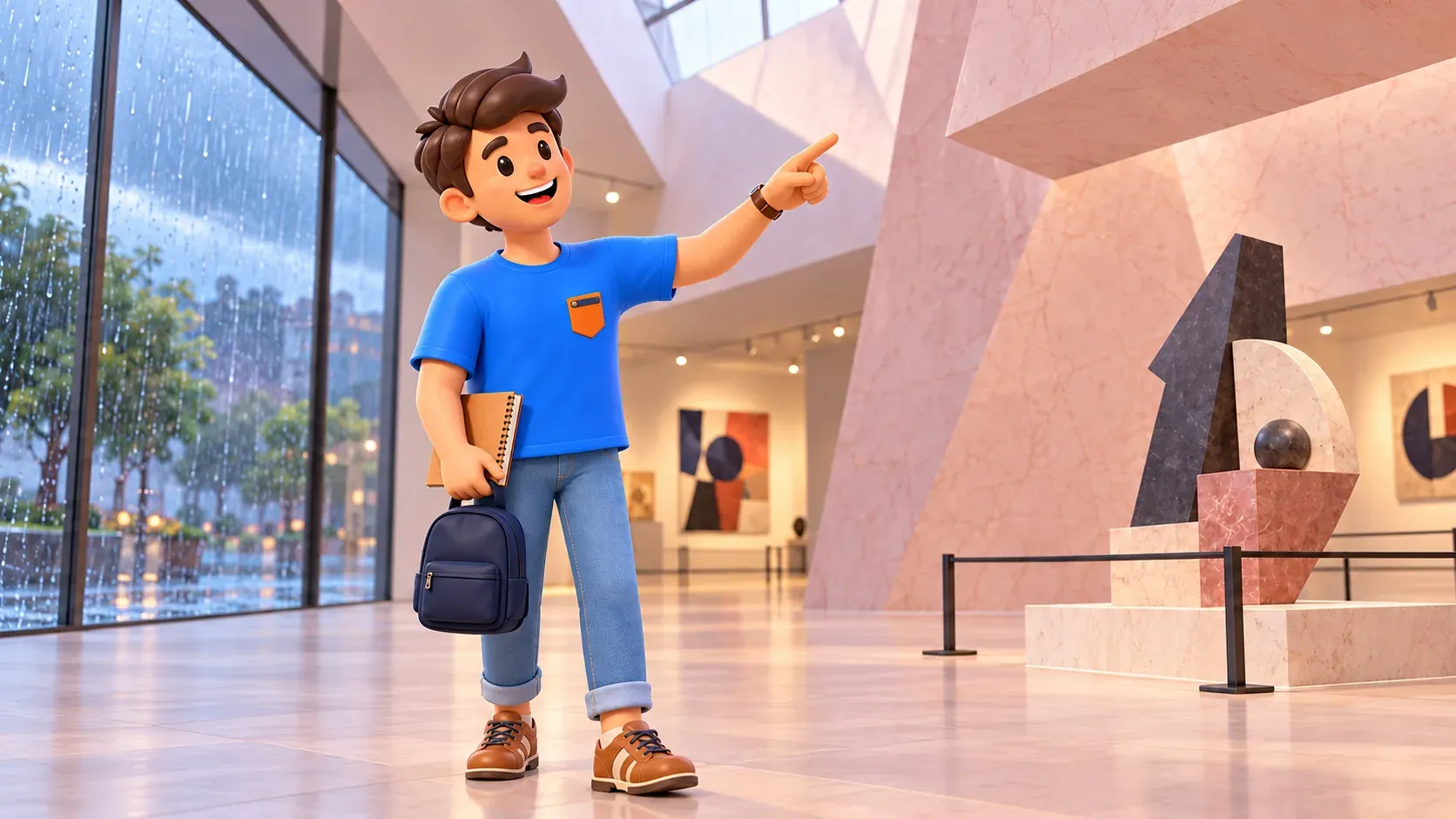
The National Building Museum is a separate alternative, not a compulsory next stop after the Portrait Gallery. Choose it for architectural scale and the built environment. The Great Hall offers volume, repetition and proportion to observe. The former Pension Building’s history helps you consider the interior as a public place with an earlier purpose, not simply a setting for today’s museum photographs.
Distinguish the Great Hall from the exhibitions. Hall and museum shop visits are free when available during visiting hours; exhibition spaces require separate paid admission. Free access to the hall does not imply an equally complete exhibition day without a ticket. Decide whether the interior itself or a particular current display is the main reason for choosing this institution.
The current schedule runs Thursday through Monday, closing on Tuesdays and Wednesdays and on specified holidays. It is therefore not a universal replacement for every wet day. Confirm the calendar before choosing the district. Other Washington institutions being open does not guarantee this building’s availability, or that a museum name on a map is enough to establish a workable visit.
Individual exhibitions have their own interruptions. Brick City is currently closed for a refresh, and an announced return date does not mean access before actual reopening. This plan does not depend on a guaranteed LEGO exhibition. If an activity determines the trip, confirm that activity rather than only the building’s hours. Guided visits likewise depend on the real programme and guide availability.
For a short architectural visit, choose one way of looking: how columns create rhythm, what makes a huge volume understandable or how human scale changes inside it. This does not replace a ticketed exhibition or promise closed areas. If a current exhibition is available and interests you, give it time while keeping the option to finish without another major museum.
Make a day without running between shelters
If a confirmed booking already exists elsewhere, do not automatically cancel it for any of these ideas. Consider the real connection and your interest first. A museum can occupy the remaining part rather than replace the whole schedule. Reducing one outside section may solve the problem more effectively than a complete reorganisation with a longer journey and another unconfirmed entrance.
Keep a clear beginning and finish. One place, a small focus inside, a pause and an understandable return form a complete scenario. A rain plan does not require watching the forecast constantly and changing district with every brighter interval. Sometimes keeping an established choice allows more attentive looking than using every available gap to resume the original outdoor list.
Choose the food arrangement separately. An onsite café does not guarantee a free table, convenient service hours or permission to stay until the institution closes. Do not make the museum plan dependent on one unconfirmed pause. Enough time and a clear nearby area after leaving can be sufficient. A specific restaurant does not need to be compulsory for every reader.
With children or different paces, name a small shared section. The second part can be shortened without calling it failure. A long indoor visit is tiring even when rain remains outside. Let people sit, finish and discuss impressions later. A successful change of programme protects interest as well as dry clothing and does not have to produce the same response in everyone.

In RoadMe, it is easier to prepare a personal plan for the complete trip, distributing museum effort, walks and rest around your interests and pace. A rainy day can become a considered part of the journey instead of a chain of improvised shelters and new decisions at every crossing.
Choose one alternative and confirm its calendar and entrance. For the wider decision, read our guide to choosing one museum around your interests. Rain changes the length of connections without requiring a poor day: one collection or architectural space seen attentively already gives the experience its own subject.