
Verona with kids: discoveries, short walks and time to rest
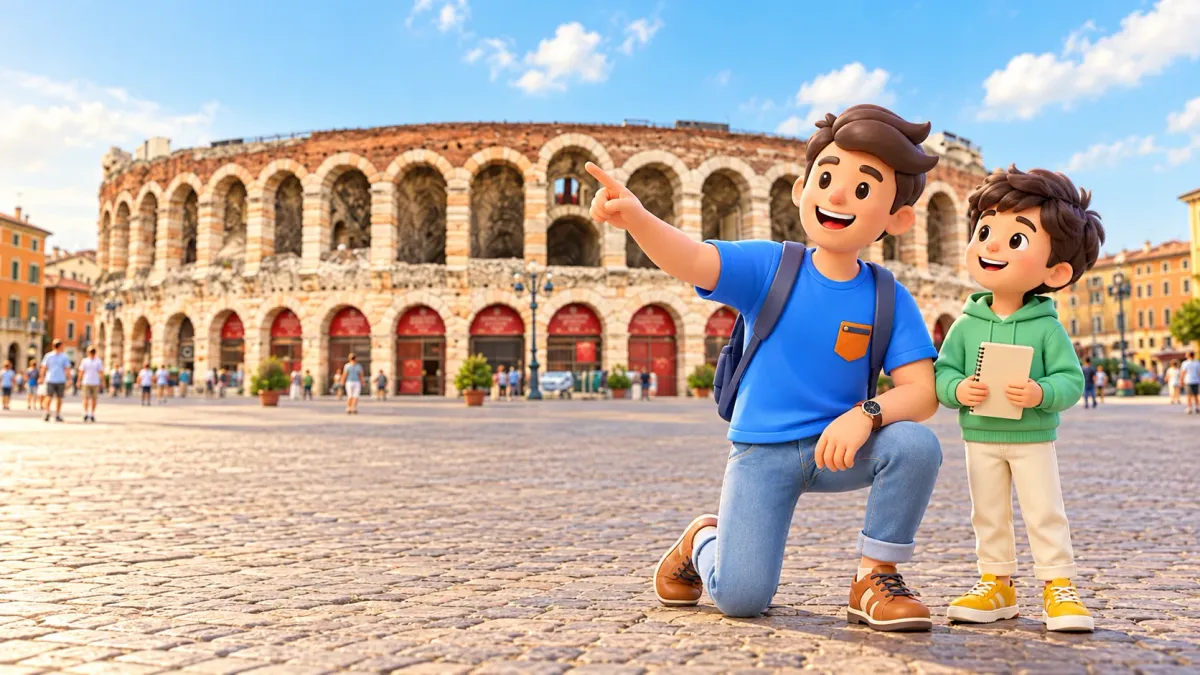
A family outing in Verona becomes easier to enjoy when it has a clear rhythm: look at something, walk a short stretch, change the activity and take a proper break. Children do not need to remember every palace name to have their own encounter with the city. One huge Roman wall of arches and one intriguing museum object can already become a story about the trip.
For a first visit, try a small plan of around three hours: Piazza Bra and the Arena outside, a walk across Ponte Navi, a selected look at the Natural History Museum and a pause nearby. Add the journey from your accommodation and your return separately. This is a flexible part of a day, rather than a compulsory programme for every child.
Choose one experience that matters most
Before leaving, ask a simple question: would everyone rather study an old building or look for something unusual in a natural history collection? Both appear in this plan, but one can be the main attraction. Giving a child a reason to go also makes it easier for adults to decide where to linger and what to leave out.
RoadMe makes preparing a personal trip around your family’s interests and pace much more convenient. Try arranging your Verona days in the app, bringing walks, museums and downtime together into a plan you can enjoy as a family.
The route starts at the Arena on Piazza Bra, follows Via Leoncino towards Stradone San Fermo and crosses Ponte Navi to the Natural History Museum in Palazzo Pompei. Finish with a pause at a suitable open business nearby. Returning to Piazza Bra is not included in this outline: decide beforehand where you will go afterwards and allow time for that journey.
Allow roughly 20–25 minutes outside the Arena, 30–40 minutes for the connecting walk with small stops, 55–70 minutes for a selected museum visit, 30–40 minutes for a break and 20–30 minutes of flexibility. This adds up to about 155–205 minutes. These are editorial planning estimates, not measured family walking times or a promise to see the entire collection.
Begin at the Arena without a long lesson
The Arena is a Roman amphitheatre, and its outer wall already makes a strong first impression. View it from the public space around the building and notice the repeating arches. Entry is unnecessary for this particular outing. A daytime visit inside and attendance at a performance are separate choices, each with its own arrangements.
Instead of a long explanation, invite one small observation. Which arches look similar? Where is the stone lighter or darker? Which part seems tallest from where you stand? One question is enough, followed by time for the child to point something out. A short, accurate explanation can work better than a speech delivered while everyone is still finding their feet.
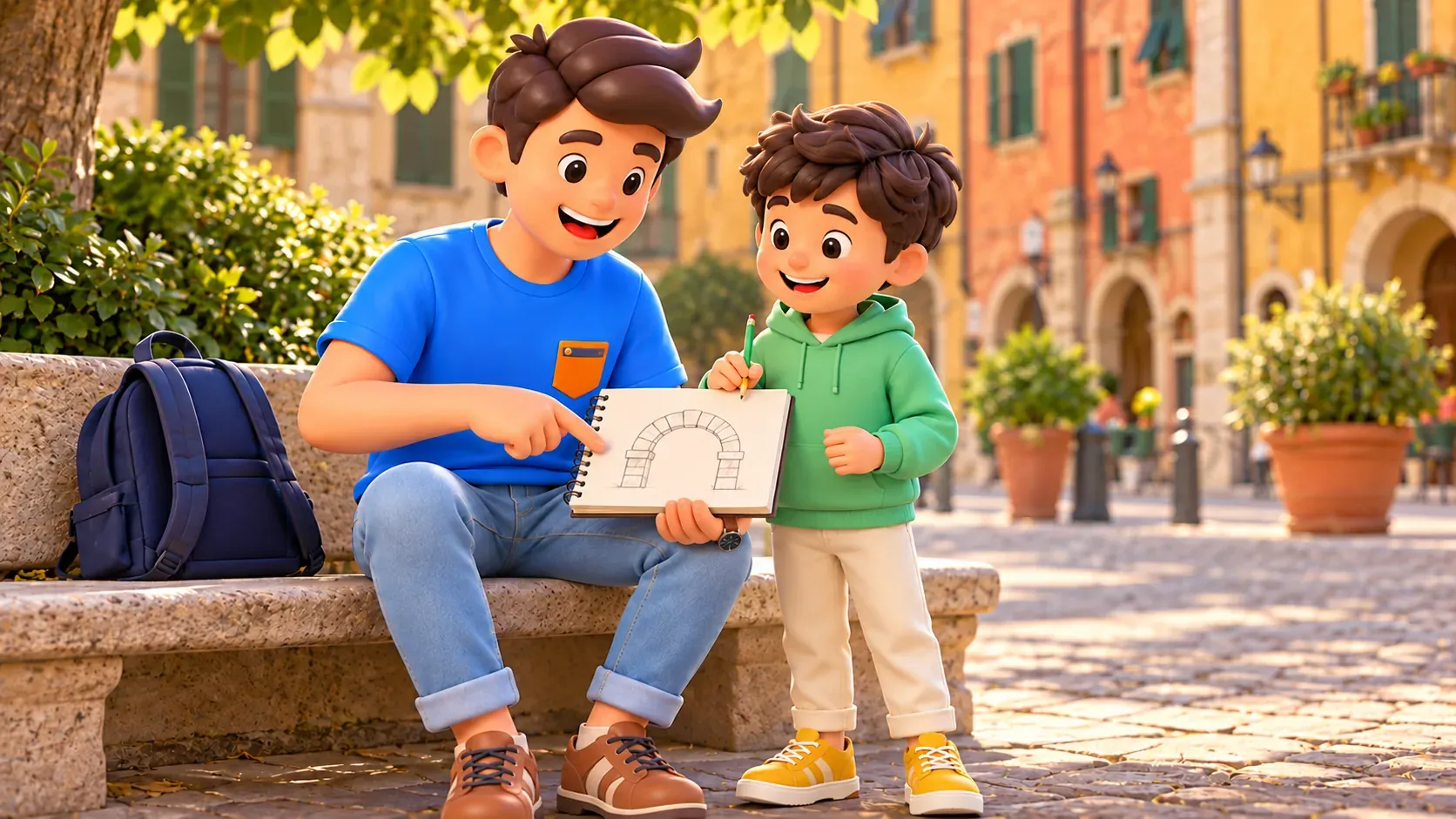
You might sketch an arch in a notebook or choose a single family photograph. There is no need to circle the whole amphitheatre to complete the activity. Stay a little longer if the shape has caught someone’s interest, or move on when attention shifts. The piazza is still a shared city space, rather than a designated playground.
A basic introduction can describe the building as an amphitheatre used for spectacles in Roman times. It is different from the Roman Theatre across the river. Avoid promising both today simply because their names sound related. One clear story connected to something immediately visible gives the family a better starting point.
Make the connection part of the experience
From Piazza Bra, follow Via Leoncino towards Stradone San Fermo and Ponte Navi. Cross the Adige and continue towards Palazzo Pompei, the museum’s home. Here the bridge connects the two banks; it is not another lengthy attraction to inspect. Use the pavement and give road crossings the normal attention a family needs.
Along the way, you could look for two facade colours or choose a favourite window shape. These prompts encourage noticing without checking a screen at every turn. They do not involve collecting objects, touching somebody else’s wall or searching behind a barrier. After one answer, it is also fine simply to walk and talk about what interested the child.
On the bridge itself, concentrate on crossing. If you stop to look at the water, choose a place where you do not obstruct others and stay beside the child. Speed games and searching beyond the parapet have no part in this outing. Changing banks already gives the walk the feeling of a small journey.
If the connection feels longer than your family would like, take the pause before the museum. A chosen sequence is no reason to continue hungry or tired. The break then replaces some museum time or extends the outing. It cannot be added indefinitely while keeping the same three-hour promise.
Look for interest rather than every room
The Natural History Museum occupies the Renaissance Palazzo Pompei at Lungadige Porta Vittoria 9. Building and collection tell different stories: a city residence now holds encounters with nature and scientific collections. Moving from Roman arches to natural history changes the activity without requiring a distant excursion or another transfer.
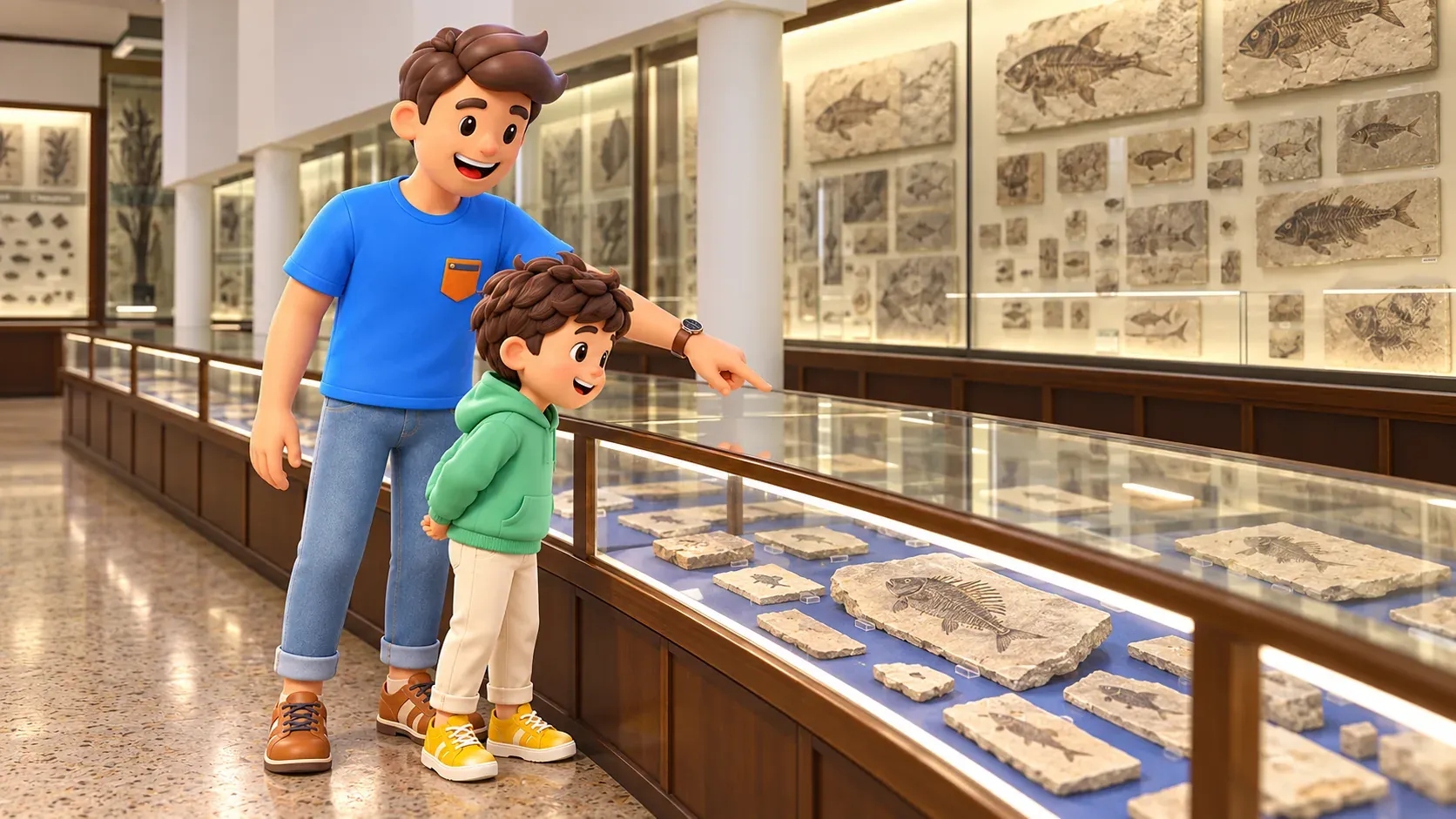
The collection includes fossils from Bolca. For a first look, choose fish and try to recognise a body outline, fins or another visible detail. Some finds do not immediately resemble a familiar animal, which gives you a reason to look together. There is no need to promise giant dinosaurs to make this museum interesting.
Let the child choose one object to remember. An adult can select a favourite too, then compare impressions: different people often enjoy different things. A handful of chosen stops is enough. The proposed 55–70 minutes is for that selective visit, rather than every room or a complete scientific explanation of every specimen.
The museum provides Segui FOSSY routes, including materials and designated multisensory stations. Ask staff which parts are currently available and what suits your visit. Permission to explore a particular station does not extend to all specimens. Ordinary exhibits and display cases should not be touched, and a complete museum route can need more time than this short family look.
Check the details that change the outing
The museum normally opens Tuesday to Sunday, 10am–6pm, with final admission at 5.30pm, and closes on Mondays. Holiday exceptions can apply. If your available day is a Monday, keep a short Arena outing and a pause, or move the museum plan to another day instead of automatically adding a distant substitute.
Admission is free for visitors under 18; children under 14 must be accompanied by an adult. Bring evidence of entitlement where required. Check adult admission and any special activity separately. Free entry for a child does not mean every workshop is included or takes place when you arrive.
Check which sections are open before the visit. The museum continues to publish a notice about work in the Veronese Prehistory Hall, while the tourist office also lists temporary restrictions affecting some upper rooms. Do not make the day depend on a promised room that may be closed. Ask which available part best matches the child’s interests.
Family activities in the calendar have their own dates, age requirements and booking arrangements. If you want one, replace part of the outline with it and allow the time it needs. Avoid treating a scheduled session as a standard daily service or assuming that places are available without confirmation.
Adapt the plan for a stroller and different interests
Museum rules permit strollers subject to restrictions in particular spaces and staff directions. An entrance for visitors with mobility difficulties is available at Via Museo 2, with a lift and ramps inside. This is useful information about the building; it does not establish that every city surface on the approach is smooth or step-free.
Do not plan to leave a stroller in the museum cloakroom, as the rules do not provide for that storage. A bulky child-carrying backpack also has different rules from a small front carrier. If either matters to your family, check the appropriate arrangement ahead. Understanding the practical side makes it easier to focus on the visit once you arrive.
A younger child may enjoy the changing spaces, a school-age child may enjoy spotting details and a teenager may prefer choosing a personal theme. Give people room to participate differently. Someone can sketch while another looks, and an adult can appreciate the palace. Sharing a stop does not require everyone to have the same task.
Use RoadMe to shape a personal itinerary for the whole trip, with your family’s balance of discoveries, walks and rest. The app makes it easier to connect ideas around your interests instead of rebuilding each day from separate attraction lists.
Make the start and finish work for your family
Choose a starting time around your normal needs for food and rest. A late start can still produce a good outing, but check how much museum time remains before closing. The last admission is not a target for a relaxed family visit. If the morning is already busy, a shorter outdoor encounter may fit better than squeezing the whole outline into the afternoon.
Agree on the final destination before leaving your accommodation. You might return for a rest or continue to a meal, but either option needs its own journey. Knowing this prevents the museum door from becoming the start of an unplanned long walk home. The useful measure is how the complete outing feels, including the practical beginning and end.
Finish with a break while the outing still feels good
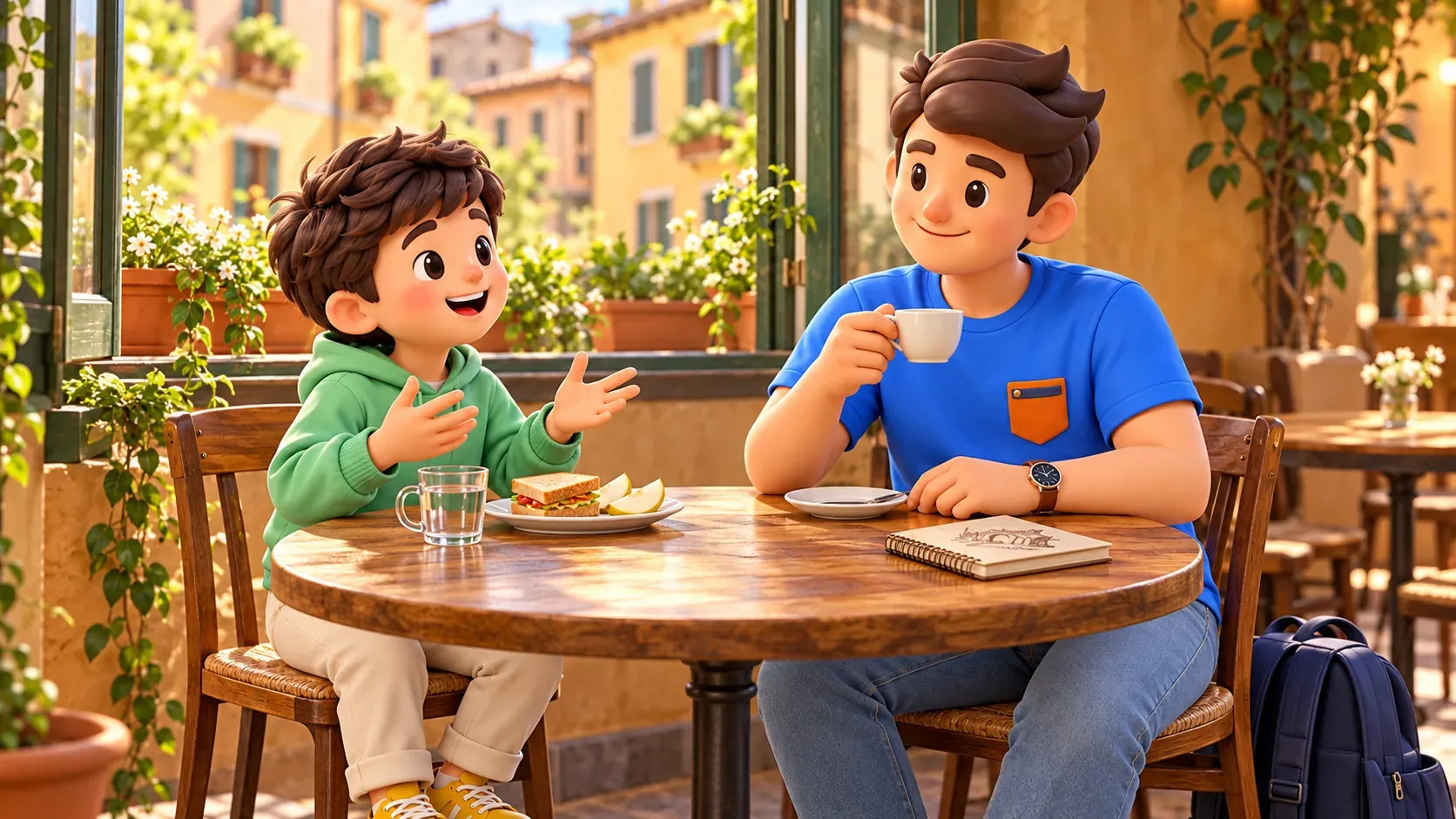
After the museum, find an appropriate open place nearby where you can sit and order food or a drink. A free table and a particular menu are not guaranteed, so leave a little room to choose. Food belongs to this separate pause; museum galleries are not a place for snacks.
At the table, ask what was most surprising. Any answer counts: an arch, a fish in stone, the river or a window shape. That conversation makes it clear that experiences have already happened. You do not need to add a tower, garden and another museum to make the day worthwhile.
If you have several days, give other neighbourhoods separate outings. Our two-day Verona plan offers ideas for spreading them out. A good family route leaves more than a list of places seen: it leaves some curiosity for tomorrow.


