Unusual Berlin museums: games, samurai art and stories of things
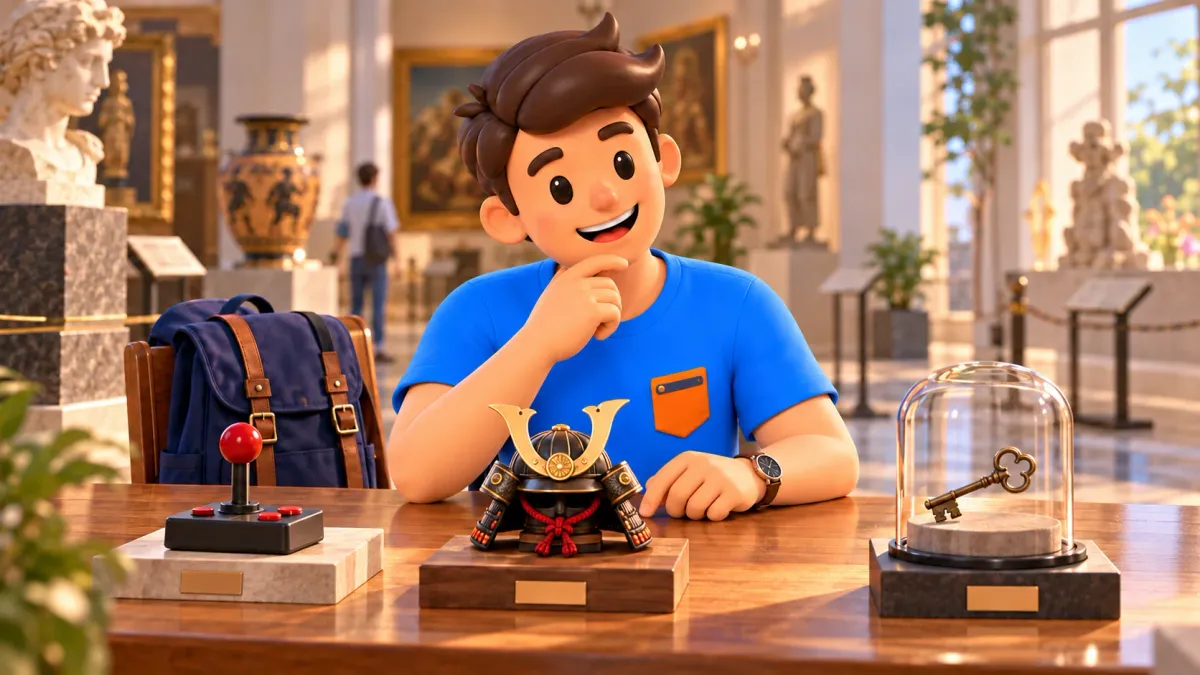
For an unusual museum outing in Berlin, choose one of three ways of looking at things. The Computerspielemuseum follows changes in gaming experience. The Samurai Museum examines historical craftsmanship through armour and other objects of Japanese culture. The Museum der Unerhörten Dinge creates a literary encounter in which an object receives an unexpected story. These are independent alternatives, not a route across all three districts in one day. Allow about three hours for games with local approaches and rest, three and a half for samurai art, or two for the literary cabinet and a short nearby walk.
Unusual does not automatically mean small, funny or entirely interactive. One place invites trying, another close observation, another reading and imagination. Choose the experience rather than the name alone. For comparing generations of technology, choose games. For material, craft and historical culture, choose samurai art. For the way a story changes an ordinary object, choose the literary collection in Schöneberg. An initial question helps you look carefully instead of turning an unusual museum into another compulsory address. The right choice is the one that holds your attention on this particular day.
Which kind of encounter appeals?
RoadMe makes developing a personalised plan for the whole trip more convenient, distributing different museum experiences around your interests, dates and pace. Try planning in the app so visits, walks and breaks fit comfortably and you use your travel time more efficiently.
The three formats have different rhythms. In the games museum, attention moves between devices and screens. With samurai art, details and how something was made become central. In the literary cabinet, much happens between the object and its accompanying account. Do not expect an identical pace. If companions prefer different forms of participation, choose a shared focus while allowing independent looking. A joint visit need not mean standing at the same case every minute or reacting in the same way. Leave room for personal interest without requiring constant commentary from everyone.
The suggested budgets include a short approach from a local station and return, but not your accommodation journey, a full lunch or a separate guided activity. Times are editorial estimates rather than measured tracks. Match admission windows to actual arrival. A small venue can still have a narrow calendar, and a large museum does not require complete coverage. One attentive visit with a little nearby street time can be more satisfying than remembering chiefly the travel between several entrances. An unusual subject remains valuable only when you leave time to notice what makes it interesting.
Computerspielemuseum: more than nostalgia
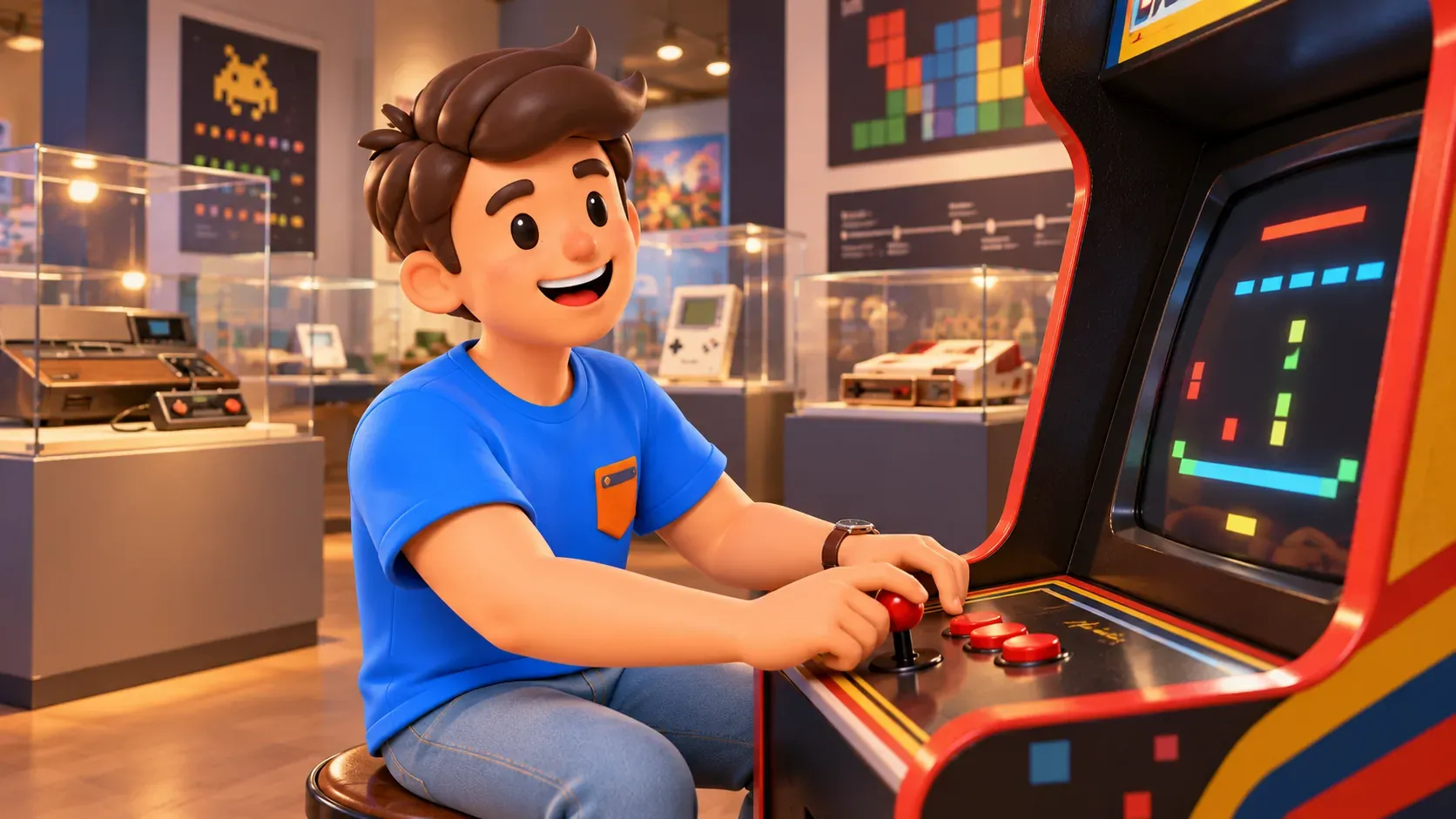
The Computerspielemuseum at Karl-Marx-Allee 93a treats games as a cultural medium. Ask not only what people played, but how devices shaped their actions. Compare controls, screen roles, available commands and ways of explaining rules. A simple-looking game can require precision and attention, while an apparently complicated system may become clear after a short attempt. That makes the visit relevant even without a favourite childhood console or memories of a particular generation. You can look at unfamiliar technology as a way of thinking about interaction rather than simply recognising things you once owned.
Divide attention between observation and participation. Choose a few historical devices, then an available playable station. Not every original object is intended for use, and interactive availability changes. Avoid promising a particular machine to a child or companion without checking. If occupied, explore another section instead of making waiting the main experience. The museum’s value extends beyond continuous play: familiar interfaces have histories and once seemed new. Try understanding an older rule rather than only comparing image quality with a modern screen. A short attempt can reveal something that looking alone does not show.
For a manageable visit, start at U Weberwiese, for example at 11am. Allow 15 minutes to approach, 20 to enter, 100 for selected historical displays and available play, 20 for rest, 10 to gather belongings and leave, and 15 back to the station. Total: 180 minutes, roughly 11am–2pm. The hundred minutes do not mean all that time on one machine or every collection. Expand if interested and reduce themes if tired. Rest in a suitable permitted place rather than assuming any gallery allows food. Keep the programme responsive to your actual energy.
Practical points before playing
The museum normally opens daily 10am–8pm. Admission is paid and tied to a selected entry window; the operator states an additional 15-minute arrival tolerance. That is neither advice to be late nor a fifteen-minute limit on the whole visit. Choose a window after your station approach. Under-14s need an adult. For accessible entry, account for the small entrance step and staff-assisted mobile ramp: being on one level does not mean the doorway has no practical detail to resolve. Plan the relevant assistance rather than assuming that one general description answers every access need.
Afterwards, a small part of Karl-Marx-Allee can provide a change of scale without another large museum. Having considered home devices and leisure, look at the surrounding urban environment. A short continuation need not identify every façade or reach the avenue’s distant end. Choose a nearby public stretch and return. This pause separates the visit from whatever follows. In poor weather, shorten the outdoor part while preserving the main experience and travel time. The nearby street is an optional continuation, not a hidden second route that must be completed within the same allowance.
Samurai Museum: craftsmanship beyond a film image
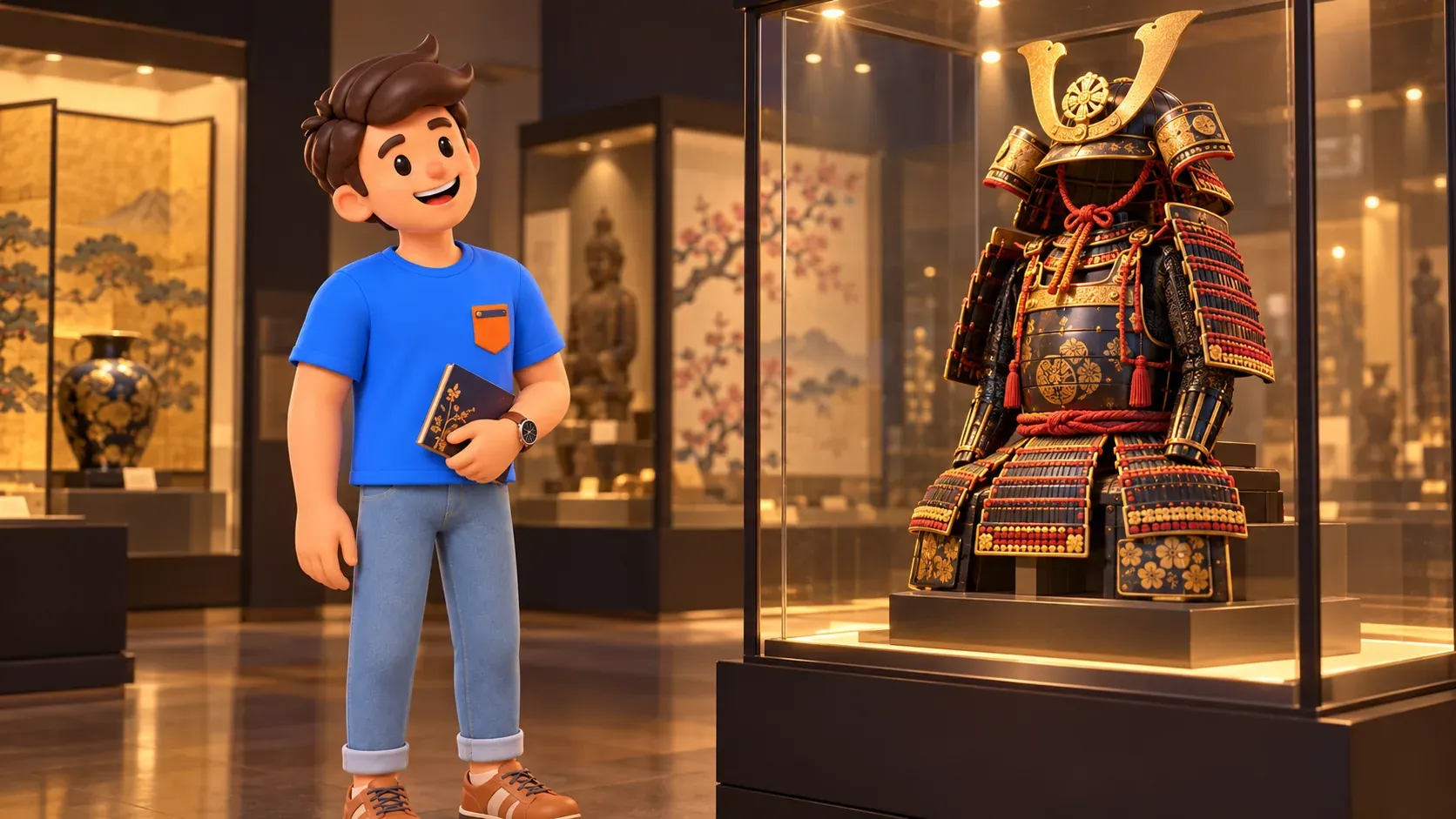
The Samurai Museum Berlin at Auguststraße 68 asks for another kind of attention. Armour, masks and other objects offer a route into Japanese historical culture through materials and craft. Do not reduce it to combat scenes or expect every object to confirm a familiar film. Observe how parts join, how surfaces are finished and how protection relates to appearance. Compare two pieces without appointing one the single correct image of a samurai. Objects belong to different contexts, and their museum proximity does not make them identical in date, purpose or use.
The Berlin-Mitte collection has been presented here since 2022, combining historical material with multimedia interpretation. Distinguish an original object, an explanatory visualisation and a demonstration on screen. References to Noh theatre or taiko do not guarantee a live performance at the moment of ordinary admission. If a tour or event matters, treat it separately from independent viewing. Choose a few details and ask how they were made. That preserves attention to objects and culture without turning the museum into a setting for an imagined duel. Curiosity about craft can carry the visit without any need for reenactment.
Begin at S Oranienburger Straße around 11am. Distribute 210 minutes as 10 for approach, 15 for entry and belongings, 120 for selected collection viewing, 20 for rest, 15 for a short Auguststraße walk, 15 back and 15 in reserve. Finish around 2:30pm at the same station. This is independent visiting, not a guided tour or every gallery in the neighbourhood. Match the ticket to arrival: the operator recommends being ten minutes before its stated window, so do not choose the moment you expect to leave the train. Allow the local approach to happen first.
Calendar, bags and a calm continuation
The general schedule is daily 10am–7pm, with 24 December listed as a specific closure. Do not apply broad holiday-opening wording to that date. Admission is paid and prices depend on the selected arrangements and purchase timing. Under-sixes need a free ticket rather than no formalities. Bags and backpacks are not allowed in exhibition rooms; follow storage arrangements. A lift serves the upper level, but one installation has an accessibility exception. Establish the suitable scope beforehand if relevant to your party. An elevator should not become a blanket promise about every element of the visit.
For the outdoor portion, choose a small available part of Auguststraße. Fifteen minutes do not promise visits to neighbouring galleries with separate doors, calendars and exhibitions. After close looking, a change of distance may be more welcome than another information layer. Rest also does not mean lunch is included. Food and drink are not allowed inside the museum, so select somewhere appropriate separately. With a short free window, keep only the museum and return rather than retaining a walk to make the schedule look complete. A calm ending supports what you have just seen.
Unheard-of things: stories without pretending they are facts
The Museum der Unerhörten Dinge around Crellestraße 5–6 is an intimate literary cabinet. Do not confuse it with Werkbundarchiv – Museum der Dinge: similar names identify different institutions. Here, an ordinary or strange object becomes a reason for a story, and fiction can change its meaning. An accompanying account is not necessarily verified provenance. The interplay between a real thing and an imagined biography is part of the experience. A travel article should retain that distinction: an engaging museum narrative does not automatically become an established historical fact to repeat as evidence.
Choose one object and look before reading its account. Then notice how the text changes attention. What was previously invisible, what did you supply yourself, and how persuasive does the story sound? This is a literary exercise rather than a test of gullibility. It suits people who enjoy reading and discussing meaning, perhaps less someone currently wanting movement and mechanisms. Ask about language support rather than assuming every narrative is translated into your language. Small size does not make the text unimportant. Let the combination of words and objects determine whether this is the right format today.
Ordinary hours are Wednesday–Friday, 3pm–7pm. Admission is free and advance telephone confirmation is recommended. Do not make it an unrestricted morning or weekend stop. Start at S Julius-Leber-Brücke at 3pm: 15 minutes to approach, 45 for the cabinet, 20 for a break, 20 on a small public Crellestraße section, 10 back and 10 in reserve. That makes two hours, finishing around 5pm. A small venue needs a gentle pace and confirmed visiting possibility, not an assumption that free admission guarantees access at any moment. Your journey from another district remains additional.
Give an unusual museum its own place in the trip
Choose games for the history of interaction and available practice, samurai art for materials and craftsmanship, or literary things for how a narrative develops. One can become the main content of half a day. You need not prove Berlin’s variety through three consecutive cross-city journeys. For painting and artistic movements specifically, our art-museum comparison offers another choice. These formats complement each other across different days without competing for the same small window. Give the subject you chose enough attention instead of dividing every hour between all the possibilities.
RoadMe helps prepare a personalised plan for the entire journey more conveniently and efficiently, connecting museums, neighbourhoods and breaks with your interests and pace. Start planning in the app so the unusual experience you choose gets time and fits naturally into the trip.
Before leaving, choose today’s experience, check the date and entry arrangements, and add travel from your district. Afterwards, ask which detail changed how you saw a familiar thing: a controller, an armour component or an object with a literary biography. One small question can make the day personal. It does not require retelling the collection or completing every interactive element. Choose a format where you want to linger.