Where to Walk During Sakura Season in Tokyo

The best cherry-blossom walk in Tokyo is the one that matches how you want to spend the day. Choose a lively public park if you enjoy the shared atmosphere, a managed garden if you want a longer look at different trees, or a waterside path if walking matters more than settling down. Ueno, Shinjuku Gyoen and the Chidorigafuchi area offer different experiences. They are alternatives to compare, not three compulsory stops in one flowering day.
Start with the current condition of the trees, then the setting and practical access. A famous photograph cannot guarantee the same stage of flowering on your dates. Nor does an announcement of flowering somewhere in Tokyo describe every tree in the city. Keep one good local plan and an alternative that is enjoyable even without a perfect canopy of blossoms.
Choose the kind of outing before the famous name
Ask a simple question: do you want to walk, sit, photograph or combine flowers with another visit? A narrow path beside water suits continuous movement; a permitted lawn pause asks for a different place. Do not arrive at a walkway expecting to spread a picnic blanket, or book a museum immediately after a garden if you know your group likes long outdoor stops. The setting should support the activity you actually enjoy.
Try RoadMe to build a personal itinerary around your interests, dates, pace and budget. Give blossom viewing a comfortable place in the trip rather than making every Tokyo day depend on one predicted flowering date.
Reserve roughly two to three hours locally as a flexible window, not a target walking time. Add travel from your accommodation and any ticketed visit separately. Some people will enjoy a short loop and a coffee; others will stay much longer with the trees. A clear starting area, a manageable route and a useful finish matter more than completing a fixed distance copied from somebody else's spring.
If your accommodation is already near a flowering park, compare that practical option with travelling across the city. The locally convenient place may give you more time outside and less time on transport. This does not make every neighbourhood tree a substitute for a destination you particularly want. It simply makes access one of the choices, alongside landscape, available time and the interests of the people coming with you.
Ueno suits a park day with other options nearby
Choose Ueno when you want a recognisable public-park setting and the possibility of combining a modest blossom walk with another part of the neighbourhood. Do not assume the experience will be quiet simply because the trees are beautiful. Plan for a shared public space and follow the current pedestrian arrangements. Decide in advance whether the park is the main visit or an outdoor part of a separate museum day.
A small loop is enough for a first impression. Start from a useful public entrance, follow the paths where the trees are currently worth seeing and leave time to pause without blocking the main movement. You do not have to walk every avenue or visit every monument. If you want an indoor alternative, check its actual opening and admission conditions instead of assuming a nearby museum can always accept you at the last moment.
For a picnic or seated gathering, use only an area where it is allowed on the day. Follow local notices about space, waste and behaviour. Do not reserve a large patch for people who are not there while the surrounding area is busy. A small practical meal can be pleasant, but it should not become the reason other visitors cannot use a path or sit nearby.
Shinjuku Gyoen suits a garden visit with more than one flowering rhythm
Shinjuku Gyoen grows different cherry varieties, which flower at different periods. That makes it worth examining when your dates do not coincide with the main Somei Yoshino moment, but it is not a promise that every visitor will find a full flowering garden. Look at the garden's current information about the trees rather than treating one citywide forecast as the whole story.
Choose it for a complete garden outing. A few flowering trees can be part of water, open lawns and changing views instead of the sole measure of success. Follow an authorised route and spend time with individual trees. Compare the shape of the crown, the colour of the flowers and the balance between petals and new leaves. You do not need to identify every cultivar to see that cherry blossom is not one uniform pink surface.
This is a managed garden with admission and seasonal opening arrangements. On particularly busy spring dates, advance reservation may be required; check the rules for the specific year and day. Buying a ticket or finding a general timetable does not prove that you have completed every booking step. Confirm entry conditions before leaving the hotel, especially if the garden is the main reason for the outing.
Alcohol is prohibited in Shinjuku Gyoen. Picnic and lawn use must also follow the garden's actual instructions; an attractive patch below a tree is not automatically available. Avoid climbing, pulling branches or stepping into protected planting to create a photograph. The garden remains enjoyable when the visit is based on observation, a modest permitted pause and respect for its living collections.
Chidorigafuchi suits blossoms framed by water
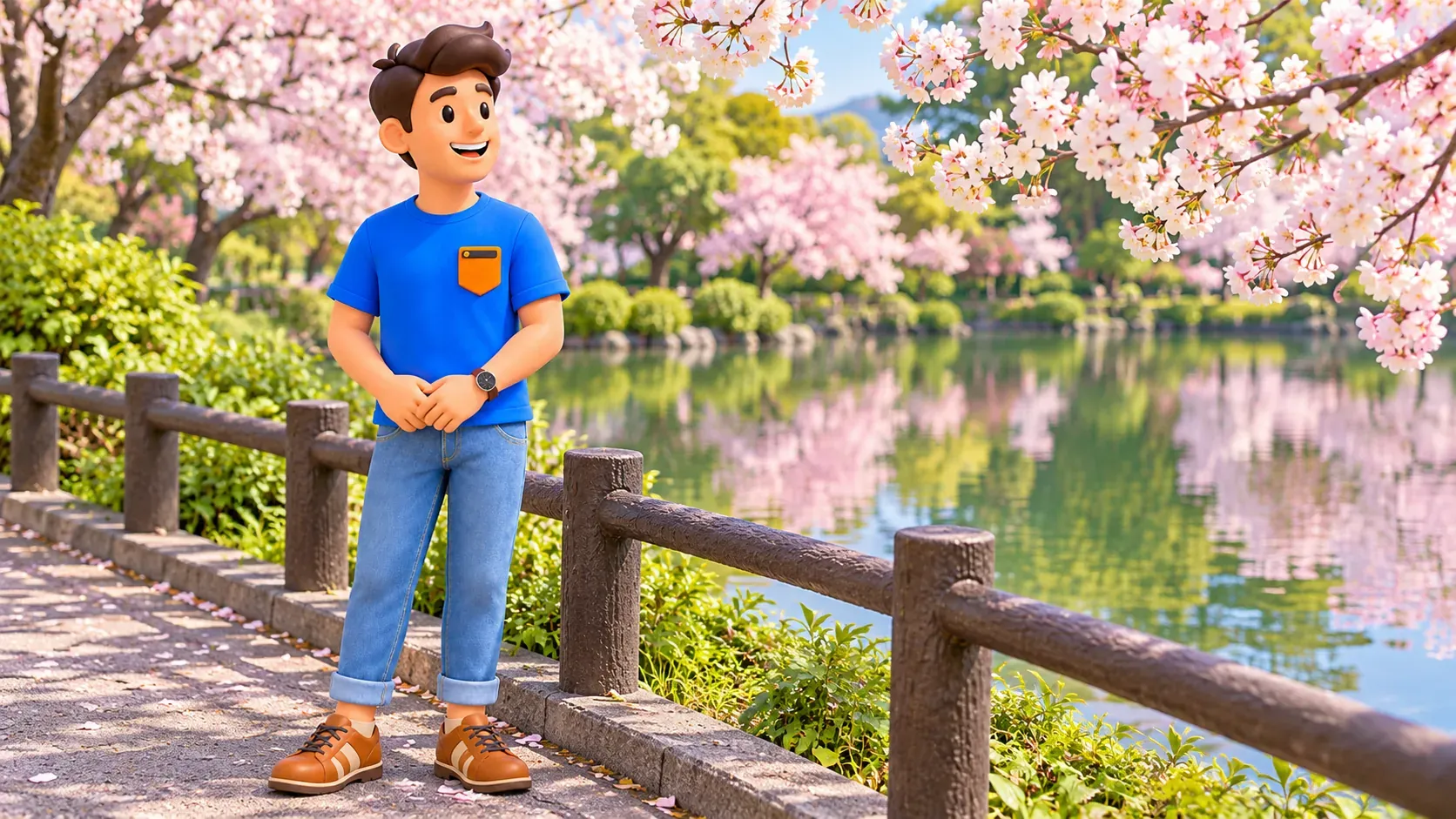
Chidorigafuchi offers a different composition: the moat and its sloping banks give the trees an open foreground and reflections. The setting belongs to the former Edo Castle landscape, so the water has a history beyond its spring photographs. Choose a short waterside walk if you want to keep moving and see how the view changes along the permitted greenway rather than settle down for a long picnic.
Keep three places distinct: the moat-side walking area, Kitanomaru Park and the Chidorigafuchi National Cemetery. Similar names and neighbouring map points do not make them one attraction with identical rules. The national cemetery is a memorial space and should not be treated as an extension of a picnic or celebration route. If you visit it, do so as a separate respectful choice.
Kitanomaru can be an additional green pause through an actual public entrance, provided time and current access suit your group. Do not draw a direct line through walls, water or restricted gates because the map points seem close. Choose one compact section and a useful exit. A route that returns to an easy station can be more comfortable than insisting on finishing at the far edge of the park.
Boats and evening illumination are optional, date-dependent experiences. A blossom picture with rowing boats does not guarantee a short queue, suitable weather or current operation. Check the particular year's arrangements if they matter. This walk is complete from the public paths; you do not need a boat or a lighting event to justify choosing the waterside setting.

Use a forecast to stay flexible, not to make a guarantee
When planning months ahead, choose a trip you would enjoy beyond the blossom peak. Keep the garden or park visit movable within your stay where possible, and avoid making a non-refundable chain of bookings depend on one forecast. Near the date, compare current tree reports and weather with the time you actually have. A forecast is useful information, not a reservation for a natural event.
RoadMe can arrange a personal plan around your priorities and preferred pace. Leave blossom viewing a flexible slot while giving museums, neighbourhoods and rest their own place, so the whole trip remains worthwhile.
Do not use an old festival article as proof of future dates. Annual events, entry arrangements and lighting programmes need checking for the relevant year. Flowering and an organised event are also separate things: trees may be attractive outside the advertised festival, while an event date does not ensure peak petals. Decide whether the main attraction for you is the flowers, the gathering or the evening programme.
If you arrive early or late, look at what is actually available rather than chasing a headline about a missed peak. Different trees and different parts of the garden may offer another kind of view. Equally, it is reasonable to choose an ordinary park walk and give the rest of the day to something else. The trip does not become unsuccessful because one natural display is at a different stage.

Plan for the people and the weather
With children or companions who tire easily, pick a short section with a clear exit and a realistic pause. Toilets, seating and step-free access should be confirmed on the current site map, not assumed from the word park. In a busy period, agreeing on a meeting point is useful even for adults who usually stay together. Avoid a plan that relies on mobile messages finding someone in an unspecified crowd.
For rain or strong wind, shorten the outdoor part or move it to a better available window. Do not shelter under trees during severe weather simply because the walk is seasonal. A nearby indoor visit is a sound alternative only if its conditions are checked and it interests the group. A café break can be sufficient; there is no obligation to replace every cancelled outdoor hour with a ticket.
Before finishing, take a moment without the camera. Notice the flowers against buildings or water, the movement of people and the difference between one tree and the wider scene. Leave branches untouched and take rubbish away according to local arrangements. A successful sakura walk is a comfortable encounter with a particular place at a particular time, with enough space in the day to enjoy it.